
By ARULINIYAN MAHALINGAM
JAFFNA, Sri Lanka: In Havana, the electricity sometimes comes back at two or three in the morning, while people are asleep. When it does, neighbours knock on one another’s doors.
“Wake up!” they tell each other, according to Cuba’s ambassador to Sri Lanka. “We have three hours.”
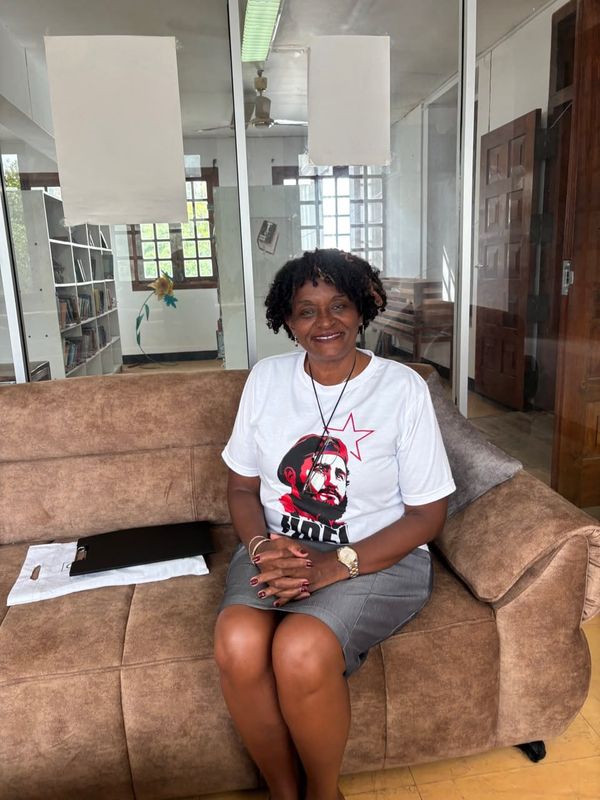
“So imagine yourself cooking at three in the morning, or washing clothes at three in the morning, because if you leave it until the morning, there will be no electricity,” Dr Patricia Lázara Pego Guerra told me in Jaffna. “This is the reality. This is the daily reality we are living now.”
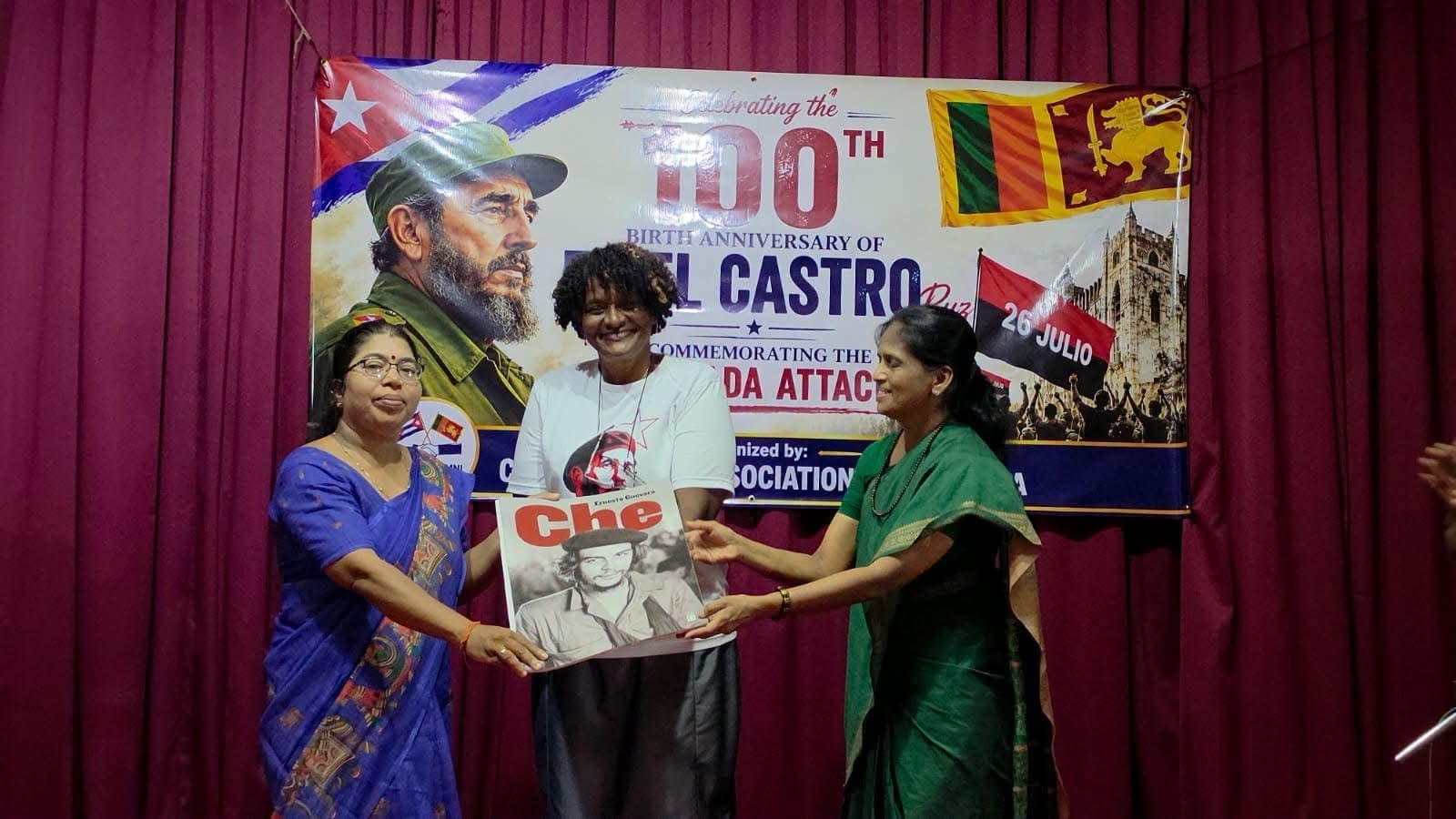
Pego Guerra came north to mark the centenary of Fidel Castro's birth, who led the Cuban revolution of 1959. Castro was born on 13 August 1926 and died in 2016. The American embargo imposed in the early years of his rule, with the aim of ending it, has outlasted him by a decade. This year it became the first effective American blockade of Cuba since the missile crisis of 1962.
The ambassador has never known Cuba without it. “I was born with the blockade,” she said. “I was born in 1968. I know what it is to live with the blockade. I don’t know any other way of living.”
At home, she is always switching off lights to save electricity. She never leaves the water pump running. “Never. Because this is the way I have lived my life,” she said. “We need to save it because today we have it, but maybe tomorrow we won’t.” The habits have followed her to her posting. “Even here in Sri Lanka, I still do the same things.”
“Now it is even worse,” she went on. Under President Donald Trump, she said, Washington has imposed what Cubans call a tightening of the blockade, “a reinforcement of the blockade without precedent. Nothing similar.”
Since January, the Trump administration has largely cut Cuba off from imported fuel. It has used executive orders, tariff threats, sanctions on foreign companies and banks, and pressure on shipping lines and other governments. The island’s power grid has collapsed repeatedly. Tens of thousands of operations have been postponed. Medicines have run short. The United Nations human rights chief has said that children are dying.
“Imagine”
I asked how the blockade affects civilians who have no part in making their country’s policy. She answered with a series of scenes, each beginning with the same word.
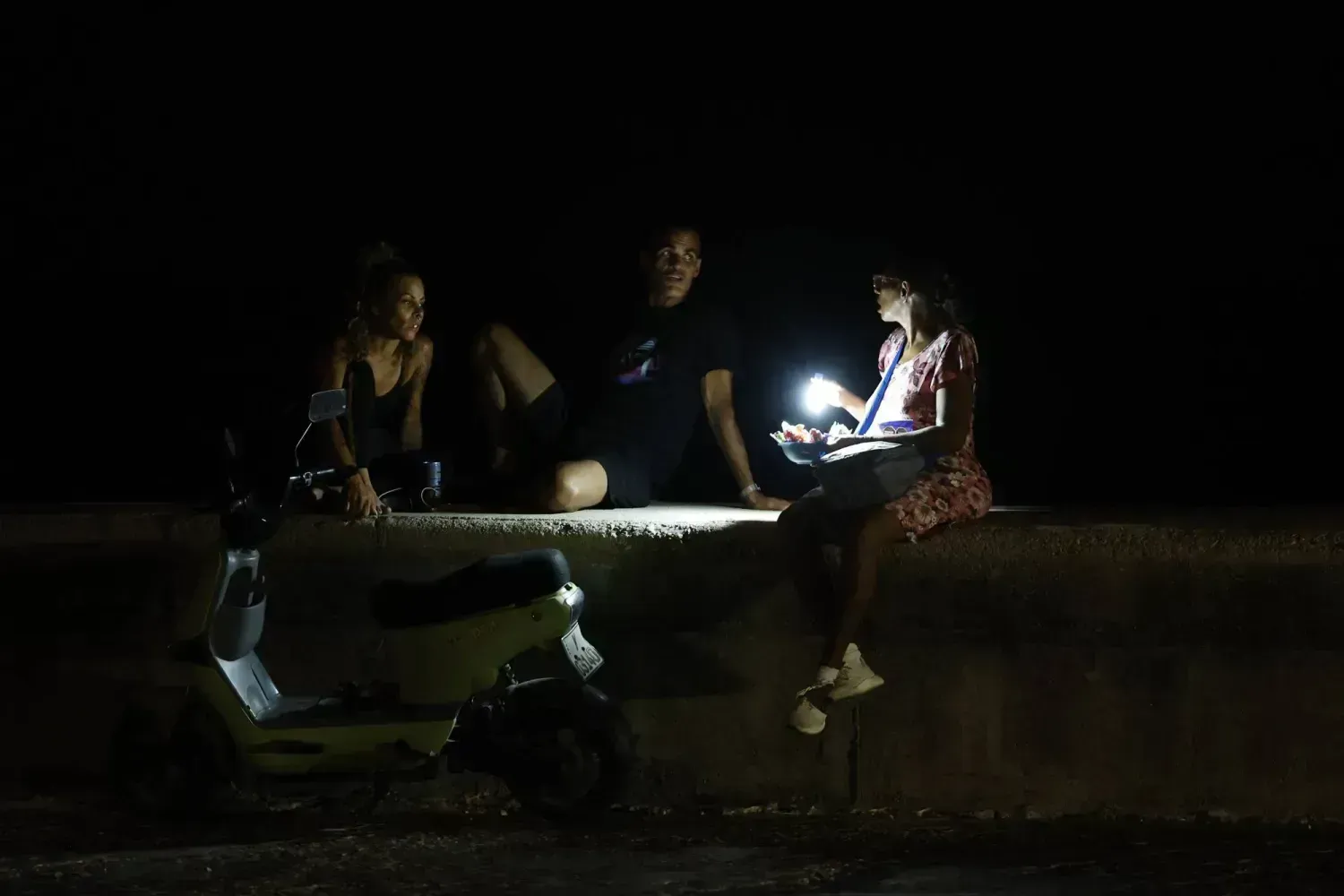
“Imagine living in a country without fuel,” she said. “You don’t have electricity. Cubans now live more than 20 hours a day without electricity. This is in Havana, the capital city. It is much worse if you go to the countryside.”
Imagine, she went on, a country where your mobile phone works perfectly and you still cannot get online, “not because of the quality of your mobile phone, but only because there is no electricity.” Imagine being unable to buy food for a week or two at a time, because without refrigeration it spoils in the heat. “So you have to buy what you are going to eat each day.” Imagine a country with almost no public transport. “Almost zero,” she said. People pay high fares for private taxis, because the drivers themselves pay so much for fuel.
Independent figures bear out her account. Volker Türk, the UN High Commissioner for Human Rights, said in June that power cuts in Cuba often exceeded 20 hours a day. CiberCuba, a Miami-based outlet, analysed the state electricity company’s own daily reports and found that on 23 of the 28 days between 3 September and 2 October, the shortfall in generating capacity at peak hours exceeded 2,000 megawatts. On 18 September, the national grid failed completely. That day, 114 small generating plants with a combined capacity of 926 megawatts stood idle because they lacked fuel. The Cuban government says Havana’s bus service is running with little more than 100 buses against a need of 3,000.
Many people in Jaffna and across Sri Lanka’s Northern Province will recognise what she described. For much of Sri Lanka’s long civil war, the government in Colombo restricted the movement of fuel, food, medicine and dozens of other essential goods into areas of the north and east controlled by the Liberation Tigers of Tamil Eelam (LTTE). Ordinary civilians bore the brunt of those restrictions and endured years of severe shortages. The causes and politics were different, but for those who lived through that period, the conditions the ambassador described will be painfully familiar.
“No oil tankers”
“No shipments, no oil tankers from any country, can bring fuel to Cuba,” the ambassador said.
For two decades, Cuba relied heavily on subsidised Venezuelan oil, paid for largely through the services of Cuban doctors. That lifeline came under threat in December 2025, when American forces began seizing tankers carrying Venezuelan oil. On 3 January, US forces removed Nicolás Maduro from power in Caracas, and shipments to Cuba stopped. On 27 January, Mexico halted its own deliveries. President Claudia Sheinbaum called it “a sovereign decision.” She made it as pressure from Washington was mounting. In the same month, The Wall Street Journal reported that the Trump administration sought to bring about a change of government in Havana before the end of the year.
On 29 January, Trump signed Executive Order 14380, declaring a national emergency. The order described Cuba, an island of fewer than ten million people that could no longer keep its lights on, as an “unusual and extraordinary threat” to the national security of the United States. It authorised tariffs on goods from any country that supplied oil to Cuba, directly or indirectly. On 20 February, the US Supreme Court ruled that the law on which the order relied gave the president no power to impose tariffs at all. For Cuba, the ruling made no practical difference. Suppliers had already taken the threat seriously.
According to Cuba’s report to the UN Secretary-General, a copy of which the ambassador gave me, a single tanker reached the island in the first half of 2026: a Russian ship carrying 100,000 tonnes of crude, which arrived at the end of March. A second Russian tanker turned back off the coast of Brazil in May. On 14 May, Cuba’s energy minister said the country had no fuel oil or diesel left, and the grid partially collapsed.
By then the pressure had widened. On 1 May, Trump signed Executive Order 14404, which for the first time exposed foreign companies and banks to American sanctions for doing business in Cuba’s energy, mining, financial, security and defence sectors. A week later, the State Department designated GAESA, the military-run conglomerate that controls much of the island’s tourism, and gave foreign partners until 5 June to cut their ties. Spain’s Meliá and Iberostar stopped operating 27 hotels. Visa and Mastercard payments on the island stopped working when correspondent banks withdrew. Shipping lines including Hapag-Lloyd and CMA CGM stopped accepting new cargo for Cuba. According to the UN, more than 2,900 tonnes of humanitarian food aid already contracted for the island were caught up in the suspensions. On 11 June, the United States sanctioned Cuba’s state oil company, Cupet, which owns most of the island’s fuel storage and distribution network.
The planes went too. “The biggest airlines are not flying to Cuba,” Pego Guerra said. “Why? Because they cannot refuel in Cuba.” In February, the civil aviation authority told airlines it could no longer supply jet fuel, and Air Canada and others suspended flights. Tourists who still come must route through Panama, Mexico, or the Dominican Republic. “As a tourist, you prefer, as I would, to go directly to Cuba,” she said, “because of the luggage, the time, and so on.”
Washington also went after one of Cuba’s main sources of foreign currency: the medical brigades it sends abroad, which the Trump administration calls forced labour. After the United States imposed visa restrictions on officials in several countries linked to the programmes, Guatemala and Honduras ended their Cuban medical missions in February, and several Caribbean governments said they would cut theirs. On 30 September, new Treasury rules barred American banks from holding accounts for Cuba’s private small businesses and ended the routing of payments between Cuba and third countries through the US financial system.
All of this sits on top of the older structure of the embargo. The Helms-Burton Act of 1996 wrote it into law, so only Congress can repeal it. Under US export rules, a product made anywhere in the world with more than 10 percent American content cannot be sold to Cuba without a licence. On his first day back in office in January 2025, Trump returned Cuba to the State Department’s list of state sponsors of terrorism, six days after President Joe Biden had removed it. The administration cited no new conduct by Cuba. Foreign banks treat the designation as a serious legal risk, and Cuba says 34 of them suspended or refused business with it between March 2025 and February 2026.
Who gets the fuel
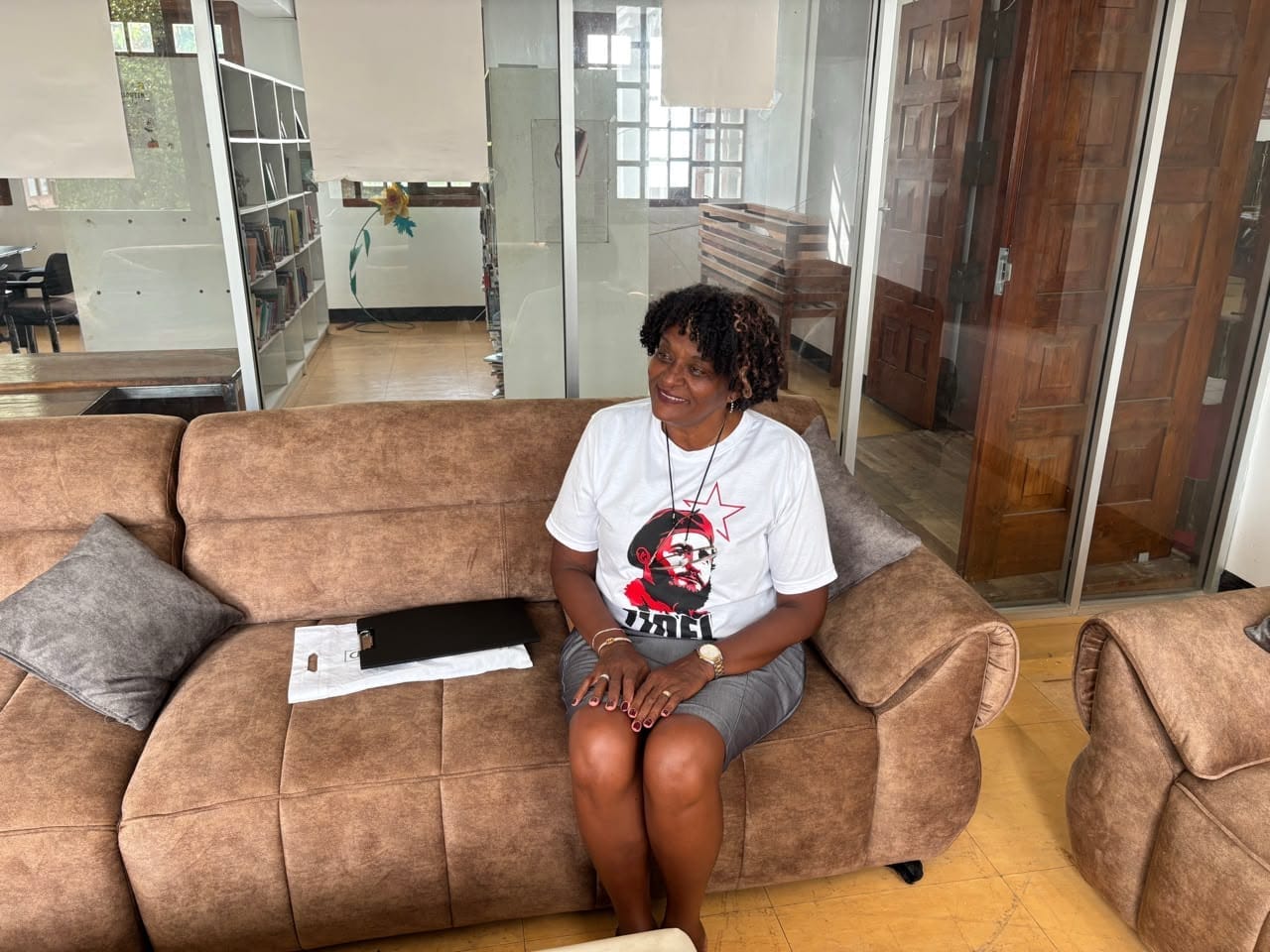
I asked what a litre of fuel costs in Cuba now. About four dollars, she said. “So it is getting better. It is still high in Cuba. In Sri Lanka it is about one dollar. But two months ago it was 20 dollars in Cuba.”
She credited Havana with the improvement. In June, the government adopted 176 economic measures, approved by the Communist Party on 19 June, that ended the state’s monopoly on fuel sales and further opened the economy to private and foreign investment, especially from Cubans abroad. “Even if they live in the US, in Europe or in any other country, their mothers, their grandmothers, their sisters and brothers are in Cuba,” she said. “So those people are also suffering.”
The reforms did help. By late July, Prime Minister Manuel Marrero said, about 200 private businesses had been authorised to import fuel. Much of what they import comes from the United States, under an exception Washington designed for the purpose. American rules bar fuel sales to Cuban state entities and permit them to private businesses. US export data reported by Latin Post show $231.7 million worth of American fuel shipped to private buyers in Cuba between January and August, against about $311,000 in the whole of 2025. Diesel prices on the island fell from more than $8 a litre to under $3 as the shipments arrived. Secretary of State Marco Rubio has said the arrangement is meant to favour private Cubans over the state.
In practice, Washington is deciding which Cubans have fuel. A private restaurant with dollars can buy American diesel for its generator. A state hospital cannot. Neither can the Havana water utility, which announced in June that it was lengthening the intervals between water deliveries because its pumping stations lacked power. Neither can the state bus company or the public schools. Most Cubans are paid by the state, in pesos. The average state salary in September was 7,354 pesos a month, about $9.25 at the informal exchange rate. Fuel sold privately, in dollars, at three or four dollars a litre is beyond their reach. Cuba’s report to the UN calls the arrangement “cynicism.” The Trump administration presents it as support for the Cuban people.
Even on its own terms, the policy has been inconsistent. In June, days after the Florida company Vanguard Energy announced plans to ship 250,000 barrels of fuel a month to Cuban private businesses, the sanctions on Cupet made such cargoes almost impossible to handle, because Cupet controls the terminals and storage. In September, the new Treasury rules cut those same private businesses off from American banks.
Surgery by phone light
“If there is no electricity,” the ambassador asked, “how can a hospital work?”
In the obstetric theatre of a leading maternity hospital in Havana, the lights can fail in the middle of an operation. “When an electrical emergency occurs, a blackout, the entire unit shuts down,” the head anaesthetist, Dr Yudmila Rodríguez Verdecia, is quoted as saying in the report the ambassador handed me. “The surgery cannot be stopped. We have had to keep operating under the glow of cell phone flashlights.”
In the hospital’s neonatal unit, the backup generator has ten seconds to start, because many ventilators no longer have working batteries. If it fails, staff ventilate newborns by hand. Arachu Castro, a public health researcher at Tulane University, documented the same practice in an independent review published in May.
Cuba built its international reputation on medicine, and the ambassador spoke of that record with pride. Cuban doctors went to Africa during the HIV and Ebola epidemics, she said, and around the world during Covid-19. The Latin American School of Medicine near Havana trains doctors from dozens of countries. During the pandemic, she said, Cuba was “probably the only underdeveloped country that produced its own vaccines.” Cuban scientists developed five vaccine candidates, and three of them, Abdala, Soberana 02 and Soberana Plus, were authorised for use. “We didn’t have to wait for someone to donate vaccines,” she said. “Our own pharmaceutical sector produced them, and we vaccinated everybody.”
“Now we have problems,” she said, “but we have the hundreds of facilities we created. We have hospitals. We have polyclinics.”
What those facilities lack is supplies. “Pharmacies in Cuba are empty,” she said. Cuba’s factories need imported components to make even a basic pill, and those components have to be bought in India. “India is far away,” she said. “So if we don’t have the components, we don’t produce the pills or the medicine.” Where the country has the equipment and the technology, it cannot get spare parts. Most hospitals now run partly on solar power, she said, “but even those have limits.”
She pointed to the waiting lists in her government’s report: children and adults awaiting surgery “for cancer, for other illnesses.” The UN system in Cuba put the national surgical waiting list at 96,387 people in early March, including 11,193 children. About 30,000 children missed their scheduled vaccinations because refrigerated trucks had no fuel, though the vaccines were sitting in warehouses. Nearly 2,900 dialysis patients depend on a power supply that cannot be guaranteed. Arachu Castro’s review found that only one of Cuba’s six linear accelerators for cancer radiotherapy was working.
The director-general of the World Health Organization, Tedros Adhanom Ghebreyesus, wrote in March that “health should be protected at all costs and never be at the mercies of geopolitics, energy blockades and power outages.” Türk went further in June. “Children are dying because doctors lack access to essential medical supplies and medicines,” he said. Cuba’s official infant mortality rate, 4 deaths per 1,000 live births in 2018, reached 9.9 in 2025. Survival among children with cancer, according to Cuban figures cited by Türk’s office, has fallen from 85 percent to 65 percent. Türk called the sanctions “incompatible with basic principles of international human rights law” and said they “must be lifted immediately.”
“The results now are not the results we expected,” Pego Guerra said, “because there is an external force preventing us from improving our system.”
Messages from Havana
It was the second time the ambassador had spoken to me about the blockade, and both times the subject visibly moved her. When I asked whether her own family and friends were suffering, she answered for herself first. “I am personally suffering too,” she said.
Before she was posted to Colombo, she lived as most Cubans do. “I don’t have a car in Cuba,” she said. “I depend on public transport to go to work, to go wherever I go. I depend on electricity. If I don’t have electricity, I cannot buy my food. So I lived like an ordinary person.”
Now she follows the crisis on her phone. Her daughter, who remains in Cuba, writes to her on WhatsApp about her day. The ambassador recited some of the messages.
“Mom, how is everything? Sorry I didn’t connect yesterday; there was no connection.”
“Mom, it’s night now, and it’s dark. No electricity.”
“Mom, I didn’t sleep last night. It was dark. No electricity, no air conditioning, no fan.”
What the policy is for
The ambassador used her government’s language. “It is not even a simple blockade. For us, it is an economic war,” she said. “There is no comparison with any other unilateral sanction against any country in the world. We call it genocide against the Cuban people. We call it collective punishment, because you cannot say it is against the Cuban government when it is the Cuban people who are suffering on a daily basis.”
She said the policy amounted to genocide “because it has been there for more than 60 years.” The Genocide Convention defines the crime by the intent to destroy a group, and no court has applied it to the embargo. Her charge of collective punishment has more support. UN human rights experts said in February that the fuel order was a serious violation of international law, and Türk has said the measures are “directly harming Cubans, especially the most vulnerable.”
The idea of using hardship to bring down Cuba’s government is part of the American record. In April 1960, Lester D. Mallory, a deputy assistant secretary of state, proposed a policy designed “to decrease monetary and real wages, to bring about hunger, desperation and overthrow of government.” His memorandum has since been published by the State Department’s own historians.
The present administration has stated its aim nearly as openly. In January, Trump told the radio host Hugh Hewitt that he did not think much more pressure could be put on Cuba short of going in and destroying the place. In May, federal prosecutors indicted Raúl Castro, Fidel’s brother, now 95, over the 1996 shooting down of two civilian aircraft flown by the exile group Brothers to the Rescue. On 22 September, Trump told the UN General Assembly that Cuba was “a failed state,” and the Cuban delegation walked out. The next day, Rubio said Washington was open to talks on “a political transition.” According to The Atlantic, back-channel talks this year stalled when the United States demanded that President Miguel Díaz-Canel leave office.
“He is very clear, together with Secretary of State Marco Rubio, that this is the only way to change the regime in Cuba and defeat the revolution,” Pego Guerra said of Trump. She described the pressure as the latest form of a much older ambition. “The United States always dominated Cuba because of Cuba’s strategic geographical position,” she said. “Cuba can be the key to the Caribbean and to Latin America.” What changed in 1959, she said, was that “a new, progressive and revolutionary government” set out to take the country towards socialism.
The policy has critics in the United States as well. In April, two Democratic members of Congress, Pramila Jayapal and Jonathan Jackson, spent five days in Cuba and condemned the energy blockade as “economic bombing” of the island.
The Trump administration has offered $100 million in humanitarian aid, distributed through the Catholic Church rather than the Cuban state, which Washington says could divert or steal it. The first flight, in July, carried food and hygiene kits for up to 700 households, and the wider programme aims to reach about 200,000 people. Cuba has about 9.4 million people. The same administration sending the food kits is withholding the fuel that runs Cuba’s hospitals, water pumps and buses. As a Cuban friend put it, the gesture is rather like offering flowers at the funeral of someone whose death you helped bring about.
Havana’s share
The ambassador called the blockade “the most important obstacle to the development of Cuba.” Her government has acknowledged that it is not the only one. Presenting the reforms in June, Díaz-Canel blamed “slowness, bureaucracy and norms that impede those who want to produce.”
The two are hard to separate, because every failure of the Cuban economy since 1959 has taken place under the embargo. For most of that period, the state has set prices, controlled foreign trade and held monopolies over the most important sectors. Economists at American University and the University of Havana point to a centralised model with chronically low productivity. Private small and medium-sized businesses were legalised only in 2021. The same model produced similar results in the Soviet Union and Eastern Europe, which faced no comparable American embargo. Vietnam, which remained under a US trade embargo until 1994, began opening its economy in 1986 and grew quickly. Cuba began comparable reforms more than three decades later.
The embargo, for its part, cut the island off from its largest natural market, 40 minutes away by air. When Washington cancelled Cuba’s sugar quota in 1960, the Soviet Union became the buyer, and the island’s dependence on Moscow followed. Since 1996, the Helms-Burton Act has exposed foreign companies to American lawsuits if they use property confiscated after the revolution. The 10 percent rule on American content shuts out goods made far from the United States. Foreign banks have paid heavy American penalties for sanctions breaches. BNP Paribas paid $8.9 billion in 2014 over transactions involving Cuba, Iran and Sudan, and many banks now avoid the island altogether. These measures raise the cost of almost everything Cuba buys, from fuel to the components for basic medicines it must source in India. For decades, the embargo also gave Cuba’s leaders a ready argument for keeping control: a country under siege, they said, could not afford the risks of opening up.
The history of Cuba’s dependence shows both forces at work. When the Soviet Union collapsed in 1991, Cuba lost its main source of subsidised oil and trade and entered the years of shortage Cubans call the Special Period. Venezuela later filled much of the gap with its own subsidised oil. Exclusion from the American market and from Western finance pushed Cuba towards single patrons. Havana’s own planning did little to reduce the risk. When American forces began seizing tankers, and Maduro was removed in January, the island had little to fall back on.
Other weaknesses were domestic decisions. GAESA, the military conglomerate, controls much of the tourist industry, one of the island’s main sources of foreign exchange. In 2023, according to the same economists, tourism and hotel construction received about 18 times what went into public health, while hotels stood three-quarters empty. For almost three decades, Cuba ran two currencies side by side, with state enterprises using an official rate of one to one that bore no relation to the peso’s real value. The 2021 reform that unified them set off years of triple-digit inflation. Cuba has been outside the International Monetary Fund and the World Bank since the 1960s, so it had no lender of last resort when the reform went wrong. Access to foreign currency remains tightly rationed, and the average state salary is worth about $9.25 a month at the informal rate. By the government’s own count, more than 1.6 million people have left the island since 2020.
The American fuel carve-out sits where these problems meet. For six decades, the Cuban state restricted private enterprise, and it kept its monopoly on fuel sales until June. Washington has designed its sanctions so that the private sector Havana long held back is the only part of the economy allowed to buy American fuel, while state hospitals, water pumps and buses go without. The arrangement also shows the cost of Havana’s own choices. Because the state controlled fuel imports and distribution, it had no other channel when its supply was cut off. The private importers it authorised in June are now among the few still able to bring fuel in.
Whether Cuba would have reformed sooner without the embargo cannot be known. The only serious American experiment with engagement, under President Barack Obama, lasted barely two years, too short to settle the question. In that time, according to figures from the Office of the Historian of Havana, private investment in restaurants, guesthouses and restoration in the old city surged, while the state kept its grip on the rest of the economy.
The vote
I asked about the silence of the United Nations. She rejected the premise. “The United Nations is not silent,” she said. Almost every year since 1992, Cuba has brought a resolution against the embargo to the General Assembly, and each time a large majority has voted for it. “That is the message, loud and clear, as we say.” The resolutions are not binding. “The problem is that the United Nations, as a multilateral body, is not doing what the majority of the international community is demanding.”
The next vote, she said, is due on 28 October, and the Trump administration has worked hard to reduce the margin. In 2024, the resolution passed by 187 votes to 2, with only the United States and Israel against. In October 2025, after an American lobbying campaign, it passed by 165 to 7, with 12 abstentions, as Argentina, Hungary, North Macedonia, Paraguay and Ukraine joined the United States and Israel. Sri Lanka voted in favour. This week, the State Department said Rubio telephoned El Salvador's President Nayib Bukele to ask for his support at the UN. Cuba’s foreign minister, Bruno Rodríguez, accused Rubio of “pressuring and blackmailing” heads of government.
Pego Guerra said she was confident of another majority. “But, as you know, it is not enough.”
Two islands
Cuba’s diplomatic presence in Sri Lanka is striking for a country in such severe economic hardship. Several wealthier European nations, including Spain, Sweden and Norway, conduct their diplomatic affairs with Sri Lanka largely through embassies in New Delhi. Cuba maintains an embassy in Colombo with a resident ambassador, a commitment that has survived decades of economic difficulty.
Pego Guerra presented her credentials to President Anura Kumara Dissanayake in Colombo on 24 February. As far as she could establish, her trip this week was the first visit to Jaffna by a Cuban ambassador. “This is a good question, because I have been asking it too,” she said. “Everybody says this is the first time.” The centenary brought her north, but she said she had wanted to make the journey since arriving in the country. “The geography of Sri Lanka tells me that Jaffna is important,” she said. She reads a great deal of history, she said, and Jaffna’s place in the island’s past had drawn her.
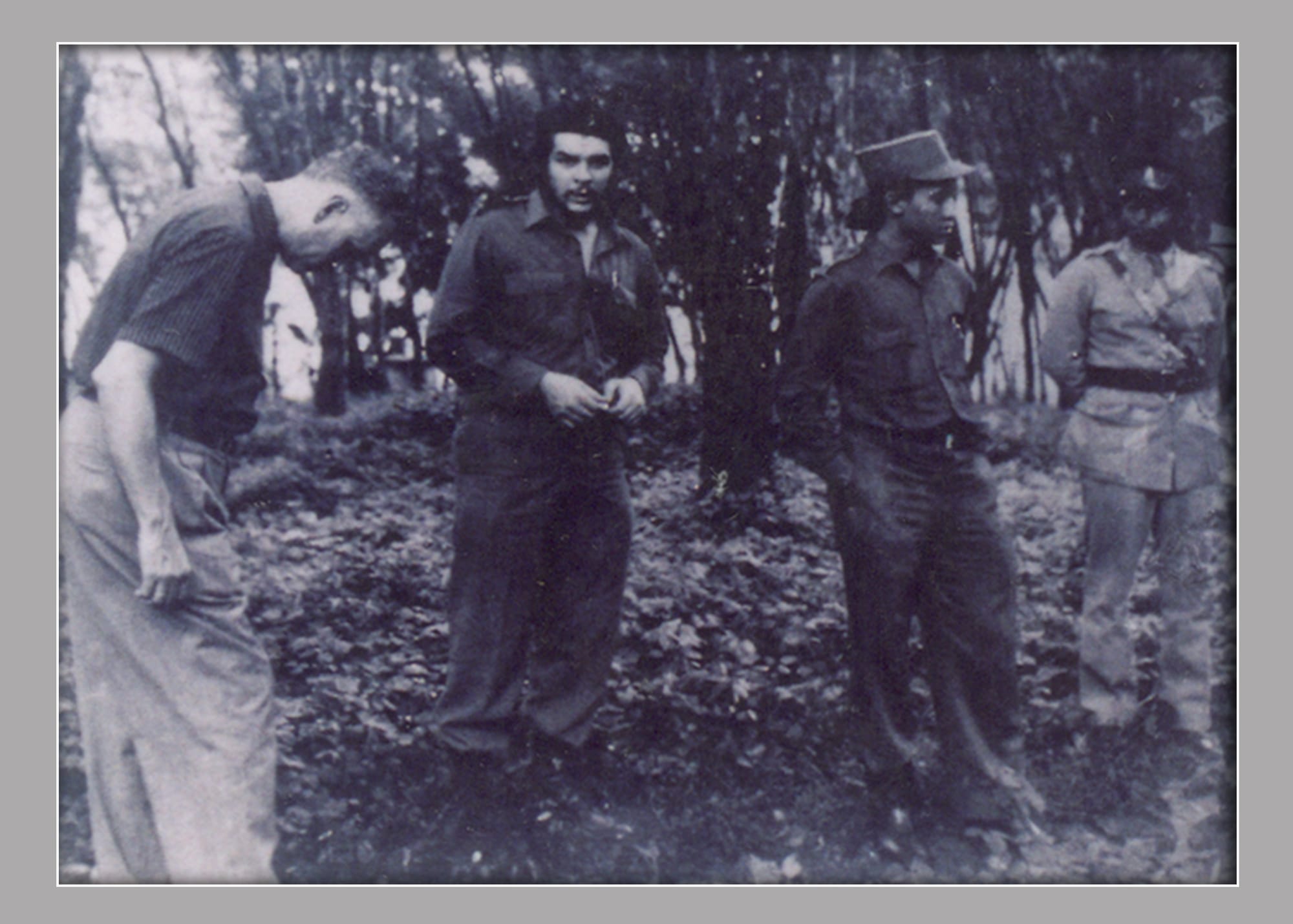
The relationship between the two countries dates almost to the beginning of the Cuban Revolution. Cuba and Sri Lanka, then known as Ceylon, established diplomatic relations on 29 July 1959, barely seven months after Fidel Castro came to power. Ernesto “Che” Guevara visited Ceylon that year to promote trade. Havana opened its embassy in Colombo in 1960, closed it in 1971 because of financial difficulties, and reopened it in 1974.
Both countries became members of the Non-Aligned Movement, and Sri Lankan students have received medical training in Cuba. Cuba offers one fully funded medical scholarship each year, and the recipients for the past two years have been Tamils from northern Sri Lanka. The relationship has also extended into the more contentious arena of international politics.
The ambassador is a historian by training. She studied at Cuba’s diplomatic school in Havana, now the University of International Relations, where she earned a master’s degree focusing on African American issues. In 2025, she completed her doctorate at the Enrique José Varona University of Pedagogical Sciences, researching the historical connections between African Americans and Afro-Cubans. “There is a common thread, which is slavery,” she said.
That interest has taken her to Puttalam, where she visited Sri Lanka’s Afro-descendant community, commonly known as the Kaffirs. The subject is personal for her. Her maternal grandparents, she said, came from Africa, and her paternal grandparents came from Spain.
The day before our interview, she visited the University of Jaffna, where, she said, the vice-chancellor, the dean of the Faculty of Arts and members of the linguistics department agreed that learning Spanish could benefit students. “Even the students told me, ‘I would like to learn Spanish,’” she said.
She is also trying to bring a Cuban film to the Jaffna International Cinema Festival in December. She spoke of boxing, a sport with a small following in Jaffna and one in which Cuba has few rivals, and of fishing as another area for cooperation. Both Cuba and Jaffna grow tobacco. “Cuban cigars are famous,” she said, “but you produce tobacco too.”
She was particularly impressed by the many uses Jaffna has found for coconuts, from cooking oil and body lotion to souvenirs. “We have a lot to learn from Jaffna,” she said, “and Jaffna can also learn from us.”
She described the two countries by their shapes. “Sri Lanka is like a drop. Cuba is like an alligator,” she said, referring to el caimán, the name Cubans give their long, narrow island. “Islanders have something in common: the way they see life, the way they enjoy the weather.” Of Jaffna, she said: “I hope this is the first visit, not the last.”
“If they dare”
Cubans have a saying, the ambassador told me: “If they dare to lift the blockade for one month.”
She imagined what even a month without restrictions might make possible: tourists arriving on direct flights, Cuban laboratories producing medicines without struggling to obtain supplies, and businesses trading freely with the outside world.
“Imagine Cuba without the blockade,” she said. “Cuba would be a fantastic place to live.”
Before we parted, she returned to a phrase she said Cubans repeat to one another.
“The blockade is real,” she said. “The blockade is not a dream.”