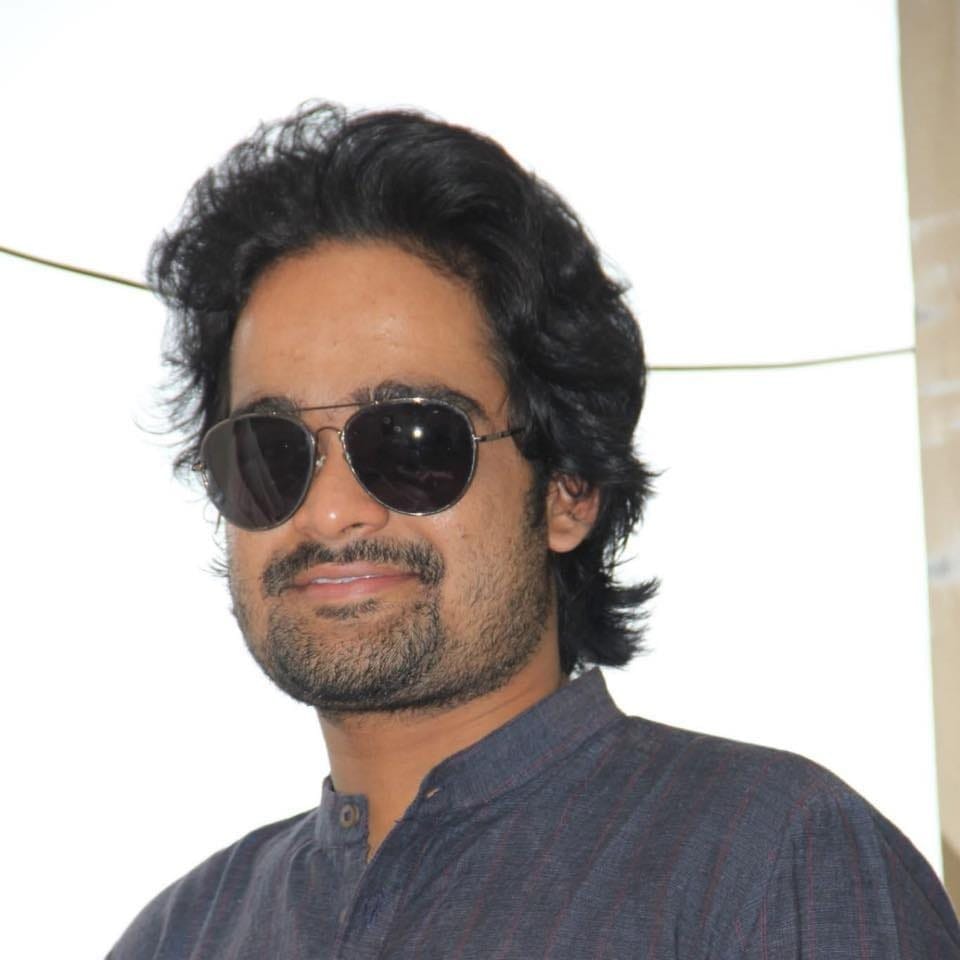

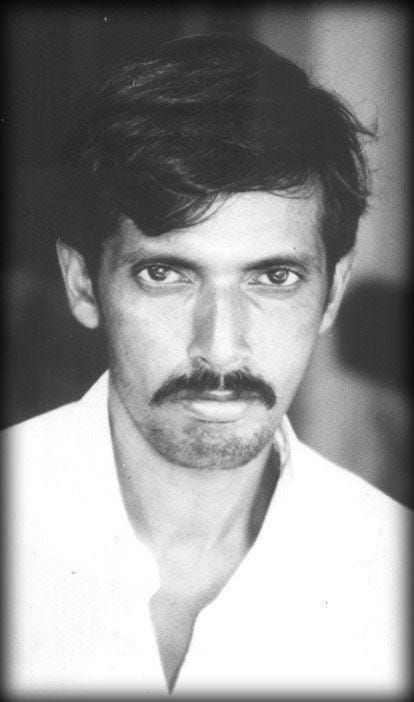
Twenty-six years after journalist Mylvaganam Nimalarajan was murdered in his Jaffna home, Jaffna Monitor reconstructs his final night through his wounded father’s testimony, contemporary newspaper reports, family recollections and the account of the colleague who broadcast his final news report.
Shortly before 9:45 p.m.
The BBC Tamil Service news ran from 9:15 to 9:45 every night. On Thursday, October 19, 2000, Kanapathipillai Mylvaganam was listening to it from a reclining chair in the living room of the family home in Kachcheriyadi, Jaffna.
The house had no electricity. According to the family, a scheduled power cut earlier in the evening had not ended. In the study, his son was working by the light of a kerosene lamp.
Outside, the town was under curfew. The house stood inside a high-security zone, and the streets were empty.
Most of the household was asleep. Parimala, the journalist’s wife, had put their three daughters to bed, all under five, and fallen asleep beside them. Prasanna, 11, a nephew from next door, was asleep in the house too. Lily Theresa, Mylvaganam’s wife, had been sleeping. She got up and went to the bathroom in the dark.
In the study, Mylvaganam Nimalarajan was on the telephone.
The front door was slightly open.
In the half-light, the old man saw someone come through it. A man in a T-shirt and long trousers.
“Son, who are you?” Mylvaganam asked, and started to get up.
The man took hold of his head.
Earlier that evening | Colombo
A few hours before, about 400 kilometres to the south, Nadaraja Kuruparan had picked up the telephone at Sooriyan FM and heard Nimalarajan’s voice.
Nimalarajan filed for Sooriyan FM from Jaffna. He also reported for the BBC, the IBC and Tamil and Sinhala newspapers, and he was secretary of the North Sri Lanka Journalists’ Association. Jaffna had intermittent electricity and no internet. He covered the peninsula on a bicycle, wrote his reports by hand, and usually faxed them to Colombo.
That evening he did not send a fax. He dictated his report down the line.
“I remember sensing a certain urgency in his voice,” Kuruparan wrote 26 years later, in a remembrance published on the anniversary of the killing. He believes the report concerned fighting in Jaffna between government forces and the Liberation Tigers of Tamil Eelam, but he can no longer recall exactly what it said. He took it down and prepared it for the night bulletin.
The two men had talked before about danger. Nimalarajan had told him many times about threats he had received, Kuruparan wrote. “I shared my concerns about his safety. But he was not someone who would abandon journalism because of intimidation.”
The chair
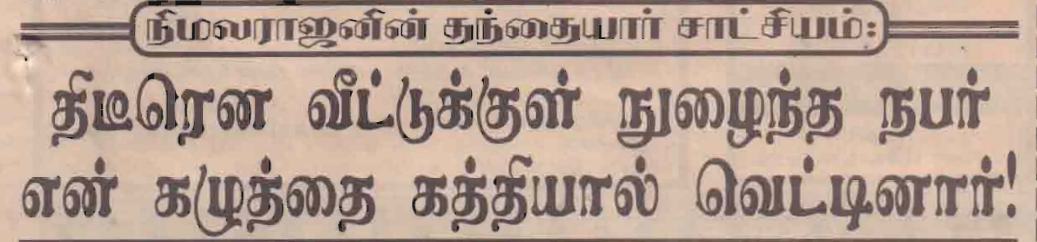
What happened in the living room is known largely through Mylvaganam's own account. The following morning, from Ward 28 of Jaffna Teaching Hospital, he described the events to the Jaffna magistrate. The Tamil daily Uthayan published his account on October 21.
“A man suddenly came into the house, grabbed my head, pressed it down below my knees and cut my neck with a sharp weapon like a knife.”
Bent double in the chair, he became aware of a second man in the house, moving towards his son’s study. He told the magistrate.
Then, from the direction of the study, two gunshots.
“I shouted, ‘They are shooting my son!’ The man who was holding my neck down let go of my head, and I was able to straighten up. It was pitch dark, and I could see nothing. Then there were loud explosions.”
The family remembers a third shot.
Lily Theresa came out of the bathroom into the dark and saw the flashes of gunfire. She ran towards them. Prasanna woke and ran out after her.
As the two men fled, they threw a hand grenade behind them. It exploded in the middle of the living room.
“In the middle of these sounds, something fell on my body and hurt me. I fell down at once and crawled towards my son’s room.”
The blast brought down part of the ceiling, destroyed a glass-fronted cupboard, and blew out every window at the front of the house. It smashed the lamps. Prasanna’s leg was broken so badly that it hung loose. Lily Theresa was hit in the leg and lower abdomen and soon lost consciousness. Fragments struck Mylvaganam, whose face, head and neck had already been cut, by the family’s account, over a length of up to 30 centimetres.
Parimala ran out of the children’s room into dust, smoke and darkness. Her family was on the floor, bleeding.
Next door
Nimalarajan’s sister, Premarani, lived in the house next door with her husband, Jegathas Paul, and their children. When the shooting started, they got under a table.
Then they heard Mylvaganam screaming.
They ran for the house with their eldest son, Premji, who was 16. As they reached it, the grenade went off, and for a moment the whole front of the building was lit up. Then it was dark again.
Inside, Premarani felt her feet sticking to the floor. It took her a moment to understand that she was walking in blood.
Premji ran back out to shout for help. He opened his mouth, and nothing came out. His mother ran out after him and screamed for the neighbours.
Across the road lived the Grama Sevaka, the village administration officer, a man named Chandrarajah. Mylvaganam later told the magistrate that he and Mylvaganam’s son-in-law were the first into the house after the explosions. Chandrarajah then went to another neighbour and persuaded him to bring out his Land Master, a small two-wheel tractor with a trailer.
Jegathas Paul took a torch and went to the nearest army checkpoint.
10:05 p.m.
He came back with five or more soldiers. At about the same moment, the power came back on. It was 10:05 p.m.
For the first time, the family could see the house.
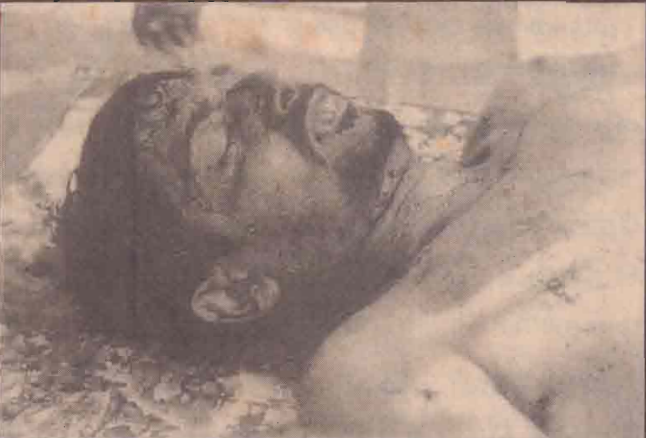
Nimalarajan was lying face down at the entrance to his study, his head near the doorway. Blood was running out of the room.
Under a chair in the living room, the soldiers found the safety lever of a hand grenade and an empty cartridge case. They took both. They said the army would send a truck for the wounded.
Neighbours were arriving now. Some tried to bandage Lily Theresa, Mylvaganam and Prasanna.
The truck did not come. There was no way to call an ambulance.
One kilometre
They carried Nimalarajan’s body to the trailer of a two-wheeled tractor, known locally as a Landmaster, and laid him inside. Then they lifted the three wounded onto the trailer beside him. Premarani climbed aboard and cradled Prasanna in her lap. Her husband joined them.
The driver was afraid. To be on the road after curfew was dangerous, and he did not know what would happen if they were stopped. The family asked Chandrarajah to ride beside them on his motorcycle. Premji followed on another.
For the first stretch, neighbours walked alongside holding lanterns. After a while, they stopped, turned back, and the Landmaster went on alone.
Two soldiers had offered to escort the family to the hospital, then changed their minds. Instead, they said they would radio the checkpoints ahead so the Landmaster could pass the main roadblock on Hospital Road, the direct way.
At the Hospital Road roadblock, the family was told the road was closed. They would have to go round.
There was no one else on the streets. On the trailer, the family watched the three wounded and believed they were dying.
Jaffna Teaching Hospital was little more than a kilometre from the house. The journey took an hour.
For all of that hour, Mylvaganam was on the trailer with his son’s body. He did not know what had happened to him.
“I was injured and in shock, so I did not know what had happened to my son,” he told the magistrate. “Only after I was taken to the hospital did I see my son lying dead.”
11:45 p.m. | Colombo
In Colombo, Kuruparan had put the night bulletin on air with Nimalarajan’s report in it and gone home in the office car. At around 11:45 p.m., his telephone rang.
“Nimalarajan’s house has been attacked with a bomb. He has been shot. He has been taken to hospital with serious injuries.”
He called the station from home, and the news went out. By his recollection, it was on air before 11:50.
Within minutes, a second call came. Nimalarajan was dead.
“The very radio station that had broadcast his report only a short while earlier now had to announce that he had been killed,” Kuruparan wrote.
In Jaffna, the family had handed Nimalarajan’s body to the hospital mortuary, and Mylvaganam, Lily Theresa and Prasanna had been admitted to the wards. The others stayed in the hospital. They did not dare go back into the streets until the curfew lifted in the morning.
Ward 28
On Friday, October 20, the Jaffna magistrate, E. T. Vignaraja, went to the house in Kachcheriyadi and inspected the scene. At the hospital, he viewed Nimalarajan’s body in the mortuary. In the forenoon he went to Ward 28, where Mylvaganam lay with wounds to his neck and body, and took his statement.
Mylvaganam described the man who had come in first. He was short, of medium complexion, and wore long trousers and a T-shirt.
“I had never seen him before,” Mylvaganam said.
The magistrate ordered a post-mortem examination, after which the body was to be released to the family. He directed the officer in charge of crime prevention at Jaffna police station to provide Mylvaganam with full police protection in hospital and adjourned the inquiry to October 23.
At about 2:30 that afternoon, the body was released. Mylvaganam and Lily Theresa, still patients, paid their respects to their son at the hospital. The body was then taken home to Kachcheriyadi. Through the rest of the day, journalists, members of public organisations and ordinary people came to the house.
Saturday
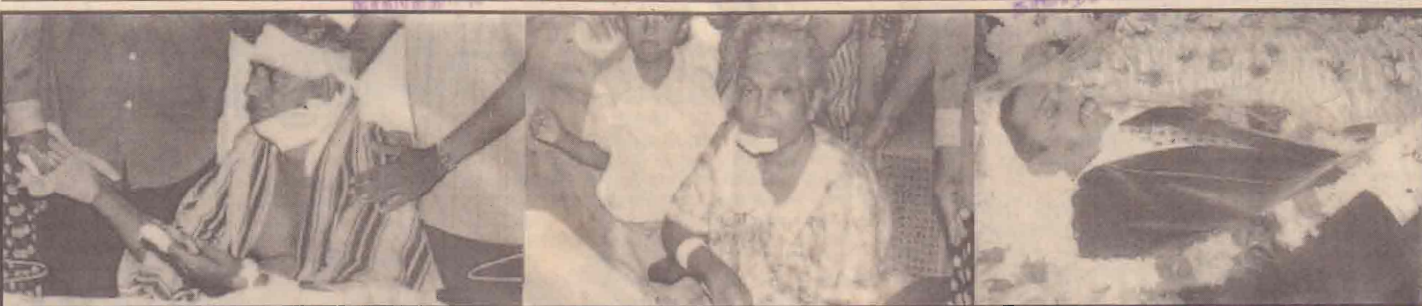
On Saturday, October 21, at 2 p.m., the funeral service was held at the cathedral, and Nimalarajan was taken for burial.
Thousands came, according to the next day’s report. Clergy, officials of the Jaffna secretariat, heads of government departments, representatives of non-governmental organisations, journalists, university students and representatives of Tamil political parties paid their respects. Rev. S. Jebanesan, bishop of the Church of South India, came to the house with other Christian clergy. Mylvaganam and Lily Theresa were brought from the hospital to bury their son.
Some of Nimalarajan’s colleagues could not get there. Jayasiri Jayasekera of the Sinhala weekly Ravaya told Sandeshaya, the BBC Sinhala Service, that a group of journalists from the south, among them Sunil Jayasekara of Ravaya, had applied to travel to Jaffna for the funeral. The Ministry of Defence approved the trip, he said, then withdrew its approval a few hours later. Appeals to the media minister and the director of information did not change the decision.
Monday
On Monday, October 23, Jaffna police said they had stepped up their investigation. They asked anyone who knew anything about the killing, or what lay behind it, to come to the station or to telephone Jaffna 2222 or 2221. The station inspector promised to keep the names of informants and what they said strictly confidential.
In Colombo, a few days after the killing, hundreds of Tamil and Sinhala journalists, media organisations and human rights activists stood outside Fort Railway Station and demanded justice. Kuruparan was among them.
Since then
Suspicion fell early on the Eelam People’s Democratic Party, a Tamil party that was armed and allied to the government of the day.
Nine days before the killing, Sri Lanka had voted in a parliamentary election. Nimalarajan had reported on intimidation, violence and alleged vote-rigging in Jaffna during the campaign and on polling day. The Committee to Protect Journalists said he had received death threats in the weeks before he died, and that local journalists suspected his reporting on vote-rigging and intimidation by the EPDP during the election had led to his murder.
In 2004, his father told Reporters Without Borders that everything the family knew pointed to the EPDP’s involvement. However, the EPDP’s alleged involvement has never been proven in court.
In 2021, the Attorney General’s Department dropped the case against six accused, two of whom were reportedly abroad, according to the Committee to Protect Journalists. No one has been convicted.
The EPDP denies any involvement. Asked by Jaffna Monitor about the allegations, the party’s media secretary, Panneerselvam Srikanth, said the EPDP had called for an impartial investigation into the killing for many years.
“Instead of slinging mud at us, there should be an impartial investigation, and the EPDP will give it every support,” he said. With a new government now reopening old cases, he added, those who blame the party should press the government to reopen this one.
A source familiar with the EPDP’s activities in Jaffna at the time, who spoke to Jaffna Monitor on condition of anonymity, described a closer relationship between the journalist and the party than the allegations suggest. Telephone and fax lines were scarce in Jaffna then, the source said, and Nimalarajan regularly visited the EPDP office on Stanley Road, where he often talked and sent his reports. At times, the source said, he ate there.
The source rejected the idea that the killing had been sanctioned by the party, but said it was possible that members or former members of the EPDP had carried it out, using personal contacts they had with the military. Jaffna Monitor was unable to independently verify the account.
Nimalarajan’s family left Sri Lanka for Canada. His mother, Lily Theresa, died there in 2021. In 2022, police in Britain arrested a man in connection with the case and released him; in 2024, the British investigation was reported to be continuing.
In Colombo, Kuruparan still keeps the photograph from Fort Railway Station. “Even after 26 years, that night has never truly ended for me,” he wrote.