
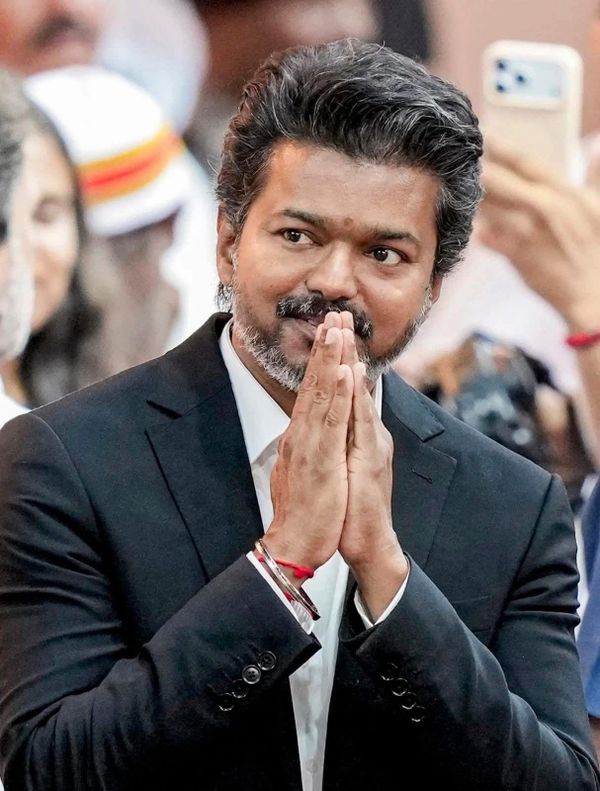
Dear Vijay,
Heartiest congratulations on becoming the chief minister of Tamil Nadu!
Now that you start governing one of India’s biggest and economically most developed states, plenty of problems, small and big, will crop up. You already mentioned the state’s fiscal mess after taking the oath of office.
Unlike most chief ministers in India, you will be confronted now and then by matters affecting or involving a neighbouring country: Sri Lanka.
This is where you need to exercise extreme caution, for more reasons than one.
As someone born and raised in Tamil Nadu, it is inconceivable that you are not broadly aware of Sri Lanka’s ethnic conflict, in particular the problems which continue to plague that country’s Tamil minority.
Unfortunately, Tamil Nadu’s mainstream politicians, particularly of the Dravidian flock (whom you routed), have often conducted themselves in a manner that has done more damage to Sri Lankan Tamils.
On many issues, their megaphone belligerence has, on the one hand, not helped the Tamils there and on the other given oxygen to a Sinhalese myth that Tamils on both sides of the Palk Strait are out to gobble Buddhist Sri Lanka.
As someone beginning on a clean slate, the first thing you need to do is not to get entangled needlessly in Sri Lankan issues, without weighing the larger Indian government perspective.
Yes, Tamils in Sri Lanka face plenty of genuine challenges, four of which can be mentioned here. Two of these are directly linked to Tamil Nadu.
Despite umpteen promises by Colombo, the military has not returned thousands of acres of land belonging to Tamils that it seized during the long years of armed conflict, even though the separatist war ended in 2009.
There is also no credible forward movement over the thousands of mainly young Tamils who disappeared and are widely believed to have been killed after the war ended.
Tamil women in Sri Lanka’s north and east still seek justice for their missing husbands, sons, and brothers. The disappeared also include some women.
A new government led by President Anura Dissanayake, a Marxist, took office in Colombo in 2024, promising to undo many of the historical wrongs that have dogged Sri Lanka. But it seems Dissanayake’s hands are suddenly fettered.
Then there are an estimated 87,000 Tamil refugees from Sri Lanka who are still in Tamil Nadu, years after they fled their island to escape the war.
Although the Indian and Tamil Nadu governments provide financial support to the refugees, it is limited in nature. A lot can be done to improve their living conditions. Many would like to return to Sri Lanka. They should be helped. Many have been born and raised in India and want to become Indian citizens. This issue has dragged on for decades and needs to be resolved, and fast.
One of the most serious problems involving India and Sri Lanka is the unending dispute between Tamil fishermen from Tamil Nadu and the island nation.
Tamil Nadu politicians have tended to give the impression that this is a row involving Indian fishermen and the Sri Lankan state. This is not the real story, at least from 2009 when the separatist war ended.
The ugly truth is that environmentally destructive bottom trawlers from Tamil Nadu, after having devastated marine life on the Indian side, are now increasingly fishing in Sri Lankan waters.
Not only does this amount to stealing seafood that rightfully belongs to Tamil fishermen living along Sri Lanka’s winding northwestern coast, but Tamil Nadu fishermen are also violating a Colombo law that bans bottom trawling.
This frequently leads to the arrest of Indian fishermen in Sri Lankan waters. Tamil Nadu political leaders, influenced by the bottom trawler owners, demand the immediate release of those taken into custody.
A frustrated Sri Lankan state is now seizing Indian trawlers and eventually disposing of them as scrap. Thousands of Tamil fishermen in Sri Lanka’s northwest are deeply frustrated that the trawler invasion from Tamil Nadu never ends, leaving them increasingly dispossessed of their valuable marine resources.
If the fishing industry petitions you, tell them about Sri Lanka’s ban on bottom trawlers and ask whether they would dare to fish so brazenly in, say, Pakistani or Bangladeshi waters. The community in Sri Lanka suffering most from bottom trawling is the Tamil fishing population.
Please do not view the Sri Lankan conflict through the narrow Tamil Nadu prism of a simplistic Sinhalese (bad guys) versus Tamils (good guys) narrative.
In one of your campaign speeches, you eulogised Velupillai Prabhakaran, the leader of the Liberation Tigers of Tamil Eelam (LTTE), who was killed in 2009, 18 years after he had former Prime Minister Rajiv Gandhi assassinated.
Prabhakaran did take up arms on behalf of the Tamil community, but his Tigers also killed hundreds of Tamils, including politicians, militants, and civilians, particularly those who tried to escape from LTTE-controlled territory toward the end of the war.
The LTTE also forcibly enlisted hundreds of Tamil children, including barely teenagers, mostly from impoverished families, and forced them to fight a war in which death was certain.
But when the war ended, an estimated 12,000 LTTE combatants — including children, young adults, and some veterans — surrendered to the military. Some prominent Tigers waved the white flag while attempting to surrender; it is another matter that they were gunned down in what many regard as a veritable war crime.
Kindly stay away from “Tamil nationalists” from Sri Lanka and Tamil Nadu who remain wedded to the LTTE cause. This section has strong faith in symbolism to keep alive the memory of the vanquished Tamil Tigers.
I am not surprised that one such Tamil politician from Jaffna has urged you to declare May 18 – the day Prabhakaran is said to have died, although the military insists he was killed on May 19 – as a “Mullivaikkal Genocide Remembrance Day” with an official resolution in the Tamil Nadu Assembly.
Please stay away from such drama.
Make it clear to all and sundry that your primary job is to work for the development of Tamil Nadu. Issues related to neighbouring countries should be taken up only in consultation with the central government.
During the height of ethnic passions, the Tamil Nadu Assembly in 1987 declared financial support to the LTTE and EROS, another Tamil militant group. It was, of course, a small matter considering the larger covert support India extended to the Tamil militants.
But the truth must be faced. Would Indians be happy if Pakistan’s Parliament announced financial aid to Indian Muslim groups? Or if Saudi Arabia, Pakistan, Turkey, or Malaysia sermonised India over issues related to Indian Muslims?
Besides the bilateral problems, India-Sri Lanka relations are today marked by wide-ranging and blossoming economic relations. A key player in this would be Tamil Nadu, which is separated from Sri Lanka by a narrow strip of sea.
This is one area your government must explore for the benefit of Tamils in Sri Lanka and Tamil Nadu. There are more and more voices in that country calling for stepped-up economic linkages with Tamil Nadu, an economic powerhouse.
Yes, if and when you meet Sri Lankan leaders, you may express your concerns over issues affecting their Tamil community. Quiet diplomacy often achieves what loud, aggressive, and headline-grabbing Tamil nationalist discourse cannot.
Yours faithfully,
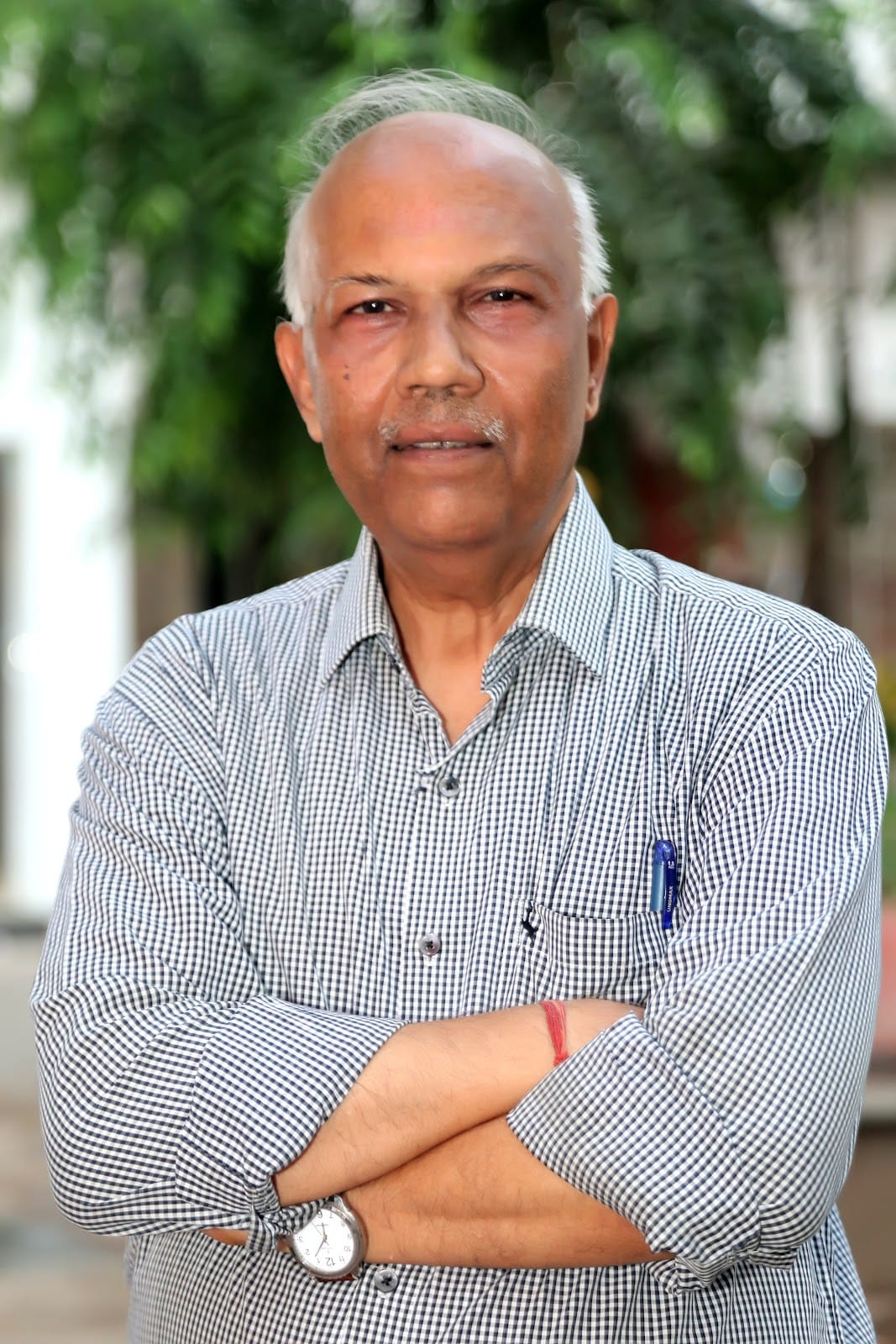
M.R. Narayan Swamy
Editor’s Note: M.R. Narayan Swamy is a senior journalist and author of several acclaimed books on South Asian politics and conflict, including Tigers of Lanka. He serves as the Consulting Editor of Jaffna Monitor.