
By ARULINIYAN MAHALINGAM
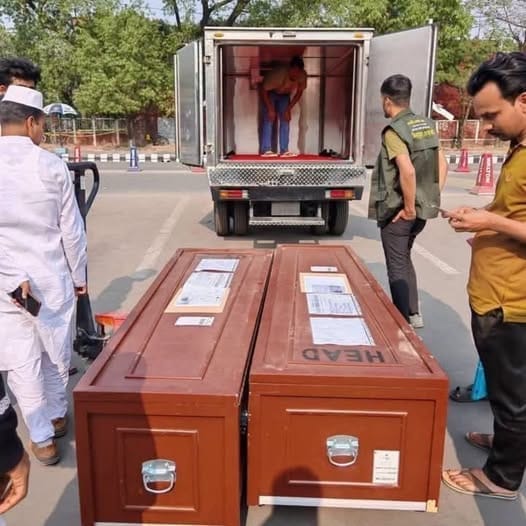
Saudi Arabia’s Interior Ministry announced on Oct. 14 that it had executed a Bangladeshi man and a woman in the Mecca region after a court convicted them of indecent acts inside a mosque. Bangladesh’s consulate in Jeddah learned of the executions after they had taken place.
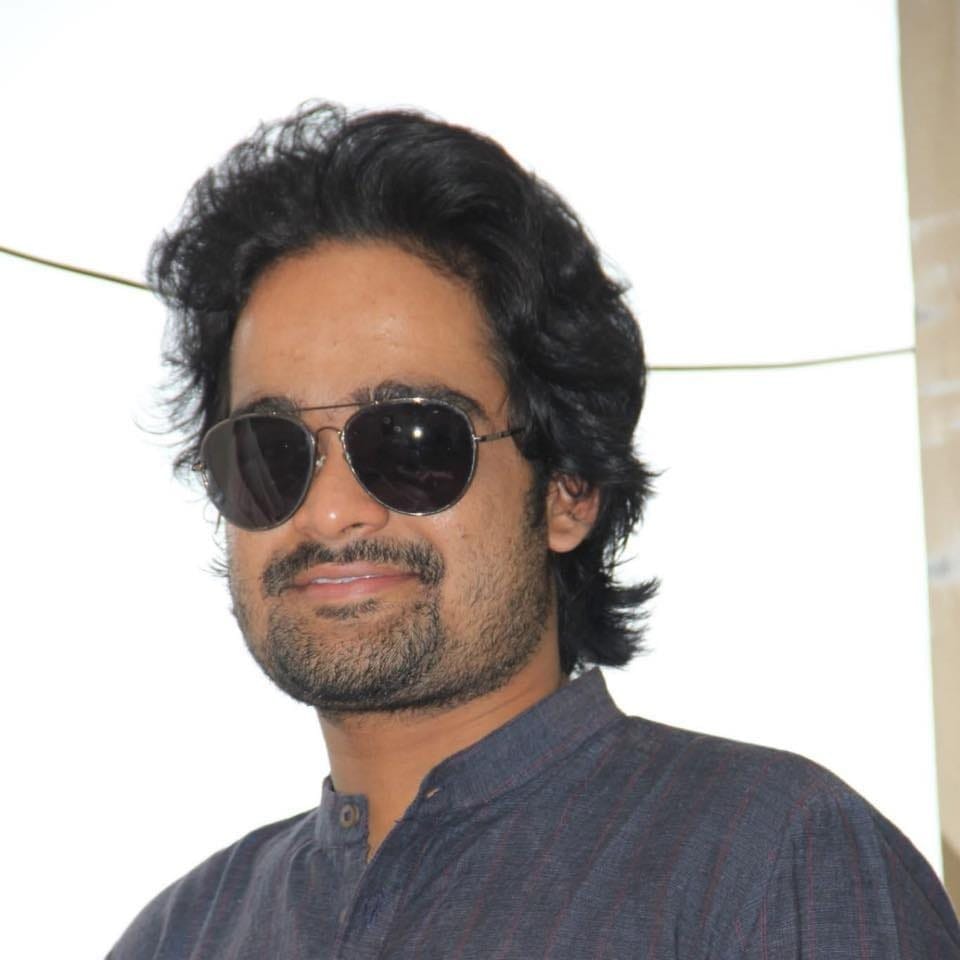
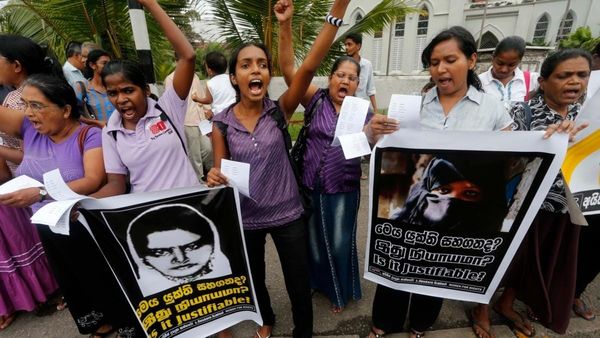
The day before, Saudi Arabia’s Supreme Court had set aside the death sentence of Sivarasa Anojan, a 24-year-old Tamil worker from Kalmunai in eastern Sri Lanka, who was condemned over a Facebook comment about the Prophet Muhammad. Sri Lanka had sent its own lawyers to Saudi Arabia, paid his family’s legal bills and enlisted the president in the appeal.
Neither case involved a killing. In both, the outcome depended in part on what the prisoner’s government knew and what it was able to do. Since King Salman took the throne in January 2015, the kingdom has executed more than 2,000 people. Of those, 845 were foreign nationals. They came from 34 countries in Asia and Africa, and one was American. No British, European, Canadian, or Australian citizen is among them.
Defendants with powerful protectors have fared differently. In 2003, King Fahd pardoned two Western men on death row after a personal appeal from Prime Minister Tony Blair of Britain. In 2020, the men convicted of killing Jamal Khashoggi, a Saudi journalist and Washington Post columnist, inside the Saudi consulate in Istanbul had their death sentences replaced with prison terms. Crown Prince Mohammed bin Salman, whom U.S. intelligence assessed as having approved the operation to capture or kill Mr. Khashoggi, has never been charged.
Saudi Arabia says its courts apply Islamic law to everyone. It publishes no figures on charges, convictions or sentences by nationality, so no one outside the government can test whether foreigners from poorer countries receive harsher sentences for the same crimes. United Nations human rights experts who reviewed individual cases have said the evidence leads them to presume that the death penalty is applied in a discriminatory way against foreign nationals in drug cases.
‘Humanly impossible’
The Saudi statement identified the two Bangladeshis as Nazerul Islam Abdul Basir and Siti Akhtar. A court sentenced both to death under ta’zir, the category of Islamic law in which no penalty is fixed and the punishment is left to the judge. Saudi law did not require their deaths. A judge imposed the sentence, an appeals authority upheld it and a royal order authorized the executions.
The statement did not describe the act, name the mosque, give a date of arrest or say how the two were put to death. Bangladesh’s mission in Saudi Arabia later told Dhaka they had been accused of adultery inside the mosque.
In September, the consulate in Jeddah had asked Saudi authorities for information about Bangladeshi prisoners in the region, according to The Daily Star, a Dhaka newspaper. The list it received covered about 2,500 people. Both names were on it, with nothing to indicate that either faced execution.
“It is humanly impossible for a mission to follow up on every case,” a Bangladeshi foreign ministry official told the paper. On Sunday, Bangladesh summoned the Saudi ambassador. About 3.5 million Bangladeshis live and work in Saudi Arabia.
Under international law, a state that detains a foreigner must tell the prisoner of the right to contact a consulate and must notify the consulate if the prisoner asks. It is not required to give notice before an execution. In October 2018, Saudi Arabia executed Tuti Tursilawati, an Indonesian housemaid who said she had killed her employer in self-defense against sexual abuse, without informing Indonesian diplomats or her family. A week earlier, the Saudi foreign minister had been in Jakarta for talks on the rights of migrant workers.
A decade of executions
Saudi Arabia executed at least 356 people in 2025, the highest number since monitoring began and a record for the second straight year, according to Human Rights Watch. Of those, 240 had been convicted of drug offenses that involved no killing, and 188 of the 240 were foreigners.
Amnesty International found that foreigners accounted for 75 percent of those executed for drug offenses in 2024 and 78 percent in 2025. Among foreigners executed on drug charges in 2025 through early October, the largest groups came from Somalia (38), Ethiopia (30), Pakistan (23), Egypt (16) and Afghanistan (12). In the first half of this year, the kingdom carried out 96 executions, 61 of them for drug offenses. Of those 61, 39 were foreigners, including seven Ethiopians and seven Pakistanis.
Reprieve, a British legal charity, found that from 2010 to 2021 Saudi Arabia executed nearly three times as many foreigners as Saudis for drug offenses, though foreigners made up 36 percent of the population.
Part of the gap reflects how the drug trade operates. Smugglers recruit poor foreigners as couriers, and couriers are the ones caught at the border. Several Ethiopian prisoners told Human Rights Watch they had been hired to carry packages without knowing what was in them. In one case documented this year, a smuggler forced a man to carry qat, a mild stimulant leaf, from Yemen as the price of getting him across the border.
The Arab Charter on Human Rights, which Saudi Arabia has ratified, restricts the death penalty to the most serious crimes. In a 2022 interview with The Atlantic, Crown Prince Mohammed said the kingdom had abolished the death penalty except for murder and for people who threaten many lives. Executions for drug offenses have increased since.
Minutes in court
Human Rights Watch said at least 17 Ethiopians had been executed for drug offenses this year by late July, some after hearings that lasted minutes, without a lawyer or an interpreter. Prisoners described group hearings held by video link, lasting under 10 minutes, where they signed documents they could not read. At least 79 other Ethiopians faced imminent execution, the group said. Amnesty International said in June that at least 63 Ethiopians held in one ward of a detention center in Khamis Mushait could be executed for drug offenses alone.
Who gets a pardon
Saudi Arabia has executed an American. In August 2023, it put to death Bishoy Sharif Naji Naseef, an Egyptian-American convicted of beating and strangling his father and mutilating the body. American diplomats had visited him the month before. He is the only citizen of a Western country recorded among those executed since 2015, and he was convicted of murder.
William Sampson, a Canadian, and Alexander Mitchell, a Briton, were sentenced to death for a 2000 car bombing in Riyadh that killed a British engineer. The main evidence against them was their confessions, which Saudi television broadcast before the trial. Both men said they had been tortured.
In August 2003, after Mr. Blair appealed personally to the Saudi royal family, King Fahd pardoned them and they were flown home. Saudi Arabia maintained that they were guilty. Adel al-Jubeir, then foreign affairs adviser to Crown Prince Abdullah, said the pardon had been granted to smooth relations with Britain. A British inquest later found no evidence that either man was involved in the bombing.
Ten years later, Sri Lanka’s president made a similar appeal. Rizana Nafeek, a housemaid from Muttur, had been arrested in 2005 after an infant in her care died. A recruitment agency had altered her passport to show her age as 23. Her birth certificate showed she was 17. She had no lawyer during her interrogation or at her first trial. President Mahinda Rajapaksa wrote to King Abdullah on Jan. 6, 2013, asking him to stay the execution. She was beheaded three days later.
The killing in Istanbul
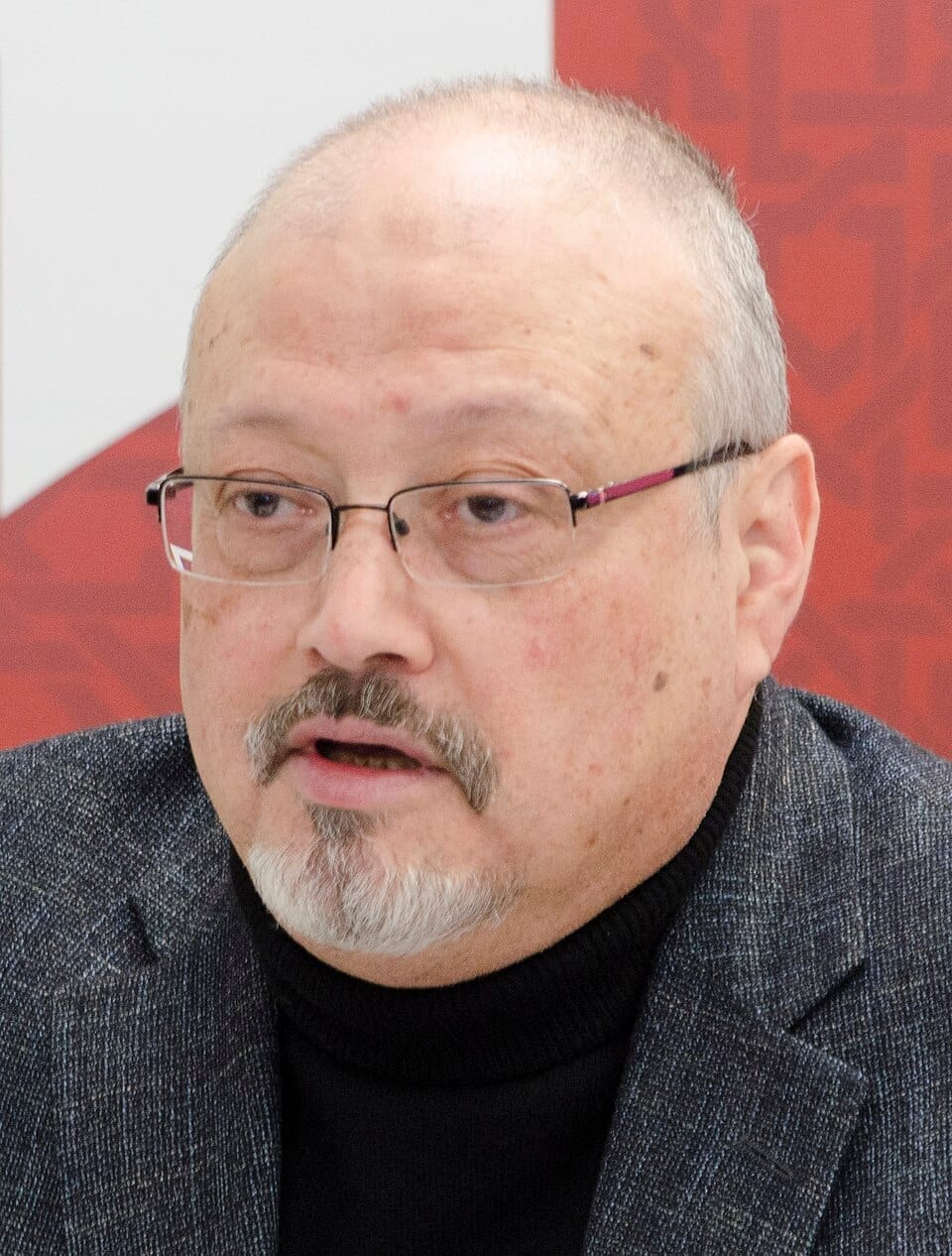
Jamal Khashoggi went to the Saudi consulate in Istanbul on Oct. 2, 2018, to collect documents he needed to marry. He was killed inside. His body was dismembered, and his remains have never been found. A United Nations special rapporteur concluded that he was the victim of a deliberate, premeditated killing for which the Saudi state was responsible.
U.S. intelligence assessed that Crown Prince Mohammed “approved an operation in Istanbul, Turkey to capture or kill” Mr. Khashoggi, citing his control over the kingdom’s security agencies and the involvement of members of his protective detail. Saudi Arabia rejected the assessment as “negative, false and unacceptable.” No court has found the crown prince responsible, and he has denied ordering the killing.
Saudi courts treat a killing that involves luring or deceiving the victim, known as ghila, as a hadd offense, one with a fixed penalty that the victim’s family cannot waive. The penalty is death. On Aug. 20, the kingdom executed a Yemeni man in the Eastern Province under that rule, citing deception, premeditation, and planning. Indonesian officials said Ms. Tursilawati was executed under the same rule in 2018. The International Bar Association reported that before the Khashoggi verdicts, his killing was widely expected to be tried as ghila.
In December 2019, a Riyadh court sentenced five men to death and three to prison. It found that the killing had not been planned and had occurred “at the spur of the moment,” although the Saudi attorney general had earlier described it as premeditated. That finding placed the case under the rules for ordinary homicide, which allow the victim’s heirs to forgive the killers. In May 2020, Mr. Khashoggi’s sons announced that they forgave them. In September 2020, the court reduced the five death sentences to 20 years in prison. Two other defendants received seven years and one received 10. None has been publicly named.
Charges were dismissed against Ahmed al-Asiri, the deputy intelligence chief whom the U.S. Treasury described as the ringleader, and against the Saudi consul general in Istanbul. Saud al-Qahtani, a senior adviser to the crown prince, was never charged.
Crown Prince Mohammed was named prime minister in September 2022. That December, a federal judge in Washington dismissed a lawsuit brought against him by Mr. Khashoggi’s fiancée, after the Biden administration said the new title gave him immunity. The judge wrote that there was a strong argument that the claims were meritorious. In November 2025, President Trump received the crown prince at the White House with cannon fire and a fighter-jet flyover, and told reporters he “knew nothing” about the killing.
Still waiting
By Monday, Bangladesh had not received a formal reply from Saudi Arabia about the executions or the trial that preceded them. Mr. Anojan remains in Dammam Central Prison. Saudi Arabia has not said whether the eight men convicted in Mr. Khashoggi’s killing are still in prison.