A government-backed community mobilisation programme has emerged as a political flashpoint in Sri Lanka's Northern and Eastern Provinces, with elected officials, political parties, and civil society groups warning that the initiative undermines constitutional governance and threatens to erode Tamil political representation at the grassroots level.
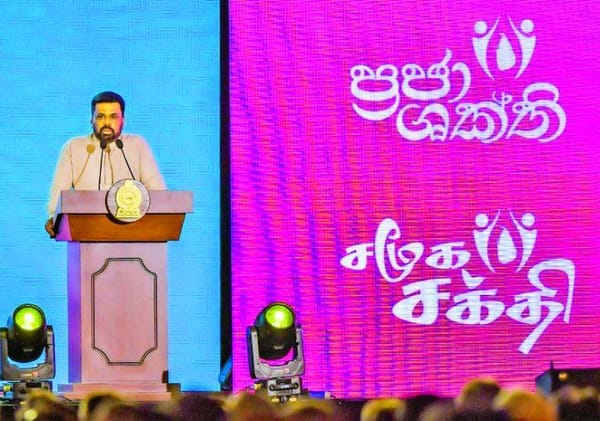
The Praja Shakthi (People's Power) programme, launched by the National People's Power (NPP) government and presented as a poverty alleviation initiative, has drawn sharp criticism from Tamil political leadership who characterise it as a partisan structure designed to bypass elected local authorities.
Constitutional Concerns Mount
The Ilankai Tamil Arasu Kachchi (ITAK), the largest Tamil political party, cited the programme as a principal reason for boycotting President Anura Kumara Dissanayake during his recent visit to Jaffna.
"Work that should be carried out by elected local authorities cannot be undertaken by a party machinery masquerading as a development programme," said M. A. Sumanthiran, ITAK's Acting General Secretary. He argued that functions constitutionally assigned to local government bodies cannot be legitimately transferred to what he described as a party-controlled mechanism.
The Point Pedro Pradeshiya Sabha has formally rejected the programme through a council resolution.
Douglas Devananda, former minister and secretary-general of the Eelam People's Democratic Party (EPDP), warned that, rather than strengthening local councils, the initiative effectively transfers power from elected institutions to a party-controlled apparatus. "This could undermine local government bodies and weaken their authority," he said.
Filling a Political Vacuum
Critics point to a critical context: Provincial Councils in the Northern and Eastern Provinces have remained non-functional for years, creating an administrative vacuum that the central government now appears positioned to fill through party-linked structures.
Suresh Premachandran, spokesperson for the Tamil National Alliance (TNA), noted that local councils fall under the purview of Provincial Councils. "With Provincial Councils remaining non-functional, the government is using Praja Shakthi to fill the resulting administrative vacuum with party-linked structures," he said.
This institutional void has made Tamil-majority regions particularly vulnerable to what critics characterise as political engineering disguised as development work.
Parallel Administration Allegations
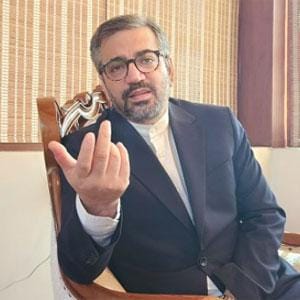
S. A. Jothilingam, a political analyst and lawyer who serves as Director of the Centre for Social Science Research, described Praja Shakthi as functioning as a parallel administrative structure in areas where the NPP lacks control over local government.
"This structure has been created specifically to undermine local government institutions in Tamil-majority areas," Jothilingam said at a media briefing in Jaffna. He alleged that Praja Shakthi leaders are selected by Janatha Vimukthi Peramuna (JVP) cadres—the Marxist party that forms the core of the NPP coalition—rather than elected by communities.
According to Jothilingam, only individuals loyal to the ruling party are appointed, circumventing democratic selection processes. He cited media reports indicating that when the President visits an area, Grama Niladharis (village officers), Samurdhi officers (a government poverty programme), and Praja Shakthi organisers are directed to mobilise public attendance.
"The JVP's long experience in grassroots mobilisation gives it a strategic advantage," Jothilingam acknowledged, "but Tamil political forces must recognise the long-term risks."
Strategic Grassroots Penetration
Local activists allege the programme represents a calculated effort to establish permanent grassroots networks with administrative influence in regions where the ruling coalition lacks electoral support.
"With the label of poverty alleviation, the government is constructing a party-controlled structure at the village level," said one local activist who requested anonymity. "This seriously undermines Sri Lanka's Constitution and electoral system."
The concern centres on whether Praja Shakthi organisers function as community development coordinators or as political operatives building partisan infrastructure at the most local level of governance.
Government's Position
The NPP government officially describes Praja Shakthi as a poverty-alleviation and community-development initiative targeting marginalised communities. The programme coordinates village-level development activities and community mobilisation through local organisers.
Government officials have not yet issued a detailed response to the specific constitutional and political objections raised by Tamil political parties and civil society groups.