
Dr. Shane Halpe
At the reception area of Green Memorial Hospital, Manipay, a mother waits patiently while her child attends therapy. Around her, the atmosphere is calm but purposeful. In nearby rooms, children play, draw, move, listen, imitate, and learn. To an outsider, these may look like simple childhood activities. But for the children and families who come here every week, each sound, word, gesture, and small act of participation carries deep meaning.
Mrs. Priya, a teacher whose name has been changed to protect her privacy, remembers when she first became concerned about her son. He was around two years old when she noticed that his speech was delayed and that he was unusually hyperactive. Later, at the Teaching Hospital, Jaffna, a pediatrician diagnosed autism spectrum disorder and referred him to the Pediatric Neurodevelopment Clinic at Green Memorial Hospital.
Since then, she has been bringing him regularly for therapy.
“The staff are very friendly, kind, and understanding,” she said. Over time, she has seen gradual but significant improvements in her son’s speech and behaviour. The regular visits have brought visible benefits, and she remains hopeful that, with continued support, he will keep progressing.
Her story reflects the quiet work taking place through the Pediatric Neurodevelopment Programme conducted by the Family Health Centre at Green Memorial Hospital. The programme supports children with autism and other developmental challenges, while also guiding and empowering their parents. It is offered free of charge to Sri Lankan families and is conducted for two hours a day, five days a week. So far, 18 children and their parents have benefited from this service.
During a visit to the clinic, I had the opportunity to speak with Dr. S. Christine Kajana, the Clinical Coordinator of the Pediatric Neurodevelopment Clinic. Her words reflected not only the structure of the programme, but also the patience and compassion required to support children with developmental needs.
“We mainly support children with neurodevelopmental delay, autism spectrum disorder, attention difficulties, learning disabilities, speech delay, and motor developmental challenges,” Dr. Kajana explained.
According to her, the challenges faced by children are commonly seen in three broad areas: self-care, socialisation, and learning. The clinic addresses these through early screening, appropriate guidance, continuous support, and structured play-based activities.
The heart of the programme is play. But this is not ordinary play. Every activity is carefully planned to help a child develop a particular skill. Through play, children are encouraged to improve gross motor skills, fine motor skills, life skills, creative skills, communication, and pre-learning abilities. At the same time, parents observe, learn, and receive guidance on how to support their children at home.
Inside the clinic, different spaces have been created for different aspects of development. These include a pre-learning room, a speech and communication room, a life skills room, a dance and indoor games room, and a sensory room. Each room has a purpose. Some children are encouraged to communicate, some are supported to improve attention and learning readiness, while others gain confidence through movement, music, dance, and interaction.
Children learn simple daily activities such as brushing, grooming, and feeding through structured routines and play. Games, physical training activities, and dance encourage gross motor skills and balance. The program supports social interaction through drama, storytelling, music, group play, and verbal and non-verbal communication games. These activities help children gradually learn how to wait, respond, imitate, participate, and interact with others.
Pre-learning activities are also an important part of the programme. Children practice handcrafting, drawing lines and curves, colouring, and using different materials such as sand, paper, chalk, pencils, markers, brushes, and sponges. These activities may appear simple, but for a child with developmental challenges, they can be important steps towards attention, hand control, early writing readiness, and independence.
The outdoor environment is equally meaningful. The clinic has access to a sensory park, playground, garden, mud play area, and a sensory garden. Different textures and outdoor experiences help children gradually overcome sensory difficulties, improve balance, explore their surroundings, and gain confidence. More recently, cycling has also been introduced as part of the external activities.
“For many children, cycling was completely new,” Dr. Kajana recalled. “But with training and encouragement, they slowly learned. Watching them ride was a very happy moment for us.”
The clinic functions from Monday to Friday, from 3.00 pm to 5.30 pm. Additional developmental activities are also conducted on Saturday mornings from 9.30 am to 12.30 pm. The programme combines play therapy, applied therapeutic activities, group interaction, parent guidance, and periodic assessment.
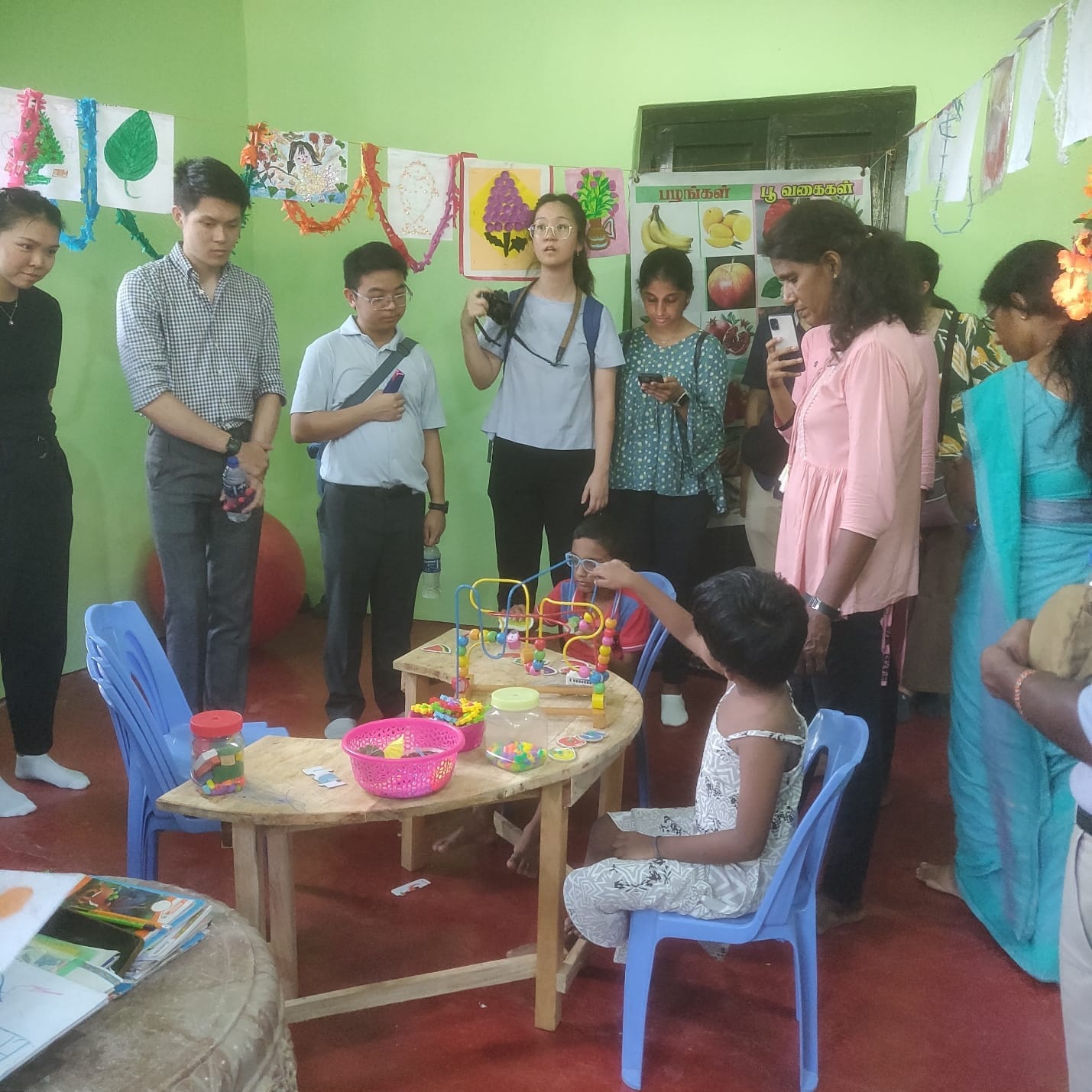
The journey of the clinic began in 2018 at the Kondavil Family Health Centre. In 2021, it moved to Green Memorial Hospital. Initially, services were carried out in an older section of the hospital, and on 5 September 2024, the clinic shifted to its current new building. Since then, it has continued to expand its role in supporting children and families in the region.
Dr. Kajana’s own journey into this work has shaped her approach. She completed her Bachelor of Siddha Medicine and Surgery and later obtained a diploma in counselling. With an interest in child development and psychological support, she became involved in the programme as Clinical Coordinator and is also pursuing further training in clinical psychology.
Her counselling background is evident in the way she speaks about the children. She does not describe them only in terms of symptoms or diagnoses. She speaks of their potential, their progress, their families, and the teamwork needed to help them move forward.
One of the most joyful parts of her work is seeing children improve over time.
“Some children come without speech, or with only one or two words,” she said. “With daily training, they may start making sounds, then one word, then two words, then short phrases. These small improvements are very important.”
Speech delay is one of the commonest concerns among children attending the clinic. Many children arrive with limited communication. Some are unable to speak at all, while others use only a few words. Through structured communication activities, repetition, play, and encouragement, the team helps children gradually build their ability to express themselves.
The clinic also conducts a special Monthly cultural programme on the last Saturday of every month. These events give children exposure to social gatherings in a supportive environment. Children perform dances, dramas, and songs, sometimes independently and sometimes with minimal support from coaching assistants. These moments are more than performances. They are opportunities for children to experience confidence, social participation, and joy.
In January, the clinic celebrated a sports meet. In March, children took part in a cycling event connected to the Junior Charity Riders celebration. For the clinic team and parents, such events are reminders that progress is not always measured only through clinical assessment. Sometimes, it is seen in a child standing on stage, joining a group activity, riding a bicycle, or smiling with confidence.
The programme also recognises that child development is closely linked to nutrition and family wellbeing. Healthy snacks are provided at the end of play sessions to encourage better eating habits and introduce nutritious foods. Periodic assessments are conducted to monitor each child’s development, with the involvement of a specially trained Paediatric nurse and Registrar/ Family Medicine.
Parents are central to the programme. Periodic parental empowerment workshops are conducted to improve understanding of autism care, stress management, and ways of dealing with social stigma. These sessions also provide space to discuss parents’ own health problems and emotional burden. In addition, monthly individual parent meetings are organised with a consultant family physician, giving families an opportunity to discuss progress, clarify concerns, and receive continuous guidance.
The work, however, is not without challenges. Some children may be hyperactive, distressed, or easily irritated. At times, behaviour can be difficult to manage. Dr. Kajana explained that such moments require patience, vigilance, teamwork, and experience. The clinic’s work depends not only on structured activities but also on the calm, consistent presence of a multidisciplinary team.
Children are referred to the clinic through paediatricians, psychiatrists, Medical Officer of Health areas, and nursery teachers. Some parents come after hearing about the service from other families whose children have benefited. This word-of-mouth trust has helped the programme become an important community resource.
A particularly important feature of the programme is that its services are offered free of charge to Sri Lankan families. This valuable service is sustained through the generous support of several committed organisations and well-wishers, including Friends of Manipay Hospital, the Institute of Medical Sciences, and Ride for Ceylon. Their continued funding and encouragement have enabled the Family Health Centre to provide structured developmental activities, parent support, nutrition-related care, assessments, and therapeutic play sessions free of charge to children and families who need them most.
For Dr. Kajana, one message to parents is especially important: early identification matters.
“If concerns are noticed early, children should be brought for assessment as soon as possible,” she emphasised. “Early support can make a meaningful difference.”
She also reminded parents to follow the Child Health Development Record carefully. Developmental milestones should not be ignored. If a baby does not smile at the mother’s face by around six weeks, or if there are concerns about speech, eye contact, social interaction, behaviour, play, or learning, parents should seek medical advice early.
The Paediatric Neurodevelopment Programme at Green Memorial Hospital is a reminder that developmental care is not only about treatment. It is about patience, repetition, encouragement, family support, and creating the right environment for children to grow.
For parents like Mrs. Priya, the clinic is a place of reassurance. For children, it is a place where play becomes therapy, routine becomes learning, and small steps become major milestones. For the wider community, it stands as a hopeful example of what can be achieved when healthcare, family support, and compassionate service come together.
In the daily life of this clinic, one message is clear: with early detection, structured support, parental empowerment, and committed care, children with developmental challenges can make meaningful progress. For many families in the North, this programme has become a place of guidance, relief, and hope.