JAFFNA, Sri Lanka — March 26 — A herd of wild elephants that suddenly appeared in farmland in the Vadamarachchi East area of Jaffna this week has ignited fresh accusations that Sri Lanka’s wildlife authorities may be using animals to strengthen claims over disputed territory.
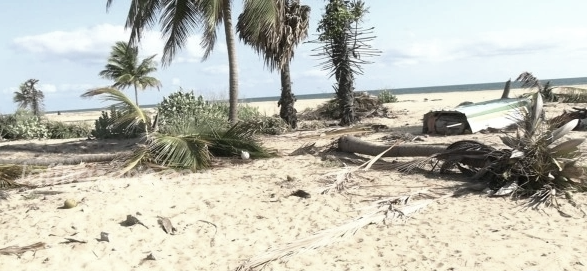
Residents and a local Catholic priest said the elephants destroyed at least 36 coconut trees in the Kattaikadu–Keavil area earlier this week, describing the incident as unprecedented in a region with no historical record of elephant habitation.
“There are no dense forests here, no reliable food sources, and no natural migration routes that could explain how these animals arrived,” said Rev. Vasanthan, the parish priest of Kattaikadu, who visited the damaged farms. “It is very difficult to believe this happened by natural means. People are asking serious questions.”
One affected farmer, whose coconut grove was ravaged, pointed to an army camp located barely 50 meters from the site. “The soldiers told us they knew nothing about the elephants coming,” he said. “How does a herd of more than five elephants simply walk into an area like this without anyone noticing?”
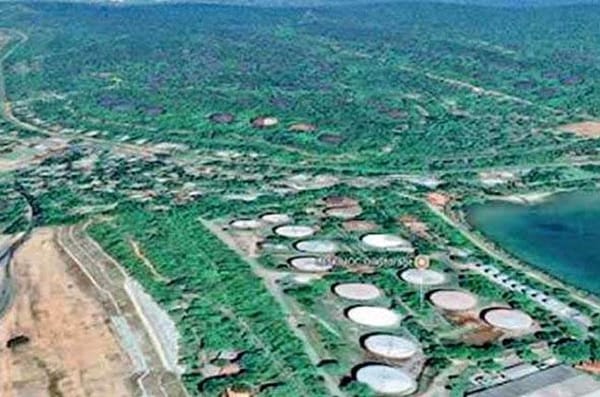
The incident has sharpened long-simmering grievances over a large stretch of land from Kattaikadu to Chundikkulam that was designated part of Chundikkulam National Park. Many residents view the protected status as an effective seizure of ancestral properties they were forced to abandon during the country’s long civil war.
“These are not virgin forests,” said Kanthasamy, a local resident. “When people flee war and leave their lands for decades, the vegetation grows back. That doesn’t mean the land was always wilderness or that it should now be taken from us forever.”
Chundikkulam Lagoon and its surroundings were first declared a bird sanctuary in 1938. After the civil war ended in 2009, the government significantly expanded conservation areas in the Northern Province. A 2014 environmental assessment supported by the United Nations recommended enlarging the sanctuary and upgrading it to national park status. In June 2015, the area was formally gazetted as Chundikkulam National Park, expanding to nearly 20,000 hectares by incorporating adjacent state lands.
Wildlife officials have described such expansions as essential for biodiversity protection and habitat restoration in a country that has lost much of its natural cover. But in Tamil-majority areas of the north and east, communities have repeatedly challenged the moves, arguing that many “protected” zones include privately owned or historically inhabited lands that reverted to bush during years of displacement.
Rev. Vasanthan said the sudden appearance of elephants appeared designed to bolster the wildlife designation.
“There is a strong belief among the people that these elephants were brought here deliberately to justify the national park and to keep residents away from their own lands,” he said.
He called on the government to revoke the relevant gazette notifications and restore the land to its original owners.
“The people must be allowed to return to their ancestral properties, to live peacefully and to earn their livelihoods without fear,” the priest added. “They have already suffered enough through decades of war and displacement.”
Officials from the Department of Wildlife Conservation and the military had not responded publicly to the allegations as of Thursday.
Wildlife experts note that elephants have been known to expand their range in search of food, particularly in disturbed or regenerating ecosystems, though no such movement has previously been documented in this area.