COLOMBO, Sri Lanka — March 24 — Iran’s ambassador to Sri Lanka said Monday that Sri Lankan naval authorities had invited Iranian vessels — including the ill-fated IRIS Dena — to visit the island, reinforcing an account first reported by Jaffna Monitor earlier this month.
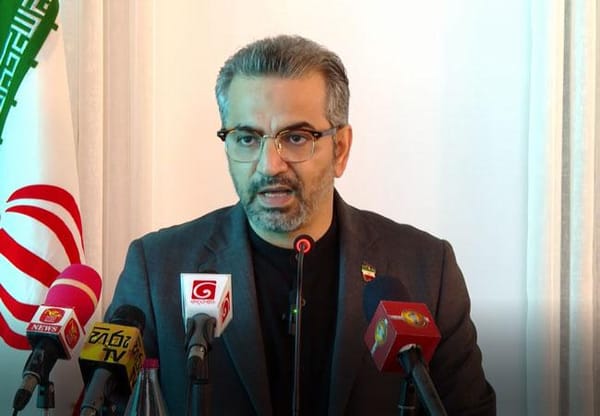
Speaking at a media briefing in Colombo on March 23, the ambassador, Dr. Alireza Delkhosh, said the invitation was extended during MILAN 2026, a multinational naval exercise held in Visakhapatnam, India.
“During the exercise in India, your navy commander invited — I repeat, invited — the Iranian Navy to send these vessels to Sri Lankan waters for friendly visits,” Mr. Delkhosh said, adding that the invitation covered three ships: IRIS Dena, IRIS Boshehr, and IRIS Lavan.
He said the IRIS Dena had taken part in a “peaceful exercise” and was not on a combat mission when it set course toward Sri Lanka.
“While in India, this vessel, along with two others, was invited by the Sri Lankan side to come here and remain,” he said. “They came in response to that invitation.”
The remarks support a timeline first reported by Jaffna Monitor, which said the IRIS Dena had been sailing toward Sri Lanka following an invitation conveyed during the naval gathering.
The frigate, commissioned in 2021, was struck by a United States submarine south of Sri Lanka on March 4. Iranian officials say more than 100 sailors were killed. Sri Lankan authorities rescued several survivors and brought them ashore for treatment.
Mr. Delkhosh said the vessel had received no prior warning before the attack and that many of those killed were not combat personnel.
“Most of those killed were not armed personnel,” he said. “They were members of a music group, playing instruments such as the saxophone and violin.”
Sri Lankan navy sources who spoke with Jaffna Monitor described the interaction between the two navies as informal and not formalized through official channels. One source, speaking on the condition of anonymity, said the navy commander who attended the event may have extended an invitation, but that it was likely informal and not followed up in writing.
President Anura Kumara Dissanayake said last week that Iran had formally requested permission on Feb. 26 for three naval vessels to enter Sri Lankan ports between March 9 and 13, describing the proposed visit as part of efforts to enhance cooperation. He added that the vessels were later located near, but outside, Sri Lanka’s maritime zone.
Jaffna Monitor has previously reported that the vessel remained in waters south of Sri Lanka for several hours after being denied entry, following what sources described as a shift in Colombo’s position amid rising tensions between the United States and Iran.
Asked about reports that the ship had sought urgent entry before the attack, Mr. Delkhosh said he did not have confirmed information but stressed that countries have a humanitarian obligation to assist vessels in distress.
“If so, absolutely any country — there is no difference between neutral or not — all countries have responsibilities, even from a humanitarian point of view, to give help,” he said.