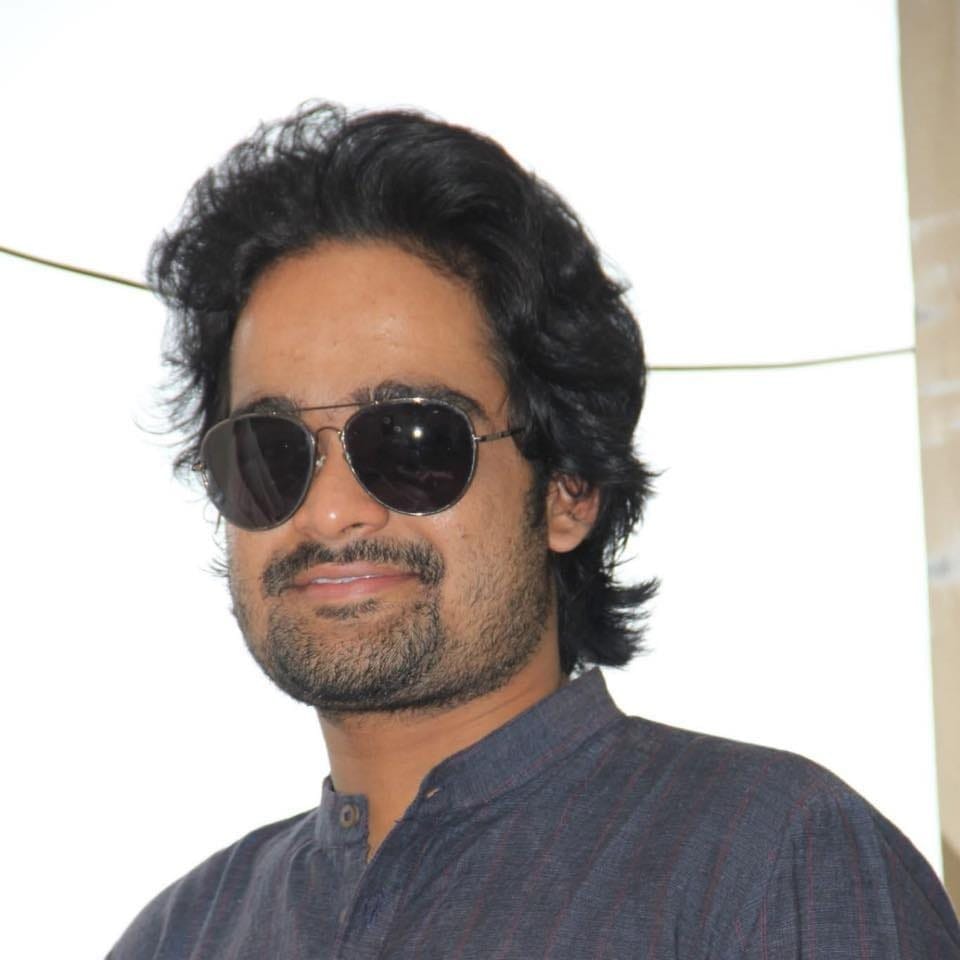

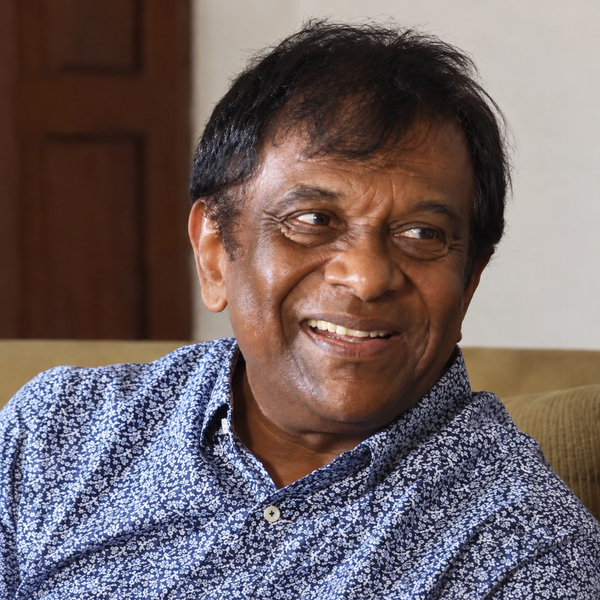
By Aruliniyan Mahalingam
Lionel Bopage was General Secretary of the Janatha Vimukthi Peramuna (JVP) from 1978 to February 1984. After the failed insurrection of April 1971, he was the second accused in the main trial before the Criminal Justice Commission, and he spent much of the next seven years in Welikada prison alongside the party's founder, Rohana Wijeweera. Together they drafted the JVP's policy declaration. The sections dealing with the Tamil-speaking people of the north, the east and the plantations, including the party's acceptance of the Tamil people's right to self-determination, were largely his work.
In July 1983, the JVP Central Committee voted to drop that commitment. Bopage was one of two members who voted to keep it. He resigned months later. During the second JVP insurrection and the state's counter-campaign of 1987 to 1989, he was threatened by both sides, and he left Sri Lanka, eventually settling in Australia.
The JVP now forms the core of the National People's Power (NPP), whose leader, Anura Kumara Dissanayake, won the presidency in September 2024. Bopage spoke to Jaffna Monitor during a recent visit to Jaffna.
Returning to Jaffna
You have rarely spoken to a Jaffna-based outlet. How often have you been back since the war ended, and what brings you here now?
This is my third visit to the Jaffna Peninsula since 2009. The first time, I came to see old comrades who were unwell and needed help. The second was in 2024, during the presidential election. I had not come to Sri Lanka for the election, but I was here when it was called, so I decided to support Anura Kumara Dissanayake and came to Jaffna to campaign for him.
This time I came to launch a book, Songs of Liberation. While I was here, my old comrade Professor Athula Sumathipala, who was associated with the JVP for many years, suggested we visit Jaffna. I wanted to see the place again. Most of our comrades from this area now live abroad.
A Political Upbringing
You were an engineering student at the University of Peradeniya. What drew you into politics?
I grew up in a politically active family. My father was a member of the Communist Party in the 1950s, and our home was always full of people discussing politics. From an early age, I read widely about political issues.
As a child, I wanted to become an engineer. But by Grade Seven or Eight, I was also involved in the Communist Party's student wing. I regularly read Mawbima, the Communist Party's weekly; Samasamajaya, the weekly of the Lanka Sama Samaja Party (LSSP); and New World, a magazine published by the Venerable Udakendawela Saranankara Thero, who was then on the Communist Party's Central Committee.
These publications opened my mind. They helped me understand why people suffered, why inequalities existed and how society could be changed for the better. Gradually I became convinced that Marxism offered the way forward.
You have a Christian name. Were you born a Christian?
No, I was born a Buddhist. I attended the Dhamma school at our local temple and studied Pali. But around 1958, while I was still at school, I became an atheist.
That does not mean I am hostile to religion. I still visit temples and churches when I accompany others. People have a democratic right to practise whatever religion they choose, or to have none. We must respect that freedom and be tolerant of one another.
What made you move away from the Communist Party?
Over time we became disillusioned. We felt the party was no longer genuinely working towards socialism. Many of its leaders, particularly in the trade union movement, had become dependent on the Soviet Union for their sustenance. We began to question whether their priority was building socialism in Sri Lanka or keeping their own positions.
Then came the Sino-Soviet split. At the time we understood it largely as an ideological dispute between Moscow and Peking. Only later did I appreciate that other factors were involved, including territorial disputes and the struggle for leadership of the world communist movement.
We gravitated towards the pro-Chinese faction, commonly known as the Peking wing, led by N. Shanmugathasan. I joined its student wing.
Shanmugathasan was a Tamil. Were young Sinhala communists comfortable with a Tamil leader?
Yes, absolutely. There was that tolerance among us. Ethnicity was no obstacle to accepting someone as a political leader. Before Shanmugathasan, we had followed Dr. S. A. Wickremasinghe, whom I still regard as a genuine leader.
But eventually we became disillusioned with the Maoist party as well. We came to believe its leaders, too, were more concerned with sustaining themselves than with advancing the socialist cause. In that respect we saw little difference between the Moscow and Peking factions.
Where did that leave you?
By then I was studying engineering at Peradeniya. Several of us felt we needed to think independently rather than simply follow Moscow or Peking. We wanted to understand Sri Lanka's own social and economic conditions and build a revolutionary movement suited to them.
At Peradeniya we were involved in the Socialist Society, the Samajavadi Sangamaya, which was not affiliated with either communist faction. One day a man known to us as Loku Mahattaya came to address the society. He spoke about the country's economic crisis, the failures of the established left, whether the independence we had obtained from Britain was independence in any meaningful sense, and how a revolution could be carried forward under Sri Lankan conditions. I later came to know him as Rohana Wijeweera.
I found his arguments more convincing than anything I had heard from the established communist leadership.
Was it his personality or his ideas?
Primarily the ideas, although he was certainly a convincing speaker.
The Communist Party placed enormous emphasis on theory. We were taught dialectical materialism, historical materialism and the ideological foundations of Marxism. Those were important, but much of the discussion stayed abstract.
Wijeweera spoke about the problems ordinary Sri Lankans faced every day: the hardships of farmers, industrial disputes, the struggles of trade union workers, youth unemployment, the lack of access to land and water. He connected Marxist ideas to the actual conditions of our society. He seemed to be addressing the questions that mattered to the people around us, rather than repeating theories developed elsewhere.
"The Movement"
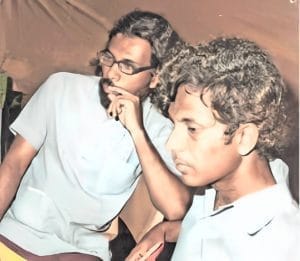
How did concern about poverty and inequality lead you to believe armed revolution was necessary?
We were not looking at Sri Lanka in isolation. We were deeply influenced by what was happening internationally, particularly the interventions of the United States and the CIA in developing countries. As I recall, we discussed how some 52 governments in Asia, Africa, and Latin America had been overthrown, directly or indirectly, with CIA involvement. Many elected governments had been replaced by military regimes or removed through foreign intervention.
Patrice Lumumba in the Congo was one of the most prominent examples we discussed. His overthrow and assassination showed us what could happen to leaders who challenged powerful foreign interests. Later, the assassination of Thomas Sankara in Burkina Faso provided another example.
Indonesia was particularly important to our thinking. In 1965 and 1966, around 20 lakh people, two million, were killed. Sukarno was president, and the Indonesian Communist Party, led by D. N. Aidit, was among the strongest communist parties in the world. We understood those events as an operation in which the CIA worked through the Indonesian military, with Suharto eventually emerging as president. For us, Indonesia showed how a powerful communist movement could be destroyed when the military and foreign powers turned against it.
Did you see a similar danger in Sri Lanka?
Yes. Dudley Senanayake was Prime Minister, and J. R. Jayewardene was a minister in his government. Jayewardene was strongly pro-American, which earned him the nickname "Yankee Dickie." I remember him saying at a public meeting that elections should be suspended for 20 years. Statements like that reinforced our fears about the future of parliamentary democracy.
We had already lost confidence in the established left. Although we had broken away from the Peking faction organisationally, our thinking was still heavily influenced by Maoism. Looking at Indonesia, at the CIA's role in overthrowing governments and at developments in Sri Lanka, we came to believe that the parliamentary path to socialism would not succeed. Those who held power would not surrender it peacefully, and a socialist revolution would ultimately require armed struggle.
Did the JVP exist at that point?
No. We were simply known as "the Movement." The name came later. But we already had a structure: a higher committee of 21 members, five or six people above it functioning as a political bureau, and district organisations below.
The Cuban Revolution was a major inspiration. A relatively small group of fighters had overthrown a pro-American government. Most of us had broken away from the Communist Party or the LSSP. Rohana and I both came from the Communist Party. There were at least six other groups with similar ideas at the time, including Peradiga Sulanga (Eastern Wind) and Ginipupura (The Spark). All were committed to armed struggle.
We believed the state would eventually use violence against us, and so we had to be prepared to respond with violence. It was essentially the same reasoning the Tamil militant movements adopted later.
Within a couple of years, we had built an organisation stronger than either the Communist Party or the LSSP. That created considerable jealousy, and they began accusing us of being CIA agents. Aththa, the Communist Party newspaper, even ran a headline claiming the CIA was behind our movement and recruiting young people. By the end of the 1960s, though we still had no formal name, we had become the third-largest political force in the country. Most students at the Vidyalankara and Vidyodaya campuses supported us.
There was another reason for our break with the established left. During the 1960s, the trade unions had put forward 21 demands. At the height of that campaign, Mrs. Sirimavo Bandaranaike's Sri Lanka Freedom Party (SLFP) invited the leaders of the LSSP and the Communist Party into a political front. They accepted and abandoned the demands. For us, that was a betrayal of working people. Workers needed an independent political movement that would not abandon their interests.
How did the Movement become the JVP?
Before the May 1970 general election, Rohana Wijeweera was arrested. We organised an island-wide poster campaign overnight demanding his release. The posters appeared everywhere except the Northern and Eastern Provinces. But we needed a name to put on them, so the Central Committee decided to call the organisation the Janatha Vimukthi Peramuna. Rohana Wijeweera was in prison at the time. He did not choose the name.
In that election, the United Front of the SLFP, the LSSP and the Communist Party presented a manifesto that was progressive for its time. It promised, among other things, to nationalise the banks and the plantations. We supported the United Front, and some of our members spoke at its meetings. It won a two-thirds majority, and Rohana Wijeweera was released.
Our position was simple: we would support the government as long as it fulfilled its promises. But in his first budget speech, the Finance Minister, Dr. N. M. Perera of the LSSP, declared that none of them could be implemented.
At our first public meeting, at Hyde Park in Colombo, we said that if the government honoured its manifesto, we would support it, and if it did not, we would oppose it. On the day of that meeting, the general secretaries of the three coalition parties issued a joint statement declaring the JVP "public enemy number one" and calling for its elimination.
By elimination, did they mean killing its members?
Yes. And remember, at that point the JVP had not been involved in a single act of violence.
The following day, the Secretary to the Ministry of Defence, who was a Tamil official, repeated the same position at a press conference. No reason was given. Through contacts in the Attorney General's Department, we learned that legislation was being drafted to suppress us, by a committee headed by the Communist Party leader Pieter Keuneman.
Then the repression began. Anyone selling our newspaper could be arrested, tortured and remanded for two weeks. Printing presses were warned not to print our publications. The constitution guaranteed freedom of association; we did not need police permission to meet, at home or in public. Yet whenever we gathered, whether five of us or 125, the police would surround us, arrest us, torture us and have us remanded.
What justification did the government give? Did it even claim the JVP was a threat of violence?
Nothing of the sort. It was anti-communism, and ironically the communist parties themselves were taking part. Similar things had happened elsewhere. In Cuba, the Communist Party opposed Fidel Castro during the revolution.
Under those circumstances, collecting weapons began to seem like a natural response. Our thinking was still influenced by Maoism: if the enemy was preparing to attack us, we should strike first.
April 1971
Where did the weapons come from?
They were very rudimentary. We bought pistols from whoever would sell them. We also had gal katas, locally made guns. Later there were attempts to manufacture hand bombs, but they were unreliable. That was one of the reasons for our eventual failure.
It became a vicious cycle. The security forces repressed us, so we collected weapons. The police seized them, and the repression intensified. By February and March 1971, the situation was extremely tense.
We wanted to explain to the SLFP leadership that the Communist Party and the LSSP were conspiring to destroy us. We hoped the government could still be persuaded to change course. Rohana tried to arrange a meeting through Sunethra Bandaranaike, Mrs. Bandaranaike's elder daughter, using mutual friends as intermediaries. The meeting never took place.
Then came the turning point. In March 1971, the Maoist Youth Front, a group that had emerged from the Communist Party and the Dharmasekara group, organised a demonstration outside the American Embassy, demanding that the embassy stop supporting the JVP. During the demonstration, a police inspector was stabbed to death.
Was there any truth to the claim that the Americans were supporting the JVP?
None whatsoever. It was a complete lie.
Did the group behind the demonstration have links to the government?
Yes, through T. B. Ilangaratne, the Minister of Trade.
That same day we issued a statement making clear we had nothing to do with it. But the government immediately blamed the JVP and proscribed the party. It was similar to what happened in July 1983. Rohana was arrested shortly afterwards, I think on March 13, and taken to Jaffna prison.
Around March 18, the government introduced emergency regulations allowing the security forces to dispose of bodies without post-mortem examinations. We went to see Edmund Samarakkody and Bala Tampoe to discuss how to secure Rohana's release. They told us this was no longer simply a political matter. The British had used such powers during the uprisings of 1818 and 1848, but no government had resorted to them since. To us, the implication was clear: the government intended to kill. By the end of March, according to Bala Tampoe, between 3,000 and 4,000 of our members were already in custody.
Our initial decision was not to attack. But the pressure from members at the grassroots was enormous. Members in Badulla, Polonnaruwa, Anuradhapura, Matara and Hambantota told us they could no longer survive in their villages. The police were hunting them down and shooting at them. Many had fled into the forests. Under that pressure, the Central Committee decided to attack police stations on April 5, seize their weapons, withdraw, and continue fighting.
Wijeweera was in prison. Did the order come from him?
Two people arrested with him were later released, and they brought us a message from Rohana: if we could no longer withstand the repression and decided to attack, we should send people to free him from prison.
Were you personally convinced that an uprising was right?
Not completely.
From January to March, I had been working in the Matale district, because we knew repression was coming. We were setting up what we called protective villages, places in the forests where members pursued by the security forces could take refuge. I was organising one at Akarahadiya, Naula.
Around March 21, we learned that Rohana had been arrested. When I later assessed our strength in Colombo, I found only a few people armed and ready. At the meeting on April 2, I reported that an attack in Colombo was impossible. We did not have enough people or equipment. But Nimalasiri Jayasinghe, known as Loku Athula, a leader of the other faction, promised to bring 1,000 fully equipped members from Kegalle.
That turned out to be a lie. Nobody came.
What went wrong on April 5?
By then, there were two main factions in the party, with considerable mistrust between them. Rohana's message brought both sides together on April 2, where we agreed to attack at 11:30 p.m. on April 5. But the Wellawaya police station was attacked before dawn that day, several hours ahead of the agreed time.
The other faction had decided to go on the offensive before the April 2 meeting. The timing was changed, but that decision never reached all their members. Once Wellawaya was attacked, we lost the element of surprise. A curfew was imposed in Colombo, and every police station was put under military protection. There was no possibility of an attack in Colombo.
Was the early attack on Wellawaya deliberate sabotage?
We simply do not know. The other faction had decided to attack earlier, probably for much the same reasons that had led us to consider armed action. I do not want to blame one side. Even on April 2, there were people in both factions who wanted to attack immediately. There was confusion over the timing, and the revised instructions did not reach everyone.
Other things contributed. We had small groups of supporters in the armed forces. In the Air Force, the entire rugby team were JVP members. We also had people in the Navy and the Army. But on April 3, that network collapsed. Even today we do not know exactly how.
There was also a leak. A newly admitted university student learned the attacks were set for April 5 and told his parents, who were United National Party (UNP) supporters. They told a UNP parliamentarian, who informed J. R. Jayewardene, and through Jayewardene it reached Prime Minister Sirimavo Bandaranaike.
Communication was another major problem. Messages had to be carried physically from place to place. There were no mobile phones, and we could not reach some districts in time. In certain areas, the JVP took control and held its positions for about three weeks before the security forces crushed the uprising.
That, essentially, is the story of the first insurrection.
So, unlike the LTTE's later armed campaign, April 1971 was not an attempt to seize state power?
Not an immediate attempt. It was an attempt to escape the repression we were facing. Ultimately, of course, our objective was to capture state power. But in April 1971 our immediate aim was to seize weapons from police stations, withdraw and regroup.
Prison and the Tamil Question
What happened to you after the uprising was crushed?
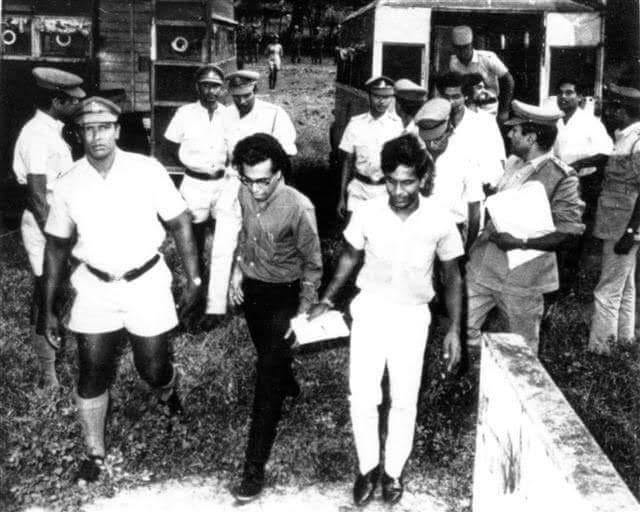
I was the second accused in the main trial before the Criminal Justice Commission. Rohana was listed as the thirteenth accused, though he was actually the first. Some of the investigators believed the Western superstition that thirteen is unlucky.
I spent seven years in prison, and I was detained twice more, in 1983 and 1985. At any one time after 1971, according to those who went through the system, about 25,000 people were held as JVP suspects. Rohana and I were held in the Welikada and Magazine prisons, in the same compound. We were locked in separate cells at night but could meet during the day.
At first, in the Magazine prison, we had no facilities and were treated as common criminals. We protested and confronted the superintendent until they gave in. We got books and utensils; the guards stayed outside with their batons, we cooked for ourselves, and visitors could bring food. We won our rights as prisoners, and we kept working politically. In 1972 and 1973, we drafted the JVP's policy declaration inside the prison.
How did the Tamil question enter that document?
Through an encounter in Bogambara prison. I had skipped my final engineering examinations in 1969 because I was working full-time for the party, though I had completed everything else. After I was convicted, I decided to sit the final written examination. Around 1972, they took me to Bogambara in Kandy because the Engineering Faculty would not send an invigilator to Colombo, and Professor Sivasegaram, a Tamil and professor of mechanical engineering, came to the prison to conduct the exam.
While I was there, I learned that a group of Tamil students from the Moratuwa campus was held in the same prison. They had raised black flags against the 1972 Constitution and had been detained without charge for six months. I managed to slip away and talk with them for about an hour, and they explained their grievances. One of them, Santhathiyar, later became a top leader of PLOTE, though PLOTE did not exist yet.
Back at the Magazine prison, I told Rohana that if we spoke about the grievances of the Sinhala people, we had to speak about the grievances of the Tamil people too, and adopt policies to address them. The sections on the Tamil-speaking people of the north, the east and the plantations were mainly my work.
There was one compromise. I wanted the declaration to say plainly that we accepted the Tamil people's right to self-determination. Rohana warned that Sinhala nationalists would attack us if we put it that way. So we went back to what the right means: the right of the Tamil people to decide their own future democratically, whether to stay together or to separate. The clause we wrote says that separation imposed autocratically, and centralisation imposed autocratically, will both be opposed. It did not endorse separation, and it was very hard for Sinhala nationalists to attack.
Was it published while you were inside?
It was finalised in prison and sent out to the groups working outside, who approved it. The party was banned, so we could not print it. The ban was lifted in 1977; we were released in November that year, and we printed the declaration in 1978. Almost every JVP leader accepted it and spoke about it in public.
When Rohana was hit by a stone at a meeting in Jaffna and left bleeding, he was speaking about the Tamil people's right to self-determination at that very moment. There is video of it.
Who attacked him?
I think a Maoist group in the North. That day he declared that we accepted the right to self-determination but did not support separation. That was our difference with them.
Building in the North
The contribution of Tamils to the JVP has barely been documented. What was it?
That is true to an extent. I have written an article on the JVP's work among Tamils and the other non-majority communities.
The groundwork was laid in the 1970s, while we were in prison. Some Tamil comrades working in factories in the south, such as the Thulhiriya textile mill near Kurunegala, had contacts in Jaffna, and through them we built a base there.
When we were released in November 1977, I was given responsibility for work among the non-majority communities, and I started in Jaffna and Batticaloa. In Jaffna, we began with very few people. Comrade R. Singamapanar was an accountant who had worked at Thulhiriya and lived near Chunnakam; he died a few months after my last visit. Comrade Sri Skandarajah is still alive and still visits Sri Lanka. There was Comrade Vakeesan, whom we called Gandhi because he looked like Mahatma Gandhi; he now lives in Denmark. In Kilinochchi there was Comrade Ganeshapillai, who is still living. I have met him once or twice since.
By 1981 and 1982 we had a good base in the peninsula, with comrades in Valvettithurai, Kankesanthurai, Alaveddy, Chavakachcheri and many other places, and as far as Mannar. The numbers were small, often one or two people in a village. The Communist Party's support was concentrated in pockets; ours was thin but spread right across the region. We also had a full-time activist, Comrade Fonseka, originally from Badulla, who spoke fluent Tamil and translated our speeches.
Jaffna is different from the rest of Sri Lanka in that almost every village has a small library. Whenever I came, we would put up a notice at the library saying there would be a discussion that evening, and people would turn up. Those discussions were serious and often heated.
The militant organisations were just emerging. When we started in 1978, we did not come across the LTTE, but EROS and later PLOTE argued hard with us. Their case was that the Tamil people had sought justice through peaceful and legal means, had been blocked at every turn, and now had to take up arms.
Those arguments taught us a great deal about what the Tamil community was going through. Some of these organisations had progressive tendencies, and in 1978 I proposed to the JVP Central Committee that we open talks with them, build a united front and fight together for the rights of the Tamil people. The Central Committee refused, fearing that any relationship with them would bring repression on the JVP in the south.
The Break
You were General Secretary from 1978 to 1984. Were you forced out?
No, I decided to resign. It began with the 1982 presidential election. In 1981 and 1982, the UNP was building up chauvinism in the south, in the rural Sinhala Buddhist communities where all of us came from. It was a planned strategy of the Jayewardene government. We came across a group printing pamphlets at the Government Press and distributing them in schools.
The party wanted me to be our presidential candidate. I refused, arguing that Rohana was known across the island and should stand. The party had a reasonable objection: if he did badly, it would be very hard for him to face the public and the membership afterwards. I still regret that I did not contest.
One of our main leaders expected Rohana to win. Others expected eight to ten lakh votes. I expected around five lakh. He got about 273,000. I do not think he expected to win, but he was badly shaken. In my view, the vote polarised around the two candidates who could win, and that squeezed us.
Afterwards an argument spread through the membership: Sinhala people had not voted for us because we accepted the Tamil people's right to self-determination, and Tamils had not voted for us anyway, so the policy should go.
Who led that push?
Mainly Somawansa Amarasinghe, Daya Wanniarachchi and Upatissa Gamanayake, with many others behind them. Another comrade, Ratnayaka, who is still living, and I opposed it.
Only the two of you?
In the end, yes. Before all this happened, we had held a public meeting at the Sugathadasa Stadium to counter this undercurrent. Rohana spoke on the general political situation, Gamanayake on the trade unions, and I on the right to self-determination. I allowed 15 minutes for questions, and the only person who spoke was Dayan Jayatilleka. He was not in the JVP. He argued that we should not only accept the right to self-determination but support separation, and he walked with me all the way from the stadium to the party office, arguing vehemently.
Around March 1983, a Tamil fisherman was killed in a clash with fishermen who had gone there from Tangalle. As General Secretary, I issued a statement condemning the killing, saying Tamils must be allowed to live as equals and that we accepted their rights. It apparently caused a commotion in the party.
When another Tamil was killed in similar circumstances, I wrote a second statement. By then, the Political Bureau had ruled that my statements needed its approval. It refused this one unless I removed the reference to self-determination. I said that if they cut it, I would resign from the party on the spot. I also told them the Political Bureau had no power to make or change policy. Its job was to implement the Central Committee's decisions.
So they called a Central Committee meeting in Tangalle, in the second week of July 1983. The committee had about 30 members; the Political Bureau about seven, the same structure as today. Two of us voted to keep the right to self-determination. Everyone else voted with Rohana to drop it.
That night I decided I could not continue. It was a matter of principle. I wanted to explain my reasons to the membership in writing, but I had no time. The following week, the July pogrom came.
The government declared that the JVP was behind the riots. Rohana and almost the entire leadership went underground. I and a couple of others did not. I believed that if we hid, people would believe the accusation, so we had to stay in the open and fight it. They did not agree.
I kept the party office open until they began hunting the leaders. I think there was a reward of fifty thousand rupees for my arrest. Then I closed the office and stayed at home. I did not go underground; they simply did not know where I was.
What was the difference?
Going underground means abandoning open political activity, and once you are underground, you can turn to violence. I wanted to say openly that we had no part in what happened and that the government alone was responsible.
Eventually someone showed them where I was, and I was arrested and held for six months. In the first week, while I kept the office open, I had gathered most of the information about who had done what. So I challenged the CID: it was their job to arrest the people responsible, and I gave them names. They were taken aback.
Are you certain the JVP had no hand in the riots?
Within two weeks, two of the officers in charge of investigating the violence came to me and said I was right. Only one JVP sympathiser, from Mount Lavinia, had been arrested, and we do not know how close he was to the party. The others were UNP people, and some were SLFP.
Then why ban the party?
By then the JVP was again the third-largest political force, stronger than the Communist Party and the LSSP and drawing away SLFP supporters. It was seen as a threat. There was also the referendum to extend the life of Parliament, the lamp against the pot, which was conducted with violence. Even the Commissioner of Elections had evidence of it. A case had been filed in Rohana's name, and Jayewardene wanted Rohana out of the way.
What happened after your release?
I attended two meetings of the Political Bureau. By then I had already decided to resign, but because the party had been proscribed, I stayed on for a while to safeguard what remained of the organisation.
The Political Bureau wanted me to continue as General Secretary. I told them I could not. By then I believed the national question had become the most important political issue facing the country, and my position on it differed from the party's. If I continued, whenever someone asked me about the national question, I would have to give my own view rather than the party's. I could not continue under those circumstances.
The Political Bureau then asked me to meet President J. R. Jayewardene to discuss lifting the ban. I agreed and met him. Jayewardene always referred to Wijeweera simply as "Rohan." He told me Rohan should come forward and make a statement, after which he would consider lifting the ban.
Were Jayewardene and Wijeweera personally close?
No. They had met twice before, but they were not close.
In the end, Rohana did not want to come forward. I discussed it with the comrades, but nothing came of it. So I wrote my resignation letter.
I deliberately kept my reasons brief and restrained. The government was looking for anything it could use against the JVP, and I did not want my resignation to give it ammunition. I asked that the letter be circulated among party members. At the end of February 1984, a member of the Political Bureau came and collected the party resources in my possession. That was the end of my association with the JVP.
Offers, Threats and Exile
After you left, several parties tried to recruit you, including Tamil militant organisations. What happened?
The approaches began even before I left. When I was arrested in 1983, the first thing the Director of the Criminal Investigation Department told me was that the President was waiting to meet me and that I could have anything I wanted. I asked him, "For what?" I refused.
After I resigned, I had no income and needed work. I had passed my final engineering examinations, but the university withheld my degree certificate. It had also withheld the classification of my results, because I had not sat the examinations in the scheduled year. When I asked for my certificate, the Vice-Chancellor and the Registrar claimed I owed university fees. Those were bogus excuses. I approached the Chairman of the University Grants Commission, but he would not help either.
Eventually I wrote to President Jayewardene, who was also Minister of Higher Education. He referred me to his secretary, Mr. W. M. P. B. Menikdiwela, who told me there would be no problem if I joined them. I left that night without agreeing to anything.
Meanwhile, several parties wanted me to join them: the SLFP, Vijaya Kumaratunga's Sri Lanka Mahajana Party, the LSSP and the Communist Party. Then a senior member of the People's Liberation Organisation of Tamil Eelam (PLOTE) approached me. He wanted me to set up an organisation parallel to PLOTE in the south. I told him that although I recognised the Tamil people's right to self-determination, I did not advocate separation, and so I could not accept. They never contacted me again.
But the Terrorism Investigation Division, under Terrence Perera, learned of that meeting. I was detained under the Prevention of Terrorism Act and held for six months, then released without charge. Later, during President Ranasinghe Premadasa's time, there was another attempt to recruit me, this time into the UNP.
What is your view of the second insurrection?
In my resignation letter, I warned that if the party took that path again, it would be devastating, for the party and for the country. In 1971 we had made errors and had our own shortcomings, and I said that going on the offensive in response to the government would lead to the same result. They did not listen.
If the leaders who went underground, and I do not mean Rohana alone, had come out and said publicly that they had nothing to do with the July pogrom, and explained their position on the national question, society would have understood what was really happening. Prins Gunasekara, one of the JVP's closest friends, had also advised them to come out, as had many others. They refused, and in the end violence came. Each side set out to destroy the other, and around sixty thousand young lives were destroyed in the south.
Some would hold Wijeweera responsible for those deaths.
I put the main blame on the UNP government and Jayewardene's leadership. The JVP also bears part of it: had it come into the open and rejected the accusations, some of those lives might have been saved.
But look at how the government handled the Tamil question. It began with violence by government thugs during the District Development Council elections in Jaffna, and the burning of the Jaffna Public Library. It was a planned scheme. In the south, they inflamed nationalism in the JVP's base, and in the north and east they did the same to the Tamil people, to divert attention from a looming crisis and create conditions that would keep them in power. At the time of the July 1983 pogrom, the LTTE was a handful of people. The pogrom gave us two and a half decades of war.
JVP carried out many horrific killings in those years.
And I blame the JVP for them, especially the killings of people who supported the Indo-Lanka Accord. People have a democratic right to support or oppose what a government does. What the JVP did was wrong. I said so then, and I say so now.
Were you a target?
I was in Sri Lanka until 1989, and I was targeted by both sides. That is why I left.
Why would the JVP target you?
I believe because I supported devolution of power to the Tamil people and accepted their right to self-determination, and because I supported the Indo-Lanka Accord, even though India imposed it on us.
You supported the Thirteenth Amendment?
I still do.
You belonged to no party by then. How would anyone know your views?
My position on self-determination was well known.
Were the attempts on your life ordered by your old friend Rohana?
I do not know who ordered them, and I cannot say that. There may have been people who decided at the last moment that those advocating such positions should be disposed of. I cannot say for certain which side it was.
From 1987 to 1989, I was General Manager of SEEDS, Sarvodaya Economic Enterprise Development Services, a business arm of Sarvodaya that still operates. I travelled across the island to its projects, including one training women in handpump technology. Messages were left at project sites: "Don't come, or you will be killed." I got by passing through without warning anyone.
Then they came for the organisation itself. One night, people tried to take vehicles from the Sarvodaya service station, which I ran. I had ordered the wheels removed and locked away, so they beat some of the guards and left. Next, they came to our head office in Moratuwa, robbed the accountant, Mr. Wimalasena, at gunpoint and asked for me. He told them I had gone to Colombo, and they left word that everything would be settled within two weeks.
Was that the JVP?
I do not know for certain, though I know some people in the JVP were after me. In the end, the SEEDS management, its Chief Executive Officer, Dulan de Silva, who is still living, and Dr. A. T. Ariyaratne, who died recently, decided to send me to Japan. They said that if I stayed, I would be killed.
I went hoping to return, but things did not settle, so I resigned. I spent six months in Japan and, when my visa ran out, another three months in South Korea. A Swiss engineer, Martin Brunnee, who had worked at SEEDS, sent me a visa for Switzerland. Meanwhile, my wife and children had been threatened and were in hiding. Father Tissa Balasuriya helped them reach Australia, where they were granted political asylum. I was on my way to Switzerland when I learned I could join them.
Rohana Wijeweera
Whenever you speak about Rohana Wijeweera, you seem to become emotional. Why?
We were very close, both before the 1971 uprising and during our years in prison. He was just one year older than me. He was born in 1943, and I was born in 1944. He was a very good, very caring friend.
But he did not always listen to advice. With me he would listen, at least up to a point. Sometimes he refused to accept what I said, walked away, and thought about it. Later he would sometimes regret his decisions. I think something similar may have happened in 1988 and 1989. He may have listened to the wrong people, accepted their advice, and taken the wrong path.
How did you feel when you learned how he had been killed?
I was deeply saddened. I was in Japan when he was killed on November 13, 1989.
The following day, armed men surrounded the place in Piliyandala where I had been living, my parents' home in Weligama, and my wife Chitra's parents' home in Pannipitiya. Fortunately, nobody was there. My family was already in hiding. They were looking for anyone who might take over the JVP leadership after Wijeweera's death. They wanted to eliminate those people as well.
Were they acting on orders, or was it revenge?
I think they were acting more or less on the orders of Ranjan Wijeratne, and probably President Premadasa as well.
Both men, regarded as the chief hunters of the JVP, were later killed by the LTTE. Did JVP members see that as karma?
I cannot say how they reacted. Obviously, they would have been glad that the people who killed their leaders were gone, and some do call it karma. I believe in karma only in the sense that what you do comes back to you one day, though you can also shape what happens. Not in the religious sense. Every action has a reaction.
How do you assess Wijeweera now?
I believe he was genuine, and I still respect him as someone who wanted to fight for social justice, though he had serious shortcomings. He had real leadership qualities. He could read situations, organise and speak, and he had a good grasp of ideology. At times he used situations to advance a political course; not for personal gain, but politically. I disagree with him on some of those things, but they are political disagreements.
Marxism and nationalism often get confused. In Russia, the movement began on Marxist lines under Lenin, but under Stalin and some of the Bolshevik leaders it turned to nationalism to hold society together against attack and invasion. For us, accepting the Tamil people's right to self-determination in principle, while not supporting separation, was a necessity.
Later, I think after Rohana's death, the JVP rallied the nationalist forces in the country against the LTTE. The LTTE was partly to blame, because its attacks in the south drove Sinhala people towards extreme nationalism. But it was the JVP that brought those nationalist and chauvinist forces together, and that was a terrible mistake. It happened under Somawansa Amarasinghe, not Rohana. But it followed from what Rohana had started, and in that I see his shortcomings.
We all have positive and negative sides. I judge a person by weighing the two. On balance, from my perspective, he was positive.
The JVP had seen one insurrection fail. Why did it try again, knowing how hard it would be to win?
It is hard for me to say, because I was no longer with the party. One reason may be that we never made a complete, honest assessment of what went wrong in 1971. There was a partial one, nothing more. A full reckoning might have helped. But a great deal also depends on the circumstances people were facing at the time.
How would you compare Wijeweera with Velupillai Prabhakaran?
Both wanted to do something for their communities. But they saw the problem from different angles. Rohana saw it in terms of class: the ruling class against the people. For Prabhakaran and the LTTE, it was a national question, about identity and the rights Tamils had been denied.
On terror, I think Prabhakaran was much worse. He did not consider the consequences. I do not know how far Rohana would have gone, but I believe that if he had understood the people were against it, he would have pulled back. That is my feeling; I cannot know.
I do not think Prabhakaran listened to anyone, and I have an experience of this. In Canberra we had a group called Friends for Peace in Sri Lanka, working for a lasting settlement. One member was the chairperson of the Australasian Federation of Tamil Associations. When he joined us, he was strongly pro-LTTE and supported only separation. After two years with us, he had come round to a federal solution. He went to London to put it to Anton Balasingham and came back with Balasingham's answer: Annai works only on what he himself thinks, and that is the bottom line.
Rohana believed in a socialist approach. Balasingham had some socialist thinking; how much Prabhakaran had, I do not know. Prabhakaran was egoistic, adventurous and revenge-seeking. I do not see Rohana that way.
The NPP and the Tamil Question
The NPP government is the first to come to power with direct Tamil votes. Will it resolve the Tamil question?
That is difficult to answer. They do not support the Thirteenth Amendment or the provincial councils, but they accept that it is in the Constitution and is being implemented, so it will continue.
From my communications with their leaders, they still think the Thirteenth Amendment is not a good solution and are looking for an alternative. Some JVP leaders say openly that Tamils have no specific problems, only the same problems as everyone else. Others I have spoken to accept that Tamils have specific grievances that must be addressed. They say they have not settled on an alternative yet, but they are working on one and expect to include it in a new constitution.
Could that mean federalism, or genuine devolution?
I do not know. I do not think they will accept the right to self-determination in writing. But even without that, if they provide a legal framework in which the non-majority communities can live with dignity, as equals and without discrimination, that will address most of the country's fundamental problems.
That is where the government is lacking. Language is one example. I saw it on this visit, at meetings with my engineering batchmates and in political discussions. Some of these people are not deliberately discriminatory. The problem is that they do not feel it. In Sinhala, we call it hangeema (perception). When you feel a problem, you try to solve it. For some in the leadership, it is a theoretical matter: if someone raises it, a policy has to be drafted. How it affects people's lives, I do not think they understand. When I talk to Tamil people, almost all of them say the same thing. How aware is the JVP leadership of that?
I will not call them racist. In Marxist terms, one could argue that refusing to accept the right to self-determination in principle is a form of racism, but not in the sense of wanting to discriminate. I do not see their officials or leaders pushing such an agenda. I may be wrong. I hope they will work towards a better solution, because it is always better to build solutions than to wait for a conflict.
As a former JVP General Secretary who resigned over this very question, what is your advice to the government?
The leadership needs to understand why Tamil people were pushed from demanding equality to demanding separation, and address those causes. Otherwise, there is always the possibility of another conflict. Resolving a conflict before it arises costs far less, and it is better for society.
The government is about to enter its third year. It must deal with these issues in real political terms before its term runs out, and this year it has to show that it is genuinely committed.
So the window is narrowing.
The window is narrowing, and the government should take that as a warning. If it does not act on this issue this year, it will be hard for it to do anything at all.