By: M.R. Narayan Swamy
Hundreds of thousands of Tamils living in Sri Lanka’s prosperous tea estates want justice and quicker rehabilitation after suffering the worst of deaths and destruction in a catastrophic cyclone that ravaged the island nation in late November.
A prominent MP and leader of the hill country, or “Malaiyaha,” Tamils—who are of Indian origin—has accused the government of President Anura Dissanayake, whom he otherwise counts as a friend, of discriminating against Tamil workers, the most impoverished section of Sri Lankan society.
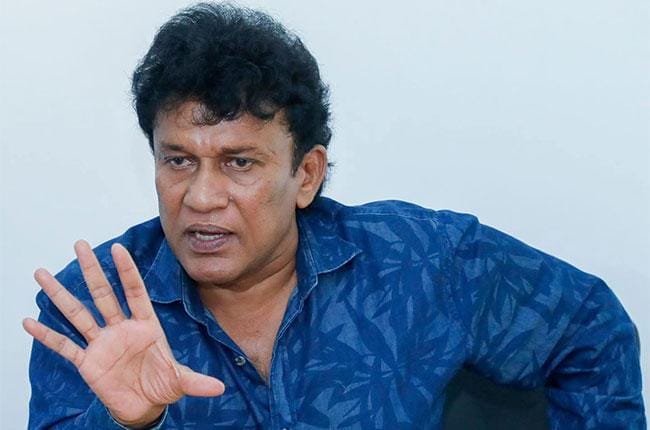
Mano Ganesan, 65, says that while the government is sincere in tackling the crisis caused by Cyclone Ditwah in the rest of the country, it is faltering in the tea estate areas, which suffered the worst and most lasting damage. The region is home to the so-called “Indian Tamils.”
“We are Sri Lankans. We should get the same treatment that is given to the Sinhalese,” the majority community, Ganesan said in a telephonic interview from Colombo. “Otherwise, we will assume that racial discrimination is at play.”
“Our community is living at the mercy of tea estate owners and the government,” he added. “I hate to say this, but we were under a White (British) Raj for 125 years; now we are under a Brown Raj. Nothing has changed.”
Ganesan, whose grandparents came to Sri Lanka from southern India during British rule, heads the Tamil Progressive Alliance (TPA) and is allied with the main opposition party. A prominent trade unionist too, he is the most articulate leader of the Tamil workers who slog in Sri Lanka’s tea estates.
These Tamils – who are separate from the Tamils in the country’s north and east – number some 1.5 million in Sri Lanka (a figure Ganesan contests), of which an estimated 800,000 live in the tea estates, one of the biggest foreign exchange earners in the country.
Of this figure, about 1.5 lakh Tamils, mainly women, pluck tea leaves in the sprawling estates which are primarily spread across Kandy, Nuwara Eliya and Badulla, the three worst-affected districts in the cyclone, which killed some 650 people and caused $4.1 billion worth of damage to buildings, agriculture and infrastructure across Sri Lanka.
Tea workers are among the poorest in Sri Lanka, earning just 1,350 rupees (about INR 400) a day. Only 20 days of work are assured in a month. Each worker is expected to pluck 18–20 kg of tea leaves daily; if the output falls by even one kilogram, half the wages are deducted by the tea estate companies.
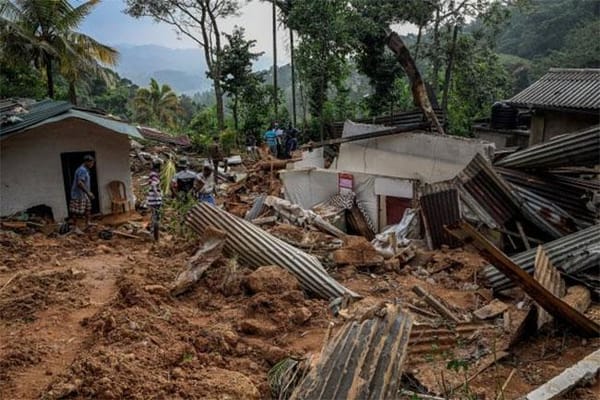
According to Ganesan, the Tamil tea workers and their families bore the brunt of the destruction (besides deaths) as the cyclone and rainfall-triggered floods triggered terrible landslides, razing innumerable homes and shanties on the hill slopes.
Even today, almost two months after the disaster, many of the Tamils rendered homeless are sheltering in temples, churches and social centres as well as with relatives in safer areas. “They lead miserable lives and are the most marginalised people,” Ganesan said. “They need to be rehabilitated, and rehabilitated fast.”
He said the tea estate community deserves a differentiated and targeted approach in the recovery and rebuilding phase due to its comparatively low and, in some sectors, negative human development indicators such as land ownership, housing, education, health, and poverty alleviation.
He said the cyclone disaster has particularly appended the lives of many hill country Tamils, pushing them into a dire situation.
Hundreds of kilometres of roads in the tea plantations have been damaged, besides bridges, drains and protective walls. Many preschool buildings, medical centres and community centres, besides houses, have suffered serious damage.
The government has announced compensation of up to Rs 50 lakh for fully destroyed houses, Rs 25 lakh for house repairs, and Rs 50 lakh for land in cases of relocation. However, the tragedy, Ganesan says, is that most Tamil workers do not own land and therefore may not be eligible for government compensation.
“So, without further delay, the government must take clear and official policy decisions regarding the land and housing rights of the hill country Tamils,” he said. “Land rights must be ensured for the Malaiyaha Tamil community on par with other citizens.”
According to Ganesan, the government tried to quietly hijack an Indian government scheme to build housing estates for the tea workers and make it a part of its larger rehabilitation package. After Ganesan protested, the Indian government pledged that this would not be allowed to happen.
The MP alleged that, exploiting the economic plight of the largely illiterate tea workers, some local officials were goading them to accept a mere Rs 25,000 each as full and final compensation for their widespread losses.
“This is unfair,” he said. “This disaster has proved, and experts agree, that the hill areas are vulnerable to natural disasters. Workers’ homes must be moved from the hills and tea estates to safer and more accessible locations. For this, the government has to provide land for them.”
Ganesan complained that although he has known President Dissanayake for decades, he had been unable to get a formal audience with him for his party to discuss the issue.
“Once, in the parliament lobby, the president wanted to know where land could be found for the workers. ‘It’s there in the estates, Anura,’ I said. ‘Ok, if so, help me find land plots,’ he said and ran away.”
Ganesan said: “I consider him a friend for last 20 years. Even after becoming the president, he used to telephone me once a week at night to talk politics. Now, (it is) no nothing.”
In sheer desperation, Ganesan and his colleagues have urged the French ambassador to tell Colombo that Sri Lanka’s access to trade concessions in Europe would be linked to the availability of housing rights for the hill country Tamils.
He also warned of the dangers of building multi-storey buildings in the tea estates since this would pose long-term danger to its inmates.
“All cyclone-displaced people estate residents must be allocated land plots and fully integrated into the housing initiative of the government.
“For whatever the reasons, the Tamils of the north and east fought to go away (secede) from Sri Lanka. They are also being rehabilitated. We are fine with that. But we Malaiyaha (hill country) Tamils, have always been for Sri Lanka. But we are being discriminated. Why?”
Editor’s Note: This article was first published on The Federal (thefederal.com), a digital news platform, and is reproduced in Jaffna Monitor with due permission.