Special Article


The Batalanda Report Was Tabled. A Year Later, Justice Was Not

The Batalanda Report Was Tabled. A Year Later, Justice Was Not

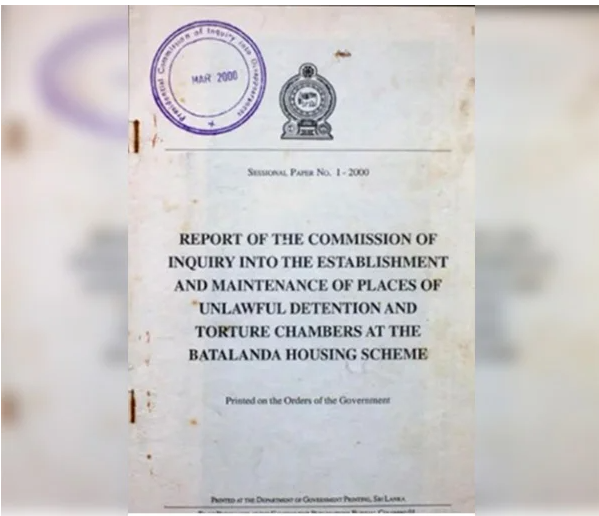
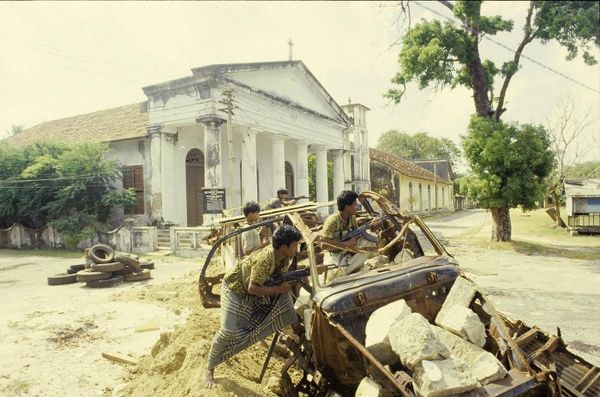
COLOMBO — One year after Sri Lanka’s Attorney General received the Batalanda Commission report — detailing torture chambers, extrajudicial killings and enforced disappearances during the government’s suppression of the Janatha Vimukthi Peramuna (JVP) insurrection — no one has been charged, no prosecutorial update has been issued, and the parliamentary debate that was promised has yet to be scheduled. The silence that has followed, political analysts say, reflects not only legal complexity but a


Our Special Correspondent

Our Special Correspondent

The Shepherd's Flock: Protecting the Human Rights of the Public Servant

The Shepherd's Flock: Protecting the Human Rights of the Public Servant

By: Jeevan Thiagarajah At the heart of a functioning democracy lies a profound paradox: the public servant is both an instrument of the state and a citizen entitled to the full protection of the Constitution. Their service conditions — carefully stipulated by the Public Service Commission and relevant regulations — are not mere administrative guidelines. They are guarantees of dignity. Courts and tribunals have repeatedly reinforced this principle: a person does not surrender their fundamental


Jeevan Thiyagaraja

Jeevan Thiyagaraja

“We Are Being Discriminated”: Hill Country Tamils Accuse Sri Lankan State

“We Are Being Discriminated”: Hill Country Tamils Accuse Sri Lankan State

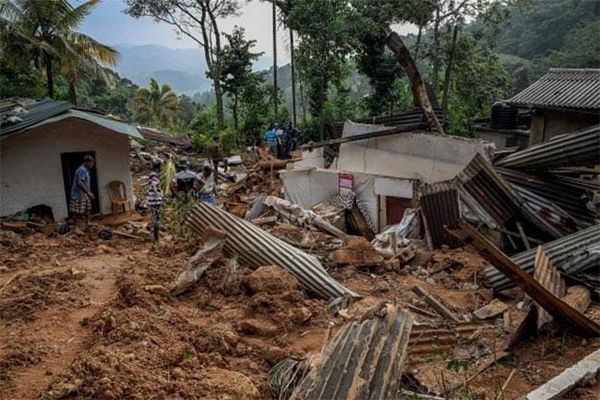
By: M.R. Narayan Swamy Hundreds of thousands of Tamils living in Sri Lanka’s prosperous tea estates want justice and quicker rehabilitation after suffering the worst of deaths and destruction in a catastrophic cyclone that ravaged the island nation in late November. A prominent MP and leader of the hill country, or “Malaiyaha,” Tamils—who are of Indian origin—has accused the government of President Anura Dissanayake, whom he otherwise counts as a friend, of discriminating against Tamil workers


M.R. Narayan Swamy

M.R. Narayan Swamy

What Sri Lanka and Gaza Teach Us About the Futility of Armed Struggle

What Sri Lanka and Gaza Teach Us About the Futility of Armed Struggle

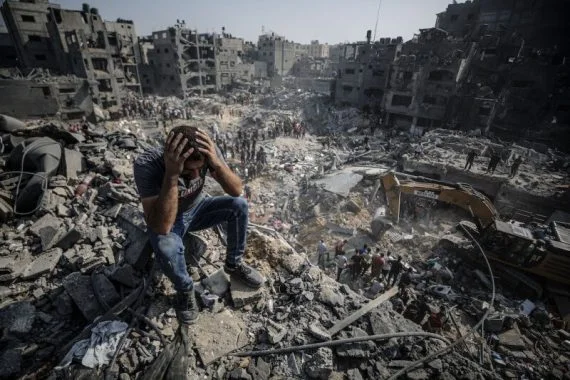
“I object to violence because when it appears to do good, the good is temporary; the evil it does is permanent”. Mahatma Gandhi Times of war create the illusion that only force can resolve irreconcilable differences. Some social theorists even justify the inevitability of violence in achieving social change on the basis that groups in power rarely relinquish that privilege voluntarily. In this context, the armed conflicts that plagued Sri Lanka for three decades and continue to unfold in Gaza


Prof. Mahesh Nirmalan

Prof. Mahesh Nirmalan

Peace Road to Jaffna: The 2002 A9 Odyssey

Peace Road to Jaffna: The 2002 A9 Odyssey

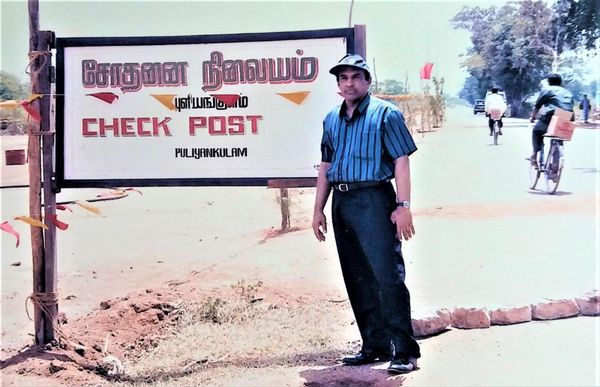
By air, by sea, and now—after almost two decades—by land. My journeys to Jaffna had always been shaped by the shifting tides of Sri Lanka’s civil war. I had flown many times into the heavily fortified Palaly Base Hospital to treat injured soldiers. I had sailed across the uncertain seas in 1994 with the International Committee of the Red Cross (ICRC) to assist the medical students of the Faculty of Medicine, University of Jaffna, in completing the final examination for the medical degree (MBBS-


Dr. Gamini Goonetilleke

Dr. Gamini Goonetilleke

Why Hamas Is Like the LTTE — Yet Unlike the LTTE

Why Hamas Is Like the LTTE — Yet Unlike the LTTE

When two hijacked planes tore into the World Trade Centre in New York, causing the iconic buildings to collapse with hundreds of casualties, an Indian friend remarked even before it was known who the mass murderers were: “This could have been done only by the Al Qaeda or the LTTE.” Osama bin Laden, of course, proudly claimed responsibility for the horrific deed. But the fact that someone thought the Liberation Tigers of Tamil Eelam (LTTE) could have carried out the history-changing terror attac


M.R. Narayan Swamy

M.R. Narayan Swamy

A Mission Called Journalism: Then and Now
M.R. Narayan Swamy interviewing LTTE cadres in Kaluthavalai, Batticaloa, soon after Eelam War II began in 1990.

A Mission Called Journalism: Then and Now

When the 1984 Bhopal gas disaster killed thousands and left many more maimed for life, the heart-wrenching tragedy was covered on a per diem of, believe it or not, a pathetic ₹45 (INR) a day! It was then the world’s worst industrial disaster, blamed on lethal doses of a highly toxic methyl isocyanate (MIC) which leaked from the Union Carbide pesticide factory on the night of December 2-3. When I flew into Bhopal from New Delhi to add strength to the local bureau of the United News of India (UN


M.R. Narayan Swamy

M.R. Narayan Swamy

Fifty Years Later: Remembering the Night India’s Democracy Was Switched Off

Fifty Years Later: Remembering the Night India’s Democracy Was Switched Off

The month of June marked the 50th anniversary of the imposition of Emergency and media censorship by Prime Minister Indira Gandhi — the most serious blow to the world’s largest democracy. The Emergency rule from 1975 to 1977 was a direct assault on India’s democratic ethos, with media censorship at its core. Although India eventually emerged from that dark chapter with its democratic spirit intact, the episode remains a stark reminder that the freedoms of a free press must never be taken for gra


Sugeeswara Senadhira

Sugeeswara Senadhira