
By Aruliniyan Mahalingam
Shankari Chandran came to fiction the way some people come to prayer: after everything else had failed.
For a decade in London she ran the pro bono programmes of one of the world's largest law firms. The work took her into more than thirty countries, into the question of who would represent the men held at Guantánamo Bay, and at one point into the office of a British prime minister. She believed what lawyers are trained to believe, which is that the law is a slow machine but that it arrives.
In May 2009 it did not arrive. It stood on the shore and watched.
Pregnant with her fourth child and stepping back from her career, Chandran began writing what she thought would be a gift to her children: an archive of a people's memory, running from the pre-colonial centuries to the present. What she finished was closer to an indictment.
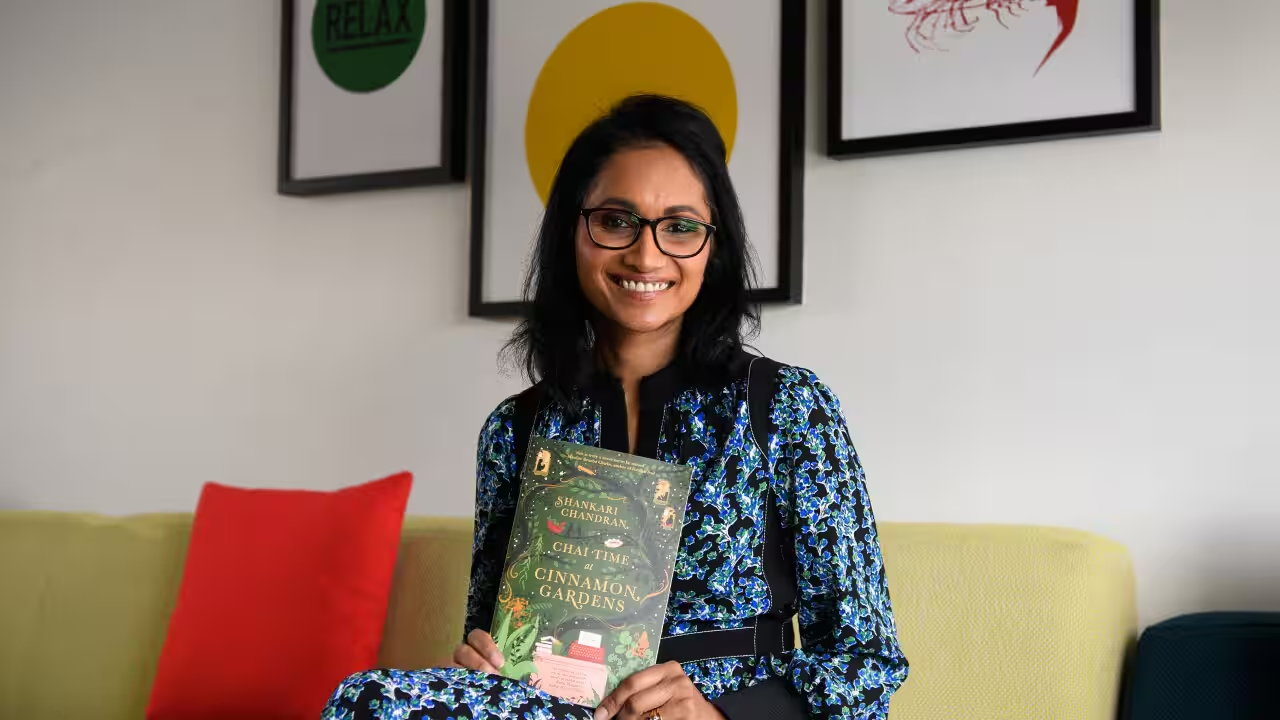
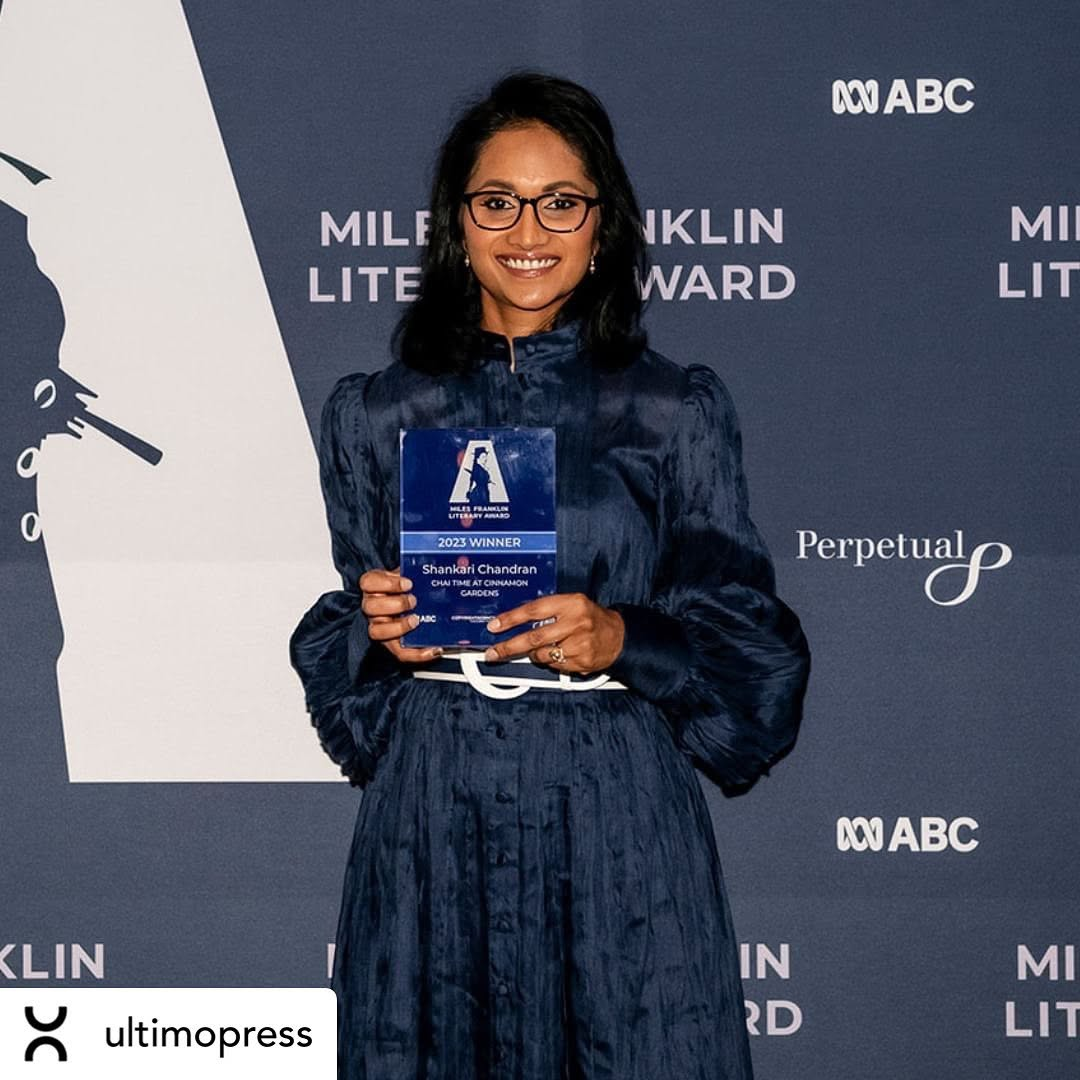
Five novels have followed, nearly all of them circling the same island. One of them, Chai Time at Cinnamon Gardens, is set in a Tamil nursing home in Western Sydney with the war running beneath its floorboards. It won the 2023 Miles Franklin Literary Award, Australia's highest literary honour, given to a novel of the highest literary merit that portrays Australian life in any of its phases.
Sydney is her home, and she does not pretend otherwise. She is exact about what her Australian passport buys her: the freedom to publish what the lawyers and activists who spoke to her cannot publish where they live. “We cannot tell these stories in Sri Lanka,” they told her.
In this interview with Jaffna Monitor, she talks about the justice that never came, what fiction can hold that a court record cannot, the reckoning with 2009 that neither community has undertaken, and the parts of the Tamil national project that her own people still will not confront.
You were born in Britain, raised in Australia and have built your life there, yet Sri Lanka — and particularly the Tamil experience — remains central to your writing. What is Sri Lanka to you personally: a homeland, an inherited memory, an unresolved history, or something that cannot easily be named?
I feel a strange, almost inexplicable connection, because I have not lived in Sri Lanka for any length of time. For all intents and purposes, Australia is my home. We have created a home here with our family, and I love it here.
At the same time, I feel something very powerful when I go to Sri Lanka, particularly when I go to Jaffna, and I don't know why. With my writing, I simply allow myself to explore that connection and try to honour it.
So, what is Sri Lanka to me? I think of myself as Tamil. I think of Jaffna as our ancestral home. I think of it as the home of all the generations of my family, including the generations we are now raising in Australia. I want them to have a connection, particularly with the North and the East.
It's hard for me to explain in some ways. I've written six novels now, and the sixth will be published next year. Five of those novels are directly set in Sri Lanka or are about Sri Lankan Tamils. I think I'm probably trying to work out what Sri Lanka is to me through my writing and through my work. I'm trying to understand why I feel so connected to it.
When did you first come to Sri Lanka, and particularly to Jaffna?
I first came in 1977. Then we came again in 1980, 1981 and 1982. After the 1983 anti-Tamil riots, we didn't come again for a number of years.
I returned in 2014 for research because, by that point, I knew that I wanted to write Song of the Sun God. I had been writing and researching it for a couple of years by then.
My husband and I did a very extensive research trip to the North in 2014, and that re-engaged me with the country and led me to start visiting on a regular basis.
You are a lawyer and, as I understand it, have also advised a British prime minister. Much of your professional life has been connected to the idea that law and international institutions can deliver justice. Then came the final stages of Sri Lanka's war in 2009, much of it unfolding before the eyes of the international community. Did that experience change the way you think about truth, justice and the ability — or willingness — of international law and international institutions to protect people?
I spent so much of my professional life believing in the institutions of justice and the framework of laws, pursuing those ideals and working within that system.
And then 2009 happened. You see injustices happen all the time around the world, so the way Sri Lanka's war ended was, in many ways, not unusual in the history of the world. It was not different, because atrocities are committed around the world and always have been.
But when the war ended the way that it did, I felt deeply disillusioned and devastated for our people. I was also disillusioned with the systems of justice that I had, until then, tried to engage with and be part of.
At that point, I was stepping away from my career briefly because we were about to have our fourth child. Shortly afterwards, I thought: Let me write something that is a gift to my children, something that tries to record the history of our people and aspects of our culture that I love, as well as the family stories that have been passed down to me.
I wanted to create a kind of archive of all our memories and my understanding of our history, from the pre-colonial period right up to contemporary history.
And I realised that what I was really trying to do was to interrogate the injustices of that war — effectively to interrogate and prosecute, or at the very least to reveal, the injustices that had taken place. I felt that our people had been failed by the justice system, whether national or international.
I don't think literature or fiction creates justice, but it certainly creates a record of things that people try to hide. And so I wanted to create a record. I wanted to understand what had happened, and I wanted people outside my own community to understand what had happened.
Unfinished Business is the first of your novels set entirely within Sri Lanka during the war. Seventeen years after 2009, how do you understand the role of fiction in the pursuit of justice? Can a novelist do more than preserve a record and bring people closer to the truth, or does justice ultimately remain the work of courts, governments and other institutions of power?
I think only the mechanisms and agents of justice can ultimately deliver justice. Institutions of power — courts, governments, lawmakers and lawyers — have the ability to pursue and achieve it, often because good people push them to act.
I see myself as part of a broader community committed to justice and equity. My role, through fiction, is to engage people with the stories and truths behind these injustices. In doing that, I draw heavily on the work of lawyers and human rights organisations — their reports, research and witness statements — as well as conversations with lawyers and their clients.
I was a lawyer; I am a lawyer, and that background gives me access to people and organisations doing extraordinary work in this field. There is an enormously powerful body of evidence and documentation produced by human rights organisations, and through fiction, I try to bring that work to a different audience and amplify it in a different way.
So, writing is my way of contributing to the pursuit of justice, but it is only a small part of a much larger effort. I see my work as being in collaboration with the people and institutions doing the work that can ultimately bring about real change.
You write in English about people who often think, feel and experience the world in Tamil. What is inevitably lost in that translation that you can never quite recover?
When I was writing Unfinished Business, I went to a very specific research base. I interviewed journalists, lawyers, activists and survivors, and spent a lot of time with people, listening to them and thinking about what they had experienced. They shared their experiences with me because they wanted those experiences to be told through fiction. So there was an understanding and a relationship between us: they wanted those stories to be told.
They did not feel that they could adequately tell those stories within Sri Lanka at that time. I started writing the novel, I think, in 2016, although it is set in 2009. They wanted to participate in this project of using fiction to tell the truth.
Inevitably, something is lost in translation. One of the greatest regrets of my life is that I don't speak Tamil fluently. I speak a little, but not enough. The testimony of war is extraordinarily specific, and every word needs to be understood and recognised, particularly because so much of that testimony has been erased, suppressed or deliberately hidden.
I don't want, with my partial Tamil, to infer or, worse, guess what is being said to me. So when people speak to me in Tamil, I always have a translator with me. Journalists, lawyers and activists, however, would often speak to me in English.
What can fiction do for a community whose history remains deeply contested? Can literature preserve truths that politics, journalism and official histories sometimes fail to preserve?
The short answer is yes. I think fiction absolutely can preserve histories and experiences that, as you said, politics, journalism and historians — or history itself — can fail to preserve.
Journalists and historians are often prey to the power and whims of politics. In many ways, one could argue that we all are. But those of us who write fiction can choose, and often do choose, to step outside that and comment from the outside looking in.
My agenda — and I think it will be contested by people who disagree with me — and my rendition and record of what happened in Sri Lanka, particularly in the North, across five novels, will most definitely be challenged by those who see things differently.
But I can use fiction to create a record of a narrative that has often been dominated and drowned out by the narratives of politics, journalists and historians.
Chai Time at Cinnamon Gardens is deeply rooted in both Australian life and the history and trauma of Sri Lanka's Tamil community. When stories born from such painful experiences find recognition and acclaim in countries far removed from where that suffering occurred, does that create any tension for you as a writer? What do you think about the relationship between telling these stories, literary recognition and the communities whose experiences they draw upon?
No, it does not create tension for me, because the value of the prize is that it elevates the story to a level that it had not previously achieved or received. And the purpose of storytelling is for that story to connect with as many people as possible — preferably people who don't know the story, and even people who might think they know it and disagree with my version of it.
So, an award is just a tool that helps you to do that. It is an extraordinary honour, and there is an aspect of it that gives a book the imprimatur of a level of literariness.
The Miles Franklin Literary Award recognises a writer who has written about an aspect of Australian life. There is value for Australians in understanding that Australian life can be defined expansively and generously, as a multiplicity of stories, and that Australian life is no longer just white colonial stories or white stories. It is the stories of all of us who have come here and are building lives here together.
So, for me, there was a twofold value. One is that it says to Australia: remember, our stories are varied. Our stories are diverse and rich. The second value is, as I said, that the award is a tool that elevates the story to a wider audience that might not otherwise have read it. And that is, in part, why I tell stories: because I want them to be read.
I have some 300 cousins, and my first novel was probably only read by my 300 cousins. Chai Time at Cinnamon Gardens was read by more than 200,000 people. So the award is a tool that creates a happy outcome.
The question then is really: what do I do with the platform that the award gives me?
The novel I wrote and published after that was Safe Haven, a novel set in an offshore detention centre that looked at Australia's detention system and the lives of many people from different countries who seek asylum in Australia — in particular, a Sri Lankan Tamil doctor, what she had fled, why she had fled it, and the way in which her community in Australia tried to support her.
The novel after that was Unfinished Business. I had actually written Unfinished Business before I wrote Chai Time at Cinnamon Gardens. But because I won that award, by that point I had a brand that was well known enough to publish Unfinished Business.
So, for me, the award does not create tension. It has created opportunities. And I had the opportunity to tell the story of 2009 in the way that I wanted to tell it.
The Tamil armed struggle emerged from decades of discrimination, failed political negotiations and violence against Tamils. Yet it ultimately ended in catastrophic military defeat and immense suffering. Looking back, what do you believe went fundamentally wrong?
There is a book coming out soon, and I will leave it to that book and that author — Ana Pararajasingham — to answer that question, because it is not something that can be answered in a half-hour interview.
I think the prevailing question will always be: what are we willing to learn from that experience? Not just the experience of 2009, because it is very easy, I think — and disingenuous, in fact — for the human mind to focus only on, for example, the events of 2009.
We are smart enough, and we should be brave enough, to focus on the long arc of history, because 2009 did not happen in isolation. We should be smart enough, and we should be brave enough, to consider the entirety of what happened.
When did it start? Why did it start? Not just: how did it end?
And then, of course, there is the question of what comes next. What do we learn from that history so that it doesn't happen again?
The overwhelming majority of Sri Lankan Tamils will continue to live on this island alongside Sinhalese and Muslims. Do you think Tamil politics has sufficiently confronted the practical reality that, whatever our historical aspirations, we must also find a viable political future within Sri Lanka?
I would never presume, from my home in Sydney, to prescribe what Tamil politics should or should not be doing in Sri Lanka. Only you know what you have to do, and what you are able to do, in order to live within the Sri Lankan nation-state, alongside and integrated with the Sinhalese community.
That is for you to ask and answer. And I hope that you will tell the diaspora what it is that we can do, if anything at all, to be useful.
You belong to a generation of the diaspora that remains deeply connected to Sri Lanka, but the next generation may experience that relationship very differently. Many families in the North and East also depend heavily on money sent by relatives overseas. Do you worry that, as second- and third-generation diaspora Tamils grow more distant, both the emotional connection and the flow of remittances could weaken — and are we doing enough now to prepare for that? More broadly, what can sustain a meaningful connection between the diaspora and the homeland across generations?
I think the emotional attachment will weaken and change over time unless future generations, guided and facilitated by their parents and grandparents, actively maintain that connection.
There is the connection with Sri Lanka, and with the North and the East, and then there is a separate thing, which is your connection with your own diasporic community. I think the connection we have with our diasporic community will always be strong and powerful, and it will evolve into its own cultural identity.
The question of whether that connection with the homeland — our ancestral homeland — becomes abstract and ultimately more distant or weakened, or whether it remains strong, is really on the shoulders of my generation, and perhaps my parents' generation, although they are getting older.
We have to actively try to create that connection: to bring our children — who are not children anymore, but young adults — to Sri Lanka; to have them meet their own family members who still remain there, if they have family there; and to engage in initiatives that strengthen the economy and the social fabric of the North and the East.
Otherwise, of course, that connection will weaken. And if it does, then I think your conclusion that those generational remittances will decline is reasonable, because future generations will not have that same sense of connection, feeling, duty or responsibility.
I'm not an economist or an accountant, and I don't know enough about the economy to know how dependent it is on diaspora remittances. But if it is as dependent as you say, and those remittances decline, then absolutely, that challenge will come in the future. That's just maths.
Do you think the diaspora sometimes exercises too much influence over political conversations in Sri Lanka without having to live with the consequences of the positions it advocates?
Look, I can probably only speak for myself in regard to that question, because the diaspora is so far and wide. The British diaspora is different from the Canadian diaspora, which is different from the Australian diaspora.
For myself, and for the diaspora in Australia, for example, our engagement in Sri Lanka is not through politics or political statements. It is through organisations such as Palmera (www.palmera.org) or Vanni Hope (www.vannihope.org), where we are trying to contribute time, money and skills — such as we have them, if we have them — towards reconstruction efforts and economic empowerment.
If you look at an organisation like Palmera Projects, its executive director is a Sri Lankan Tamil from Australia. I think she lives between Sri Lanka and Australia, and she does an extraordinary job of empowering entire communities, particularly women-led households, towards economic independence. Palmera doesn't just lift a family; the organisation helps lift an entire village and the economy around that village, that’s when systems start to change.
That is where, for example, the Australian Tamil diaspora sees that it has a role to play, through organisations like Palmera or Vanni Hope.
I am acutely aware that I don't have to navigate the political tensions of Sri Lanka's history and its present day. I don't have to live in, negotiate and navigate a country where two ethnic groups are working out how to live together post-war. And I don't have to navigate the economic uncertainties that Sri Lanka has faced in its recent past and continues to face.
Therefore, who am I to dictate or suggest to you what you should be doing?
How can diaspora wealth and expertise be transformed from individual remittances into more sustainable investment in education, entrepreneurship, employment and institutions?
I think that's already happening, honestly. As I said, organisations such as Palmera, Vanni Hope, Sivan Arul Illam and Bridging Lanka are doing this.
From my perspective as an Australian, I don't know which organisations other parts of the diaspora are connected to, but those are some of the organisations we are connected to.
These are organisations where, instead of us giving only to our own families — or not even instead of, but in addition to giving to our families — we are giving to organisations that have the capability to create economic independence for families and communities.
That's the long-term, sustainable approach. I don't think individual remittances create generational empowerment or independence.
Australia has given many Tamils safety, opportunity and extraordinary success. At the same time, successive Australian governments have taken hard positions on Tamil asylum seekers. How do you reconcile those two Australias?
I'm still trying to understand the many contradictions of human nature, and therefore of human politics.
I explore this in my novel Safe Haven, which looks at the stance successive Australian governments have taken towards asylum seekers, while also looking at the ways in which Australian communities work to protect asylum seekers.
That is a contradiction we will grapple with in Australia for many generations.
For decades, leaving Sri Lanka was seen by many Tamil families as the ultimate path to security and success. Do you worry that the continued migration of some of the most educated and ambitious young people could leave the North and East intellectually and economically hollowed out?
I think every country faces this when it has experienced the terrible disruption of civil war — particularly a prolonged civil war — and then economic failure. Of course, people will seek a better life for themselves: a more economically secure life, more justice and more equity for themselves and their children elsewhere.
It is impossible for me to say that people should stay in Sri Lanka and contribute to its reconstruction, because I live in Australia. I am, again, acutely aware that I live in Australia.
The only thing a country can do to keep its people is to improve the conditions under which they live and help them feel a sense of wanting to be part of that country's reconstruction — a sense of wanting to rebuild the nation together.
And Sri Lanka will always be competing with the allure of economic success, professional opportunities, stability and justice in places like Australia.
Seventeen years after the war, families are still searching for answers about the disappeared, while fundamental questions of truth and accountability remain unresolved. Is it possible for a society to genuinely move forward without first establishing the truth about what happened?
Lawyers, I think, will always say that a country cannot move forward until there is — even if there is no mechanism for justice — at least a mechanism for truth.
Families don't forget. The impact of the loss, the grief and the anger is passed down through generations. People learn to live, and they learn to hide what they think and what they feel. But that doesn't mean the grief, the questions, the longing and the rage have gone away.
I think that for a country to rebuild itself, it needs strong foundations of truth-telling. And that requires enormous courage. I don't know that Sri Lanka would agree with me on the need for that.
My concern is that you can tell people to move on, and you can tell people to keep going, but the feeling still sits in the body. And it still sits in the bodies of the children who come after.
I don't know that you are building something that will last if its foundation is not based on truthfulness.
The mothers whose sons and daughters were forcibly disappeared are still waiting for answers. How do you see this continuing injustice?
I have four children, and if I did not see a body, I would not believe that my child was dead. I would hold on to hope for the rest of my life. Unless I saw it with my own eyes, I would hold on to that hope forever.
So I can understand an aspect, an element, a tiny fragment of what those mothers and fathers are feeling, what they are thinking, and why they refuse to give up hope.
That is a very deep injustice that continues to be done to them. Not only is it highly likely that their children are dead, but they may never have full confirmation of that, or be able to perform the rites that I have participated in myself for other members of my family whom I love — rites that do, indeed, give you some ability to accept what has happened.
At the same time, no society can live permanently inside its trauma. How do Tamils preserve memory and continue demanding truth and justice without allowing the war to define every generation that comes after it?
Isn't that an interesting question? Do you think that Israel and the Jewish community globally are not defined by what happened to them and by their trauma?
The default answer to your question is that societies are always defined by the trauma they have encountered. But I think we can, and we will, do better than that. In fact, I think we are already doing better than that.
I think we are the sum total of who we are. When I look at my own family — if I look at just the Chandrans, or if I look at the Kathiravelpillais, my father's family — individually, we are able to do different things that are quite excellent. But collectively, holistically, we can do, and we do achieve, much more together than we achieve alone.
Therefore, within our Tamil community, in Sri Lanka and in the diaspora, I think every person has to do their job. Every person has to do the thing that they are good at doing towards a shared goal, which is our collective betterment, both in Sri Lanka and outside of it.
What that means is that there will be people who have to keep fighting the fight for truth and reconciliation. And there will have to be people who let them fight for truth and reconciliation while they continue the journey of economic empowerment.
You will have to use your skills to tell all sides of the story, as you do, and I will have to use my skills in fiction to preserve culture and history — in many ways, preserving culture for people in our diaspora whose connection may change over time.
I don't need to preserve culture in Sri Lanka for Sri Lankan Tamils, because they are living that culture. But I need to learn from them and try to communicate that history to the child in Strathfield, or elsewhere in Western Sydney, where there is a large Sri Lankan Tamil community.
Although, often, the child in Strathfield or Western Sydney is more likely to teach me how to be a better Tamil. We now have so many Tamils here in Sydney that there are many language schools. When we migrated, shortly after the White Australia policy ended, you could count on one hand the number of brown people living in Canberra, the city where I grew up. It was a different nation. It was a different country.
So, yes, I think we can do better than being defined by our trauma. But what it takes is a community of skilled and good people, each doing their job.
What does reconciliation actually mean to you? Is it primarily something that must happen between communities, or must it begin as a political process requiring fundamental changes in the structures and institutions of the state?
I think reconciliation will have to be led by people and communities, because I think political leaders are too invested in maintaining the status quo. They won't necessarily have the will or the courage to engage in systemic change.
To the extent that systemic change occurs, it will have to be driven by Tamil and Sinhalese people together — people who saw what happened, who saw their own children die, Tamil and Sinhalese, and who don't want it to happen again.
You write about a community to which you belong but whose daily realities you experience largely from abroad. Does that distance give you greater freedom to speak, or does it impose a greater responsibility to listen?
All of the above.
I think, first and foremost, it gives me a very deep and heavy sense of responsibility to try to get it right. And you should read my work and tell me if I've got it right or wrong.
It absolutely means that I have a great responsibility to listen. In Australia, Aboriginal people talk about deep listening. You're listening to learn. You're not listening to react, you're not listening to respond, and you're not listening to solve. You're just listening to learn. As a writer, that is my first job.
Does that distance give me greater freedom? Yes. But that freedom is a privilege that I don't take lightly, so I am not irresponsible with it.
I have worked with lawyers and activists in Sri Lanka who have said to me, "We can't tell these stories in Sri Lanka. We are not safe to tell these stories in Sri Lanka. We do not feel safe. We know we are not safe."
I have a safety, purely by existing outside the country, that allows me to tell these stories. That is not a privilege I take lightly. I am well aware that this freedom comes with a responsibility.
What is the hardest truth about Tamil society that you think Tamil writers, intellectuals and political leaders are still reluctant to confront?
I think, because we are human, we are still reluctant to confront the ways in which we contributed to, or were culpable in, the failure of the Tamil national project.
The challenge for us is: are we courageous enough to reflect on that? And are we wise enough to learn from it?
You have children growing up far from the world that shaped your parents' generation. What do you want them to inherit from their Tamil identity, and what do you not want them to inherit?
I don't think they need to inherit the diasporic and vicarious trauma and guilt that my generation inherited.
I think there is a generational transition. It's almost natural that my generation would inherit that trauma and guilt, and then that we might allow — and want — our children not to inherit it.
What do I want them to take from their Tamil identity? I love Hinduism. I think Tamil Hinduism has been one of the greatest gifts of my life, and I would like my children to take that with them because it offers a pluralism and a respect for difference that is overlooked, to our detriment and damage.
I would like them to take forward the extraordinary Tamil commitment to community and family. And I think we have a work ethic like no other — a determination to do better and be better, and a determination to give back.
I feel a very strong sense of both justice and equity, and of wanting to give not just to my own community, but to have a sense of connection and community with people I don't know. I think that comes from my Tamilness, and I want them to have that.
I think that's what I want for them.