By M.R. Narayan Swamy
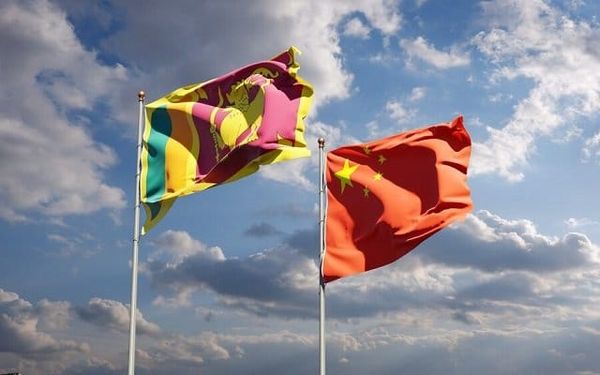
China and Sri Lanka have enjoyed decades of close and warm relations. Many Sri Lankans also credit China with providing extensive military assistance that helped Colombo defeat the Tamil Tigers. But is there a side of this relationship that has been kept under wraps? Yes, says a Sri Lankan scholar in a revealing new book.
After detailing at length the many ways China has come to the economic and military rescue of Sri Lanka since the 1950s, Colombo-based Bhagya Senaratne touches upon the not-so-known aspects of their bilateral military cooperation.
She says in her study, From Friendship to Dependency: Analyzing Sri Lanka’s Foreign Policymaking Towards China (KW Publishers, New Delhi), that Beijing’s military diplomacy in the 21st century shows it is keen to expand its links with Sri Lanka, focusing on the latter’s strategic location in the Indian Ocean.
“China is gradually moving from hardware defence sales to developing softer ways of defence diplomacy to pursue its interests in Sri Lanka, especially through exchanges, training and non-lethal equipment (communications),” says the scholar at the Bandaranaike Centre for International Studies.
These, according to her, signal a shift in strategy, tools and ends, using defence diplomacy as an instrument to build influence.
“Shrouded in secrecy, China has commenced close interactions with Sri Lankan military personnel to forward bilateral military relations.
“China is using military aid, training and exchanges and high-level visits by working (with) defence personnel to implement its defence strategy.
“In these interactions, China is favouring Sri Lanka by providing it opportunities and facilities that it is not providing others. This is visible from the lack of publicly available data on training and aid given to Sri Lanka.”
Senaratne says that Sri Lanka would stand to benefit from these interactions “if it is aware of its strengths in negotiating and does not succumb to the power rivalry in the region”.
The author, who holds a PhD in International Relations from the University of Colombo, says Sri Lankan bureaucrats have come to understand the objectives behind China’s military sales and defence diplomacy.
China, the book says, is using its military diplomacy with Sri Lanka to make further inroads into the Indian Ocean Region and achieve its foreign policy objectives in securing its interests in energy, construction, and expansion of its network of friendly countries.
All this also assists in improving China’s domestic economy as Beijing expands construction projects in Sri Lanka.
The 239-page study notes at the outset that China’s security relations with Sri Lanka were relatively understudied compared to its political and economic relationship with Colombo, despite the publicity that accrues when military or research vessels visit the island nation’s ports.
According to Senaratne, there is a long-standing bilateral defence relationship between Sri Lanka and China that is less known to the public and the international community.
After presenting data on training courses offered to Sri Lankan military personnel by China, she says the programme resumed from late 2022 after the Covid-19 epidemic caused a two-year break.
While noting that Sri Lanka has not disclosed the latest data, she quotes a confidential source as saying that Colombo has sent a considerable number of military personnel in junior, middle-grade, and senior ranks to China.
“Moreover, there are high-level military exchanges in various other seminars and forums.”
While these courses give an exposure to Sri Lankan personnel to Chinese thinking and culture, “I would argue that China is hosting Sri Lankan officers to gain a better understanding of the geopolitics in the Indian Ocean Region, to understand the Sri Lankan thinking…”
Military officers who have attended courses at China’s National Defence University (NDU) have formed a NDU Alumni Association in Sri Lanka which has more than 80 members, both serving and retired personnel.
According to Senaratne, China is keen on strengthening its security connections with Sri Lanka, likely due to its location in the Indian Ocean as well as its proximity to India and international shipping lines.
“It can be argued that China is attempting to wedge a divide between India and Sri Lanka by proposing ‘joint initiatives focussing on maritime security … accompanied by the transfer of military equipment, alluding to closer military cooperation between China and Sri Lanka’.”
The focus of the well-researched book is how Sino-Sri Lankan relations rapidly expanded during a 21-year period starting from November 1994 when Chandrika Kumaratunga became the president to when Mahinda Rajapaksa lost power in January 2015.
This includes some 15 years when Sri Lanka fought a bloody war against the LTTE, until the insurgents were routed in May 2009, and the six years which followed the end of the conflict.
But Senaratne, who also goes into the early period of bilateral ties driven mainly by economics and trade, is clear that relations with Beijing have been extremely beneficial to the island nation.
The foundation of the bilateral relationship was the celebrated Rubber-Rice pact of 1952 – one of the first agreements Beijing signed with a non-communist country. Accordingly, China paid a higher price for rubber from Sri Lanka and sold rice in return at below the market price.
A grateful Sri Lanka co-sponsored the 1971 resolution, which helped China to join the United Nations. By 1975, China had become Sri Lanka’s largest trading partner.
The book details how Kumaratunga diversified Sri Lanka’s relations with China, which were, until then, limited to state-to-state relations, giving a major push to private businesses both ways. Her Foreign Minister, Lakshman Kadirgamar, visited China frequently and was a great exponent of stronger ties with Beijing.
All through the war against the military offensive against the Tamil Tigers, China played the role of a staunch friend, providing vast quantities of arms and ammunition to Colombo.
Senaratne says the military assistance and the later heavy pressures mounted by Western countries, in particular, over human rights issues forced Rajapaksa to lean more on China. In doing so, he ignored the objections of both the West and India.
The book does not analyse how Sri Lanka is balancing relations between China and India but underlines that Beijing’s relations with Colombo may not have been same had the latter been located elsewhere and not the Indian Ocean, close to India.
(In Sri Lanka, Senaratne’s book can be bought on www.vijithayapa.com)