
By M.R. Narayan Swamy
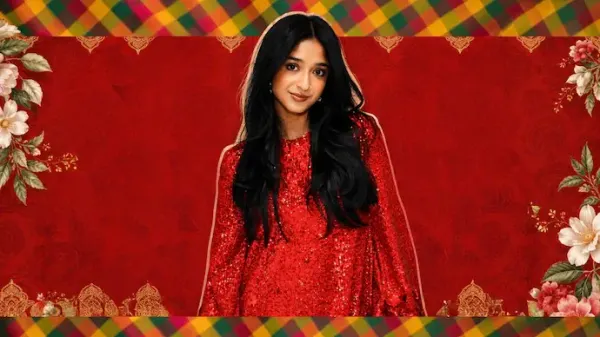
There can be little doubt that Tamil-Canadian actor Maitreyi Ramakrishnan is a victim of a section of Sri Lankans who detest her political views.
The organised denunciation of her acting skills by Sinhalese-driven interest groups in Sri Lanka has succeeded in driving down the IMDb rating of the “Best of the Best”, the latest Netflix film starring the young Canadian woman.
The attacks are directed primarily at her and less at the movie, which follows two childhood friends who join a competitive Bollywood-fusion dance team at the University of California, Los Angeles (UCLA).
I doubt that most of those from Sri Lanka who gave the film a one-star rating and posted negative reviews of Ramakrishnan’s acting, pushing its overall rating down to 5.5, even saw the film.
They probably didn’t intend to view “Best of the Best”. Their ire was more at what Ramakrishnan said ahead of its September 18 release.
Video clips then quoted the 24-year-old as saying that she was a “Tamil Eelam woman” and went on to explain why she does not call herself Sri Lankan.
Like thousands of Tamils from Sri Lanka, her parents embraced Canada amid a horrific ethnic conflict in the island nation. The future actor was born in Canada.
Although Ramakrishnan, who rose to prominence in a teen comedy series while still at high school, did not say anything new about her family origins, what little she uttered was incendiary material for Sinhalese nationalists.
To an extent, it was a needless provocation on the part of Ramakrishnan. I will return to the theme later.
The Tamil separatist campaign ravaged Sri Lanka for over a quarter century, dividing the country into “us” and “them” – a Tamil-Sinhalese gulf which hasn’t truly gone away and which probably will take years to fade.
Ramakrishnan does not speak Tamil but is proud of her Tamil roots. She has every right to be.
As an aside, hundreds of thousands of Tamils in India live outside of Tamil Nadu and are equally proud of their Tamil heritage, irrespective of whether they speak Tamil adequately or not.
Ramakrishnan’s parents must have shunned Sri Lanka for good after concluding that Tamils cannot have a great future in a land where thugs killed hundreds of innocent Tamils in 1983 following the massacre of 13 soldiers in Jaffna.
I have maintained that the Tamil insurgency in Sri Lanka got its real oxygen not from the ambush of the soldiers by the Tamil Tigers, but from the senseless retribution that bloodied Colombo, with more than tacit encouragement from the government.
Since then, hundreds of thousands of Tamils have made the West and other countries their new home. And from there, innumerable Tamils financed, willingly or otherwise, a Tamil separatist war that ended militarily in 2009.
At one point, it almost looked like Sri Lanka would split. It was a miracle – thanks also to a string of blunders by the Tamil Tigers – that the war’s pendulum swung dramatically the other way.
But it left behind a broken society, with an estimated 100,000 lives lost, thousands wounded and maimed for life, and vast numbers of families across the island headed by women because the gore devoured their men.
While millions of indigenous Tamils, Indian Tamils and Tamil-speaking Muslims continue to live in Sinhalese-majority Sri Lanka, including in areas dominated by the majority community, the long years of bloodbath have produced some politically incorrect expressions. For the larger good, these minefields are best avoided, without hiding one’s ethnic and linguistic identity.
Ramakrishnan was born and raised in Canada. She is a Canadian. There is no need to keep parroting that she is not a Sri Lankan.
My (now late) sister left India for good in 1971 and became an American citizen five years later. Her two children were born in the United States and are now parents of five children in all.
My niece and nephew – professionally successful in their own ways – do not keep saying they are not Indians. Yes, they are not; they are American citizens, real and proper. Period. This holds true for Ramakrishnan too.
Like it or not, “Eelam Tamil” is a political phrase, made popular by Tamil militant groups which wanted to form an independent Tamil homeland called Tamil Eelam. It is not something other Sri Lankans (Sinhalese and Muslims) are in love with.
The two words are also associated with the Liberation Tigers of Tamil Eelam (LTTE), which remains a designated terrorist group in Canada and in many countries.
After being pushed to the wall for a long time, the Sri Lankan state militarily routed the LTTE. The war may have ended 17 years ago, but bitter memories remain – on all sides of the ethnic boundaries.
The fact is, Ramakrishnan has never made any reference to the LTTE, contrary to the accusations hurled at her. It was uncouth to run an image of her beside LTTE chief Velupillai Prabhakaran’s body.
It would be nearly impossible for someone whose parents escaped from Sri Lanka to remain unscathed by the past, even if they were not a direct victim of sectarianism.
But Ramakrishnan is not another Tamil of Sri Lankan origin. She is a gifted artist who is bound to go a long way in the times to come.
This is why she must understand that if she keeps insisting that she is an “Eelam Tamil”, there will be ugly consequences. Is this worth it, if she wants to be a public figure?
This appeal is not an attempt to stifle Ramakrishnan.
Yes, she has a right to free speech. Unfortunately, so do her critics. Those Sri Lankans (Sinhalese) who feel offended by her will hit back – the aggression will only bog her down needlessly.
There is another aspect that Ramakrishnan must keep in mind.
Unlike the Tamils from Sri Lanka who have become citizens of other countries, millions of Tamils live in the island nation and are affected by what the Tamil diaspora says or does.
Every time a prominent Tamil (as opposed to rabid pro-LTTE figures) rants about “Tamil Eelam” or “Eelam Tamil” or similar concepts, it does not help the Tamils living in and spread across Sri Lanka.
Believe it or not, most former Tamil militants (of all shades) I have spoken to are furious at Tamil Nadu politicians who kept talking about Tamil Eelam – and gave no material help when the chips were badly down for the community. Yet, these politicians still wear a Tamil tag on their forehead.
Indeed, merely showcasing one’s Tamil identity while running down Sri Lanka is counter-productive.
There will be those who will argue that Ramakrishnan has a right to say whatever she wants. I won’t quarrel with them.
However, I am sure that many things which look daring and politically correct today will sound different as the years roll by. Talk to former Tamil Tigers still in Sri Lanka, and it will open our eyes to the truth of this wisdom.