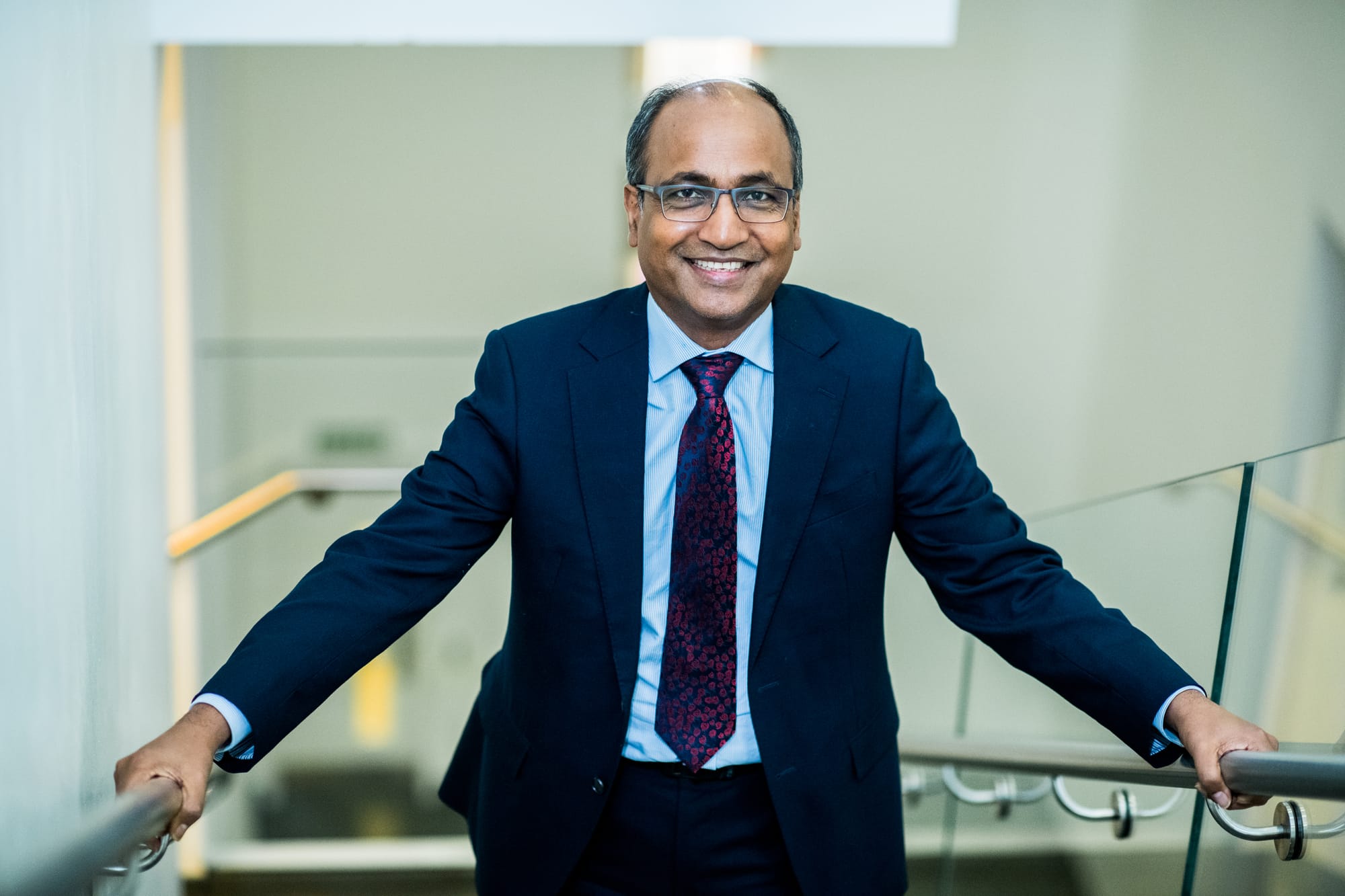

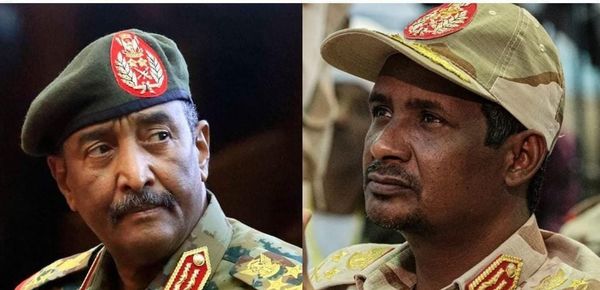
Mr. Saifeldin Nemir and Prof Mahesh Nirmalan
Mr Saifeldin Nemir is a Sudanese national and the current Chief of UNICEF Field Office, Ethiopia. He was also the former Deputy Country Director for Islamic Relief Worldwide; Professor Mahesh Nirmalan is the Associate Vice President for Responsible Research Practice at the University of Manchester and Consultant in Intensive Care Medicine at Manchester Royal Infirmary, UK
Sudan is geographically distant from Sri Lanka, but its recent history carries vital lessons for every post-colonial society with unresolved ethnic, linguistic and political tensions. The lessons are not limited to war and humanitarian catastrophe, but extend to misplaced faith in international agencies. It relates to the frequent belief that when human suffering associated with an internal conflict exceeds a given threshold and the violation of basic human rights become adequately manifest, ‘the guardians’ of such rights – The UN and/or its Western sponsors will intervene to deliver justice. Well, Sudan now and Rwanda previously proved that this was not the case.
The most recent cycle of conflict in Sudan which erupted in April 2023 between the Sudanese Armed Forces and the Rapid Support Forces (RSF), has produced one of the world's gravest humanitarian crises. In a report by Reliefweb on 03/05/2026 the death toll was estimated to be around 150,000 and the number of people displaced – internally or externally, was quoted to be over 10 million. In addition civilians have also suffered extreme hunger, sexual violence, attacks on hospitals and the destruction of civilian infrastructure. Darfur, is already synonymous with atrocity and impunity and the world's inability – not necessarily unwillingness, to protect the vulnerable populations. When the decisive actions that are required conflict with geopolitical or electoral realities, the latter always prevails. The Tamil saying “அழுதும் பிள்ளை அவளே பெற வேண்டும்” (Not withstanding the pain and tears, the baby has to be delivered by the woman who is pregnant) aptly summarises the politics of Human Rights in the modern world.
The doctrine of the Responsibility to Protect (R2P) evolved after the overt failures of Rwanda and Balkans. The premise here being that when states fail to protect their own populations from genocide, ethnic cleansing, war crimes or crimes against humanity, the international community has a responsibility to act. In theory, the sheer scale of killing and displacement in Sudan should have triggered such actions as the level of suffering is unprecedented. What we see however is a textbook description of the gap that exists between lofty moral language from airconditioned boardrooms and the ability of a modern democracy – largely driven by the needs of its own population, to act.
This reality matters to countries such as Sri Lanka because sections of political thinking, both within the island and in the diaspora, continue to place considerable faith in external intervention. Many still hope that governments in Europe, North America or Australasia – bound by R2P or in response to organised electoral pressure from diaspora groups, will intervene to mobilise international legal mechanisms to deliver justice and accountability that domestic processes had failed to deliver repeatedly.
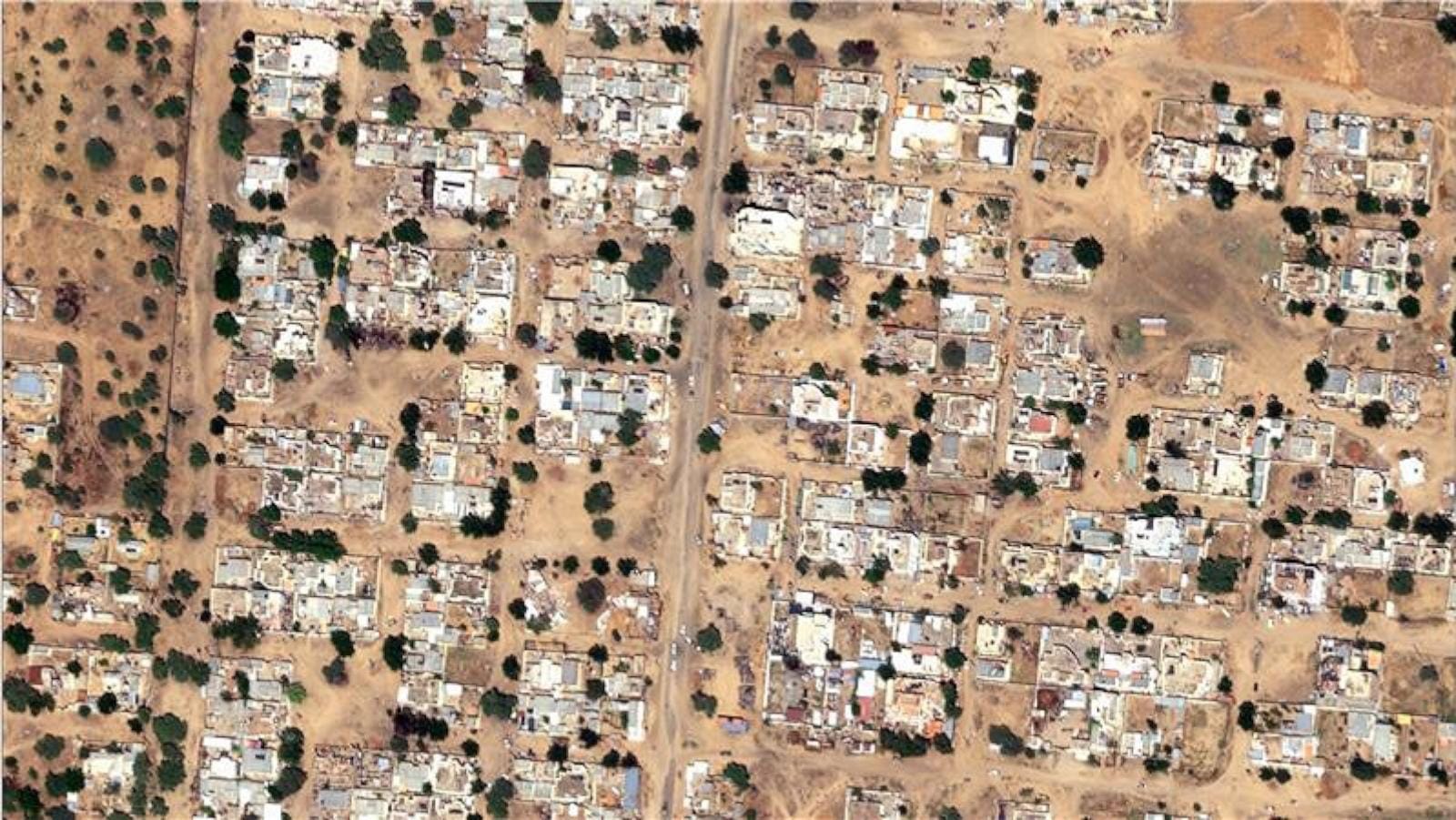
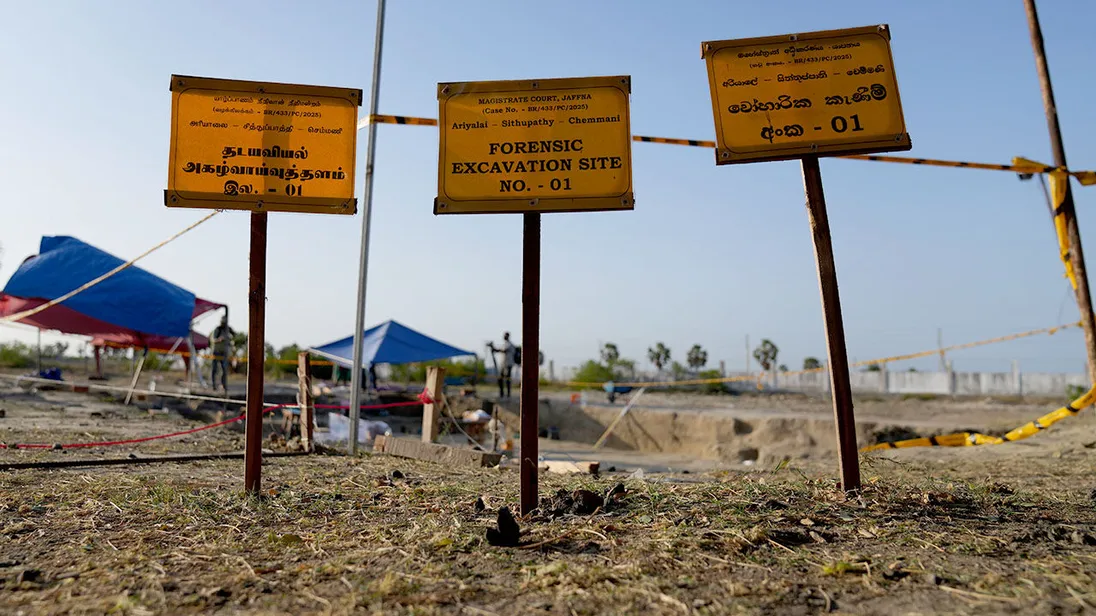
Such wishful thinking emerge through genuine grievances following cycles of discrimination, anti-minority violence, militarisation, land disputes, the trauma of war, the unresolved pain of the disappeared, the mass graves of Chemmani (செம்மணி or චෙම්මනි) and the repeated cycles of betrayal by the ruling class. However understandable, hope and wishful thinking do NOT amount to sound political strategy. The lessons from Sudan vis-à-vis R2P are unmistakable. Western powers are increasingly reluctant to invest resources or place their soldiers in harms-way in poorer countries. The experiences of Iraq, Afghanistan and Libya have fundamentally altered public opinion and despite speaking the language of human rights, civilian protection and accountability, the democratic mandate for active intervention is hard to obtain. They therefore attempt to use diplomacy, soft sanctions, humanitarian aid restriction and expressions of concern as levers to resolve deep-seated ethnic conflicts. Such ‘soft power’ is rarely effective in shifting the position of parties locked in bitter disputes along ethno-relegious fault lines and - in reality, merely prolongs the conflict.
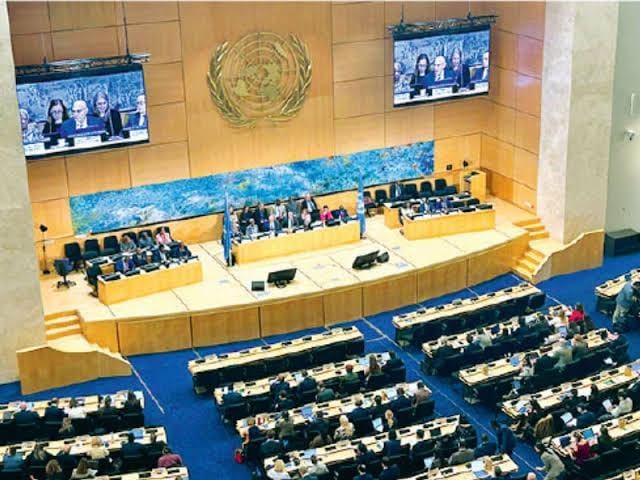
Even if external actors can shape narratives and support humanitarian operations they are rarely neutral actors pursuing justice alone. Strategic, economic and security interests frequently determine the extent of their involvement. Sudan further illustrates a harsher truth: external engagement sometimes prolongs conflict rather than resolving it. The implications of these harsh lessons for Sri Lanka are no doubt uncomfortable. A country that has not resolved its internal national questions cannot indefinitely outsource those responsibilities to Geneva, New York, Washington, London, Delhi or Brussels. International advocacy can expose abuses, preserve evidence and maintain pressure. Though indispensable at times it cannot substitute for the difficult domestic work of constructing a political settlement that the peoples of Sri Lanka can collectively sustain – “அழுதும் பிள்ளை அவளே பெற வேண்டும்” (Not withstanding the pain and tears, the baby has to be delivered by the woman who is pregnant).
Stating these stark realities of international politics is however not an argument for silence or surrender. The demand for dignity, equal citizenship, accountability and meaningful power-sharing by minority groups in Sri Lanka remains entirely legitimate. A country cannot move forward by asking victims to forget. But political realism requires a different question: if external actors are unlikely to deliver a lasting solution, what internal strategy offers the best prospect for durable progress? Part of the answer lies in moving beyond constitutional labels and focusing on constitutional outcomes.
For decades, political discourse amongst minority groups has revolved around concepts such as federalism, devolution, autonomy and, at times, a separate state. These ideas emerged in a specific historical context and hence cannot simply be dismissed. Constitutional frameworks are however only conduits to achieve certain endpoints. They are means to an end rather than ends in their own right. The more important question therefore is what problems deserve resolutions or what are the impediments to inclusive nation-building? Indeed, one consistent weakness of ‘minority politics’ in modern times has been the failure to articulate clearly and consistently the fundamental concerns that challenge minority groups. Notwithstanding discussions that may have taken place behind closed doors with the political elite in Colombo, the real problems were neither defined nor articulated to the common decent men and women who determine the electoral fate of the country .
In this context it is useful to place on record three primary concerns of all minority communities that stand out.
Physical security and protection against organised collective violence: The memory of 1958, 1977, 1983, the final years of the civil war and the riots of Digana and Aluthgama remain deeply embedded in the political consciousness of minority communities. The concern here is whether constitutional order provides credible safeguards against recurrence. The crucial question is whether those occupying the highest offices of state - including Head of State, Defence Secretaries, Military Commanders, Police Chiefs and other senior officials, can be held legally accountable if they participate, facilitate or fail to prevent organised violence directed against any community? Constitutional arrangements that fail to do so will inevitably struggle to generate trust. This is a very legitimate concern for all people who have observed the vexed political journey of post-independence Sri Lanka and many other countries with similar problems.
Concerns over cultural assimilation: This is often poorly understood outside Tamil political circles. The anxiety concerns the gradual disappearance of a distinct linguistic and cultural identity rather than individuals taking different identities through marriage or other circumstances. Examples from parts of the North Western Province demonstrate how minority communities can become assimilated into larger majoritarian populations within 2 generations. Even if not necessarily violent or coercive, such rapid transformations result in the erosion of language, historical memory and cultural continuity. The demands for separate state and even federalism stem from this basic and legitimate anxiety within the community. This concern raises the obvious questions of how language and cultural rights may be protected throughout the island?; How can educational institutions preserve linguistic and cultural traditions?; How can public administration support genuine Tri-lingualism?; and how can minority cultures be protected wherever they are – as a constitutional duty rather than as a ‘special favour’ rendered by any given leader.
Historical legitimacy and belonging: Many Tamils and Muslims reject narratives that portray them as relatively recent arrivals and hence possess weaker historical claims to the island than others. They seek acknowledgement that Tamil-speaking people have been an integral component of Sri Lanka's civilisation, history and cultural tapestry for centuries if not millenia. This issue cannot be dismissed as being merely symbolic as symbols matter in Nation building. Nations are held together not only by constitutions or military power but rather by the stories we tell about ourselves. If the story we say is one of ‘Us Vs Them’, the ‘Them,’ will always want to become the ‘Us’ triggering powerful centrifugal forces that are hard to control. A durable settlement therefore requires an understanding of Sri Lanka's past that recognises the historical contributions and an honest reconciliation with the fact of co-ownership and co-evolution.
Crucially, none of these three concerns necessarily require physical separation between communities or the creation of exclusive ethnic territories. Security, cultural continuity and historical legitimacy can potentially be secured through a range of constitutional arrangements. The real issue is therefore not one of ‘unitary Vs united’ or ‘federalism Vs unitary’ but rather if the chosen constitutional arrangements effectively address the above-mentioned concerns. This distinction matters because it shifts politics away from symbolic debates and towards measurable outcomes. Such a reframing would also make the concerns of the minority communities easier to comprehend. Security from collective violence, protection of cultural identity and the denial of historical and cultural legacy are principles with universal relevance. They invite practical discussion rather than ideological confrontation.
In this context, the Tamil leadership and the diaspora face an important choice. Should they continue invest their political energy in persuading external actors to impose solutions that those actors are unlikely (or unable) to enforce anyway or should they combine international advocacy with a more grounded strategy involving the strengthening democratic institutions, investing in education and enterprise, nurturing civic organisations and supporting political initiatives capable of addressing the above three legitimate concerns. In the context of the 30-year war and the extent of the losses suffered, this transition is not emotionally easy. Internal engagement is slow, frustrating, unspectacular and lacks the perceived ‘victory’ of securing international condemnation. It requires dialogue with those who may deny, minimise or misunderstand legitimate grievances. It demands engagement with Muslim concerns in the East, the struggles of Malaiyaha Tamils and the anxieties of ordinary Sinhalese citizens. It is not a path that can be summarised through emotive electoral slogans such as “செந்தமிழ் நாடென்னும் போதினிலே இன்ப தேன் வந்து பாயுது காதினிலே” (When calling out the name of the Tamil state a sweet ecstasy floods the ears).
Political settlements are not built through mutual validation of grievances alone. They emerge through institutions that allow communities with different memories and aspirations to coexist. The narrative that ‘We are the cultural and historical owners and you are the polluting invader’ is not helpful in moving the country towards any lasting settlement that creates the environment where economic development and the wellbeing of citizens become the focus.
Sudan serves as a warning. Once conflicts become entrenched, everyone ultimately pays. The immediate victims may belong to particular communities, but prolonged instability eventually damages all parts of this integrated whole. If Sudan is too far a country, look at the families of the 60,000 Sinhala youth who lost their lives between 1987-1989, the 25,000 service personnel who perished fighting Tamil separatism or the economic meltdown of 2022 and the beeline of the Nation’s youth to the long and tortuous passport queues. Sri Lanka is clearly not Sudan. The two countries possess very different histories, demographics and state structures. But the broader lessons remain relevant. Fractured societies cannot assume that international actors will rescue them from the consequences of unresolved internal tensions.
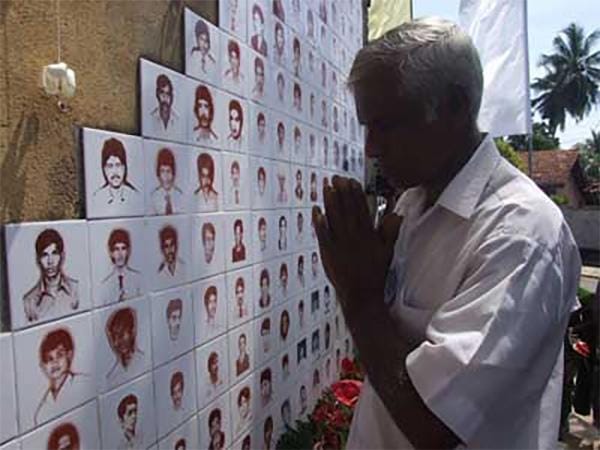
The international community may express concern, pass resolutions, investigate abuses and provide humanitarian assistance. These actions matter. Evidence should be preserved. Families of the disappeared deserve answers and victims deserve dignity and commemoration. Serious violations should not disappear beneath claims of ‘security considerations. International engagement however cannot replace domestic political settlement. For Sri Lanka, the internal agenda remains clear. It includes meaningful decentralisation of power, protection of land rights, equal implementation of language policy, independent institutions, effective accountability mechanisms and economic development that treats all regions as equal stakeholders in the national future. Equally important is the need for political leadership willing to speak honestly to its own constituencies. Tamil and Muslim leaders must discuss not only what is desirable but also what is achievable. Sinhala leaders must recognise that unresolved minority grievances will continue to undermine national cohesion. Both must move beyond narratives that treat compromise as weakness.
The diaspora also bears responsibilities. Distance - despite preserving memories, can also freeze politics to a by-gone era of ‘burning libraries’. But politics and thinking can and must evolve in the changing world driven by the politics of Donald Trump, Elon Musk, Rupert Lowe and Marie LePen.

Those living abroad often enjoy security and opportunities unavailable to those still living in Sri Lanka whose fates can no longer be tied to the wave of migration - legal and illegal, heading towards the shores of Europe, North America or Australasia. That horse has bolted. The privileges the diaspora enjoys – albeit for the time being, should encourage constructive engagement rather than the perpetuation of unrealistic expectations. The most valuable contribution of the diaspora may be neither lobbying foreign governments nor defending old political orthodoxies. It may lie in strengthening the conditions necessary for long-term political progress: supporting education, funding research, investing in local enterprise, promoting civic participation, encouraging independent media and helping create the intellectual space for a more mature political discussion.
The struggle for dignity, justice and equality must not not be abandoned. On the contrary, it should be deepened and clarified. The task however is no longer simply to argue about terminologies in constitutional law but rather to articulate precisely what kind of future is sought and how that future may be made possible. The false comfort of waiting for the world is that it postpones these more difficult conversations and Sudan reminds us that such waiting can become tragically long, and hence is not a neutral option. It enables violence to become normalised with the victims and the outside observers accepting status-quo as the norm for that community.
Sri Lanka's challenge is to learn that lesson before another generation inherits the consequences of unresolved grievances and misplaced expectations. The hard truth is that no outside power will ultimately reconcile Sri Lanka's communities and the country cannot reach its full economic potential without reconciliation amongst its citizenry. That responsibility belongs to Sri Lankans themselves. The challenge is not merely to preserve memory, but to transform memory into institutions, rights and relationships capable of sustaining a shared future. We must not mistake international sympathy with political deliverance.
The views expressed in this article are that of the authors alone and do not represent the views of either the University of Manchester or UNICEF.