

by Kumulan
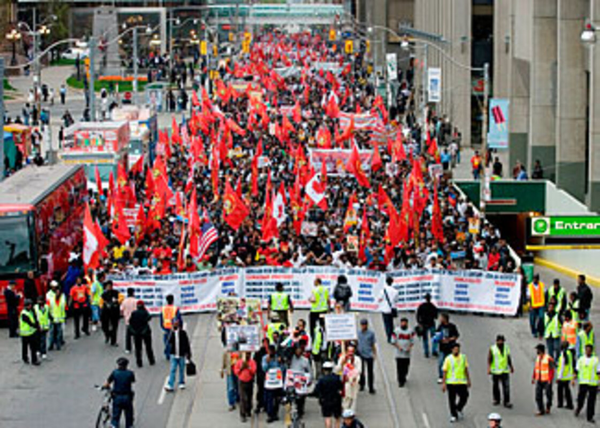
Every time I see Khalistan rallies in Canada, the UK, Australia, or some comfortable Western suburb with clean pavements, I feel like I am watching political cosplay with a blood-soaked backstory.
Flags. Slogans. Martyr posters. Angry men with microphones. Boys born in Mississauga, Southall, Surrey, or Melbourne shouting about liberation with the confidence of people who have never had to live through the consequences of the liberation they are selling.
It is all very heroic when the revolution comes with central heating.
Let us be clear. The Sikh story is not a joke. Operation Blue Star in 1984 was a trauma. The Indian Army's entry into the Golden Temple ripped open the Sikh soul. Then came Indira Gandhi’s assassination, followed by the anti-Sikh pogroms, where innocent Sikhs were butchered while the state looked away, or worse.
Nobody should mock Sikh pain. Nobody should pretend those grievances were invented in a Canadian basement.
But pain is not a political programme. Grief is not a constitution. Nostalgia is not nation-building.
The Khalistan movement, in its violent phase, produced assassinations, fear, and the paralysis of Punjab. Then, in 1985, Air India Flight 182 exploded over the Atlantic, killing 329 people, mostly Canadians. That remains Canada’s worst mass killing. Not India’s. Canada’s.
Punjab itself has largely moved on.
The average Sikh in India is not sharpening swords, waiting for a separatist WhatsApp group from Brampton. Sikhs in India remain fiercely Sikh — faith, hair, gurdwaras, langar, Punjabi pride, business genius, swagger, all intact.
But most are also Indian.
This is the part the diaspora warriors cannot digest. Identity does not automatically require separation. You can honour the dead without reopening the grave. You can remember 1984 without demanding that 2026 behave like 1984.
Because people who lived through fire do not romanticise fire. It is the diaspora that keeps old wars polished, framed, garlanded, and backlit.
And this is where Sri Lankan Tamils are sitting in the same leaking boat.
We, too, have our diaspora museums of rage.
We, too, have boys in Toronto, Paris, London, Zurich, Oslo, and Sydney wearing LTTE T-shirts like the official uniform of a country that never existed.
They say, “I am Tamil. I am Eelam Tamil.”
Lovely. Emotional. Dramatic.
But sorry, machan. Eelam is not a country. It has no passport counter. No central bank. No national airline. No customs officer stamping your arrival card.
You are Sri Lankan Tamil.
That is not an insult. It is not surrender. It is geography.
You can say you are Sri Lankan Tamil and still condemn the Sinhala-Buddhist state. You can still speak of genocide. You can still carry Mullivaikkal in your bones. You can still refuse to bow before any government that murdered, marginalised, disappeared, bombed, starved, and humiliated our people.
Truth does not become betrayal because it lacks a flag.
Yes, we went through genocide. Yes, we were marginalised. Yes, our language, education, land, dignity, and lives were attacked.
But we also have to be brutally honest.
The armed struggle did not deliver salvation.
Tamil Nadu did not come. India did not save us. The West issued statements. The UN expressed concern. The world watched, debated, delayed, and went to lunch.
At the end, our people were left with the dead, the disappeared, the widows, the orphans, the wounded, and the traumatised — while the diaspora held flags in cities where the garbage is collected on schedule.
So what now?
Do we keep pretending a separate state is the only way to preserve identity?
What exactly does that get us today?
A postage stamp? A national anthem? A president with garlands? A minister for coconut development? Some fellow in white opening a roundabout while the youth still leave for Australia?
Even if you drew lines on soil and called it Tamil land, then what? Could you ban others from buying land? Stop migration? Legislate memory? Protect culture with barbed wire?
No.
Culture is not protected by borders alone.
Culture is protected by power.
And in this century, power is economics.
If we want to protect Tamil areas, buy land. If we want to protect schools, fund them. If we want to protect language, teach it properly. Restore old houses. Digitise manuscripts. Support writers. Build libraries. Fund museums. Create scholarships. Invest in agriculture. Create jobs. Make our people economically unignorable.
Make the North and East rich. Educated. Too expensive to erase.
Instead, what does the diaspora do?
Too often, we send millions so every village can build another temple taller than the next village’s temple. Neon lights. Marble floors. Massive speakers. Gold paint. Committees. Ego. More ego.
Very spiritual. Very loud.
Meanwhile, where are the libraries? The technical colleges? The Tamil research centres? The scholarships? The mental health clinics? The archives and cultural institutions that will outlive one festival season?
We keep saying, “We must protect Tamil identity.”
Fine. Then let us ask the dangerous question.
What is Sri Lankan Tamil identity?
Is it just Tamil language? Then what makes us different from Tamil Nadu? Is it our accent? Our food? Our dry humour? Our Jaffna arrogance? Our Vanni resilience? Our Batticaloa lyricism? Our obsession with education?
Do our children know paal puttu, odiyal kool, palmyrah, Kumulamunai, Mullaitivu, Jaffna, Batticaloa, Mannar, and Trincomalee? Or do they just know the flag?
A flag is easy. Culture is hard.
You can wave a flag with one hand while forgetting your grandmother’s language with the other.
That is the hypocrisy.
And now let us speak about the LTTE without turning our own history into a street fight.
For many Tamils, the LTTE is not an abstract subject. It is tied to grief, protection, sacrifice, fear, pride, loss, memory, and survival. Many young men and women gave their lives believing they were defending a people who had been abandoned by the state and ignored by the world. That sacrifice cannot be dismissed cheaply.
But respect does not require blindness.
The armed movement came from real oppression. It also left behind difficult questions that we still struggle to discuss honestly: democracy, dissent, Muslims expelled from the North, rival Tamil movements, civilians trapped between impossible choices, and the price paid by ordinary families.
We do not honour our dead by simplifying them into slogans.
We honour them by telling the truth with dignity.
That is why a boy born in Canada wearing an LTTE shirt as weekend fashion makes me uneasy. Not because I have forgotten. Because I remember. I remember what war does to families. I remember that symbols carry weight. I remember that mothers did not raise children so they could become posters.
He inherited the symbol. He did not inherit the consequence. And that is dangerous.
The Khalistan shouting in Canada is not just a Sikh problem. It is a mirror.
A diaspora can become trapped in amber. It can preserve rage long after the people at home have chosen survival. It can mistake noise for power, nostalgia for strategy, martyrdom for governance, and a flag for a future.
We must not become that.
We do not need another war. We do not need a postage stamp to prove we exist. We do not need another generation raised only on grievance, slogans, martyr posters, and old battlefield maps.
We need education. Economics. Land ownership. Serious politicians.
We need families that teach culture at home, not outsource identity to dead militants and festival committees.
The future of Sri Lankan Tamils will not be saved by a boy in Paris wearing a Tiger T-shirt.
It will be saved by a child in Kilinochchi getting a world-class education. By a farmer in Mullaitivu owning his land. By a girl in Jaffna learning history without propaganda. By a businessman in the diaspora investing in jobs instead of another temple loudspeaker. By politicians with brains, not slogans.
We must become powerful. Educated. Wealthy. Rooted. Democratic. Culturally alive. Economically dangerous.
Not by asking the next generation to die for a map.
But by making sure they inherit something worth living for.