

By Che Ran
There is a particular smell to Colombo politics after rain: diesel, wet dust, sea salt, old files, new lies, and that faint colonial rot of a state that has never really confessed to itself.
The ministries dry out. The uniforms return to their posts. The priests keep waiting. The widows keep waiting. The politicians, of course, discover justice exactly when it becomes useful.
Into this humidity walks the case of Suresh Sallay — soldier, intelligence man, Rajapaksa insider, spymaster, villain to some, patriot to others. Depending on whom you believe, he is either one of the darkest conspirators in modern Sri Lankan history or the most useful prisoner of a government desperate to prove the old regime was not merely corrupt, but monstrous.
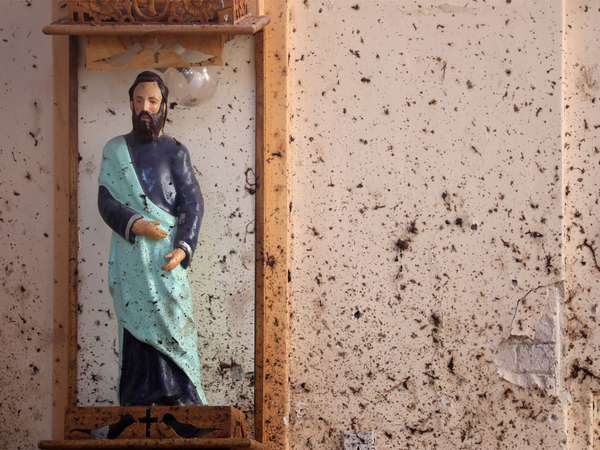
The allegation is almost too large to hold: that elements of the state helped enable the Easter Sunday bombings of 2019 — the churches, the hotels, the bodies, the panic — so that Gotabaya Rajapaksa could ride the smoke into power. It is the sort of allegation that either rewrites a country’s history or destroys the credibility of those who dared say it out loud. There is no middle ground.
If the government proves it, it becomes the administration that finally entered the locked room of Sri Lanka’s post-war security state and found the bodies. If it fails, it becomes something uglier: a government that took the most sacred grief of a country and used it to hunt political enemies. That is a profound moral risk.
The NPP government came to power promising a clean break from the rotten habits of the old order. Sri Lanka needed that rupture. But every revolution eventually finds itself standing before the same old machinery, hand hovering over the same old lever.
In this case, the lever is the Prevention of Terrorism Act.
The PTA is the cursed instrument that swallowed Tamil boys, Muslim men, journalists, and inconvenient bodies. It made detention easier than proof, allowing the state to say: trust us, we know things you cannot know. Now, the new government uses it against the old spymaster. There is dark poetry in that, but also immense danger. If you use the devil’s tools, you should not be surprised when people notice the smell of sulphur on your hands.
The government’s defenders will say this is different—Sallay was a man of power who was the system itself. Perhaps. But due process exists because the state is always tempted to call its enemy guilty before proving it.
Around the world, governments have tried this move before: prosecute the powerful, turn legal action into national cleansing. Sometimes it works. Sometimes it becomes a spectacular self-own.
Brazil’s Operation Car Wash began as a heroic anti-corruption crusade. Presidents, contractors, and party bosses were dragged into daylight. But the investigation became entangled with politics. The halo cracked, Lula da Silva’s convictions were annulled, and the man once imprisoned returned to the presidency.
That is the nightmare scenario for Sri Lanka. You aim at the old regime and miss. The old regime gets up, bleeding but smiling, and says: See? They were never after justice. They were after us. Failed prosecutions are resurrection machines.
In the United States, the 2008 case against Senator Ted Stevens collapsed over prosecutorial misconduct. The question shifted from “What did he do?” to “What did the state do?” That shift is fatal. Once the state becomes the accused, the original crime recedes into the fog.
For Sri Lanka, the trap is especially cruel because the unanswered questions about Easter Sunday are real. The Indian intelligence warnings, the failure to act, the paralysis of the Sirisena-Wickremesinghe government, the extremist networks, the convenient timing—these are not small matters.
But the bigger the allegation, the cleaner the proof must be. You cannot prosecute a national trauma on vibes or convict a spymaster on speeches. You cannot build the biggest case in modern Sri Lankan history on an asylum witness unless they are tied down with steel cables of corroboration: phone records, travel logs, financial trails, and independent witnesses. Something that survives cross-examination. Otherwise, the defense has only to say one word: politics. And in Sri Lanka, that word is never far from the table.
Prosecuting the powerful is not always a mistake; history sometimes demands it. Peru’s Alberto Fujimori and South Korea’s Park Geun-hye both faced the machinery of justice. But those cases mattered because they were built with institutional discipline. No shortcuts. No revenge optics. No hero speeches. No “trust us, we have secret evidence.” That is not justice; it is theatre with handcuffs.
Sallay is a uniquely dangerous defendant. He is not a politician with a bad haircut and a bank account in Dubai; he is intelligence. He is the locked drawer. Men like that know who met whom, who paid whom, and who pretended not to know. If the government has the goods, it must move with surgical precision. If it does not, it is walking into a room full of mirrors.
Many Sri Lankans will not cry for Sallay. The irony of a former intelligence chief discovering the cruelty of the PTA only when it reaches his own cell will not be lost on civil liberties advocates. Fair enough. But irony is not evidence. A man can be morally compromised and still legally not guilty of the thing you most want to pin on him. That is the discipline of justice, and Sri Lanka has never been very good at discipline when politics enters the room.
The worst-case scenario is easy to imagine. Ministers thunder in Parliament. Friendly media leak fragments. The Catholic community is told that truth is coming. Sallay becomes the bridge to the old regime. Then the case reaches court.
Dates wobble. Records go missing. Intelligence material is ruled inadmissible. The PTA detention becomes the story. Sallay’s health and alleged mistreatment become the headlines. Slowly, horribly, the victims disappear from the center of the case.
That is how governments lose the plot. First, the dead are invoked, then the accused is paraded, then the evidence disappoints. Finally, the accused becomes the victim, the old regime claims persecution, and the public shrugs and says: all politicians are the same.
That final sentence is death. Because the NPP was elected to prove that all politicians are not the same.
There is only one safe road. Charge him properly. Protect him physically. Remove obvious conflicts of interest from the investigation and use independent prosecutors. Stop trying the case in Parliament, respect the court, and show the evidence. If the evidence is not strong enough, do not pretend that moral certainty is the same as legal proof.
The Easter dead deserve more than a failed prosecution. They deserve truth. And truth, in a country like Sri Lanka, is not found by shouting. It is found by taking the state’s dirtiest files, putting them under bright light, and refusing to blink even when the evidence cuts against your own story.
The Sallay affair is about whether Sri Lanka’s new rulers can resist becoming what they replaced. That is the real trial. Not of one spymaster, but of the government itself.