
By M.R. Narayan Swamy
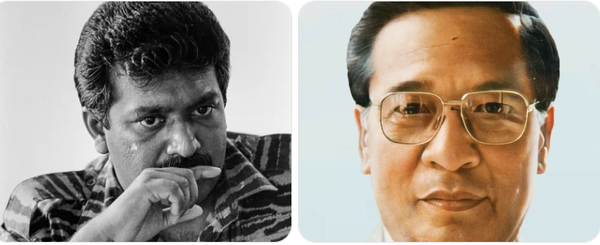
It was in 1966 that the Mizo National Front (MNF) launched its guerrilla war against the Indian state. This was nine years before Velupillai Prabhakaran shot dead the Mayor of Jaffna, and a decade before Sri Lanka witnessed the birth of the Liberation Tigers of Tamil Eelam (LTTE). The comparison is striking not only in timeline but also in scale: Prabhakaran’s envisioned Tamil Eelam spanned roughly 18,000 to 19,000 square kilometres, not far off from Mizoram’s approximately 21,000 square kilometres.
After two decades of violence and terror, the MNF signed a peace accord with New Delhi, transforming Mizoram from one of the most disturbed regions into one of India’s most peaceful states. In contrast, the LTTE, after spearheading a bloody and eye-popping war for over a quarter century, was crushed beyond redemption.
MNF leader Zoramthanga’s gripping book, From Guerrilla Fighter to Chief Minister (Penguin/Black), offers some valuable lessons on why the two insurgencies – no doubt in different settings and eras -- took widely different trajectories and ended with dramatically opposite outcomes.
The first coordinated military salvo by the MNF in 1966 jolted the Indian state, although there was suspicion that something was about to happen. The well-planned attacks were a success, and several police/military posts across Mizoram fell to the rebels. But the biggest of them all, in capital Aizawl, remained in Indian government hands despite bitter fighting.
Zoramthanga viewed the Aizawl failure differently. A devout Christian, he in fact thanks God for the setback. In his reading, had the fighters taken Aizawl, they would have come into possession of millions of rupees from the treasury, along with a vast arsenal of weapons. This, he believed, would have humiliated the Indian state, triggered retaliatory reprisals, and led to terrible bloodshed. Instead of despairing, he expresses gratitude to God for averting such a possibility.
“If Aizawl had fallen and the MNF had ruled all of Mizoram, even briefly, opportunities for error and abuse might have arisen. In the heat of triumph, political vendettas or personal grievances could have led to regrettable acts,” he says. “It would have been difficult to protect the staff and officials from other parts of India living in Mizoram.”
The admission is a rare tribute to the way Mizo leaders consistently placed the utmost importance on the welfare of the people they claimed to represent. This principle lay at the core of their two-decade-long struggle, which saw many ups and downs.
In contrast, the LTTE repeatedly engaged the enemy even when victory was not in sight, calculating that any military retaliation would fuel greater anger among the people and, perhaps, lead to increased recruitment for the Tigers.
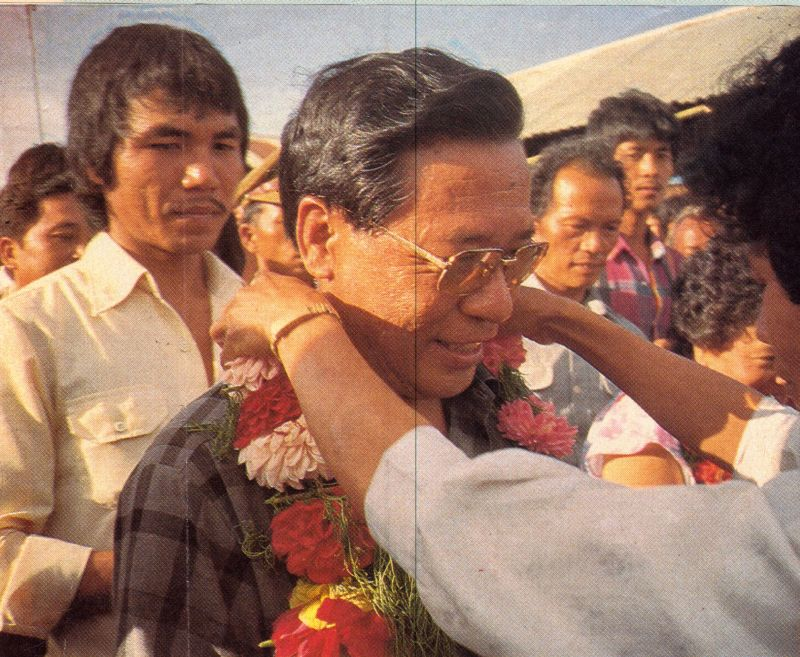
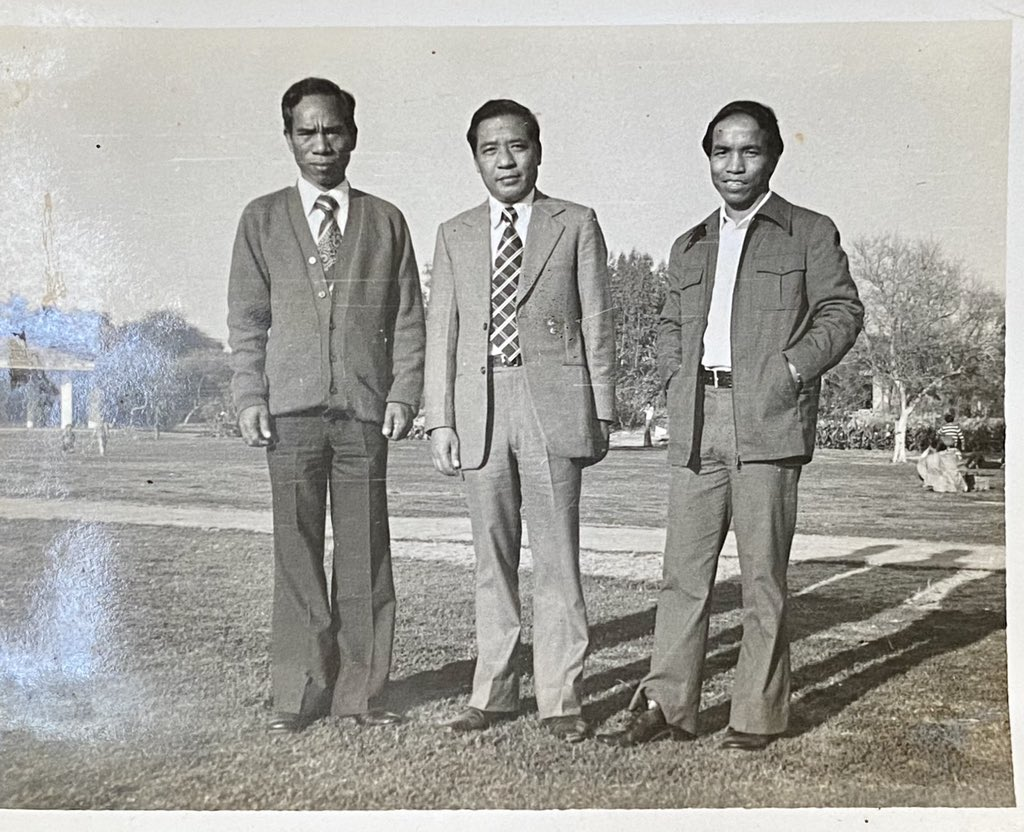
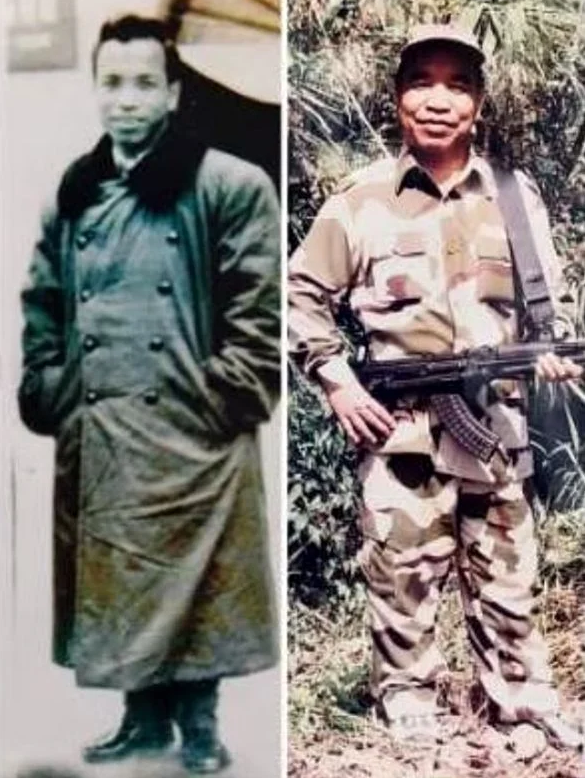
Now 81 years old, Zoramthanga served for long periods as a trusted deputy to MNF founder leader Laldenga. He became Laldenga’s secretary in 1969. Laldenga, a former Indian Army soldier, went on to become the first Chief Minister of Mizoram after it was granted full statehood in the wake of the 1986 peace accord.
Eight years after Laldenga’s death in 1990, Zoramthanga became Chief Minister of Mizoram, serving for 15 years across three terms.
Although the MNF established early ties with both Pakistan and China and secured weapons and money from both countries, its leadership concluded early on that it would be impossible for Mizoram to secede from the Indian union. Pakistan, which, along with China, also trained MNF fighters, hosted Laldenga for many years – first in Dhaka, when it was a part of East Pakistan (now Bangladesh), and later in Islamabad. Even from Pakistani soil, the MNF quietly pursued peace efforts with India, without the knowledge of the Pakistani intelligence. This took Zoramthanga and his comrades on covert missions to Kabul, Bangkok, and Geneva.
LTTE founder-leader Prabhakaran lived in India continuously for more than three years; he too, like Laldenga, did not come under the control or influence of his host government. But unlike Laldenga, Prabhakaran believed he could never be defeated. He brushed aside even friendly warnings to the contrary from well-meaning confidants such as Anton Balasingham.
Laldenga, by contrast, did not allow early military successes to go to his head. Of course, there is no comparison between what the MNF and the LTTE achieved militarily. Unfortunately, Prabhakaran failed to realise that what is won by force can also be undone.
When Zoromthanga and his Mizo friends wanted to abandon their studies and join the MNF, he was advised by its leaders to first finish their graduation. It is this attitude that has made Mizoram, although overwhelmingly tribal, one of the most literate states in India today. In Sri Lanka’s Tamil areas, hundreds of emotionally-charged Tamils quit schools – and were encouraged to do so – to sign up with militant groups in the 1980s without caring for the future. The disastrous consequences are seen now because most former LTTE fighters who survived the war lack the basic educational skills to acquire jobs.
Zoramthanga makes a telling comment even as the MNF was putting down strong roots in Mizoram in the late 1960s: “Freedom cannot be won through arms alone — it must rest on the consent and confidence of the people. One cannot govern rightly with a gun in hand.”
Such thinking would have been anathema to the LTTE, whose leadership was wedded to the dogma that political power grows out of the barrel of a gun — always, at all times.
India was as harsh vis-à-vis the MNF and its supporters — real or perceived — as any state could be. Indeed, some of the punitive measures unleashed by the Indian government were so heavy-handed that they have not been repeated anywhere in later years. Naturally, this affected the morale of MNF cadres, many of whom surrendered to the security forces. The MNF, however, did not brand such individuals as “traitors.”
If anything, the MNF leadership understood the harsh realities. “We could not blame the parents and their children who surrendered — not because they betrayed the MNF’s principles of the freedom movement, but simply because of poverty, as parents needed help, or, in some cases, because of poor health and the need for rest,” writes Zoramthanga.
In Sri Lanka, during the final phase of the war, even child fighters who had been forcibly recruited by the LTTE’s notorious abduction and enlistment units, and who later tried to escape, were tracked down, beaten — their parents too were assaulted — and dragged back into Tiger ranks to fight and die. Most of these children came from impoverished families.
The peace talks between the Indian government and the MNF were not smooth. Both sides had different agendas, and there had to be give and take between the two parties. “The MNF sought to secure as much as possible; the government sought to give as little as it could. The process was long and required patience and perseverance.”
To the frustration of the MNF, the Indian government made unexpected U-turns during the peace process, seriously straining ties with the insurgents. One Prime Minister, Morarji Desai, bluntly told Laldenga: “I don’t trust you.” Indira Gandhi was initially conciliatory but later backtracked.
Yet Laldenga held on, believing that a new dawn was possible — and he was proved right. Finally, Rajiv Gandhi, after succeeding his mother as Prime Minister, signed the peace pact with Laldenga. It has since remained one of the most successful peace accords in the country.
There were fissures within the MNF, too, and some internal killings. Mizo society was not monolithic either. But overall, despite infighting and leadership crackdowns on dissenters, the MNF did not descend into a bloodbath, even though its members were heavily armed.
Zoramthanga writes: “I believe such restraint would be hard to find in any armed insurgency anywhere.” One need not delve into the horrific internecine warfare among Tamil militant groups, in which the LTTE emerged with the worst track record.
Even after the peace accord was signed, the MNF had pessimists. There were misgivings that the government could suddenly go back on its promises, and the MNF cadres would be left in the lurch. Some commanders told the leaders that 40 to 50 of the best weapons should be held back – “just in case”. The MNF brass held firm, telling the fighters that one should never go back on a promise. The group had pledged to give up every single weapon. And that was done.
Yes, Mizoram did not secure independence from India. But today’s Mizoram is not only one of India’s most peaceful states, it also has many economic and social achievements to its credit. This would not have been possible but for the visionary leadership that the Mizo insurgency produced — a quality less evident in the LTTE’s trajectory.