
Prof. Mahesh Nirmalan MD, FRCA, PhD, FFICM
In the legendary film director K Balachander’s 1981 film ‘Thanneer Thanneer’ (or Water Water), a village’s struggle for water becomes a parable of neglect. Four decades later, this parable is being replayed in parts of the Northern province in Sri Lanka.
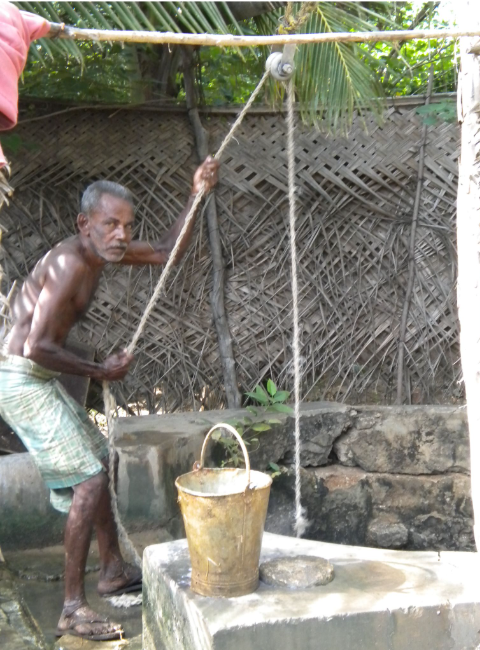
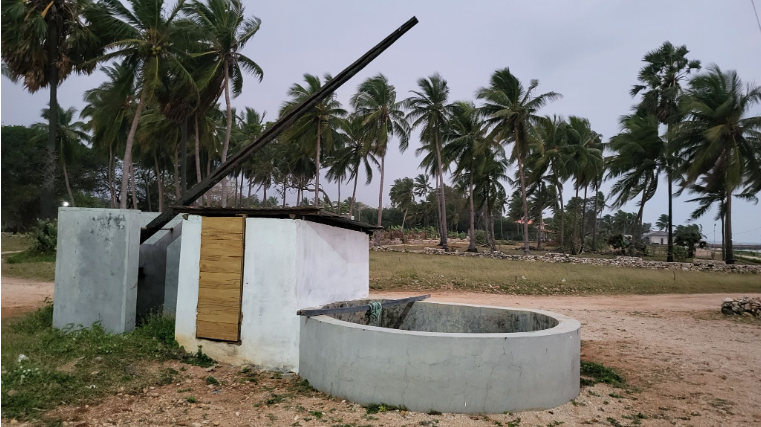
For generations, the people of Jaffna have lived amidst water scarcity. Walking approximately 2 miles daily to a common well (‘Aththai well’ or அத்தாய் கிணறு or අත්තායි ලිඳ in Karainagar) or carrying water from the adjacent Nallur temple were part of daily experience of the author - born in Karainagar in the early 60s before moving to Nallur in the mid-70s.
Situated within Sri Lanka’s dry zone, the Jaffna peninsula has no perennial rivers and cannot depend upon the irrigation reservoirs that sustain agriculture elsewhere on the island. Instead, its civilisation developed around more fragile shallow underground aquifers. Thousands of shallow wells drew from freshwater lenses within these limestone aquifers. They supplied water for drinking, cooking, livestock and agriculture, enabling the cultivation of onions, chillies, vegetables, fruits, tobacco or paddy - the hallmarks of the ‘Jaffna brand’. The wells were therefore not merely a source of water, but rather the very backbone of ‘Jaffna life ’-utilised with prudence and reverence.
The geology that made this possible is also what makes Jaffna’s water supply extremely vulnerable. Rainwater passing through the porous limestone creates a freshwater lens that floats above salty water connected to the surrounding sea. This lens becomes thinner towards the coast, and its quality at any given time varies with rainfall, extraction, depth, land use, and proximity to the sea. Excessive pumping can weaken this precarious balance and increase the risk of saltwater intrusion. Research has also identified nitrate contamination associated with intensive cultivation and septic bacterial contamination in some locations. These relentless changes to the aquifers are no longer theoretical. A study undertaken on Punguduthivu Island found severe freshwater scarcity during the dry season, with most wells affected by low water levels and high salinity.
Further evidence on this subject comes from Karainagar. Karthiga and colleagues monitored 36 wells over three years, from October 2019 to September 2022, recording rainfall, well-water level, electrical conductivity and acidity. Their findings show considerable fluctuations in the aquifer through the seasons. During the rainy seasons, water levels rose and salinity reduced. In the drier months, however, water levels declined, and salinity increased. The cumulative rainfall required for full recharge for Karainagar was estimated to be from 652 to 892 millimetres between years, averaging 739 millimetres. Once the freshwater lens is replenished, the excess water from the monsoonal rains runs off into the sea unless ponds, wetlands and other suitable retention areas hold it for storage. Poor maintenance of these storage waterways during the war and the loss of traditional knowledge in water conservation meant that more monsoonal water was lost to the sea with poor recharge of the aquifers.
The tragedy, however, is that neither the findings from Punguduthivu nor Karainagar are surprising or novel. It is a phenomenon well known to every ordinary villager living in these islands. The deterioration of Jaffna’s groundwater has been observed, studied and discussed for decades. But the gulf between knowledge and mitigatory action has been frustratingly wide. Reports have accumulated in dusty cupboards, conferences have been held, and proposals have been drafted, but practical interventions have remained few and far between. While the professionals ‘discussed’ and ‘presented papers’, desperate citizens - with no formal education in hydrology- came up with home-made contraptions to capture and filter rainwater draining down their roofs during the monsoons. This harvested water was then discharged into their own wells in order to ‘recharge’ the aquifers. The effectiveness of such local ingenuity remains unverified to this day.
Against this background, the role of the Greenlayer Environmental Organisation - a small community organisation in Jaffna, deserves attention. It is a small, volunteer-led initiative based in the village of Neerveli, and its experience within a short time scale demonstrates what communities can achieve when they refuse to wait passively for a perfect government-lead solution. Despite their humble beginnings and modest resources, Greenlayer now reports that since 2020 it has planted more than 150,000 saplings across the region.
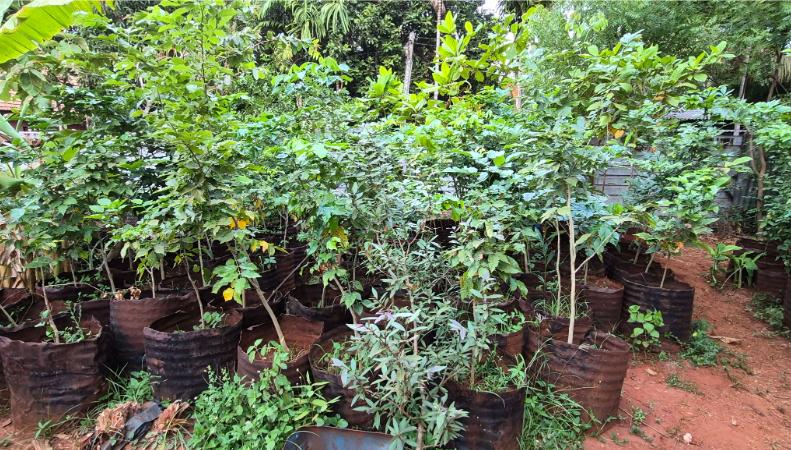
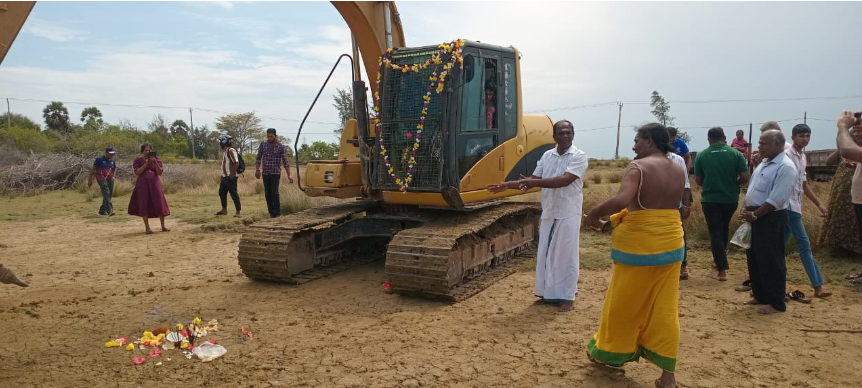
Furthermore, Greenlayer has successfully established two mini- forests using the Miyawaki method on privately owned land at Navatkuli and in the Vattukottai area. In September 2026, it launched its most ambitious undertaking - the creation of an artificial lake of approximately ten acres in the Puttur East region, intended to capture excess water during monsoonal rains and contribute to local groundwater recharge.
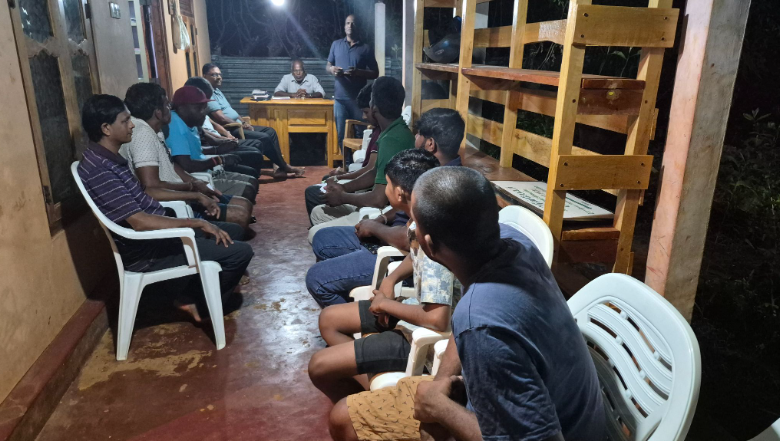
Such projects on their own - despite the noble intentions, will clearly not rescue the aquifers of the Northern peninsula. Nor should every tree-planting campaign, pond or artificial lake construction automatically be assumed to improve groundwater security in the region. Species selection, catchment characteristics, soil permeability, evaporation, maintenance, water quality and local hydrogeology all matter. Projects undertaken on state land must be founded upon transparent approval, environmental assessment and continuing scientific supervision.
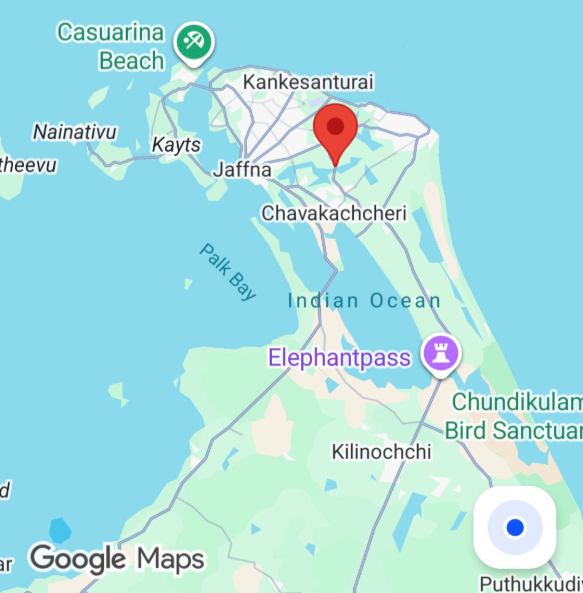
Nevertheless, Greenlayer’s underlying philosophy is both sound and urgent. Water falling upon the peninsula during monsoonal rains must, wherever environmentally appropriate, be captured and allowed to percolate into the soil. Degraded land must be restored, and tree cover in the region must be expanded using species suited to local conditions. Existing ponds, wetlands, drainage routes and recharge areas must be protected. Above all, communities must be treated as custodians of the aquifer, rather than as entitled consumers of water. The fact that the proposed lake in Puttur is to be located in what used to be a traditional floodplain is an encouraging sign suggesting Greenlayer is operating under the guidance of a team that understands local hydrology.
Local Action to an Impactful Movement - the Rajasthan Experience:
There is considerable international evidence that modest community initiatives can cascade far beyond their original scale. One of the most instructive examples comes from Rajasthan in India. Beginning in the village of Gopalpura during the 1980s, ‘Tarun Bharat Sangh’ worked with villagers to restore 'Johads', traditional earthen structures that capture seasonal rainwater and allow it to percolate into the ground. A case study published by the Council on Energy, Environment and Water records that between 1985 to 1988 Tarun Bharat Sangh had constructed 13,800 functioning rainwater-harvesting systems contributing to the rejuvenation of 13 rivers. The report identifies strong community ownership and village-level institutions as central to the programme.
The Rajasthan story also offers an important caution. Community ownership cannot be invoked as a comforting slogan while decisions remain concentrated among a few individuals or powerful landowners. One published critique of a 'Johad' project identified disputes concerning authority, water rights and the equitable distribution of benefits. Environmental projects therefore require clear land tenure, transparent decision-making and prior agreement about who will gain access to the water conserved. In this context, the construction of mini forests in privately owned land by the Greenlayer movement - both in Navatkuli and Vattukottai- raises concerns over their longevity.
Parallels in Africa:
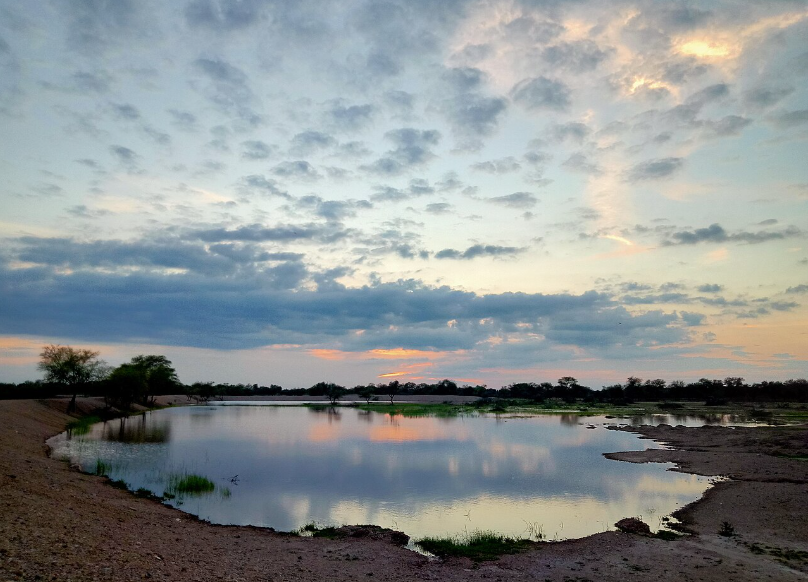
In Ethiopia, long-term community-based watershed restoration has employed soil and stone bunds, terraces, check dams, gabions and protected areas to slow runoff, reduce erosion and increase infiltration. Evidence from watersheds in Tigray, Dire Dawa and East Hararghe points to improvements in vegetation, soil condition and water availability as a result. A multi-method assessment across six Ethiopian watersheds reported increased vegetation and water availability across all the areas studied. In some areas, farmers moved from one annual cereal crop to three vegetable harvests a year with significant impact on livelihoods.
Yet these examples do not prove that every undertaking described as ‘community-based’ will succeed. Research from Uganda’s Awoja watershed found only average levels of community participation and concluded that people should be involved throughout the project cycle. They should not simply be recruited as labourers after the important decisions have already been made. A community project is not merely a government, charitable or diaspora-funded project carried out in a village. It is one in which local people participate in identifying the problem, choosing the intervention, governing the asset, monitoring its effects and sharing its benefits.
The lesson for Jaffna, therefore, is not to copy the experiences of Rajasthan, Ethiopia, or Uganda. These regions have different geological or rainfall patterns, community attributes and legal imperatives. It is to recognise that community labor, traditional knowledge and modest finance when coupled with modern science and governed effectively can deliver change at scale. One pond or one mini-forest may seem insignificant. But hundreds of catchment ponds, restored village water ways and monitored tree belts could begin to shift an entire ecosystem in a positive direction.
Environmental Interventions Need Objective Validation:
Greenlayer’s plantations, mini forests and planned Puttur lake should therefore be regarded as more than isolated environmental activities. They should become demonstration sites for a new form of community-led development, supported by robust science and public accountability. The new lake project in Puttur should build directly upon the Karainagar/Punguduthivu approach, beginning with baseline measurement of groundwater levels, electrical conductivity, salinity, pH, rainfall and water quality in surrounding wells, followed by more frequent observation during the rainy season and continued through the dry months. Monitoring should continue after construction so that its actual influence upon water retention and recharge can be assessed. Changes in surrounding vegetation, agricultural output and livestock use should also be documented. If the project produces measurable benefits, the evidence could support carefully adapted replication elsewhere. If some anticipated benefits do not materialise, transparent monitoring would still provide valuable lessons. Such an approach can only materialise if organisations such as Greenlayer are partnered with academic institutions in Jaffna and/or beyond.
A Constructive Role for the Diaspora:
For decades, the global Sri Lankan diaspora has supported schools, hospitals, places of worship, welfare programmes, village associations and emergency relief. These contributions sustained families and institutions through war, displacement and economic crisis. The next stage of diaspora engagement should place environmental and water security alongside education and healthcare. Lack of reliable water supplies affects all aspects of life resulting in the loss of traditional habitats and mass emigration. Water security is therefore a fundamental condition for the continuity of a community. Community-owned environmental projects therefore deserve priority within the development agenda. A functioning recharge pond, restored wetland, protected catchment or a carefully managed series of mini-forests are not aesthetic value additions. They are ecological pre-conditions for a community’s very survival.
However, diaspora support must not create a culture of remote control. Funding from London, Toronto, Paris, Sydney or Zurich should not displace the knowledge and judgement of people who live beside the wells and cultivate the land. The strongest model would combine local leadership with diaspora finance, professional expertise and transparent accountability. Projects should disclose land ownership, permissions, budgets, contractors, ecological assessments and monitoring results. Diaspora donors should finance not only visible construction but also the less glamorous work of scientific surveys, maintenance, consultation and independent evaluation. This would move diaspora engagement beyond episodic charity towards long-term investment in the ecological foundations of Sri Lanka.
Beyond Wells to Nation Building:
These initiatives also offer an important opportunity for Sri Lanka’s NPP government. The NPP’s 2024 manifesto referred to a united Sri Lankan nation, sustainable resource use, food security, productive land management and scientific approaches to social problems. Sri Lanka’s National Environmental Action Plan for 2022–2030 includes climate action, integrated water-resource management, sustainable land management and coastal conservation. Community-led groundwater protection in the North can therefore be connected to declared national priorities.
The state’s role should not be to take over successful voluntary organisations, politicise their achievements or outsource its own responsibilities to unpaid volunteers. The government must provide the regulation, legal framework, scientific capacity and larger infrastructure that communities cannot provide for themselves. It can make carefully selected state land available through transparent procedures, commission coastal groundwater monitoring and connect community organisations with technical institutions such as the newly established Multi Disciplinary Environment and Health Research Centre (MEHRC) at the University of Peradeniya. Ring fenced pump-priming research grants between the Centre of Digital Epidemiology (CODE) at the University of Jaffna and MEHRC could support partnerships between different academic communities to develop the theme of ‘Environment and Health’ to globally competitive standards. This may be done effectively by tracking changes in the composition of coastal water and the rise of non-communicable diseases (hypertension and chronic kidney disease in particular) along the entire coastal belt.
It is too simplistic if not naive to believe that such partnerships alone can erase the scars of the war - suffered by all communities. Planting trees is not an alternative to confronting difficult political questions. Yet practical cooperation can create spaces in which trust grows through shared work and visible collective solutions to common challenges. Water provides an unusually powerful foundation for such cooperation because it belongs to no ethnicity. Salinisation, drought, land degradation and excessive extraction threaten Sinhala, Tamil and Muslim communities alike. Protecting aquifers and catchments can therefore become an expression of shared citizenship without requiring any community to abandon its history or identity.
Beyond Greenlayer - A Way Forward:
A ten-acre lake will not save all of Jaffna’s groundwater. Two mini-forests will not reverse climate change. One hundred and fifty thousand saplings will not restore every degraded landscape. But that is the wrong way to evaluate such work. Large transformations are often the accumulated result of disciplined local action and Greenlayer’s greatest contribution is therefore the example it sets. A small group of volunteers who recognised a threat, mobilised community resources and began implementing tangible solutions - they went beyond ‘talking’, they launched an ‘Action plan’. Its work deserves scrutiny, scientific support and governance. It also deserves recognition and investment.
The wells of Jaffna are an inheritance from the landscape and from generations who learnt to live within its limits. Allowing them to degrade – qualitatively and quantitatively, would be an ecological failure and a betrayal of the unborn generations. Protecting them could renew rural livelihoods, give the diaspora a constructive long-term mission, rebuild confidence in collective action and create practical bridges between North and South.
That is not merely environmental conservation. It is nation-building from the ground up.
Notes:
- The views expressed in this article are those of the author only. They do not represent the views of the University of Manchester on the subject.
- Conflict of interest: The author serves as an Hon member in the advisory panels of Greenlayer Jaffna, CODE Jaffna and MEHRC Peradeniya.