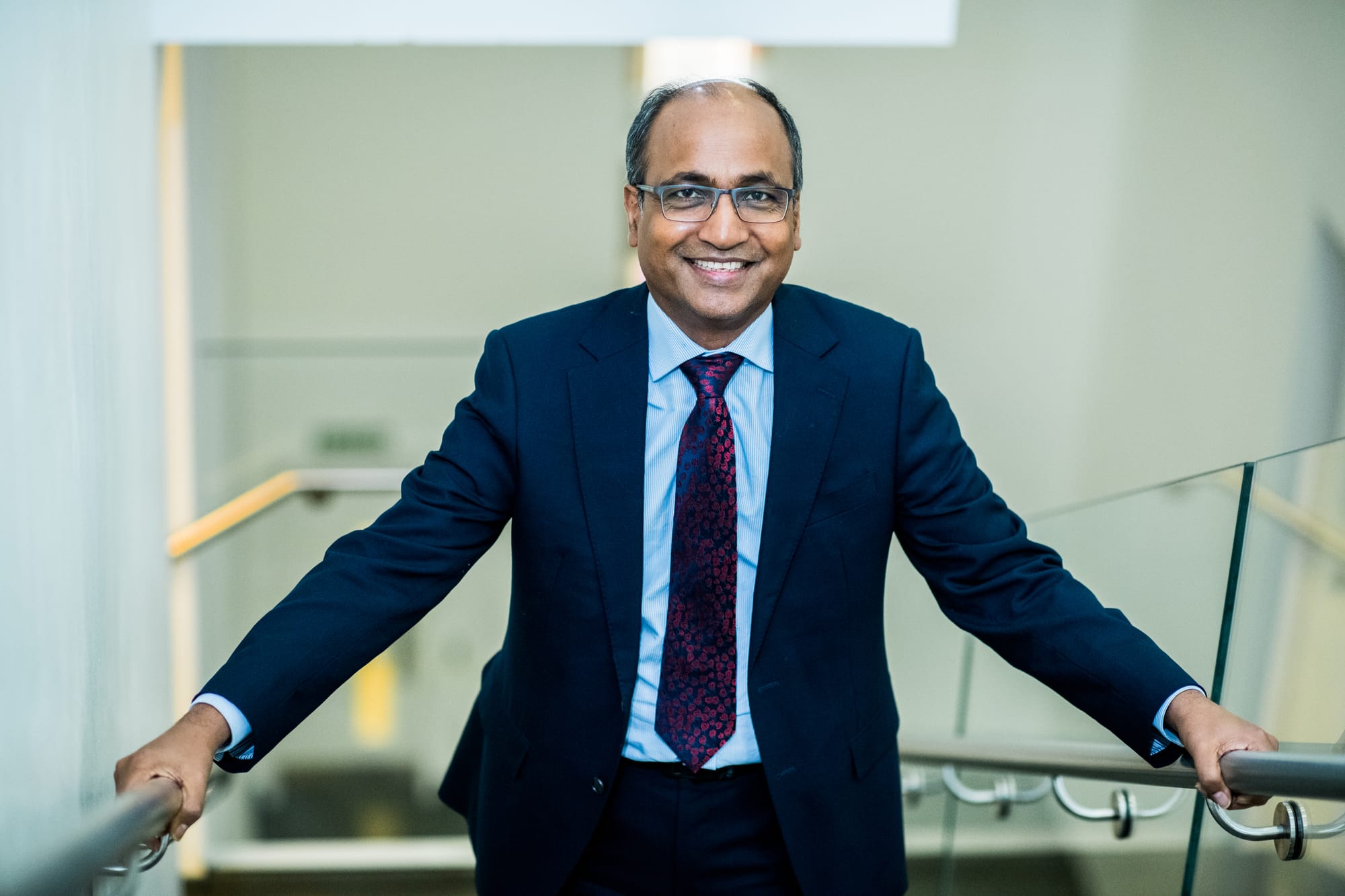


By Prof. Mahesh Nirmalan, MD, FRCA, PhD, FFICM,
University of Manchester
Religion is often viewed as a collection of beliefs about god, divinity, creation, salvation, after-life, scripture, ritual and morality. Despite variations in how these concepts are perceived within each tradition, there lies a noticeable pattern in the evolution of religious thought that manifests across most major religions. At various moments, thinkers and reformers have challenged the dominant paradigm of their age. They have questioned the concept of god, dominance of priesthoods, the relevance of rituals, the exclusivity of religious institutions and the assumption that divinity lies entirely outside the individual. Instead, they directed their followers inward, towards self-knowledge, contemplation, meditation and a direct experience of ‘Divinity’. This recurring universal phenomenon may be seen as a spiritual counter-revolution. Despite differences in language and theology, all these movements share a common premise that the deepest spiritual truths are not merely received from outside but experienced within. The story does not however end there as human beings - across cultures, also concurrently return to prayer, devotion and the search for a transcendent God who listens, protects, forgives and consoles. Even traditions founded upon inward exploration frequently develop devotional forms centred upon an external god. This oscillation between an ‘external god’ and ‘internal spiritual experience’ needs further exploration.
The External God:
Most religions begin with what may be called the external God paradigm. Human beings encounter forces they cannot control - disease, death, drought, famine, natural disasters, war, infertility and suffering. In many of these instances ‘science’ or rational thought do not provide answers to the keyquestion ‘Why Me?’. Faced with these realities, they naturally seek assistance from powers beyond themselves.
We may characterize this as behaviour born out of desperation, but desperation too is a valid human condition for which rationalism does not provide a suitable answer. Most forms of traditions therefore invoked gods or destiny defined through past actions in discourses related to such live-events. The irony however is that unless faith is absolute - even during good times, its effectiveness in troubled times is limited. This implies that faith, if it is to fulfill its purpose, needs to be pervasive and a constant presence in life.
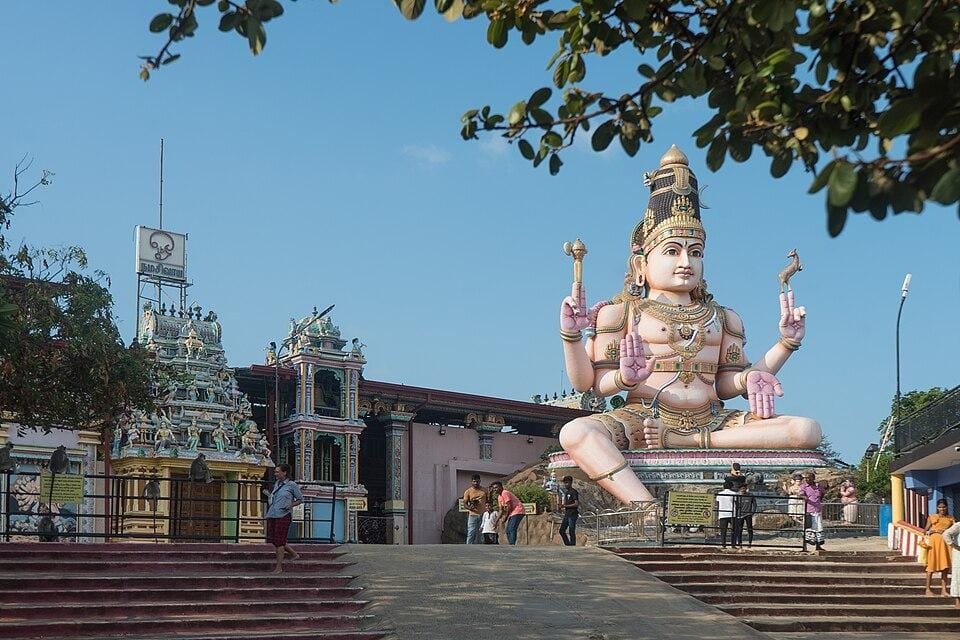
Rituals, sacrifices and prayers were devised in an attempt to establish a relationship with these unseen powers. The sacred was external and the gods were approached through priests, temples, rituals and sacred texts. Salvation, blessing or protection came from the realms of gods or ‘meritorial actions’. Religion in effect became a bridge between a vulnerable humanity and a transcendent power. This model proved enormously successful because it addressed fundamental properties of the human condition.
Human beings are rational creatures, but they are also vulnerable creatures. Science may explain a disease but it cannot remove the grief of a parent who loses a child. Technology may improve life but it cannot eliminate mortality. Politics may address injustice but it cannot abolish suffering. In such circumstances the need for an external scaffold to share the weight of human burdens is very real and organic. This universal need cannot be discarded as ‘superstition’; as the argument ‘what cannot be measured does not exist’ simply does not meet the totality of the human condition.
The First Great Internal Revolution:
The oldest and perhaps most influential inward turn emerged within the Indian religious tradition. Early Vedic religion was centred upon rituals, sacrifice and priestly authority. Complex ceremonies were performed to sustain cosmic order and prosperity. Religious expertise rested with groups defined by birth in possession of ritual knowledge. Over time, however, profound questions such as could ultimate truth really be confined to ritualistic performance?; could spiritual fulfilment be purchased through sacrifice?; or is there something deeper than ceremonies and offerings? emerged. The authors of the Upanishads answered this dilemma by shifting the entire focus of religion inward. Rather than focussing on sacrificial rituals they examined consciousness and instead of asking how to appease the gods, the focus shifted to examining who we are and what our relationship was with creation. Their conclusion was refreshing.
They concluded that an individual - being an integral part of creation, cannot be seen or understood in isolation. Therefore the spiritual quest became a journey of self-discovery and viewing the self (Atman) as an integral component of the universe (Brahman) - experientially rather than merely intellectually. The centre of religion thereby moved from the altar to the self. Centuries later, Advaita Vedanta carried this logic even further. In its purest form, Advaita suggested that the apparent separation between the individual (or Jeevathma) and ultimate reality (Paramathma) is itself an illusion arising through ignorance (or Avidya). It argued that the seeker and the sought are ultimately one. This was perhaps the most radical challenge ever mounted against an omnipotent external God.
A Revolt Against Ritualism, Hierarchy and Exclusion:
This inward turn was not simply a reaction to ritual. It was often a response to deeper moral and intellectual tensions within religious systems. When religion - with a focus on external deities, becomes heavily institutionalised the following three tendencies frequently appear.
- Ritualism: The assumption that external observance is more important than inner transformation.
- Hierarchy: the creation of privileged and subordinate categories within the spiritual community.
- Exclusivity: the belief that one particular path enjoys unique access to salvation or truth.
Shifting the focus of religios life inward challenged all three. Dissatisfaction with ritualism was accompanied by discomfort with inherited social privilege and caste distinctions in many societies. Advaita Vedanta’s position was that if all beings are integral parts of a single ultimate reality, social hierarchies lose their meaning. Inward spirituality therefore became not merely a philosophical exercise but a form of spiritual egalitarianism.
Counter currents in Buddhist societies:
Buddhism may represent the most complete expression of the inward revolution. The Buddha did not place a creator God at the centre of his teaching. Instead he focused upon suffering and the liberation from suffering by addressing its causes. Meditation became the medium of exploration whereby the practitioner reflected upon craving (Tanha), attachment (Upadana) and ignorance (Avijja) within his/her mind. No priest could perform this task on another's behalf, no sacrifice could replace it and no inherited privilege guaranteed enlightenment.
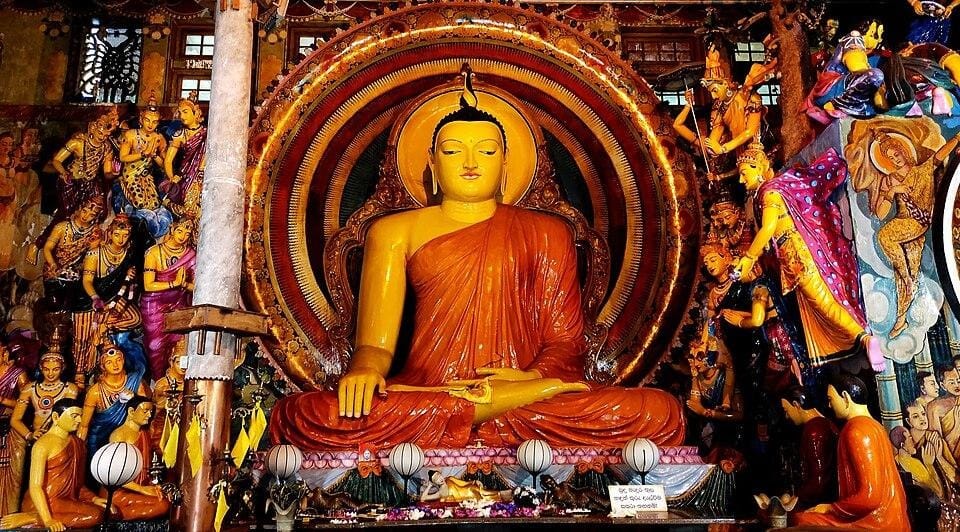
Yet Buddhism – as practiced in the real world, also reveals one of the central paradoxes of religious history. Despite its strongly inward orientation, most Buddhist societies developed rich devotional traditions. Buddhists pray and visit temples. Most Buddhist temples in Sri Lanka – the home of Theravada Buddhism, have a ‘Devalaya’ where various deities can be worshipped and venerated. They seek blessings by paying homage to the tree under which the Buddha achieved enlightenment (Bo Tree or Ficus Religiosa) – the ‘Bodhi Pooja’. They ask for protection and transfer merits to departed ancestors. In many parts of Asia, the Buddha himself functions as a divine incarnate (of God Vishnu - the protector God in Hinduism) and the human need for an external sacred reasserts itself.
Judaism and Christianity - Between Transcendence and Immanence:
The same pattern appears in the Abrahamic traditions. Judaism emerged around the idea of covenant between God and a particular people. The God of Judaism is profoundly transcendent, revealing divine law and guiding history from beyond creation. Yet Judaism also generated mystical movements that sought the divine within and amongst fellow humans. The 20th-century philosopher Martin Buber was one of the most recognised proponents of inward spirituality over external ritualism. At a time of highly institutionalised European synagogues, Buber argued that true religion is not found in dogma, laws, or formal prayers but rather that God can only be met through authentic, direct, and unscripted relationships with one’s inner self, fellow human beings and the world.
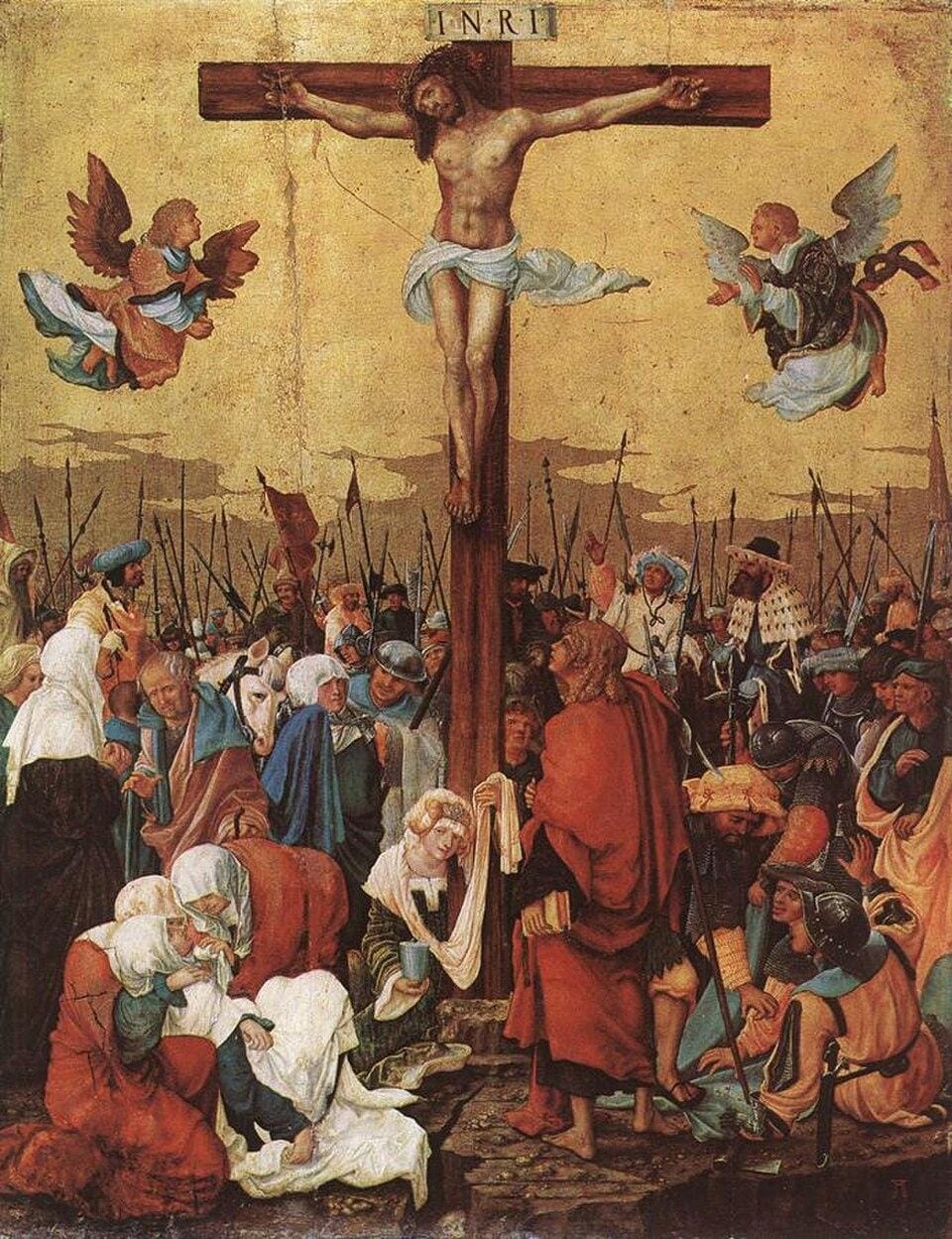
Christianity displays the same dual movement. On one hand, Christianity is deeply relational with an omnipotent god. Christian history however also produced powerful counter traditions such as ‘Christian Gnosticism’ which did not view God as an external entity. In these traditions divinity was a fundamental reality which was entirely bound up within the individual being and the cosmos. In early Christianity these sects rejected the traditional concept of a creator god as a distortion of truth. Meister Eckhart (1260-1328) spoke of the “birth of the word in the soul”. Teresa of Ávila described an interior castle through which the seeker journeys towards union with God. The Quakers emphasised the Inner Light present in every individual. Again, the same pattern emerges. The institution points outward but the mystic revolts by seeking divinity within.
Islam and the Universalism of Sufism:
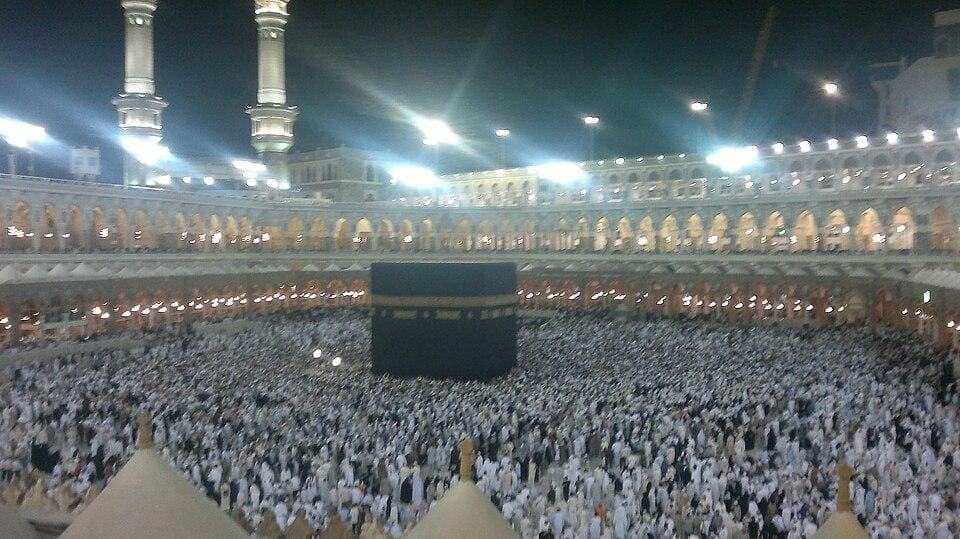
Islam also contains this duality. The Quran emphasises divine transcendence. God is sovereign, merciful and utterly beyond comparison. Prayer, fasting and pilgrimage form the framework of religious life. Yet Islamic civilisation produced one of humanity's richest mystical traditions. Sufism sought direct experiential knowledge of God and for the Sufis, religion was not merely about obedience to law but transformation of the heart.
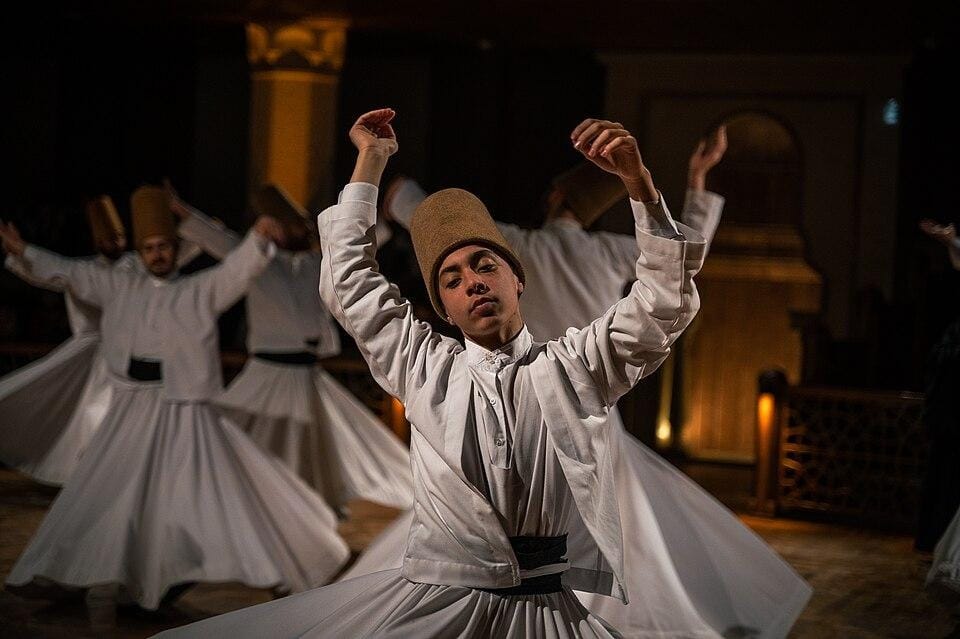
Rumi – the famous 13th century Sufi poet, described the soul's longing for union with the divine. Many Sufi traditions softened rigid distinctions between insider and outsider by emphasising the universality of divine love. Here again the inward path emerged partly as a response to excessive legalism, formalism and exclusiveness.
External God Never Disappears:
If the inward traditions are so compelling intellectually and spiritually, why do they never fully replace devotional religion? The answer may lie in human nature itself. Whereas the inward traditions satisfied human intellect an external God was perhaps needed to satisfy human emotions. Meditation may cultivate insight but it does not provide consolation. Philosophy may explain suffering but it felt cold and indifferent in the face of personal grief. A mother praying for her sick child is not conducting a philosophical inquiry or a refugee fleeing war is not seeking metaphysical non-duality. They seek hope and comfort that the ‘rational world’ is unable to offer.
This need appears almost universal. Perhaps it is psychological but the response it evoked - in the form of an external omnipotent god, could be an evolutionary survival mechanism too. Whatever its origin, it repeatedly recreates devotion even within traditions originally centred upon introspection.
The Oscillation of Religious History:
The history of religion therefore resembles a pendulum. External religion creates community, identity, continuity and hope. Over time it may also produce hierarchy, exclusivity and excessive ritualism which give rise to inward movements that challenge these tendencies. They affirm direct access to the sacred, affirm spiritual equality and redirect attention towards consciousness and inner transformation. Yet these movements often become too abstract for the practical and emotional needs of ordinary people enabling the gradual return of devotion. New institutions with new hierarchies develop and the cycle begins again.
This pattern can be observed in Hinduism, Buddhism, Judaism, Christianity and Islam. The recurring appearance of mystical traditions across all major faiths suggests that this is not an accident of history. It reflects something fundamental about being human.
A Universal Theory of Spirituality:
Perhaps the deepest lesson is that neither side possesses the whole truth. The inward traditions remind us that spiritual authority cannot be monopolised by priests, caste, institutions, ethnicity or creed. They insist that every human being possesses the capacity for direct encounter with the divine. The devotional traditions remind us that human beings are not merely seekers of knowledge. They are vulnerable creatures living under the shadow of suffering and death, who in times of crisis seek communion, hope and trust. Thus, the God within speaks to our longing for truth and the God beyond speaks to our longing for refuge.
Both impulses are real, permanent and authentic reflecting different facets of the human condition. The relationship between these impulses may be compared to the two rails of a railway track. Faith in a God beyond and the search for the divine within run in parallel and do not necessarily ever converge. In the larger human conversation, so too do faith and rationalism. The rails do not merge, and neither needs to absorb or defeat the other. Yet both are necessary if the train of human civilisation is to move forward steadily without leaving the track. Their distinctiveness is not a failure of reconciliation, but part of the balance that makes the journey possible.

Conclusion:
The emergence of the Upanishads, Buddhism, Jainism, Vedanta, Jewish mysticism, Christian contemplation and Islamic Sufism represents far more than a series of isolated religious developments. Together they reveal a recurring cross-cultural debate. These movements arise whenever religion becomes excessively dependent upon ritual, hierarchy, exclusivity or external authority and redirect attention to direct spiritual experience. In doing so, they challenge the idea that access to ultimate reality can be monopolised by birth, caste, clergy, institution, ethnicity or creed.
Yet humanity never abandons the external God. Faced with mortality, suffering and uncertainty, people continue to seek a transcendent God capable of offering hope, comfort and meaning. Even the most introspective traditions eventually tilt towards devotion. The heart repeatedly reclaims what the intellect seeks to eliminate. The true story of religion may therefore not be a battle between faith and reason, or between orthodoxy and mysticism. It may be something more profound representing an enduring attempt to reconcile two fundamental and authentic human needs - the desire to discover the sacred within and the desire to encounter the sacred beyond. Across most great religions of the world, that conversation continues. Indeed, it may be one of the defining conversations of civilisation itself.
The ideas and opinions expressed in this article are those of the author alone. They do not represent the views of the University of Manchester on the subject