
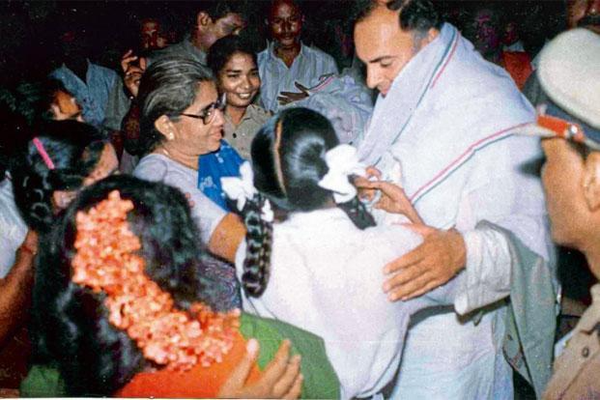
May 21, 1991, was one of the busiest and most sensation-filled days in my journalistic career. That night, former Indian prime minister Rajiv Gandhi died a horrific death when a suicide bomber blew him up at an election rally near Chennai.
The news excitement dragged on for days as Indian investigators began to piece together the numerous fragments of the jigsaw puzzle to get to the bottom of who had ordered the high-profile assassination of a member of the Gandhi-Nehru family.
I was in the AFP office in Delhi one evening when I got a telephone call from Chennai. The man at the other end was Amod Kanth, an illustrious Indian Police Service (IPS) officer who had been deputed to the Special Investigation Cell (SIT) formed to crack the assassination plot.
I had known Kanth from his days in Delhi Police when I lent a hand in covering the crime beat. But it was mystifying that he was calling after so many years.
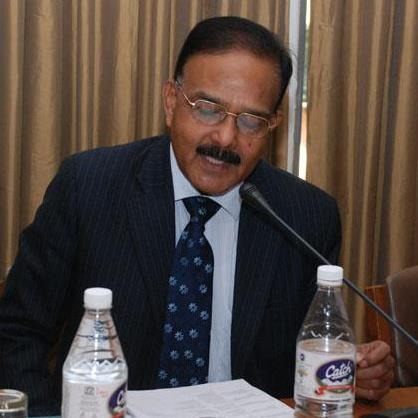
Amod Kanth
After the preliminary pleasantries, Kanth came to the point. On the night of May 21, had I spoken to Subha Sundaram, a photographer in Chennai? If yes, could I share the gist of that conversation?
I readily conceded, although I was a bit surprised by the strange request.
Sundaram, I explained, was the AFP photo stringer in Chennai. We had similar stringers all across India. They were not AFP employees but would feed news photographs on request in the event of important events.
On the day Rajiv was killed, the AFP’s chief photographer for South Asia, Douglas Curran, was very busy and also spoke only English. The other photographer, R. Raveendran, knew Tamil but was not in the office. So, Douglas asked me to tell Sundaram (in Tamil) that we needed a photograph of the tragedy, and real fast. I did that.
“Did you and Sundaram speak about anything else?”
“No,” I replied, and that was the truth. I was a little intrigued by the query.
Kanth then asked how much AFP paid stringers for photographs. At that time, a stringer received Rs. 500 for a black-and-white snap and Rs. 800 for a colour print.
By then, I had begun hearing a whirring sound deep in the background, as if our conversation was being recorded. I probed Kanth about this. My surmise was correct, he admitted, somewhat embarrassed.
This is when Kanth threw a bombshell.
He said Sundaram was detained on the night of May 21 because he was speeding on a two-wheeler from Chennai towards the assassination site. He admitted he was looking for the camera of Hari Babu, a young Indian photographer who had been killed in the suicide blast.
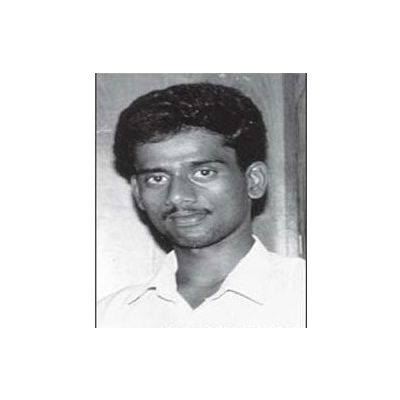
Hari Babu
Ironically, Hari Babu died while taking the final immortal pictures of Rajiv Gandhi who was about to be garlanded by a Tamil Tiger female suicide bomber, later identified as Dhanu.
An understudy of Sundaram, Hari Babu had no idea that he had been instructed to record an event that would unleash death. Unaware of the conspiracy, he also captured photographs of three others who were part of the “killer team” – Sivarasan and Subha of the Liberation Tigers of Tamil Eelam (LTTE), and Nalini, an Indian woman accomplice. These photographs would later prove invaluable to the SIT.
“You see, while being questioned, Sundaram said he wanted to pick up Hari Babu’s camera because you had told him to do so,” Kanth said.
It would be a gross understatement to say that I was shocked by the unfounded allegation.
I protested my innocence. I never told Sundaram anything of that kind, I insisted. Also, how was I, in Delhi, to even know on May 21 that someone had photographed Rajiv Gandhi in the moments leading to his death and that such a camera, surprisingly undamaged by the heat of the explosion, lay amid body parts?
Very true, Kanth replied, as if to assure me. “But our duty is to check everything.”
Would I visit Chennai anytime soon? If and when I did that, I was told to meet Kant at ‘Malligai’, the heavily-protected-secure SIT office in Adyar area.
Adyar was one place in Chennai I was familiar with as I had stayed there more than once. Some of the iconic temples in the vicinity were my prime attractions.
About a week later, I called on Kanth at his office. Seeing me, he stood up from his seat, gave a broad smile, extended his hands and blurted out: “Don’t worry, Narayan Swamy. You are in the clear. Subha Sundaram has admitted that you knew nothing. In the heat of the moment, he made up the story when he was detained and questioned.”
I heaved a huge sigh of relief. Kanth then introduced me to some of his colleagues. One of them was Radha Vinod Raju, a very fine IPS officer who was also on deputation to the CBI. In no time, we struck up a friendship that grew stronger until his unfortunate passing. Thanks to his ability to read and speak Tamil and his quick grasp of detail, he soon became a walking encyclopaedia on the LTTE and Velupillai Prabhakaran. I cannot count the number of days and nights we spent discussing our mutual favourite subject for hours on end. Much later, he went on to become the first head of the newly formed National Investigation Agency.
Whatever may have caused Sundaram to concoct a story about me, I felt sorry for him when he was snared in the Rajiv case and imprisoned. After his release, he passed away. I was told that he broke from within while in jail, apparently due to guilt. I am reasonably sure he had no idea that Rajiv Gandhi was to be assassinated on May 21.
In that sense, Sundaram was a victim of the LTTE’s use-and-throw deviousness. Like many others in India, Sundaram may have thought that he was simply helping a group fighting for the liberation of Tamils in Sri Lanka. He would not have known that his closeness to the Tigers would one day cost him his freedom – and peace of mind.
I met Sundaram only once. That was in October 1990, when I camped in Chennai for 16 days to research my first book, Tigers of Lanka. Tipped off by friends that Sundaram knew LTTE operatives in Tamil Nadu, I went to his house without telling him in advance why I wanted to meet him.
Sundaram received me warmly. When I explained the purpose of my visit, he sighed. “I wish you had told me in advance, or at least arrived half an hour earlier. Baby Subramanian was here. He would have spoken to you.”
Baby Subramanian was one of Prabhakaran’s earliest associates. He was said to be responsible for maintaining liaison with politicians and others in Tamil Nadu. Yes, Sundaram knew people in the LTTE, but the Tigers would never have taken him into confidence when they decided to kill Rajiv Gandhi.