By M.R. Narayan Swamy
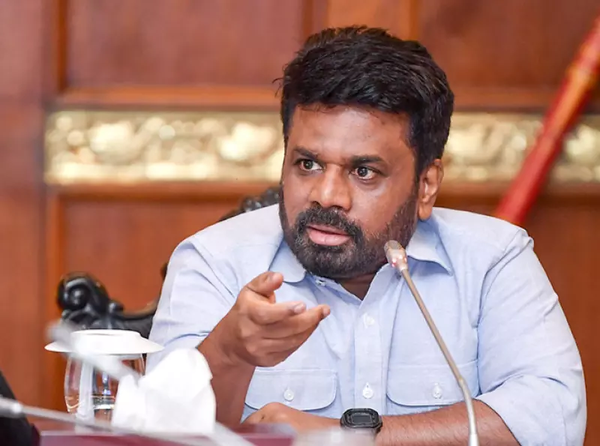
There is an important reason President Anura Dissanayake must be equally looking forward to a meeting on August 3 with leaders of six Tamil and Muslim parties in Sri Lanka.
In the first major initiative since coming together on July 13 to flag issues of common concern, the six parties sought a meeting with Dissanayake to address a string of unresolved issues plaguing the Tamil-speaking communities.
Immediately after Batticaloa MP Shanakiyan Rasamanickam sent a letter requesting a meeting, the president’s office readily consented. An amiable President also spoke to Shanakiyan, addressing him as malli (younger brother).
The six parties – the Ilankai Tamil Arasu Katchi, the Sri Lanka Muslim Congress, the All Ceylon Makkal Congress, the Ceylon Workers Congress, the Tamil Progressive Alliance, and the Democratic Tamil National Alliance – have not revealed what they plan to take up with Dissanayake.
But the issues are expected to include promised constitutional reforms, the military’s occupation of civilian land in Tamil areas, the Prevention of Terrorism Act (PTA), allocation of land to Indian-Tamil plantation workers, activities of the archaeological department in Tamil-majority areas, and the much-delayed Provincial Council elections.
It is a good sign that the President will meet with leaders representing the Tamil-speaking minorities, who continue to face challenges and broken promises from the government amid an assertive Sinhala-Buddhist majoritarian agenda.
Dissanayake, who as an individual enjoys wide support among Tamils and Muslims, is very much aware of the burning issues confronting the two communities.
Since taking office in 2024, his government has released land in the island's Tamil-majority north and multi-racial east that the military forcibly took from civilians during the war against the Tamil Tigers.
But the military remains intransigent on the issue of giving back all civilian land in its possession, creating a lot of bitterness among Tamils.
One area where all six parties are united is the need for early elections to Provincial Councils, particularly in the north and the east, so as to achieve limited regional autonomy. Muslims form the single largest group in two of the three eastern districts.
Both Dissanayake and his National People’s Power (NPP) pledged during the 2024 ballot to have new Provincial Councils elected within a year of forming a government. But the promise has been breached.
Opposition leaders say the JVP-led government is coming up with spurious excuses for delaying the elections because it fears major setbacks, worse than what it suffered in the 2025 local body polls.
While Dissanayake may have his own views on some of the contentious subjects, he cannot ignore the thinking of those JVP colleagues who may not favour holding provincial elections in only one region.
But a source close to the JVP said it would not mind an electoral battle in the north and east, as a defeat there could be explained as the sentiments of the minorities and not of the Sinhalese majority.
In any case, Dissanayake is aware that on September 7, just a month after he meets Tamil and Muslim leaders in Colombo, the 63rd session of the UN Human Rights Council (UNHRC) will begin in Geneva.
Discussions in the Swiss city will cover the state of human rights in Sri Lanka, the continued existence in the statue books of the draconian PTA, and the need for an internationally monitored domestic accountability mechanism.
Dissanayake is aware that his August 3 meeting will help Sri Lankan diplomats to claim at Geneva – irrespective of the outcome of the talks -- that Colombo is serious in tackling the concerns of the Tamil-speaking people.
This is one reason the president may be amenable to many issues on paper but leave the critical implementation open-ended. This is why the six parties could put pressure on Dissanayake to announce elections in the northern and eastern provinces at least if the not in the rest of the country.
It must be made clear to those with ideological blinkers that provincial councils are not a stepping stone to Tamil Eelam but were meant to show minorities that they could enjoy limited autonomy within Sri Lanka.
It is precisely for this reason that the Liberation Tigers of Tamil Eelam (LTTE) and fellow-travelers treated the provincial council system with disdain. On the other side of the ethnic divide, hardline Sinhalese nationalists still treat the councils as some kind of a new threat to the island nation.
President Dissanayake must be politely but firmly told that the August 3 meeting should not be reduced to good optics or a photo opportunity, but should instead serve as a stepping stone toward achieving ethnic reconciliation.
Of course, no election can resolve any country’s problems. But in the case of Sri Lanka, vesting autonomy in provincial councils will help herald a genuine process of accommodation that is missing even 17 years after the LTTE disappeared.