
By M.R. Narayan Swamy
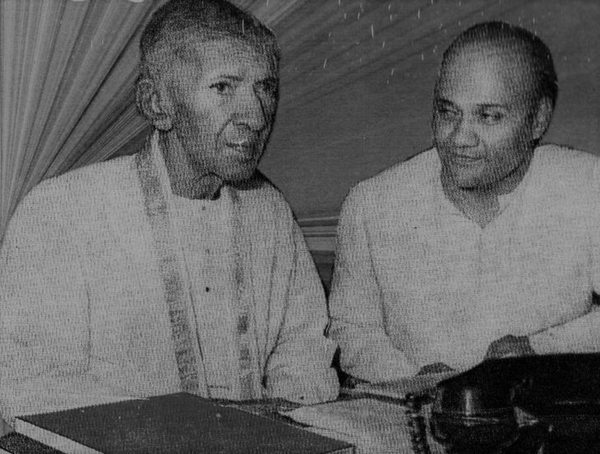
“Sir, why don’t you talk to me at length about your early political history?”
I made the plea to Appapillai Amirthalingam, leader of the Tamil United Liberation Front (TULF), while he was perched on a sofa at the Tamil Nadu government guest house in Chennai.
The year was 1988 when Indian troops were battling the Tamil Tigers in Sri Lanka’s north and east. I was on my way to Colombo, a trip I made frequently then.
With no direct Delhi-to-Colombo flights, I used to take short breaks in Chennai to update myself by speaking with some of the Sri Lankan Tamil political figures based in Tamil Nadu.
I had been mentally preparing myself to embark on a book about the origins and growth of Tamil militancy in Sri Lanka. This eventually came out in 1994 as Tigers of Lanka: From Boys to Guerrillas.
I was aware that Amirthalingam had become a pale shadow of his original self, boxed in as he was between an increasingly aggressive Tamil Tigers and an uncompromising Sri Lankan government.
Both were eager to see his back. Given their penchant for pulling the trigger, the Tigers shot dead Amirthalingam in July 1989.
My poser to Amirthalingam was not based on any advance knowledge of his impending death. I realised that the man had played a key role in radicalising Tamil politics, but the events he wanted to be in control of soon overtook him.
Many Tamils had told me about the TULF leader’s fiery past, his role in egging on young militants at one point, and how his stature rose and rose as he sold dreams of an independent Tamil homeland.
I knew Amirthalingam had time to spare. He had been marginalised both by the Liberation Tigers of Tamil Eelam (LTTE) and Colombo. The Indian government still gave him respect, and some Western diplomats called on him now and then.
So, I wanted him to answer in detail the many questions that were bothering me. I had already been interviewing Tamil militants who had taken up arms in the 1970s and early 1980s. The diaries were slowly piling up.
Amirthalingam responded to my request with an enigmatic smile. He was ready to answer questions of the day, but he played hard to get when it came to questions about his early brush with militancy.
“We will see. Maybe one day I will give you time,” he said. The day never came.
I was in Colombo when I heard that the TULF leader and his colleague V. Yogeswaran had been shot dead at the latter’s house in the Sri Lankan capital.
The three killers, from the LTTE, were, in turn, gunned down by the policemen meant to protect the Tamil politicians.
I can’t forget the huge flutter that was caused when an Indian journalist mistook one of the slain assassins, Visu, to be Yogaratnam Yogi, a leader of the LTTE’s political wing, only to soon realise the mistake.
Like in Amirthalingam’s case, I remember making a similar request to K. Pathmanabha of the Eelam People’s Revolutionary Liberation Front (EPRLF). He was an early player in the militancy. I had interviewed some of his colleagues here and there.
I also asked Pathmanabha to provide me with the large collection of literature they had at their Chennai office. I promised to photocopy the material and return the originals.
I was desperate to lay my hands on anything and everything that would throw light on the early 1980s and beyond. I went through every issue of The Hindu from June 1, 1983, to July 31, 1987, as well as all issues of The Saturday Review, a bold English-language magazine from Jaffna whose neatly bound volumes were made over to me for research by its later editor, S. Sivanayagam.
Like Amirthalingam, Nabha too promised to speak with me when he had time to spare. He would probably have done so. Unfortunately, the LTTE, determined to stamp its authority on the Tamil political scene, finished him off in 1990.
Once Nabha and his mates were gunned down, the Tamil Nadu Police took away a heavy load of Tamil literature from the EPRLF’s bullet-ridden office. No one had any idea what happened to all the material.
Nabha had dropped it off at my house in New Delhi, unannounced, one evening in June 1990, as I was packing my suitcase for another flight to Colombo, this time via Karachi. Soon after I reached Sri Lanka, I heard that he had been killed.
Perhaps, just perhaps, if I had known what was going to happen, I might have spoken to the man at length that day and left for Sri Lanka a day later.
Another chunk of invaluable history died with Nabha.
To me, it was nothing about “good Tamil” or “bad Tamil”. I spoke to whoever I could speak to and whoever would speak to me. My interest lay in digging up layers of buried and hidden history, not to judge people or political players.
Indeed, I often struck mini gold mines by talking to mid-level cadres in Tamil militant groups (I know Tamil despite being born and raised in Delhi). Often, they provided me with information that the leaders might not have shared.
The last time I met EROS leader Velupillai Balakumaran was over tea in 1990 in Colombo. He knew I often visited Sri Lanka. The former banker called me over to discuss the situation in Sri Lanka.
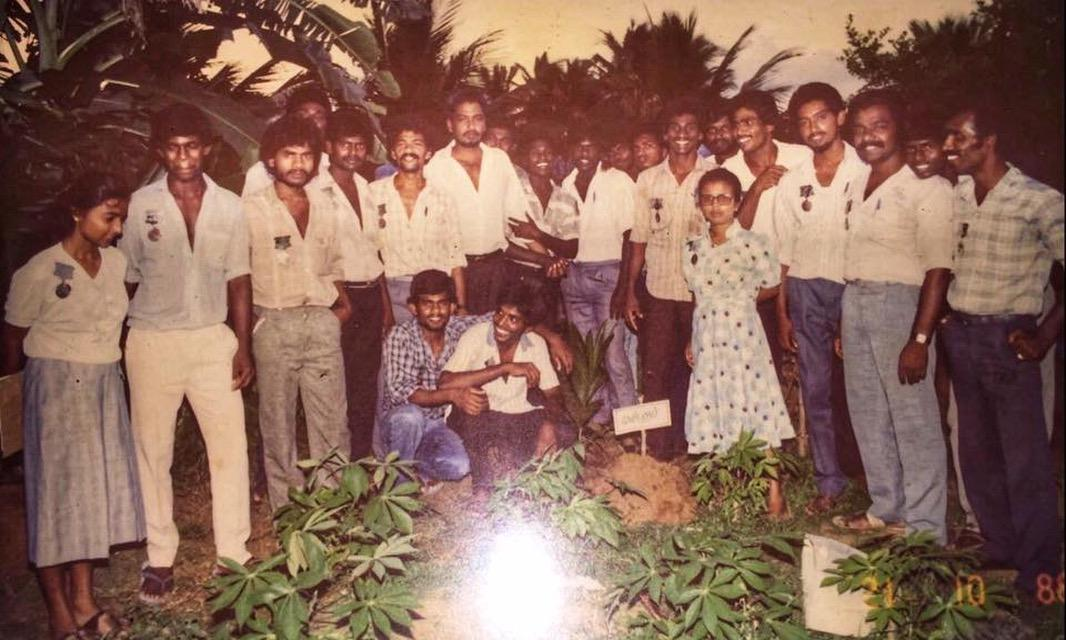
He did not reveal that he was planning to merge EROS, his group, with the LTTE. But he did tell me something that remained etched in my mind: “You don’t know the LTTE. You don’t know them. They can go to any length to achieve their objectives.”
We never met again. Balakumaran’s words came back to haunt me when an LTTE suicide bomber callously blew up former Indian Prime Minister Rajiv Gandhi in May 1991.
I regret that I did not press Balakumaran to sit down with me for a lengthy question-and-answer session that day. I made the same mistake with his confidant, Shankar Rajee, whom I met more often in Colombo and Chennai before ill health claimed his life.
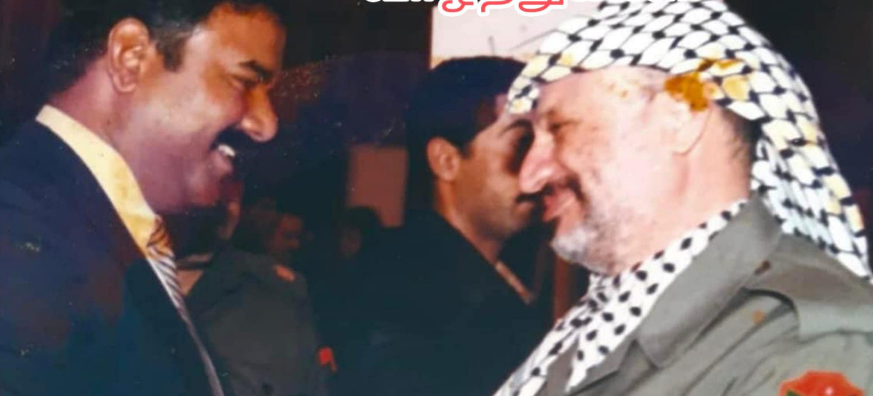
Now, veteran Sri Lankan journalist and publisher Vijitha Yapa says that D.B.S. Jeyaraj had expressed a desire that Yapa, who had given him the break in English journalism, should publish his memoirs. But Jeyaraj passed away before he could complete his project.
If only he had finished his autobiography, it would have made a fascinating read. After all, here was a journalist who wrote the bitter truth without minding repeated threats and even a painful physical assault.
Even today, there are scores of Tamils in Sri Lanka and elsewhere who intimately know parts of the Tamil story starting from the times when politics in the north and east got radicalised – then militarized.
All of them — politicians, activists, militants, former officials, and others — must put the knowledge they possess into writing, irrespective of whether they are good or not-so-good writers. It does not matter how explosive or seemingly unimportant their information may be.
Postponing this for a supposedly auspicious moment may prove costly.
If this is done, someone in the future will be able to weave a comprehensive and honest history of the Tamil saga in Sri Lanka.