By: M.R. Narayan Swamy
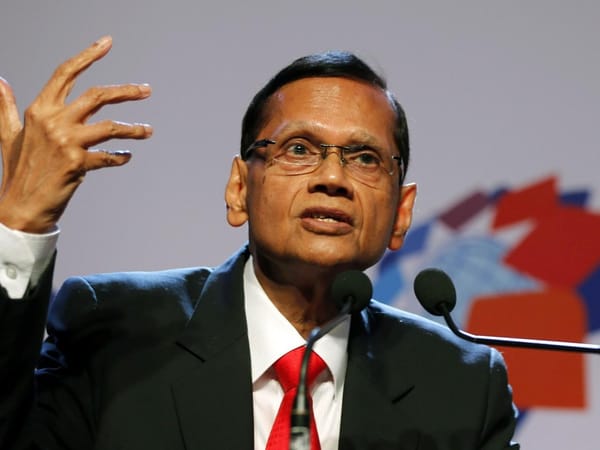
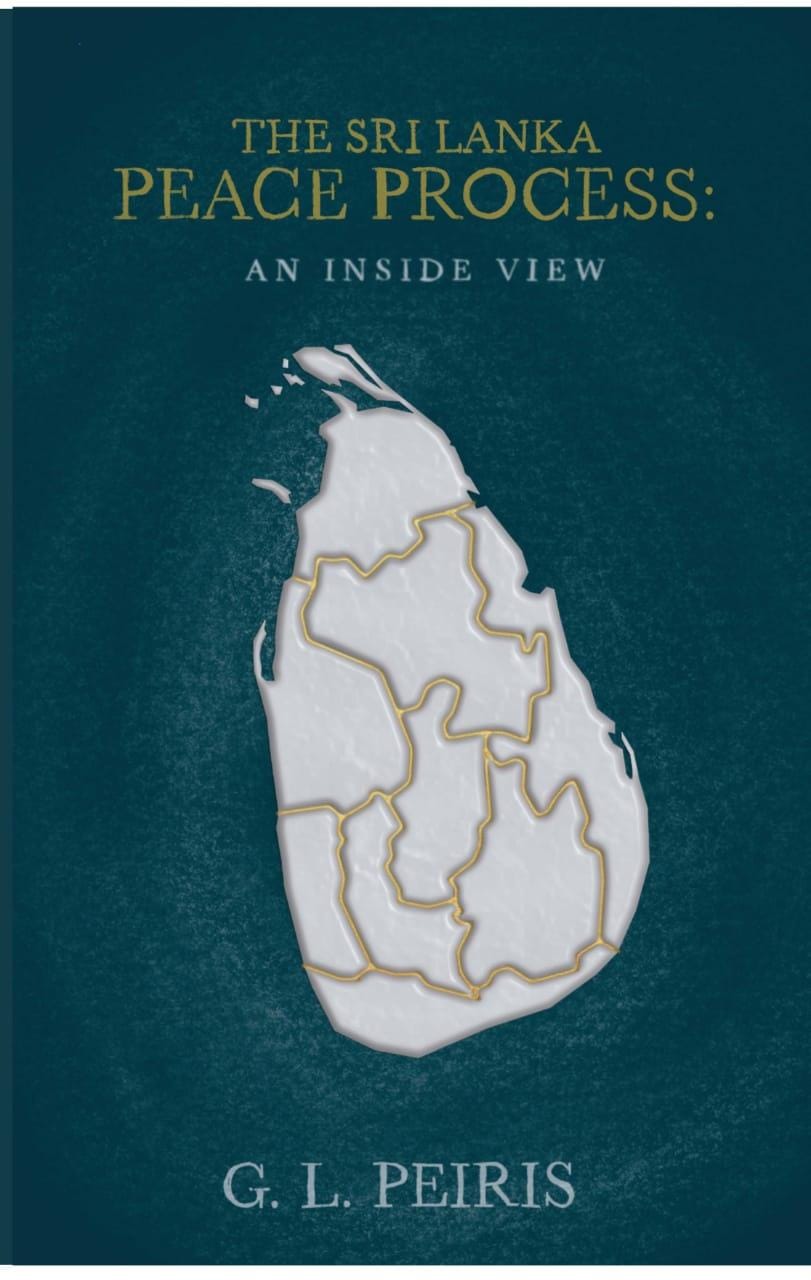
Reading this otherwise invaluable book will give the impression that academic-turned-politician G.L. Peiris was a distant observer of Sri Lanka’s peace process (which collapsed) and not the government’s chief negotiator with the Liberation Tigers of Tamil Eelam (LTTE) and a key player in a dialogue that had been expected to end a protracted and bloody conflict.
Peiris raises several vital issues that he feels led the peace process to unfortunately unravel, triggering a fresh round of war in 2006, which resulted in the LTTE’s military rout and the killing of its leadership, including Velupillai Prabhakaran, who founded the outfit.
“The most significant inflection points were calculatedly left unaddressed,” moans Peiris in his just-released book. He lists three main drawbacks: A deeply flawed Norway-sponsored peace process, the LTTE’s intransigence, and a bitterly divided political class in Sri Lanka.
Sri Lanka and the LTTE signed a historic Norway-facilitated Ceasefire Agreement (CFA) in April 2002 in a bid to end decades of war. But it soon came under great strain and began to derail. This led to the final and bloodiest phase of the war in Sri Lanka, which ended with the LTTE’s comprehensive destruction in May 2009.
Peiris, who has held more than one portfolio in the government, makes apt observations. One is that President Chandrika Kumaratunga should not have been kept out of the peace process (the CFA was signed by Prime Minister Ranil Wickremesinghe and Prabhakaran), that the issue of contention over the sea should have been well-defined (this caused serious confrontation between the navy and Sea Tigers), and that the peace dividend did not percolate to the people in the Sinhalese-majority south who first became disenchanted and later turned hostile.
But Peiris doesn’t say what stand he had on these issues during the talks with the LTTE. He was a known favourite of Wickremesinghe, who pretty much gave him a free hand during the negotiations. Did Peiris ever tell Wickremesinghe – or Norway – that Kumaratunga should also be roped in? The fact is that Kumaratunga, who pursued her own peace agenda until the LTTE resumed its separatist campaign, had lost the elections, paving the way for Wickremesinghe to form a government. Did India, which played a behind-the-scenes role in the CFA, tell Norway not to sideline Kumaratunga? It is human to be wise in hindsight, but is it morally correct to blame Oslo for a broken relationship at the political top in Colombo?
Peiris doesn’t reveal that the LTTE was adamant on continuing its weapons shipments because the government had, and rightly so, refused to accept a Tiger plea to put an end to strengthening its military. Eventually, an informal agreement was reached that the navy would look the other way when the LTTE brought in weapons and ammunition by sea. But this did not work, leading to heightened tensions between the two antagonists. Was such an informal pact justified? It might not seem right now, but when the CFA was signed in 2002, the LTTE was at the peak of its military strength while the Sri Lankan economy was tottering. The Tigers did not want to give up their military advantage.
Peiris’s attempt to pull up Norway over failing to keep the Sinhala media on board and to have a parallel Track II diplomacy to cement the stuttering peace process is amusing. Was it really Oslo’s responsibility to woo the Sinhalese media, or should this have been done by the Sinhala-knowing government leaders? Yes, a Track II diplomacy would have helped somewhat; but, again, did Peiris say any of this when the talks were on? Or are these an act of belated waking up?
The author makes it clear – a truth that eventually dawned on many – that the LTTE’s chief negotiator, Anton Balasingham, and Prabhakaran drifted away amid the peace process. Balasingham’s suggestion that there could be a federal solution to the conflict displeased Prabhakaran no end. Amid criticism from the LTTE, Balasingham withdrew into a shell. The tragedy is that Balasingham, alone in the LTTE, had a grasp of the political issues surrounding the often complex negotiations. He told Peiris that he had done everything in his power to present Prabhakaran with the true position but could make no headway.
Surprisingly, Peiris makes no significant observations about Prabhakaran, the one man who mattered the most in the peace process. Peiris may not have met Prabhakaran, but he had an excellent rapport with Balasingham; this could have provided him with rare insights into the mental make-up of Prabhakaran, a school dropout who at one stage almost broke up Sri Lanka.
For all the warm relationship he is said to have enjoyed with Erik Solheim, Norway’s chief peace facilitator, G. L. Peiris says that Norway came to be widely seen in Sri Lanka as biased and indulgent towards the Liberation Tigers of Tamil Eelam (LTTE). He chides Norway for not insisting on firm links between the foreign trips it arranged for LTTE leaders—ostensibly to educate them on constitutional issues—and actual progress on the relevant matters in the talks.
But even in retrospect, Peiris insists that negotiations between Colombo and the LTTE were a good thing to have happened. “(Had it been) handled differently, (it) could well have yielded a positive outcome.”
Peiris feels the LTTE wanted to use the peace process to earn global legitimacy but remained adamant throughout in its insistence on a separate Tamil state—a demand that ultimately led to its annihilation. The outfit used guile and ingenuity to forestall the implementation of significant steps that could have ushered in real peace.
“The dominant factor was the LTTE’s determination to perpetuate its hold on government structures in the North East. So long as the inflow of funds (from the global community) served this purpose, the LTTE was unequivocally supportive. Its views became diametrically opposite if the funds brought with them any danger of pressure being exerted on the LTTE, destructive of this critical aim.”
In the final run, there was sharp disenchantment within the military vis-à-vis the peace process as it was seen to be giving into the LTTE’s unending demands. In the process, the LTTE’s insistence on having its way on almost every issue related to the north and east – the war theatre – only hardened feelings in Sinhalese areas, eventually leading to the CFA’s and the LTTE’s demise.
All said and done, this is an important book in understanding some of the facets and difficulties that marred the Sri Lankan peace process. The book can serve as a good lesson to those attempting peace elsewhere in the world.
The Sri Lanka Peace Process: An Inside View by G. L. Peiris (Vijitha Yapa Publications, Colombo), xv + 425 pp., LKR 7,500.