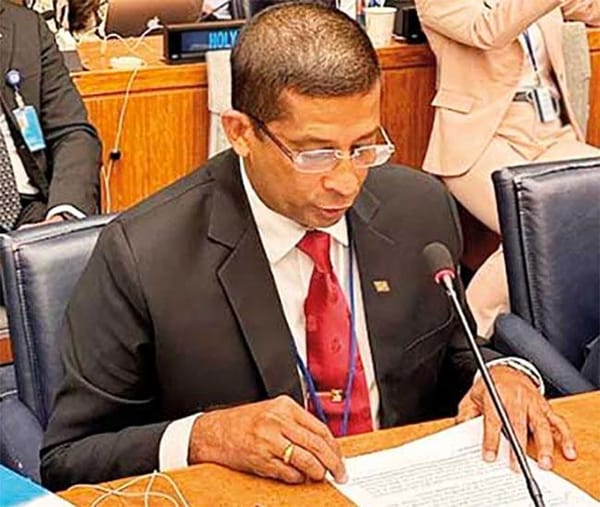
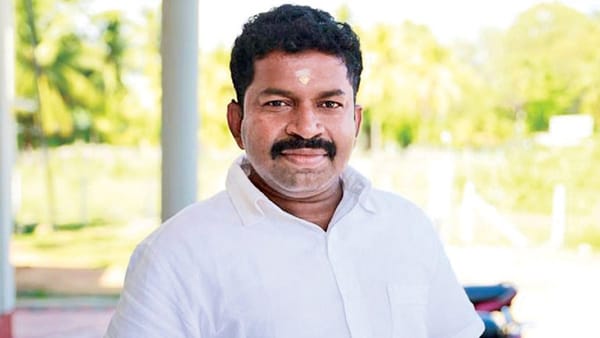
From a Facebook post by Siva Ramasamy | Translated by JM
Amid the ongoing controversy over whether Sara, also known as Pulastini, is alive or dead, MP Mujibur Rahman stated in Parliament that a SIM card was recently obtained in her name.
Upon hearing this, it wouldn’t be surprising if Ishara Sewwandi—allegedly the mastermind behind the courtroom assassination of underworld figure Ganemulla Sanjeewa—also ends up with a SIM card in her name.
Though I sometimes consider avoiding political commentary on Facebook, much like how a dancing leg or a singing mouth cannot be stilled, my typing fingers seem just as unwilling to rest.
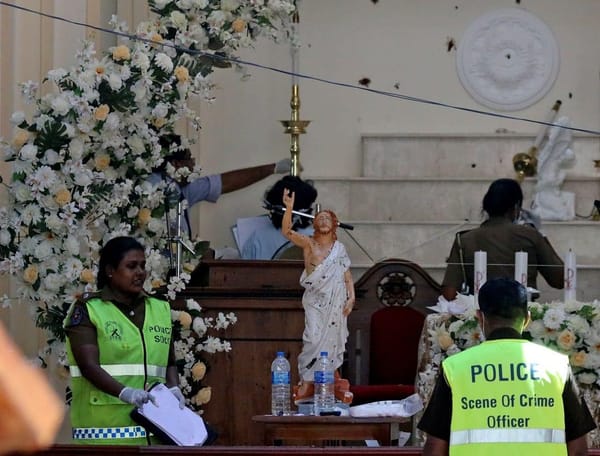
Just like the old saying that everything—good or bad—ends up being blamed on the Chettiar’s head, it now appears that all blame for the Easter Sunday attacks is going to be pinned on Pillayan.
Ravi Seneviratne, who testified before the Presidential Commission of Inquiry about a man named Abu Hind, now serves as Secretary to the Ministry of Public Security. In that role, he can easily manage many matters. But there’s little chance these investigations will progress meaningfully beyond a certain point.
What we’re seeing instead is political theatre—arresting Pillayan and his associates simply to satisfy the Cardinal. You can say anything, but without evidence, nothing can be proven.
If it's claimed that Pillayan knew about these matters while still in prison, then serious questions arise:
- How did he gain access to such information while in custody?
- Who enabled it?
- Who were his contacts?
All of this must be thoroughly investigated—and proven. Simply making statements isn’t enough. This is not a game.
That’s why the government says “Pillayan knows everything” only inside Parliament. Minister Ananda Wijayapala hesitates to make such statements outside. Inside Parliament, they can speak freely by invoking parliamentary privilege. But the government side is afraid to say these things in public—because if, one day, they fail to prove what they said, they might end up running around in court cases.
Just as a young man was detained for nine months under the Prevention of Terrorism Act, only for authorities to later admit they had no case against him, the same could happen to Pillayan tomorrow.
Who knows?
For readers unfamiliar with the background:
1.Sara, also known as Pulasthini Mahendran, was a Tamil woman who later converted to Islam after marrying Mohammed Hasthun, one of the suicide bombers of the 2019 Easter Sunday attacks in Sri Lanka who targeted St. Sebastian's Church in Katuwapitiya.
She was suspected of involvement in the bombings and her fate remained uncertain for years after initial DNA tests failed to confirm her death in the April 26, 2019 Sainthamaruthu blast. However, a third DNA test conducted in 2023 finally confirmed that she died in the explosion at the safe house where several extremists, including Zahran Hashim's associates, were killed.
2.Mohamed Rifai Mohamed Suhail, a 21-year-old aviation student from Mawanella. He was arrested in October 2024 under the Prevention of Terrorism Act (PTA) after posting an Instagram video showing the Israeli flag being trampled. Despite being held for nine months, authorities later admitted there was no case against him.