

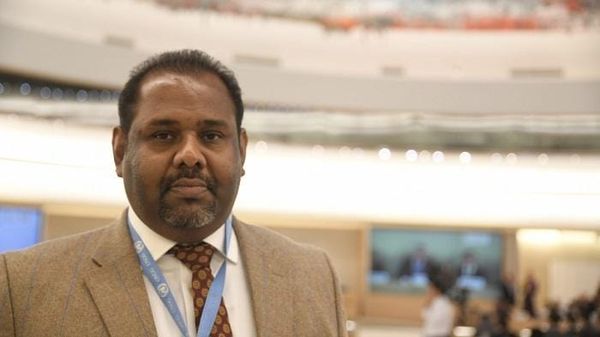
Gajendrakumar Ponnambalam, leader of the Tamil National People's Front (TNPF) and a member of Parliament, has accused Sri Lanka's government of attempting to administer the country's Tamil-majority Northern Province through a network of unofficial "shadow ministers," bypassing a long-dormant elected provincial council and effectively concentrating power in the hands of the ruling party.
He made the allegations on the floor of Parliament this week, warning that the move amounted to an unconstitutional end-run around Sri Lanka's devolution framework at a moment of renewed sensitivity over Tamil political rights.
"The Northern Provincial Council is not functioning," Gajendrakumar said. "Instead of reactivating it through democratic means, the government is appointing its own MPs to oversee departments that fall under provincial powers."
The Allegations
Gajendrakumar alleged that Bimal Rathnayake, a cabinet minister in the ruling National People's Power (NPP) government, instructed the Northern Province Governor, Nagalingam Vedanayagam, during a recent visit to Jaffna to designate ruling party Members of Parliament as informal overseers of key provincial sectors.
The alleged assignments, as stated by Gajendrakumar in Parliament, are as follows: MP Sripavanandarajah for health, MP Jegatheeswaran for education, MP Rajeevan for women's affairs, MP Ilankumaran for local government institutions, and MP Thilakanathan for agriculture and livestock development.
As evidence of the arrangement's operation, Gajendrakumar pointed to a recent health-sector meeting held in the Northern Province to which MP Sripavanandarajah was invited, to the exclusion of other elected representatives from the region.
"On what basis was he invited?" he asked. "If discussions are being held on provincial matters, all Members of Parliament should have been invited. Selective inclusion reflects a deeply problematic approach."
The Constitutional Backdrop
The accusations carry particular weight given Sri Lanka's fraught history of power-sharing between its Sinhalese-majority central government and Tamil-majority Northern Province.
The Northern Provincial Council was established under the 13th Amendment to the Constitution, enacted in 1987 following the Indo-Lanka Accord between Colombo and New Delhi. The accord, brokered under Indian pressure during the height of the country's civil war, was designed to devolve a defined set of powers — including health, education, agriculture, and local governance — to elected provincial bodies.
The council last held elections in 2018. Its term has since lapsed without fresh polls being called, leaving the province administered by a Governor appointed by the central government — an arrangement critics argue has effectively reversed the devolution the 13th Amendment was designed to guarantee.
Provincial council elections have been repeatedly delayed, with successive governments citing security concerns, administrative complications, and — more recently — the country's prolonged economic crisis.