

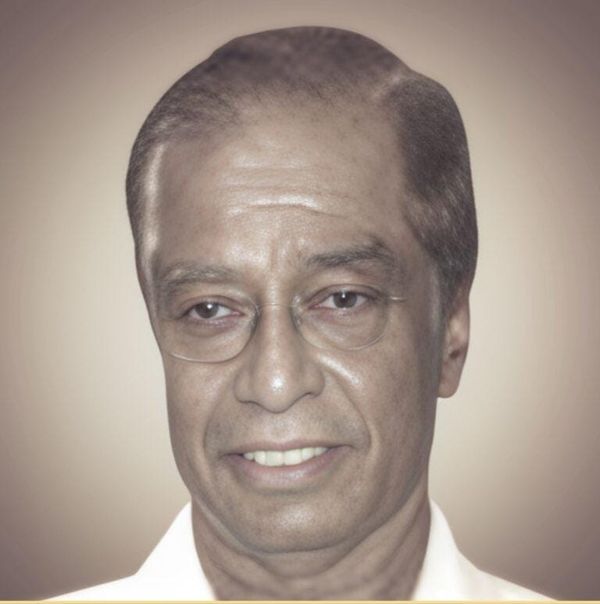
Emeritus Professor Velupillai Tharmaratnam, Pioneer of Jaffna University's Science Faculty, Passes Away

Emeritus Professor Velupillai Tharmaratnam, Pioneer of Jaffna University's Science Faculty, Passes Away


Share this post

Emeritus Professor Velupillai Tharmaratnam, the founding Dean of the Faculty of Science at the University of Jaffna and a distinguished mathematician, has passed away.

Professor Tharmaratnam, who served as Dean from 1978 to 1984, was instrumental in establishing the foundational infrastructure and academic standards of the Faculty of Science during the institution's formative years following its separation from the University of Sri Lanka.

Joining the University of Jaffna in the late 1970s after a notable tenure at the University of Colombo, Professor Tharmaratnam assumed leadership of the Science Faculty at a critical juncture in its development. His six-year deanship was marked by extensive curriculum reforms and the establishment of physical and academic infrastructure that shaped the faculty's trajectory for decades.

"Much of the faculty's foundational infrastructure was established under his stewardship," the Faculty of Science stated in its official announcement, noting his role in positioning the faculty within the national academic landscape.

Beyond his administrative contributions, Professor Tharmaratnam was recognised internationally for his scholarly work in Near Rings, a specialised field of abstract algebra. His research contributions enriched both national and international mathematical communities.

Colleagues and former students remember him for his distinctive teaching style – delivering complex mathematical lectures with precision and originality, entirely without notes. This approach cultivated deep mathematical appreciation among generations of students and helped nurture young mathematicians who would go on to contribute to the field.

Professor Tharmaratnam's influence extended beyond the Faculty of Science through his service on key statutory bodies, including the University Senate, Council, and the University Grants Commission, where he played a decisive role in shaping academic policy.

Described by colleagues as calm, principled, and deeply principled, Professor Tharmaratnam was widely respected for his integrity, fairness, and unwavering commitment to academic excellence throughout his career.


Share this post

Be the first to know

Join our community and get notified about upcoming stories

Subscribing...
You've been subscribed!
Something went wrong
What Sri Lanka and Gaza Teach Us About the Futility of Armed Struggle

What Sri Lanka and Gaza Teach Us About the Futility of Armed Struggle

“I object to violence because when it appears to do good, the good is temporary; the evil it does is permanent”. Mahatma Gandhi Times of war create the illusion that only force can resolve irreconcilable differences. Some social theorists even justify the inevitability of violence in achieving social change on the basis that groups in power rarely relinquish that privilege voluntarily. In this context, the armed conflicts that plagued Sri Lanka for three decades and continue to unfold in Gaza


Prof. Mahesh Nirmalan

Prof. Mahesh Nirmalan

A Peacemaker’s Belated Wisdom

A Peacemaker’s Belated Wisdom

By: M.R. Narayan Swamy Reading this otherwise invaluable book will give the impression that academic-turned-politician G.L. Peiris was a distant observer of Sri Lanka’s peace process (which collapsed) and not the government’s chief negotiator with the Liberation Tigers of Tamil Eelam (LTTE) and a key player in a dialogue that had been expected to end a protracted and bloody conflict. Peiris raises several vital issues that he feels led the peace process to unfortunately unravel, trig


M.R. Narayan Swamy

M.R. Narayan Swamy

The Promise and Limits of AI in Mental Healthcare

The Promise and Limits of AI in Mental Healthcare

Artificial intelligence (AI) today permeates almost every sphere of modern life, from finance and defence to education and healthcare. While its recent explosion has captured global attention, the roots of AI stretch back several decades. The intellectual groundwork was laid in 1950, when British mathematician Alan Turing posed a revolutionary question in his paper “Computing Machinery and Intelligence”: Can machines think? A few years later, in 1955, computer scientist John McCarthy formally co


Dr Ruwan M. Jayathunga

Dr Ruwan M. Jayathunga

Cricket in Jaffna: Past, Present, Future and the Debate Over a New International Stadium

Cricket in Jaffna: Past, Present, Future and the Debate Over a New International Stadium

Cricket occupies a unique and powerful place in Sri Lanka’s national identity. No other sport evokes the same depth of passion or collective pride. The 1996 Cricket World Cup victory transformed cricket from a popular pastime into a unifying national obsession—an emblem of hope, joy, resilience, and belonging. For decades, Sri Lankans have believed that cricket transcends geography, ethnicity, class, and political divisions. From the urban centres of Colombo, Galle, and Kandy to the rural heartl


Dr. Gamini Goonetilleke

Dr. Gamini Goonetilleke