
European Union Allocates Additional €1 Million in Humanitarian Aid to Sri Lanka After Cyclone Ditwah

European Union Allocates Additional €1 Million in Humanitarian Aid to Sri Lanka After Cyclone Ditwah


Share this post

COLOMBO, February 27, 2026 — The European Union has announced an additional €1 million in humanitarian assistance to Sri Lanka, reinforcing relief efforts for communities still recovering from the devastation caused by Tropical Cyclone Ditwah, which struck the island in late November 2025 and triggered widespread flooding and landslides across all 25 districts.

The latest allocation, equivalent to more than LKR 370 million, brings the EU’s total humanitarian contribution to Sri Lanka’s cyclone response to over €3.35 million. The funding will be delivered through humanitarian partner organisations to support essential services and assist vulnerable communities struggling to restore basic living conditions.

The announcement comes as more than 170,000 people remain displaced or living with host families, with thousands continuing to shelter in temporary relief centres — including schools, religious buildings, and community halls never intended for prolonged habitation.

Cyclone Ditwah made landfall on Sri Lanka’s eastern coast on November 28, 2025, unleashing torrential rains that inundated towns, destroyed homes, and triggered landslides across the country. Nearly 1.8 million people — approximately eight percent of the population — were affected, including more than 500,000 children, according to disaster response authorities. The official death toll has reached 649, with 173 people still missing.

The economic consequences have been severe. The World Bank has estimated direct physical damage at $4.1 billion — equivalent to roughly four percent of Sri Lanka’s gross domestic product — with total economic losses projected at between $6 billion and $7 billion.

The European Union had previously mobilised €2.35 million in emergency humanitarian funding immediately after the cyclone, alongside technical expertise and in-kind assistance from member states, including France, Germany, Italy, and Luxembourg, which provided engineering support and resources to strengthen Sri Lanka’s emergency response and coordination.

The additional funding signals the EU’s continued engagement as recovery efforts enter a prolonged phase, with many families still dependent on humanitarian support months after the disaster.

The European Union and its Member States collectively constitute the world’s largest provider of humanitarian aid. Through its Civil Protection and Humanitarian Aid Operations department, the EU delivers assistance to millions of people each year affected by conflict and natural disasters, operating through a global network of humanitarian partners.

Share this post

Be the first to know

Join our community and get notified about upcoming stories

Subscribing...
You've been subscribed!
Something went wrong
‘This Is Apartheid’: Mano Ganesan Calls for UN Intervention in Cyclone Relief

‘This Is Apartheid’: Mano Ganesan Calls for UN Intervention in Cyclone Relief

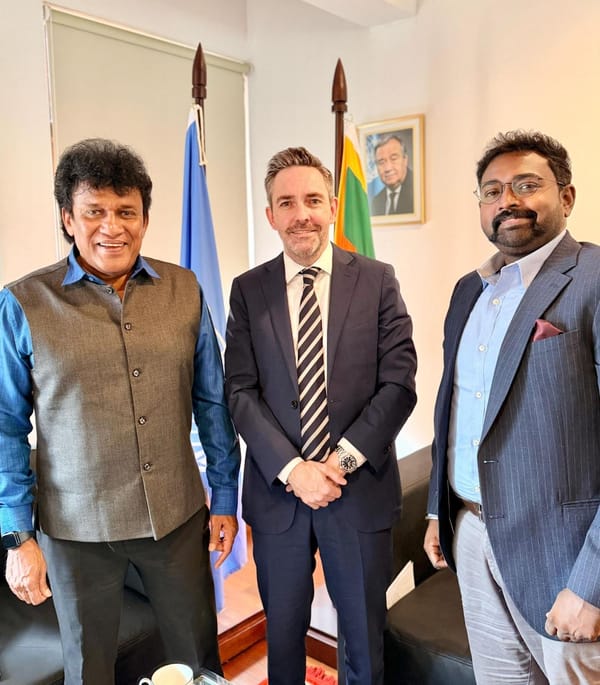
Tamil Progressive Alliance leader Mano Ganesan has appealed to the United Nations to intervene in what he characterised as the systematic exclusion of Hill Country plantation communities from Sri Lanka's post-disaster reconstruction programme following Cyclone Dithwa. In a meeting with UN Resident Coordinator Marc-André Franche at the UN office in Colombo, Mano Ganesan said the government's Rebuilding Sri Lanka housing scheme had failed to include plantation families displaced by the December c


Our Reporter

Our Reporter

Tamil Leaders Accuse Government of Building Parallel Power Structure Through Praja Shakthi

Tamil Leaders Accuse Government of Building Parallel Power Structure Through Praja Shakthi

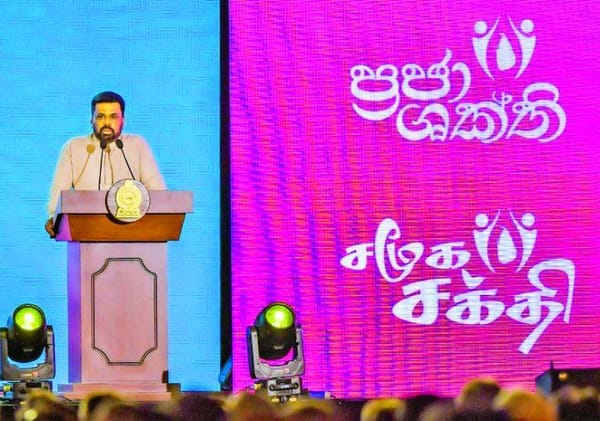
A government-backed community mobilisation programme has emerged as a political flashpoint in Sri Lanka's Northern and Eastern Provinces, with elected officials, political parties, and civil society groups warning that the initiative undermines constitutional governance and threatens to erode Tamil political representation at the grassroots level. The Praja Shakthi (People's Power) programme, launched by the National People's Power (NPP) government and presented as a poverty alleviation initiat


Our Reporter

Our Reporter

“Balasingham Saw the End — Prabhakaran Believed He Was Invincible”: G. L. Peiris on Sri Lanka’s Failed Peace Process

“Balasingham Saw the End — Prabhakaran Believed He Was Invincible”: G. L. Peiris on Sri Lanka’s Failed Peace Process

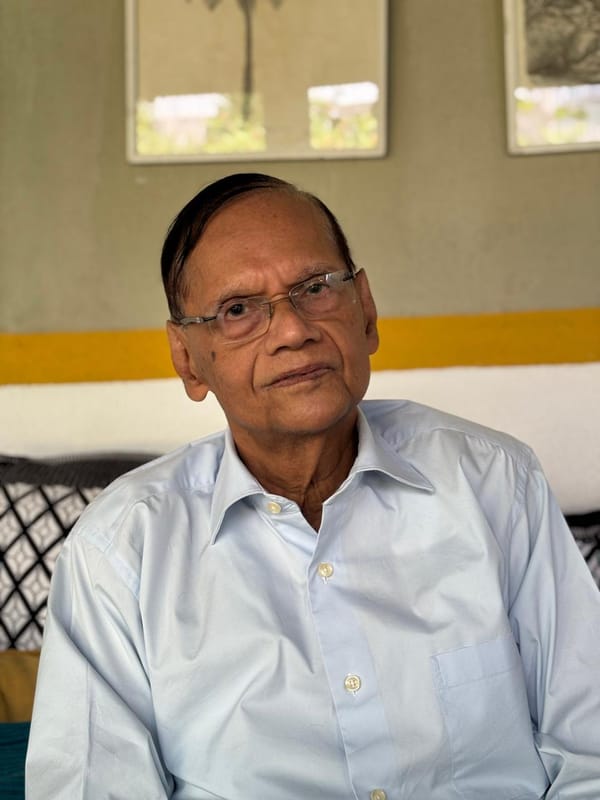
G. L. Peiris was at the epicentre of Sri Lanka’s peace negotiations with the LTTE and occupied senior office under three successive governments during one of the most consequential phases of the conflict. In his new book, The Sri Lanka Peace Process: An Inside View, he revisits that period with the benefit of temporal distance and retrospective clarity. In this interview with Jaffna Monitor, Peiris confronts the charge that his narrative assumes the posture of a detached observer and explains w


Aruliniyan Mahalingam

Aruliniyan Mahalingam

Holy Support for a Controversial Cause: Clergy Back ‘Black Day’ Protest

Holy Support for a Controversial Cause: Clergy Back ‘Black Day’ Protest

Senior religious figures from the Tamil community have now lent their moral weight to a controversial and arguably ill-judged plan by Jaffna University students to observe Sri Lanka’s Independence Day on February 4 as a “Black Day” in the Northern and Eastern provinces. The Jaffna University Students’ Union has announced that it will stage demonstrations and mark February 4 — Sri Lanka’s Independence Day — as a Black Day and a day of protest. In preparation, student representatives recently pai


Our Reporter

Our Reporter