By M.R. Narayan Swamy
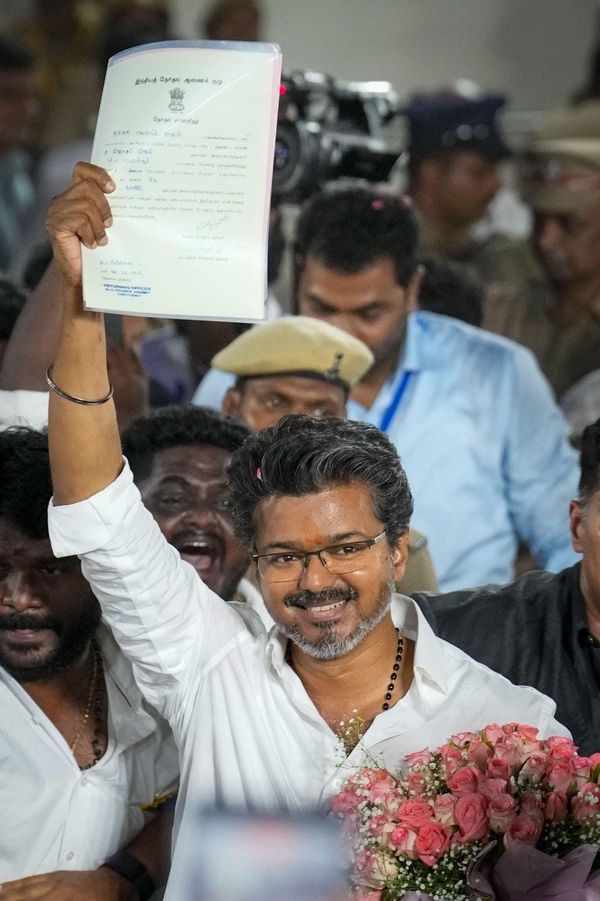
After five days of tense, suspense-packed drama, Tamil superstar Vijay on Saturday was finally on the path to becoming the new chief minister of Tamil Nadu as he marshaled majority support before Governor Rajendra Vishwanath Arlekar.
But Vijay supporters admitted that the 51-year-old actor-turned-politician had learnt some invaluable lessons in politics as his Tamilaga Vettri Kazhagam (TVK) desperately scouted for support since May 4 after falling short of a legislative majority by just ten seats.
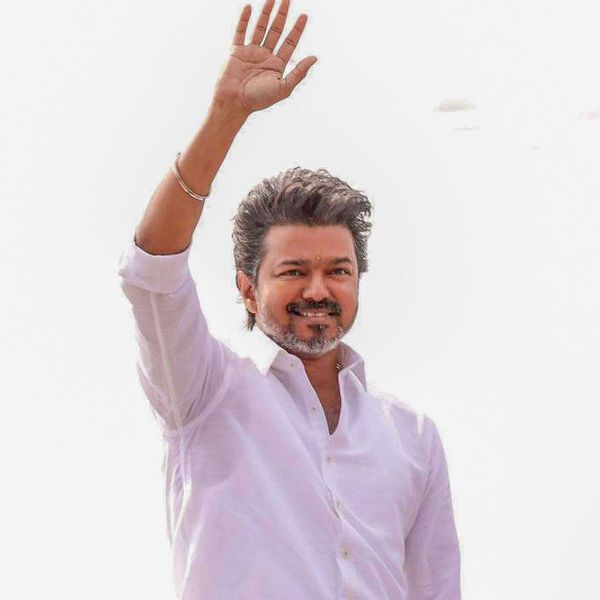
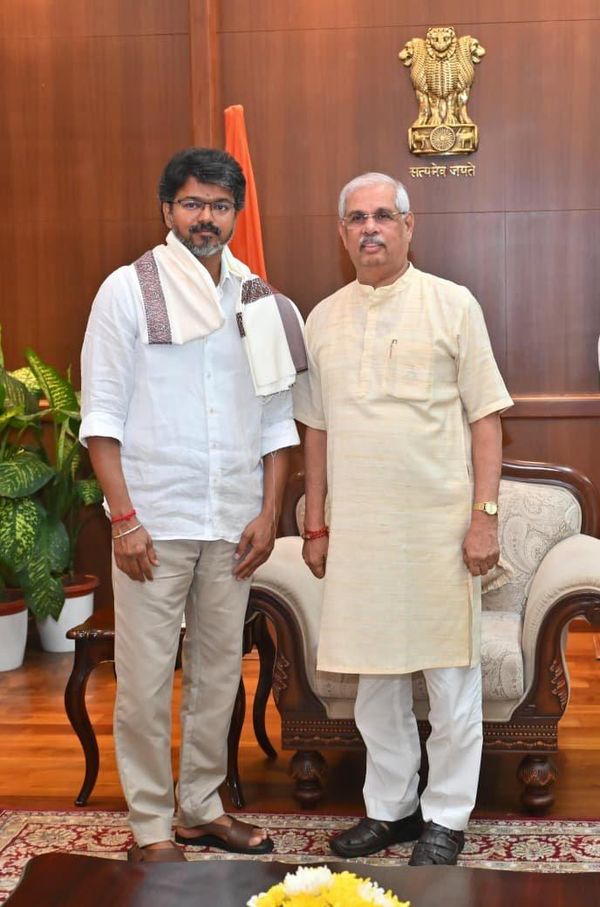
On Saturday evening, Vijay, dressed in his usual white shirt and khaki-beige trousers, met the governor at his office after Arlekar canceled a planned trip to neighboring Kerala. The actor was accompanied by leaders of all the parties that had declared their crucial support for him.
There was no immediate word from either the governor or Vijay, but sources in his TVK party told Jaffna Monitor that he would, in all probability, take the oath after 4 p.m. on Sunday, as suggested by astrologers.
Whenever that happens, Vijay would herald the first non-Dravidian administration in Tamil Nadu, now one of India’s most economically developed states with 85 million people, since 1967, when the DMK stormed to power for the first time, ending decades of Congress monopoly.
Since then, the sprawling coastal state has been ruled by the DMK or its splinter AIADMK, barring brief periods of President’s Rule or direct federal rule.
Barring the Congress, all other supporting parties have extended outside legislative support to Vijay. VCK leader Thol Thirumavalavan denied that he was staking claim to the post of deputy chief minister, saying reports to that effect were “just rumors.”
Excited TVK supporters danced in the streets of Chennai and elsewhere across the state, even as a 47-year-old Vijay supporter who had earlier set himself on fire in Tirunelveli district to protest the delay in allowing TVK to take power remained hospitalised.
Soon after the TVK secured an incredible 108 seats in the 234-member Tamil Nadu Assembly, the Congress, with five members, announced its support to him. The two communist parties, each with two members, also vowed to prop up his government.
Amid rumours that the defeated DMK and AIADMK might embrace and form a government, two separate legislators whose support Vijay’s aides had earlier claimed suddenly backtracked, putting a question mark on government formation and casting a pall of gloom in the actor-turned-politician’s camp.
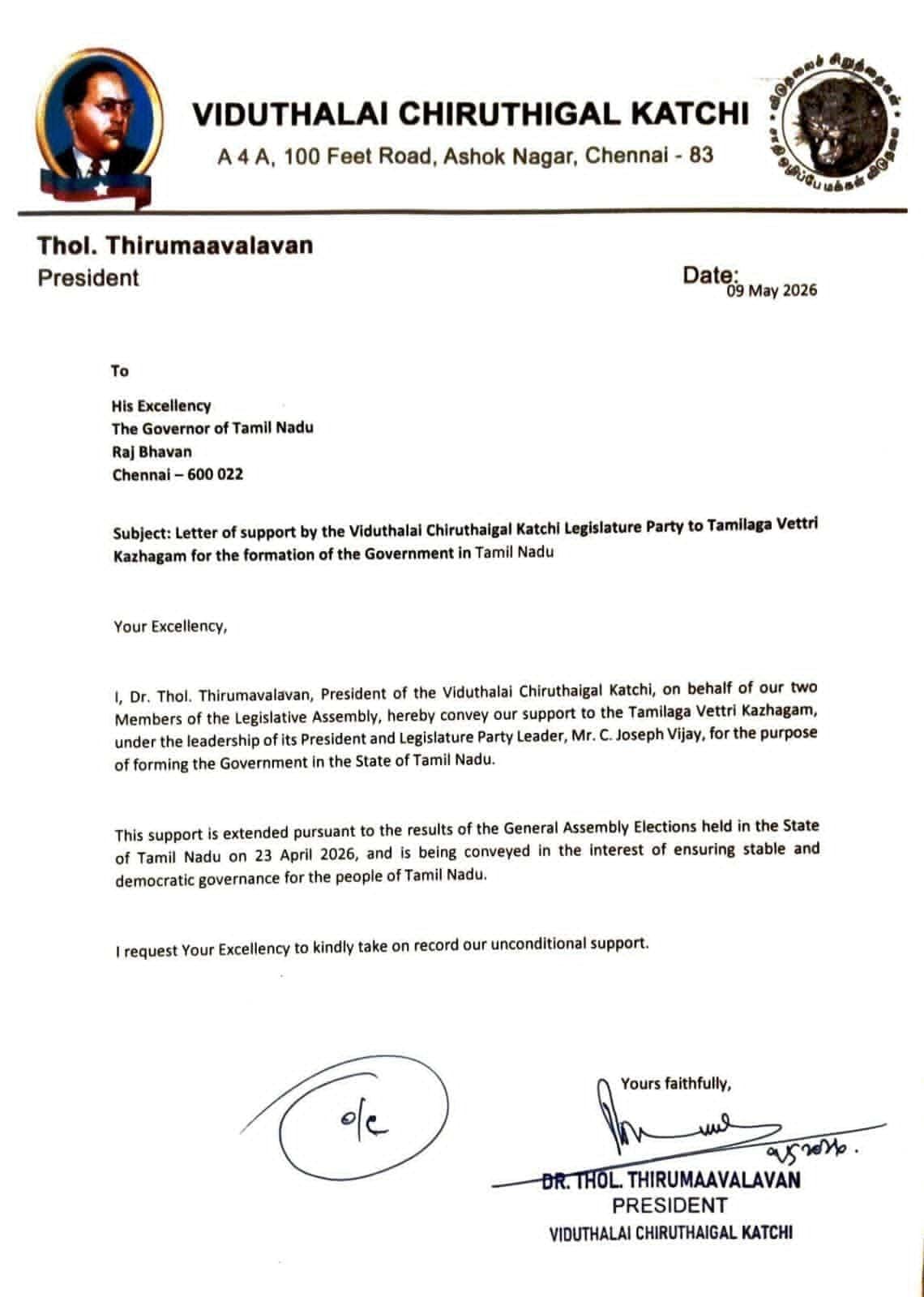
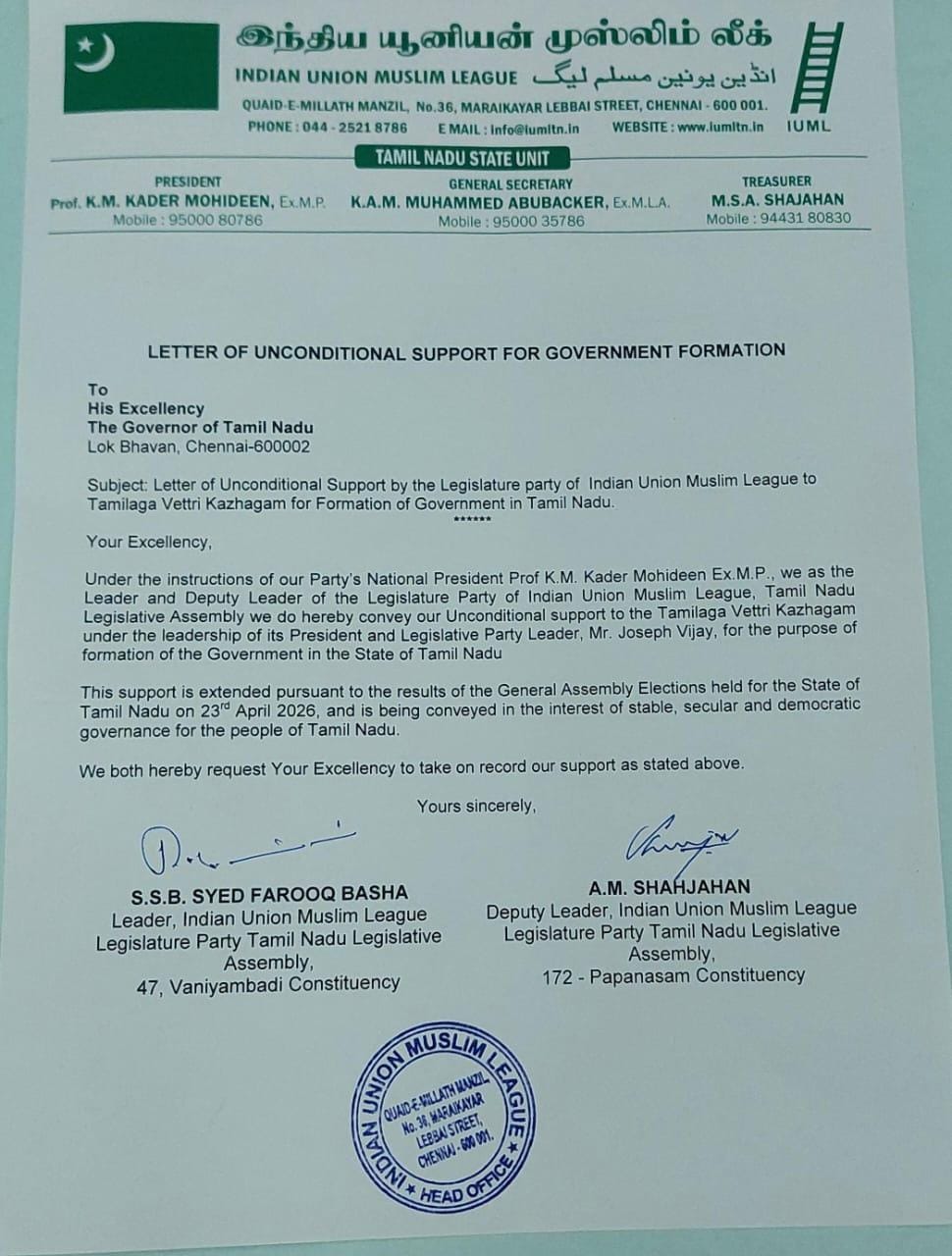
The dark clouds, however, beat a retreat on Saturday after the Viduthalai Chiruthaikal Katchi (VCK) and the Indian Union Muslim League (IUML) informed Governor Arlekar that their two MLAs each would back Vijay in his efforts to provide a new administration in Tamil Nadu.
The latest announcement brought the number of legislators supporting Vijay to 120, surpassing the 118 needed to form a government.
Arlekar ignored the established convention that a governor must invite the leader of the single largest party in a fractured verdict to form a government, with the majority to be proved in the legislature, not in the governor’s office.
As the uncertainty cleared in Tamil Nadu, outgoing chief minister M.K. Stalin, whose DMK party now has 59 seats, a sharp fall from the earlier three-digit figure, conveyed his heartiest congratulations to the to-be chief minister Vijay.
Although the DMK will be the main opposition in the new legislature, it was the action of its long-term allies – the VCK, IUML, and Communists – in extending legislative backing that helped Vijay to the requisite majority.
In the process, the DMK and the Congress, two of India’s oldest political parties, snapped decades of political marriage as the Congress quickly embraced Vijay’s TVK after the election results. The development, political analysts say, will have long-term consequences for the already divided national opposition as it tries to unite against Prime Minister Narendra Modi.
The days since the election results in Tamil Nadu became known, with Vijay’s two-year-old TVK crushing the two Dravidian giants, political inexperience and desperation to grasp power led the actor to make errors, compounded by the governor’s bizarre rules.
Vijay’s main challenge will come once he becomes chief minister and attempts to run a government. His greatest drawback will be his sheer lack of administrative experience. And Tamil Nadu is one of India’s largest states.
That he will be under pressure from friends and foes alike became clear when the communists made it clear – and the DMK said so too – that the “good policy decisions” of the outgoing government should not be dumped.
As he governs, there will be increasing demands and pressures, along with group and community expectations, giving Vijay a much-needed realization that it is far easier to be a hero in the world of cinema than in the real world.