Police Investigate Whether Blaze Was Accidental or Deliberate; Cancer Drugs Among the Losses
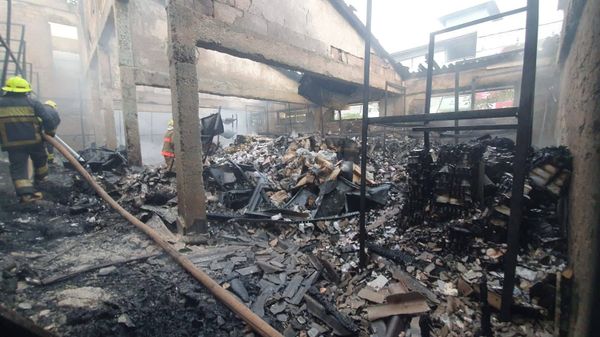
JAFFNA, Sri Lanka — A major fire tore through the pharmaceutical warehouse of Jaffna Teaching Hospital in the early hours of Saturday, destroying medicines and medical equipment worth several billion rupees, including cancer treatment drugs and other critical-care pharmaceuticals, in what officials are calling one of the worst disasters in the hospital's history.
The blaze began at approximately 1:30 a.m. and took more than five hours to bring under control. Firefighters from the Jaffna Municipal Council, supported by military, air force, police, and electricity board personnel, battled the fire as highly flammable liquids and chemical substances stored inside the warehouse caused the flames to spread rapidly through the building.
Jaffna police have launched an investigation into the cause of the fire, with investigators examining both the possibility of an electrical fault and the possibility of deliberate sabotage.
Authorities say a recently installed refrigerated unit in the warehouse, which had been set up to preserve temperature-sensitive medicines, is suspected to have triggered the blaze through an electrical short circuit, but that determination awaits a Government Analyst's report.
The warehouse will remain under full police control until the analyst's examination is completed, said Member of Parliament S. Sribhavanandarajah, a former deputy director of the hospital who inspected the site Saturday. "All of these have now been destroyed in the fire," he said, referring to the high-value medicines that had been stored there.
The financial toll is still being calculated. Fisheries Minister Ramalingam Chandrasekar, who visited the site Saturday morning, said losses could exceed several thousand crore rupees. He said he did not personally believe sabotage was the cause, but that the fire's origins could only be confirmed after a chemical analysis. "This disaster is a huge loss for our people," he said.
Northern Province Governor N. Vethanayahan also toured the damaged warehouse Saturday, receiving a briefing from Hospital Director Dr. T. Sathiyamoorthy on emergency measures taken — including the relocation of salvaged medicines and coordination with the central health ministry in Colombo to arrange emergency resupply.
Hospital officials said patient care would not be interrupted. Medicine distribution is continuing through the hospital's internal stores and regional health services, and authorities urged the public not to panic. Dr. Sathiyamoorthy said central health ministry officials had been immediately notified following the fire.
The governor thanked the fire brigade and emergency responders for containing a disaster he said could have been far worse. Hospital officials confirmed that all personnel who fought the fire — including firefighters and military personnel — would receive medical assessments, including respiratory examinations.
Jaffna Teaching Hospital is the leading government hospital in Sri Lanka's Northern Province and the only teaching hospital in the region, serving as the main clinical facility for the University of Jaffna's Faculty of Medicine. The loss of its pharmaceutical warehouse strikes at the medical infrastructure of a province that has faced decades of underinvestment following the end of the civil war.
An internal hospital inquiry is running parallel to the police investigation. The Government Analyst's Department has not yet indicated when its report will be completed.