A Tamil student from the war-affected district of Kilinochchi has topped Sri Lanka’s Physical Science stream. A Muslim student from Kattankudy has ranked first in Commerce. And in Mullaitivu, a young woman from a once-displaced Muslim community has emerged as the district’s top performer and secured a place in medical studies.
Jaffna, Sri Lanka — April 1, 2026
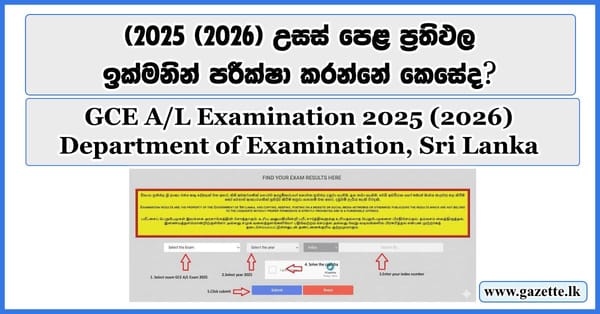
In results that have drawn attention beyond the usual examination season headlines, a Tamil student from the war-affected northern district of Kilinochchi and a Muslim student from the eastern town of Kattankudy have secured first place in separate streams of Sri Lanka’s 2025 G.C.E. Advanced Level examination — widely regarded as the country’s most consequential school-level test, determining access to state university education.
Education observers say this year’s results point to a gradual, if uneven, shift in the country’s academic landscape, with strong performances emerging from districts in the North and East.
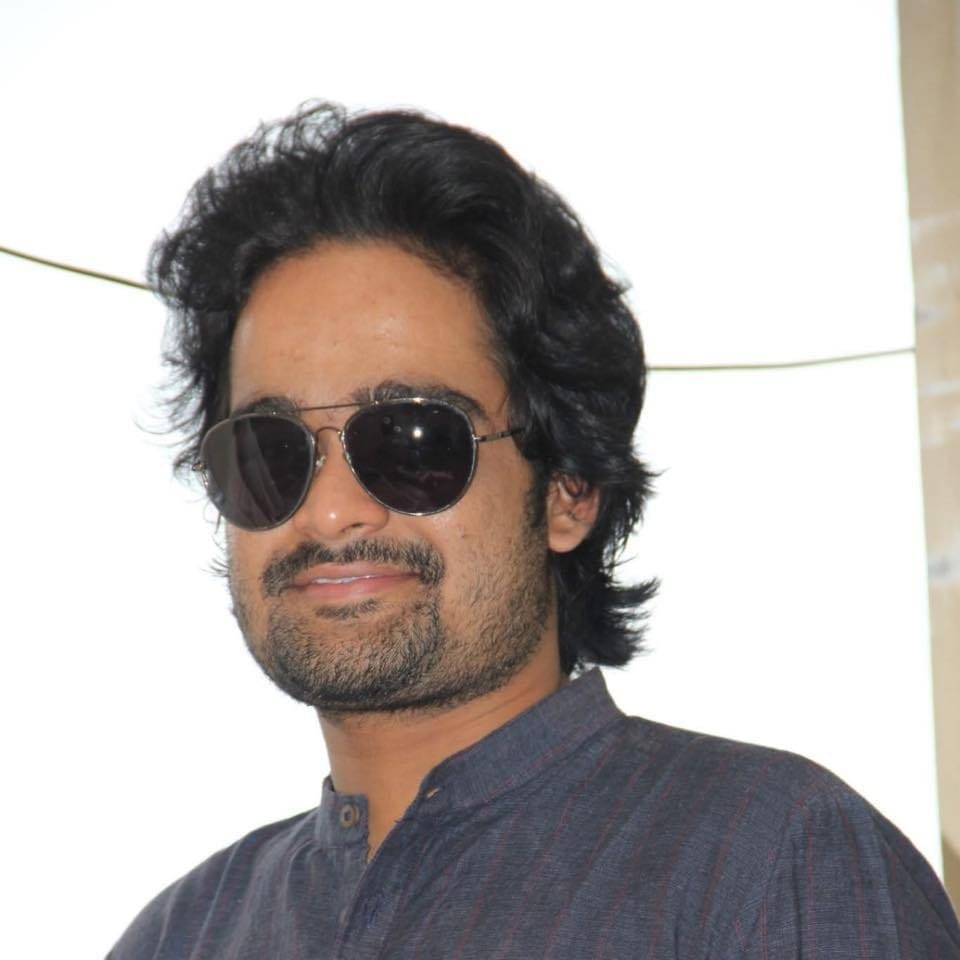
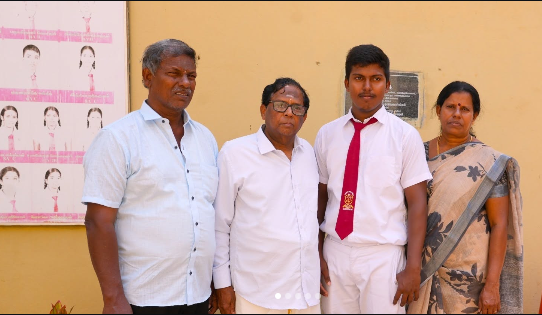
Theiventhiran Thirukumaran, a student at Kilinochchi Maha Vidyalaya in the north, ranked first in the island in the Physical Science stream. Mohammad Subaideen Mohammad Farthan, of Kattankudy Central Maha Vidyalaya in the east, topped the Commerce stream.
A Region Re-emerging
Kilinochchi, once the administrative center of the Liberation Tigers of Tamil Eelam, was heavily devastated during the final phase of Sri Lanka’s civil war. The town fell to government forces in early 2009, while the war’s last battles unfolded in neighbouring Mullaitivu. Both districts experienced widespread destruction and loss.
Schools in the region endured years of damaged infrastructure, shortages of teachers, and cohorts of students shaped by prolonged displacement. That a student from Kilinochchi Maha Vidyalaya now holds the country’s top rank in the Physical Science stream is, by almost any measure, a notable achievement, an educator told Jaffna Monitor.
The Northern Province governor, N. Vethanayahan, visited the school following the announcement, describing the achievement as a “new chapter” in the region’s educational trajectory.
S. Sritharan, an ITAK parliamentarian known for his Kilinochchi-centric political outreach, was among the first to visit and congratulate the student. Social media pages affiliated with him framed the achievement as a milestone, describing the student as “the one who restored lost pride.”
The development comes just days after controversy involving Ramanathan Archchuna, a legislator from the Jaffna–Kilinochchi electoral district and a frequent source of public controversy, who, according to reports, referred to residents of Kilinochchi in derogatory terms during a social media livestream following protests against him in Kilinochchi, reportedly organized by S. Sritharan’s camp.
Thirukumaran’s result was not an isolated one. Across the North, the 2025 A/L season delivered a broader base of strong performances than most years in recent memory.
In Jaffna, long regarded as one of Sri Lanka’s academic centers, the tradition held: Jaffna Hindu College reported 67 students with three A passes, with more than four-fifths of its candidates qualifying for university admission. At Hartley College in Point Pedro, students secured top district rankings in both Mathematics and Biological Science, with one candidate placing 12th nationally in the Mathematics stream.
In the Eastern Province, Sri Shanmuga Hindu Girls’ College in Trincomalee recorded one of its strongest years, with Tharshana Konesh placing third nationally in the Biological Science stream — a result confirmed in the island-wide rankings released alongside the results.
Kattankudy: A Different Kind of First
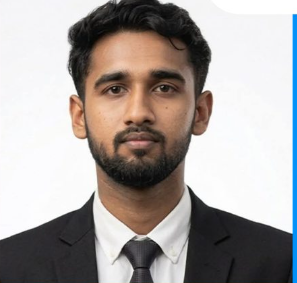
In Kattankudy, a densely populated, predominantly Muslim town on Sri Lanka’s eastern coast, the island-first ranking in the Commerce stream by Mohammad Farthan of Kattankudy Central Maha Vidyalaya has been widely seen as a community milestone as much as an individual achievement.
Muthur: A Story of Survival and Study
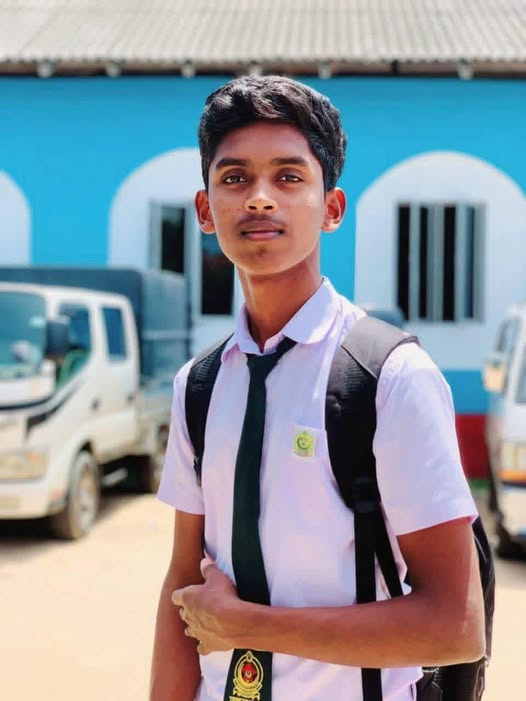
In Muthur, in Sri Lanka’s Eastern Province, another student’s journey has drawn attention for the circumstances that shaped it as much as for the result itself.
Mohammad Akram Mohamed Rushdi, who has secured a place to study medicine, lost both his parents in an airstrike in 2006 and was subsequently raised by his grandmother, who, according to reports, sells string hoppers to sustain the family’s daily life and support his education.
Mullaitivu: Medicine, and What It Means
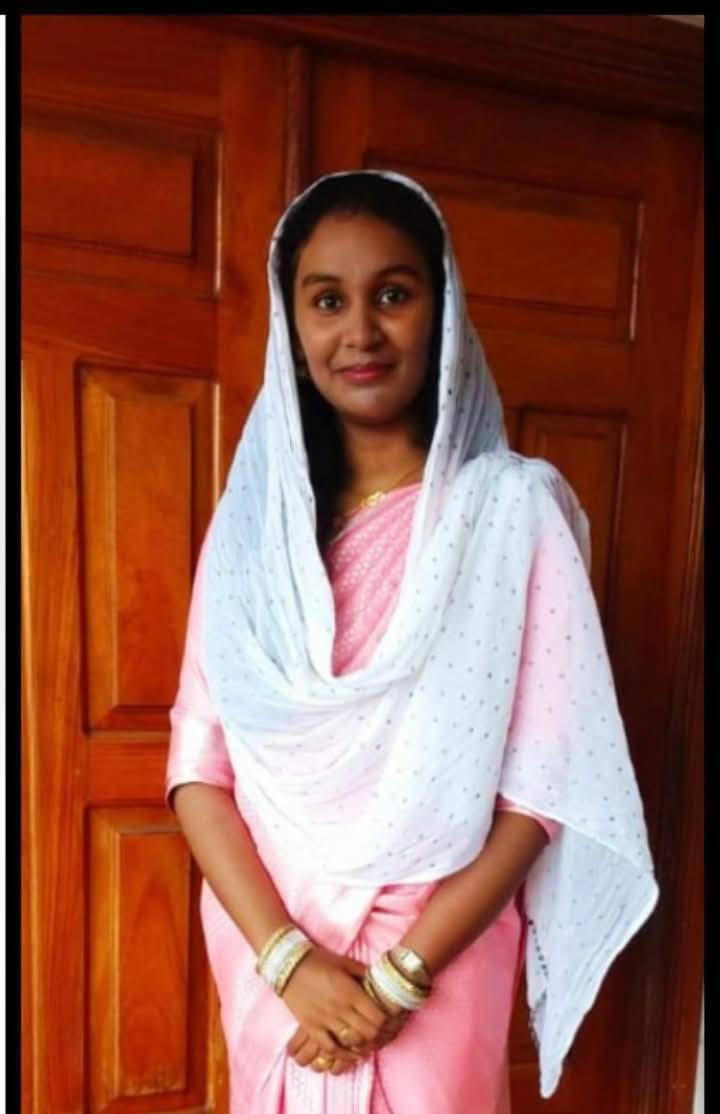
Of all the results from the North and East this year, few carry more symbolic weight than that of Misraj Nida Fathima, a student of Mullaitivu Maha Vidyalaya.
Fathima ranked first in Mullaitivu district and 207th nationally, earning eligibility for medical studies at a state university.
Mullaitivu was among the districts hardest hit in the final phase of the war. Its Muslim population had been forcibly expelled from the Northern Province in 1990 by the Liberation Tigers of Tamil Eelam, with many families losing their homes and belongings. Resettlement began gradually during periods of ceasefire and accelerated after the war ended in 2009, but communities returned to areas where schools had been damaged, teachers had fled, and years of schooling had been disrupted.
Against that backdrop, Fathima’s achievement is not merely a statistic. “This is not just an individual accomplishment,” a local school official said. “It reflects a community that is still rebuilding but beginning to re-enter national spaces through education.”
Another teacher, Ravi Thangathurai, told Jaffna Monitor that her success represents a positive sign for the resettled Muslim community, particularly for young girls. He described her as a student who could “offer a sense of hope to a generation that grew up in displacement.”
The National Picture
At the island level, the 2025 results confirm patterns familiar from recent years, even as the geography of top performance continues to shift. In the Biological Science stream, first place went to Dilan Sanjana Karunaratne of Royal College, Colombo, while Darshana Konesh’s third-place finish for Sri Shanmuga Hindu Girls’ College in Trincomalee marked one of the strongest results for an eastern school in that stream in years.
The Engineering Technology stream was led by Wanigasuriya Arachchige Don Heshan Anujaya Wanigasuriya of Bandarainake Vidyalaya, Gampaha. The Bio Systems Technology stream was topped by Wijeratne Mudiyanselage Dona Ishani Manodya of Bandaranayake Central College, Veyangoda. The Arts stream was led by Marasinghe Pathiranage Achintha Mihiranga Rathnayake of Wayamba Royal College, Kurunegala.
Beyond the Rankings
The A/L examination remains the principal gateway to state university education in Sri Lanka. With placements sharply limited, the pressure is immense — and the stakes are particularly high for students from districts where private tutoring, laboratory access, and qualified teachers are unevenly distributed.
This year, educators note, the North and East delivered not just standout individual results but a broader cohort of high-performing candidates — a sign, they say, that the improvements are systemic rather than exceptional.
Devathas Kishani of St. Anthony’s College in Kayts, for instance, ranked first in Jaffna district in the Bio-Technology stream and 27th nationally. She lost her father — a fisherman — in a shooting incident when she was an infant, and was raised by her mother, who worked as a daily wage laborer. Her result, educators in the region say, illustrates both the determination that characterizes many students from under-resourced communities and the distance those communities have had to travel.