COLOMBO, Sri Lanka — Sri Lanka’s long-delayed provincial council elections appear set for further postponement, with a parliamentary panel now expected to submit only an initial report within three months.
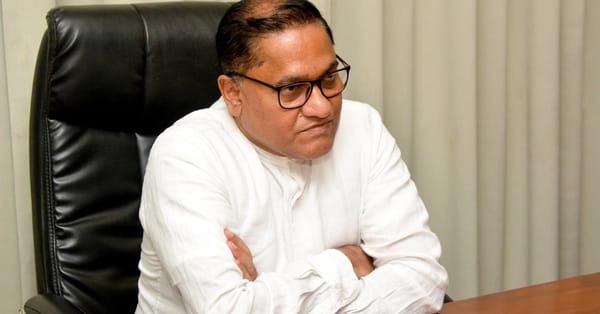
The select committee, chaired by Foreign Minister Vijitha Herath, had originally been tasked with producing a report within that timeframe. But at its first meeting last week, Mr. Vijitha Herath indicated that only a preliminary report would be delivered, suggesting that further stages of review will follow, with no clear end in sight.
The distinction has deepened skepticism among analysts and opposition figures, many of whom believe the government is in no hurry to face another election.
The National People’s Power (NPP) government had promised during the 2024 general election campaign to hold provincial council polls within a year of taking office. Nearly a year and a half later, that pledge remains unfulfilled, with little indication of movement beyond procedural steps.
In the 2025 local government elections, the NPP’s vote share dropped sharply, with the party securing roughly 1.8 million fewer votes than in the parliamentary election a year earlier. That setback, analysts say, has made the government wary of testing its popularity again — particularly in a system where provincial elections could expose regional weaknesses.
Instead, the government has leaned on a mix of procedural hurdles and external crises to justify the delay.
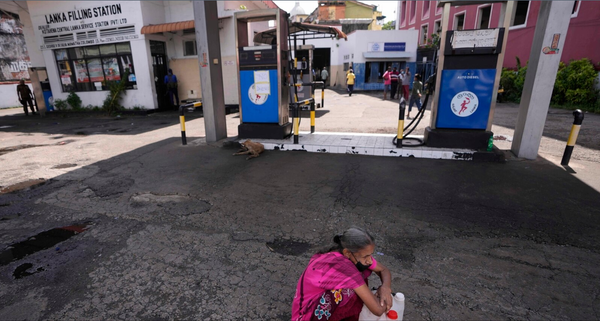
Officials have cited the aftermath of Cyclone Ditwah and the economic pressures linked to the Middle East conflict as reasons to prioritize governance over elections. But critics argue that such justifications have become a familiar pattern in Sri Lankan politics, where elections are often deferred under the weight of “exceptional circumstances.”
Deputy Minister of Provincial Councils and Local Government Prabha Ruwan Senarath defended the government’s position, saying its immediate focus was on managing the country’s economic and social challenges.
“The immediate priority is to manage the prevailing crisis situation,” he said, while noting that legal and structural issues surrounding the electoral system remain unresolved.
He rejected allegations that the government was avoiding elections, pointing to a 10 billion rupee allocation in the national budget for provincial polls. Yet analysts note that budgetary provisions have historically done little to guarantee electoral timelines.
The select committee is scheduled to meet again on April 7, when it is expected to consult the attorney general and the chairman of the Election Commission — another step in what critics describe as an increasingly drawn-out process.
Meanwhile, Tamil nationalist parties — which have periodically threatened mass mobilization over both provincial elections and the full implementation of the 13th Amendment — have struggled to maintain sustained pressure, weakening one of the few potential sources of political urgency.
The debate has also been complicated by speculation that India has softened its stance on the 13th Amendment, a key pillar of provincial devolution introduced under the Indo-Lanka Accord. In an interview with Jaffna Monitor this January, however, India’s High Commissioner to Sri Lanka, Santosh Jha, dismissed that claim.
“India has not softened its position. India’s stand remains unchanged,” he said, adding that the issue continues to be raised at the highest levels of engagement.
Political observers also point to a noticeable shift in tone from Janatha Vimukthi Peramuna (JVP) General Secretary Tilvin Silva following a visit to India in late February.
In a recent interview, Mr. Tilvin Silva questioned the effectiveness of the provincial council system itself, while stopping short of advocating its abolition.
“Provincial councils have not served the purpose. We should look for a better solution,” he said, adding that they would not be scrapped without an alternative framework.
He acknowledged that the government had intended to hold elections this year but cited legal barriers, the need for electoral delimitation, and disruptions caused by Cyclone Ditwah as reasons for the delay.
Taken together, these signals point to a government recalibrating its position — from an earlier commitment to early elections to a more open-ended timeline shaped by political risk and procedural complexity.
For now, political observers say the direction is clear: provincial council elections are unlikely in the near term, with some analysts warning that delays could extend even beyond 2027.