By M.R. Narayan Swamy
Fatigue with Dravidian outfits, being sick and tired of corruption, anger over poor law and order, disgust with family control of parties, and a “let-us-try-out Vijay” sentiment were the most common denominators that delivered a stunning election verdict in Tamil Nadu, sinking political giants and bringing plenty of unknowns into the corridors of power.
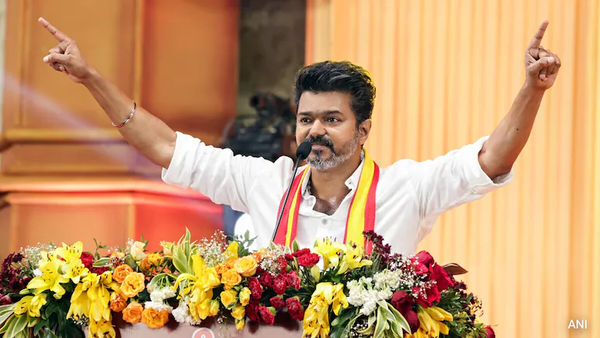
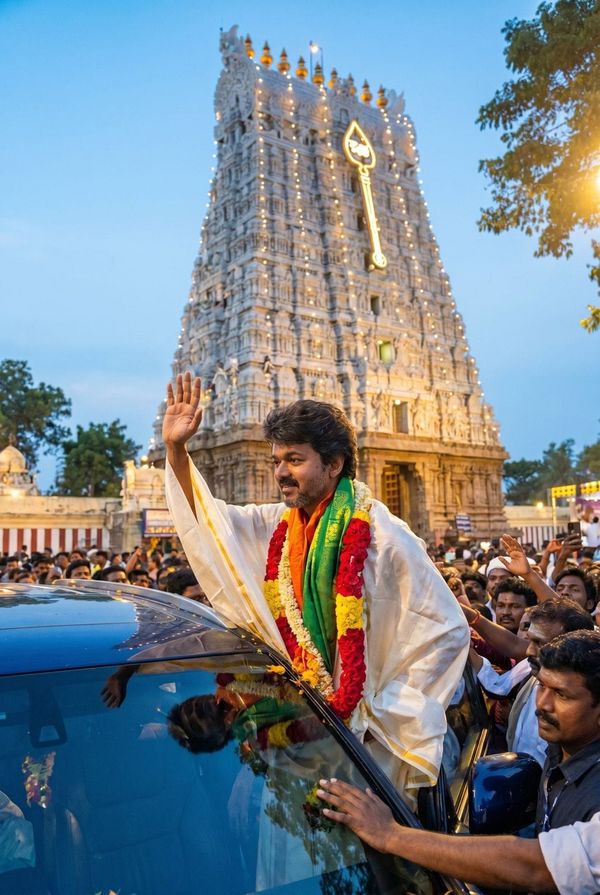
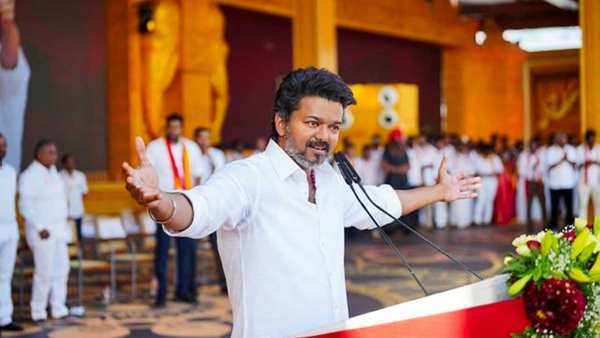
Interviews with dozens of residents, mostly in Chennai, revealed the extent of silent outrage against an established system that spurred millions in the state to root for a 51-year-old movie superstar who formed his party just two years ago and who had never contested an election until now.
Voters say what happened on April 23 when Tamil Nadu voted was a carefully hidden roar which crushed the DMK and the AIADMK, which had monopolised governance in the state for almost 60 years, besides traumatising India’s two big national parties: the Congress and the Bharatiya Janata Party (BJP).
Those who have interacted with Vijay’s Tamilaga Vettri Kazhagam (TVK) after the stunning verdict say even TVK leaders and cadres did not expect such a sweep, thinking they would probably win around 60 seats in the 234-member Tamil Nadu Assembly – and then perhaps play the kingmaker.
But the mass of Tamils had other ideas. And so they gave a generous 108 seats to the TVK, just ten short of the 118 needed to form a government, a deficit he can make up with support from those who have single-digit wins and become the chief minister of Tamil Nadu, India’s most urbanized and one of its best-performing states economically.
This, however, is not just a vote for Vijay, one of the highest-paid stars in the country who entered politics only in 2024; the voters also gave a strong, undisguised message – “Don’t take us for granted!” -- to everyone else in the electoral field.
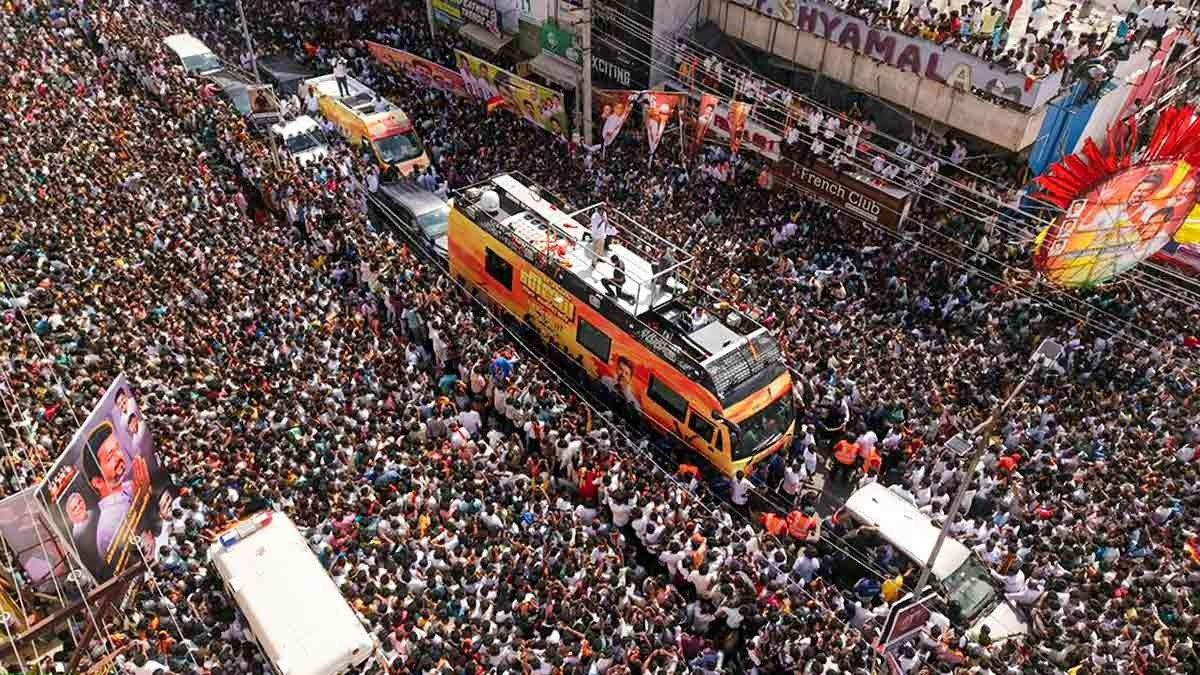
Many voters Jaffna Monitor spoke to said they had no idea who the local TVK candidate was, even as they voted for Vijay. In the process, many unknowns won across Tamil Nadu, including two Brahmins, a community long ostracized by the Dravidian parties.
This is also how the iconic actor M.G. Ramachandran, or MGR, stormed to power in 1977, although he had long been a player in the political system.
“When I used to talk about anti-incumbency, many did not believe it, particularly those not living in Tamil Nadu,” retired banker K.V. Narayanan told Jaffna Monitor. “Now people are simply saying ‘wow’.”
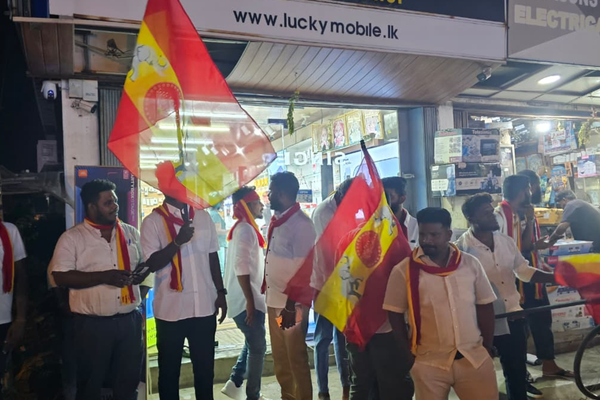
Like many others, Narayanan pointed out that support for Vijay cut across Tamil Nadu in all forms. Urban and rural, traditional Dravidian voters, Hindus, Muslims, and Christians, men and women, the middle class and poor, even those who benefited from Dravidian welfare packages. Before the rivals could gauge what was happening, Vijay had turned into a Pied Piper, silently but steadily wooing large chunks of voters from every other player.
In the end, the long-held Dravidian fortress was breached. In contrast to the TVK’s 34.9 percent of votes polled, the DMK and AIADMK may still have 31.4 and 26.1 percent votes respectively in their kitty, but the sheer redrawing of people’s minds gave the DMK just 59 seats (a huge plunge from 2021) and the AIADMK 47 seats.
Former corporate manager K.S. Vishwanathan said, “Yes, the DMK spoke about social justice, but their leaders were mostly ensuring ‘justice’ for themselves. Their corruption is legendary. They were taking cuts in every deal. Yes, Tamil Nadu progressed, but that had nothing to do with the DMK.”
Auto-rickshaw driver Selvam had always voted for the DMK, but this time he rooted for Vijay, flocking to many of his massively attended election meetings. Asked why, he said: “I just can’t take DMK politics anymore.”
Muthukumar, who with friends sells South Indian snacks on the streets, also voted for Vijay, knowing the actor lacks political or administrative experience. “Let someone new take over, Sir. Tamil Nadu needs a break.”
Prime Minister Narendra Modi’s BJP may have scored stunning victories elsewhere in India, but in Tamil Nadu, its pathetic tally of four in the outgoing house was cut to 1 after it allied with a largely discredited AIADMK.
In political terms, the bigger loser was the Congress, which turned down desperate invitations from Vijay ahead of the election for an alliance and remained politically married to the DMK. The result: the Congress now has just five MLAs, down from the double digits earlier.
Saravanan Karthikeyan, a Chennai resident in his late 50s, said people were angry over the deteriorating law and order in Tamil Nadu, even as the DMK kept a tight grip on the local media, which some residents allege mostly refrained from reporting the dark spots in the state.
“Even children in our families were urging the elders to vote for Vijay,” Karthikeyan said. “The immense popularity of this man is mind-boggling. When I returned home after voting, my niece, just 14, asked: ‘Mama, did you vote for Vijay uncle?’”
Voters also disliked the fact that Chief Minister Stalin was brazenly grooming his son Udhayanidhi to take over the DMK and possibly the government one day.
“We know that Stalin was groomed by his father (and chief minister) Karunanidhi, but Stalin slogged and slogged for decades,” said a former DMK supporter who didn’t want to be named. “But what right did Stalin have to promote a son who is not fit for this job?”
There was also, more than one voter said, a pent-up Hindu anger against the DMK for what was widely felt as anti-Hindu postures of its leaders.
“Their favorite pastime was to denounce Hindu religion and Sanatan Dharma,” said one resident. “They forgot that the earlier times are gone. The Brahminical domination is long over. No DMK leader would speak one word against other religions, but attacking Hinduism was considered a fair game.”
Even those who have voted for Vijay admit the road ahead might be bumpier than what even the actor can fathom. After all, administrative acumen is critical to run an entire state. And Vijay lacks it – completely.
Popular goodwill, however well earned, has an expiry date.
No wonder Vijay has urged the Tamil Nadu governor to invite him to form a government and said he would prove his legislative majority within two weeks.
The far bigger challenge would be administering a state of 85 million people — almost four times the population of Sri Lanka or Australia — and managing and overcoming the numerous problems that plague the state.
If he embraces the Congress and gives it a seat in his government, he could court the anger of the BJP in New Delhi. Already, in his campaign speeches, the actor called the BJP “fascists” and described it as an ideological adversary. And the BJP, as has been proved repeatedly, doesn’t forget its foes easily.
It is possible that Vijay will realize that winning an election is perhaps not as difficult as running an Indian state — in this case, Tamil Nadu.
Tamil Nadu has certainly changed, but it has not turned its back on its past. Dravidian politics may not die, but its adherents will have to reinvent it. Traditional freebies are no longer enough to win people over. The voter in Tamil Nadu has quietly rewritten the state’s political script.