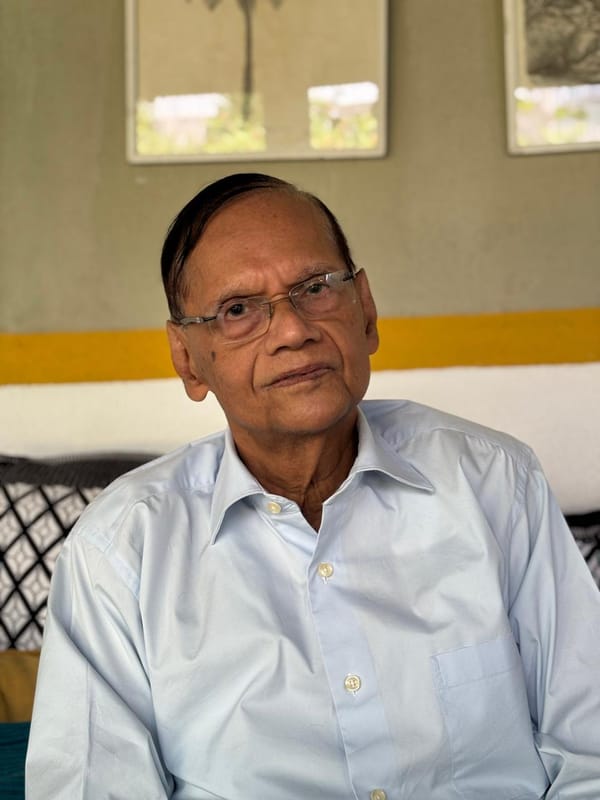
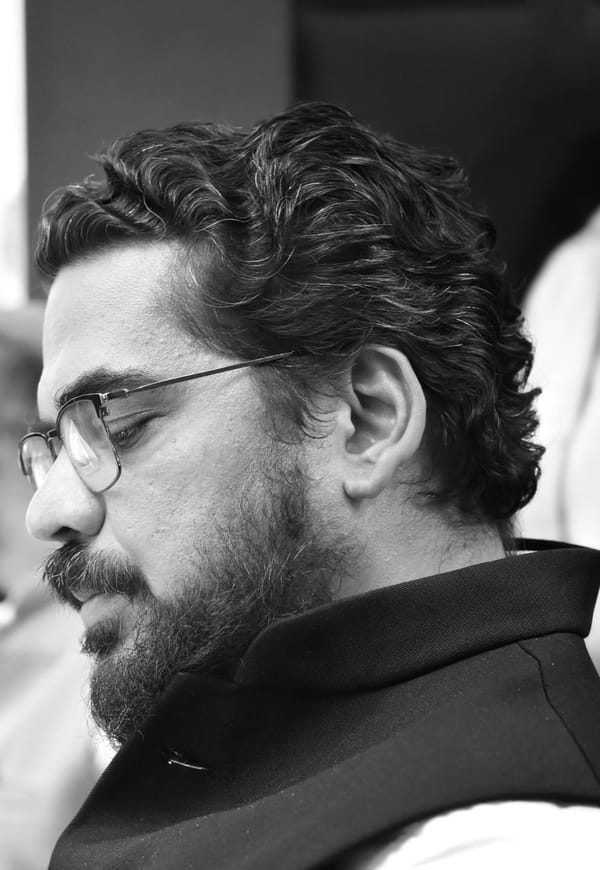
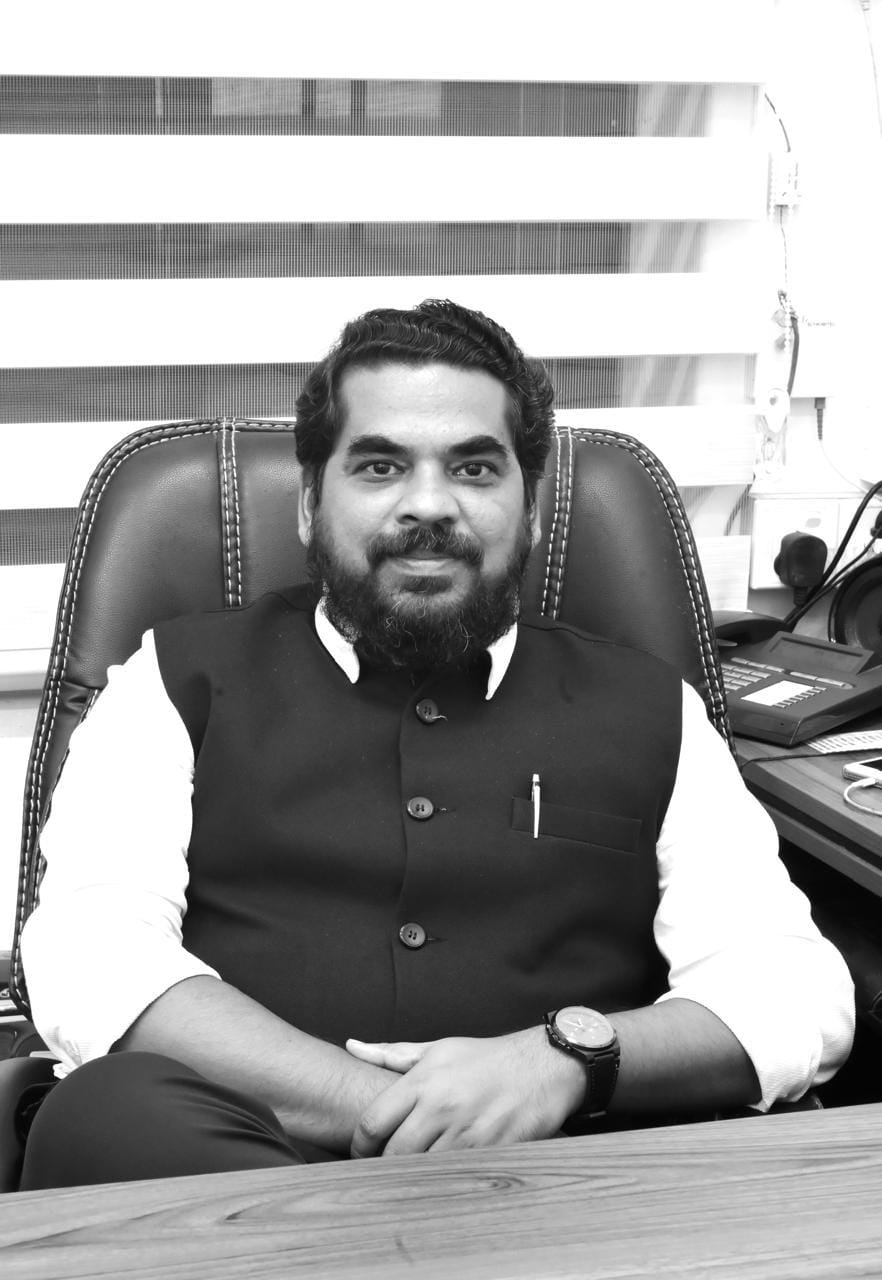
Prof. (Dr.) Ankuran Dutta is an academic and public intellectual who serves as the Director of the Swami Vivekananda Cultural Centre (SVCC), the cultural arm of the High Commission of India in Sri Lanka. SVCC functions under the Indian Council for Cultural Relations (ICCR), which oversees India’s cultural and educational outreach abroad.
He recently visited Jaffna, where SVCC is a major partner of the Jaffna International Cinema Festival.
In this interview with us, Prof. Dutta discusses SVCC’s role in Sri Lanka, the ICCR scholarships offered by the Government of India, and other initiatives shaping India–Sri Lanka cultural engagement.
The ICCR has long supported Sri Lankan students through scholarships that have enabled many to build successful careers. Could you briefly outline the scholarships currently offered by the ICCR to Sri Lankan students? Additionally, are there any specific scholarships, quotas, or targeted initiatives aimed at students from the Northern and Eastern Provinces?
At present, the ICCR offers around 200 fully funded scholarships annually to Sri Lankan students under various schemes, covering almost all academic streams except medical, paramedical, and law programmes.
While there is no province-wise quota, students from the Northern and Eastern Provinces are given due preference during the selection process, alongside other deserving candidates.
Scholarships are usually announced through Sri Lanka’s Ministry of Higher Education, followed by a formal selection procedure that also assesses applicants’ genuine interest and readiness to study in India.
India, the world’s second-largest education hub after the United States, has nearly 1,300 universities and about 75,000 colleges, hosting a large international student population.
ICCR scholarships provide comprehensive support, including airfare, a monthly stipend (approximately INR 25,000, varying by city and institution), accommodation assistance, book grants, and educational and cultural visits.
Could you briefly highlight the ICCR alumni network?
Sri Lanka’s current Prime Minister, Harini Amarasuriya, is an ICCR alumna who completed her BA in Sociology at Hindu College, University of Delhi, under an ICCR scholarship; a research laboratory was recently inaugurated in her name at her alma mater.
ICCR also has a strong alumni presence in Sri Lanka’s higher education sector. A recent database identified nearly 500 India-educated professors serving across 17 public universities, the majority of whom were ICCR scholars.
The alumni footprint is particularly strong in the Northern Province. At the University of Jaffna, several faculty members are ICCR alumni, including S. Raguram, Dean of the Faculty of Arts, and P. Ahilan from the Faculty of Fine Arts. At the Ramanathan Academy of Fine Arts, it is estimated that over half the faculty studied in India, many through ICCR scholarships.
So, in a way, would it be fair to say that the educational landscape of Sri Lanka has been significantly shaped by ICCR scholarships?
Yes, I believe that would be a fair observation. As I mentioned earlier, we have identified nearly 500 ICCR alumni serving as professors across 17 public universities in Sri Lanka. This figure does not even include private universities. Given this scale, it is clear that ICCR scholars have had a substantial influence on shaping higher education in Sri Lanka, both through teaching and academic leadership.
You mentioned that around 200 scholarships are offered each year. Could you break this down by level of study—how many are allocated for undergraduate, postgraduate, and PhD programmes?
It is a little difficult to provide an exact numerical breakdown across all categories, as the scholarships are offered under different schemes. However, ICCR provides a substantial number of scholarships at the undergraduate level and for master’s programmes. In recent years, we have also expanded the number of scholarships available for PhD candidates. Additionally, the age limit for PhD applicants has been increased, allowing candidates above 50 years of age to apply.
What is the broader motivation behind the Indian government investing so significantly in scholarships for Sri Lankan students?
One could certainly describe this as part of India’s soft power and education diplomacy, but more importantly, it is rooted in our Neighbourhood First policy. India believes strongly in standing by its neighbours, especially in times of need.
You would have seen this very recently during Cyclone Ditwah, when India was the first to extend support to Sri Lanka. This assistance is unconditional and heartfelt—it comes from a genuine sense of responsibility and solidarity. In our societies, when a neighbour is suffering, it is the neighbour who responds first, often even before relatives. That is the spirit behind India’s approach.
Beyond immediate support, Sri Lanka and India are inseparable in many ways. Our connection is not just geographical, but deeply historical and cultural. If we look at the Ramayana, our shared links go back nearly 7,000 years; through Buddhism, we share a relationship spanning over 2,500 years. These are civilisational bonds that cannot be separated.
I would also like to emphasise that there is a great deal of goodwill among Indians towards Sri Lanka and its people. A simple example is cricket—except when India and Sri Lanka play each other, Indian audiences overwhelmingly support Sri Lankan players, many of whom are deeply admired in India.
Culturally, too, Sri Lankans find it easy to adapt to life in India. In terms of appearance, communication, food, and everyday social interaction, there is a natural familiarity. That is why India often becomes the first choice for higher education for Sri Lankan students—not only from the Northern and Eastern Provinces, but from across the entire country.
We now see a very strong response and healthy competition for ICCR scholarships. We actively encourage Sri Lankan students to consider India as a destination for higher education, not just for academic excellence, but for the rich cultural and life experience it offers.
For the 200 scholarship slots available each year, how many students typically apply?
The number of applicants varies from year to year. However, last year alone, nearly 4,000 students applied for ICCR scholarships. This strong response clearly reflects the high demand and credibility of ICCR scholarships among Sri Lankan students.
I want to understand the selection process more clearly. While ICCR offers around 200 scholarships and works with the Ministry of Higher Education to allocate them, is there any specific quota for students from the Northern and Eastern Provinces—regions that have endured nearly three decades of conflict—or for the Hill Country, which has been historically marginalised? Wouldn’t it be fair to allocate additional slots to students from these regions?
ICCR follows a policy of preference rather than formal quotas. The Education Wing of the Indian High Commission maintains close links with universities across Sri Lanka, including those in the Northern and Eastern Provinces, and ensures that eligible candidates from these regions receive due consideration.
Scholarships are not region-based, as rigid quotas can create practical challenges—for instance, varying demand across undergraduate, postgraduate, and PhD levels from year to year. A flexible approach allows for greater fairness.
That said, preference is clearly reflected in practice. Each year, faculty members from the Swami Vipulananda College of Aesthetic Studies at Eastern University are selected for Master’s and PhD programmes in India, and several faculty members from the Trincomalee Campus are currently pursuing PhDs under ICCR-supported schemes.
While the Ministry of Higher Education plays a key role in the initial selection, the process is carried out in close consultation with the Indian High Commission, which is actively involved in interviews, evaluations, and final decisions, making it a collaborative rather than a single-institution-driven process.
You are the Director of one of Sri Lanka's most active cultural institutions—the Swami Vivekananda Cultural Centre (SVCC) in Colombo. Could you tell us about the Centre's work and initiatives?
I am pleased to share that I have completed three years of my tenure at the Swami Vivekananda Cultural Centre and will soon return to India to resume my role as a professor. Over this period, the Centre has been exceptionally active, organising more than 1,000 programmes and activities—almost one programme every day.
Training and education have been at the core of our work. We conduct regular courses in yoga, Hindi, and Sanskrit. Most recently, we organised a rigorous one-week residential Spoken Sanskrit programme for 250 Buddhist monks and Pirivena teachers, with expert resource persons from the Central Sanskrit University, New Delhi.
In the performing arts, we offer continuous training in Bharatanatyam, Carnatic and Hindustani vocal music, sitar, tabla, violin, and related disciplines. Outreach has been another major pillar. Each year, we organise the Indian Film Festival at the Trincomalee Campus—this year inaugurated by the Governor of the Eastern Province—and we regularly conduct programmes at the University of Jaffna, Eastern University, and South Eastern University in Ampara, focusing on Indian knowledge systems, arts, and culture.
Importantly, our work is rooted in cultural exchange rather than one-way dissemination. While Bharatanatyam has Indian origins, Sri Lankan artistes have made equally significant contributions. We have facilitated Sri Lankan cultural troupes performing in several Indian cities, and most recently, Sri Lankan artistes participated in the International Gita Mahotsav in India. At this event, Bharatanatyam set to the Bhagavad Gita was presented alongside Kandyan dance. Renowned Kandyan dance maestro Dr Ravibandhu Vidyapathy also produced a remarkable dance drama based on the Bhagavad Gita and the Mahabharata, rooted in Kandyan traditions.
Literature and translation form another key focus area. The distinguished Tamil writer from Jaffna, Ayathurai Santhan, was awarded the Prestigious Premchand Fellowship of the Sahitya Akademi, and we are currently planning a Hindi translation of his Tamil short stories. We are also working on publishing 100 Indian folk tales in Sinhala, representing different regions of India.
A particularly meaningful initiative involved the legendary Indian music icon Dr. Bhupen Hazarika. His iconic song “Manuhe Manuhor Babe”—often described as the “Anthem of Humanity”—was translated into Tamil and Sinhala. The Tamil translation was done by Ayathurai Santhan, and the Sinhala translation by Professor Upul Ranjith Hewawithanagamage of the University of Kelaniya. Produced in both official languages of Sri Lanka, the song was later appreciated by Prime Minister Narendra Modi and featured on Mann Ki Baat.
We have also worked with Sri Lanka’s traditional string puppet theatre, Rukada Natya, particularly associated with Ambalangoda. For the first time, we introduced the Ramayana into Sri Lankan string puppetry. In addition, Indian classical and moral literature—such as the Panchatantra, Hitopadesha, Kathasaritsagara, and Jataka stories—has been translated into simple Sinhala and produced as a nine-hour audiobook.
Hindi promotion remains a priority. Hindi, the world’s third-most-spoken language, is currently taught at nearly 10 universities in Sri Lanka. This year alone, we helped introduce Hindi courses at the Kotelawala Defence University and the Open University of Sri Lanka.
What is the rationale for teaching Hindi in schools and universities in a non-Hindi-speaking country like Sri Lanka? How would you respond to those who describe this as a form of “Hindi imperialism”?
First of all, I would like to clarify that Hindi is not my native language either. Today, however, more than 650 million people worldwide speak Hindi, making it the third most spoken language globally.
Hindi is spoken by over half of India’s population and has emerged as a major international lingua franca. In Sri Lanka, many people—particularly within the Sinhala-speaking community—understand Hindi quite well, as Sinhala is an Indo-Aryan language with strong linguistic similarities. At present, Sri Lanka has a full-fledged Hindi Department at the University of Kelaniya, with Hindi taught in 88 government schools and at around 10 universities across the country.
I want to be very clear on one point: India does not pressure Sri Lanka to teach Hindi. We do not impose it. Our support for Hindi education is provided only where there is genuine local demand. That demand is not created by India—it already exists. Our role is purely supportive.
Indian tourists account for the highest influx of foreign visitors to Sri Lanka. As a result, knowledge of Hindi offers strong employment potential locally, particularly in the tourism sector—hotels, travel services, and hospitality—and also opens opportunities in other countries.
To illustrate this demand, last year we organised a Hindi song festival to mark the birth anniversary of Mohammed Rafi, and the response was overwhelming.
In 2025, we organised two major cultural events. One featured the popular young Indian singer Papon (Angaraag Mahanta) on India’s Republic Day at the Nelum Pokuna. The venue was completely full, and nearly 500 invitations had to be cancelled due to space constraints. Similarly, on 15 August, India’s Independence Day, a concert featuring Kavita Krishnamurti and Dr L. Subramaniam once again filled Nelum Pokuna to capacity.
Beyond concerts, there is also a practical dimension to learning Hindi. Many Sri Lankans work in the Middle East, where Hindi is widely used as a lingua franca. In fact, wherever I travel in Sri Lanka—even in small towns or tea stalls—I often meet people who can speak Hindi. This reflects an organic, ground-level demand.
So the reality is simple: the interest and initiative already exist. India merely responds to that demand. There is no coercion, no cultural imposition, and certainly no imperialism—only support for linguistic and cultural exchange driven by people’s own choices.
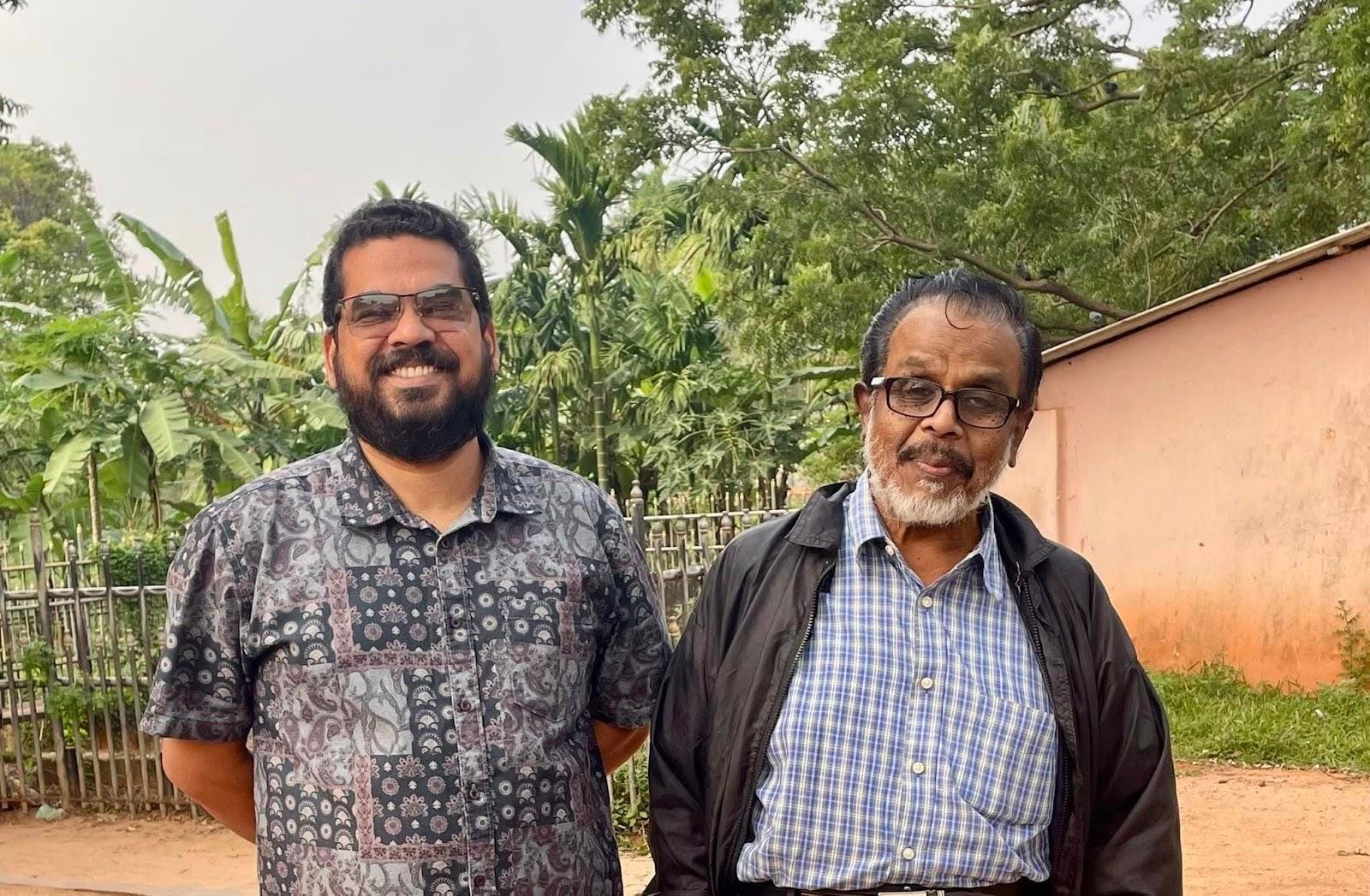
Could you tell us about the Jaffna International Cinema Festival?
The Jaffna International Cinema Festival (JICF) is Sri Lanka’s only continuously sustained international cinema festival, and it has now completed 11 years. I strongly believe that cinema is one of the most powerful media for connecting people across cultures and languages.
We have been collaborating with the Jaffna International Cinema Festival for the past three years. In 2023, we marked the birth centenary of the renowned Indian filmmaker Mrinal Sen by presenting a comprehensive retrospective of his work. Initially, I was slightly apprehensive about how non-Tamil films would be received in Jaffna. However, to my surprise and delight, the screenings at the University of Jaffna were met with standing ovations after every film. This reaffirmed the idea that cinema speaks a universal language, transcending linguistic boundaries.
This year’s festival further demonstrated that universality. The opening film was in Khasi, a regional language spoken in Meghalaya, which is not among India’s 22 constitutionally recognised languages. Yet the film was deeply appreciated by audiences in Jaffna. While subtitles were provided for key dialogues, it was primarily the visual storytelling and emotional depth that connected with viewers.
I am also pleased to share that over 200 Indian filmmakers submitted their films for this year’s Jaffna International Cinema Festival. From these, a curated selection was made, and a significant number of films are being screened in Jaffna during the festival.
I would like to place on record my appreciation to Ms Anoma Rajakaruna, the Festival Director, as well as the advisory committee and the entire festival team, for successfully organising this remarkable festival for over a decade.
There is now a budding cinema industry in Jaffna. While it has long been influenced by Tamil Nadu cinema, over the past decade a distinct Sri Lankan Tamil cinema has begun to emerge. Do the Swami Vivekananda Cultural Centre or the Indian government have any plans to support such initiatives?
I see the growth of independent filmmaking among Sri Lankan Tamils as a very positive and encouraging trend. These filmmakers bring distinct storytelling styles and perspectives, and they deserve support and encouragement.
We are always open to supporting creative and artistic initiatives, especially those that reflect emerging local voices. At present, there are discussions underway in Sri Lanka about establishing a National Film School, possibly with multiple campuses. While it is likely to begin in Colombo due to logistical advantages, there is also scope for such initiatives to expand to Jaffna in the future.
From the Swami Vivekananda Cultural Centre, we have already been exploring ways to support young and emerging cinema practitioners. For instance, we are organising a week-long workshop with the National School of Drama, New Delhi, currently planned for Colombo. I have personally requested that similar workshops be conducted in Jaffna as well, even if only for a few days.
From the Indian side, institutions such as the Film and Television Institute of India (FTII), Pune—one of the most renowned film schools in the world—have shown strong interest in supporting Sri Lankan cinema. There is clear openness to collaboration, training, and knowledge exchange.