VAVUNIYA, Sri Lanka — The chairman of the Vavuniya South Tamil Pradeshiya Sabha spent more than 1.7 million rupees of public money in five months on a rented luxury pickup truck, even as residents in the area say the council repeatedly cites budget constraints to explain crumbling roads, broken drains, and unlit streets.
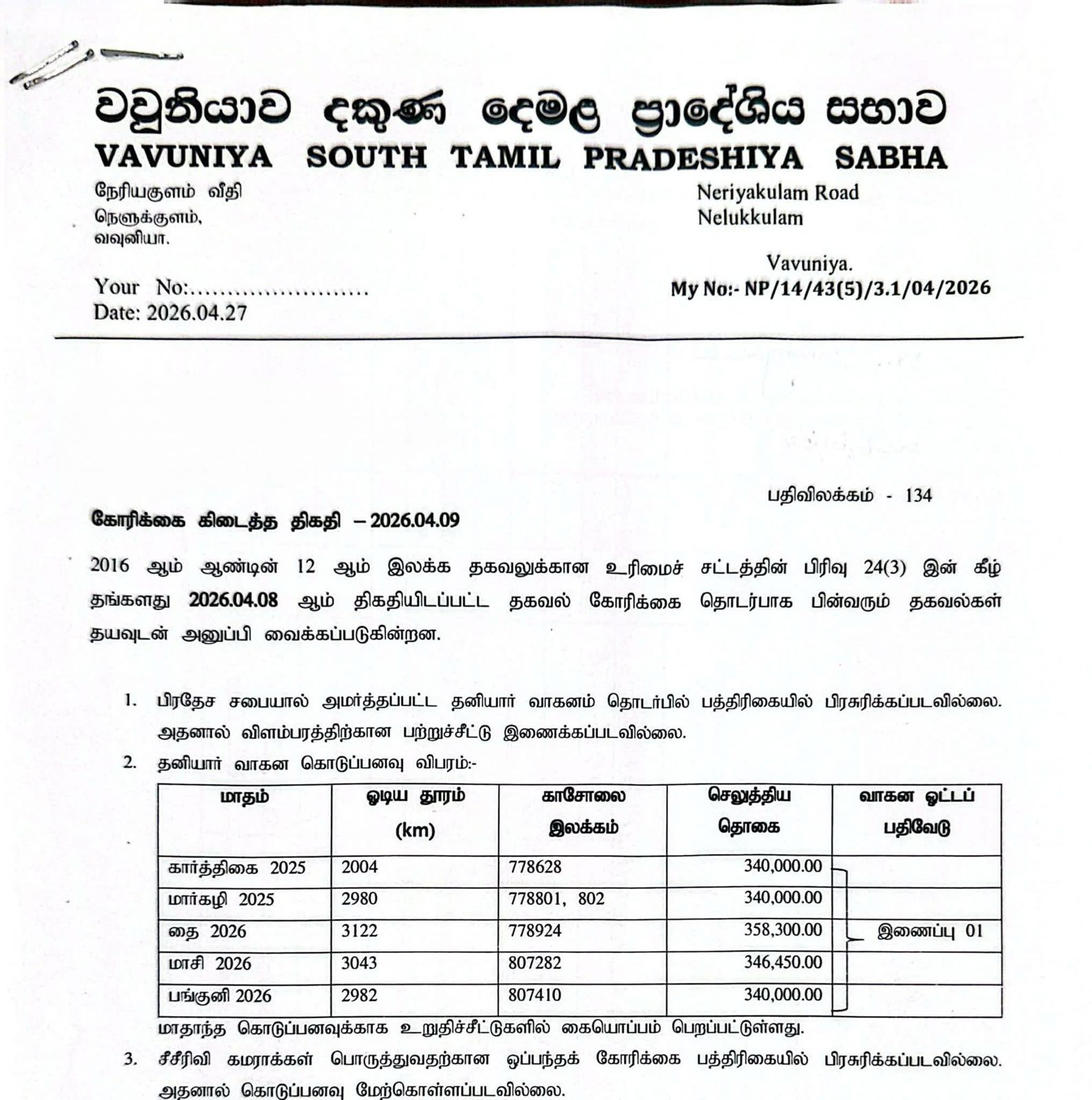
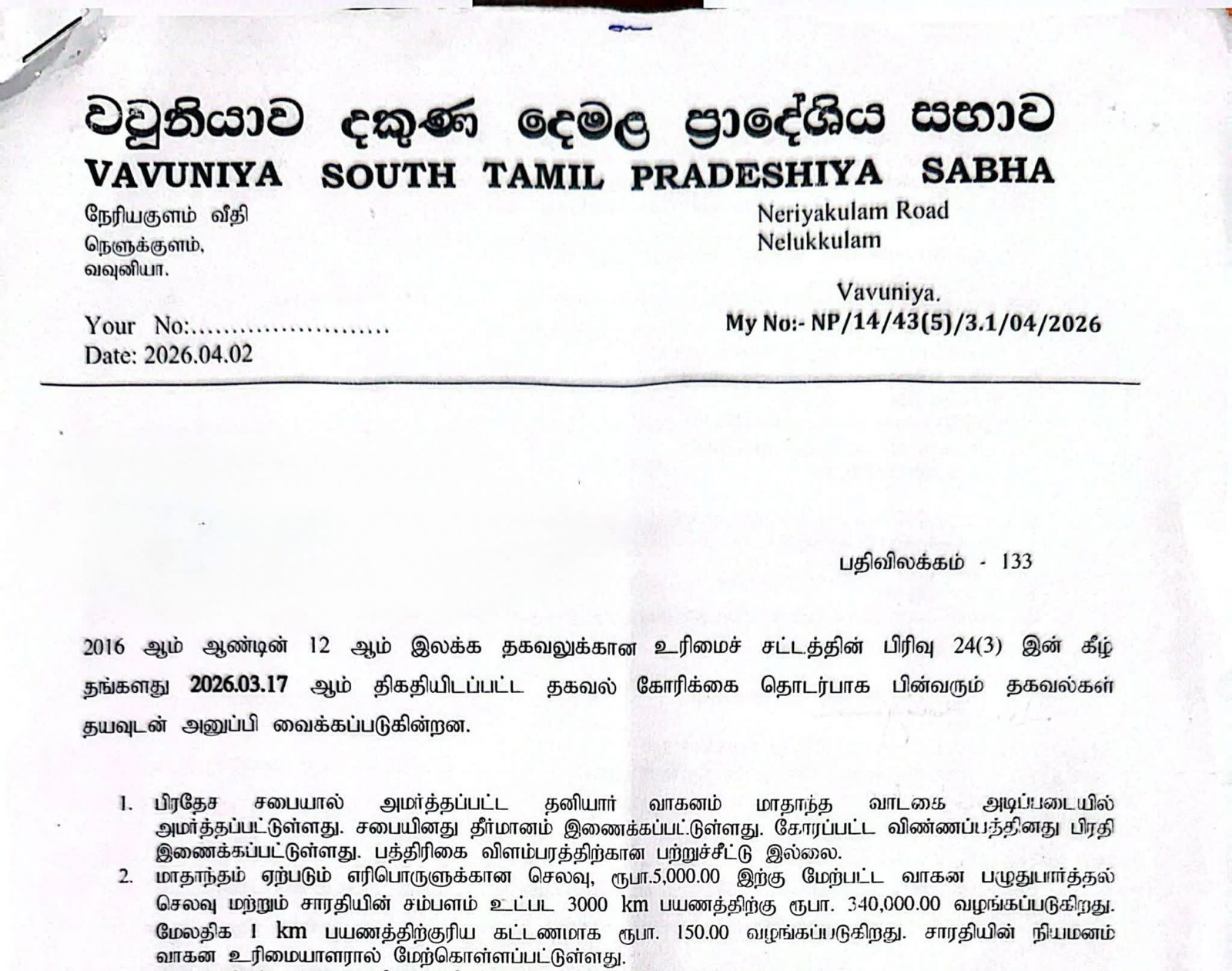
The expenditure came to light after the Pradeshiya Sabha was compelled to release the information following a Right to Information request, prompting scrutiny from residents and civil society observers who have questioned both the scale of the spending and the process through which the contract was awarded.
The chairman, who is affiliated with the Ilankai Tamil Arasu Kachchi, entered into a one-year lease for a Toyota Double Cab Pickup running from November 13, 2025, to November 12, 2026. Under the terms of the contract, the council pays 340,000 rupees per month for up to 3,000 kilometers, with an additional charge of 150 rupees per kilometer beyond that threshold. In the first five months of the agreement, the total bill came to 1,724,750 rupees.
The council already has access to an official fleet that includes a single-cab vehicle, a three-wheeler, and a double-cab pickup provided by the Government Agent. Previous chairmen are reported to have managed their official duties using those vehicles.
No public procurement notice or newspaper advertisement for the vehicle lease appears to have been published through standard official channels, according to residents and observers who have tracked the matter. The absence of any visible competitive bidding process has deepened concerns about transparency and governance.
"Why is there money for an expensive vehicle when there is no money to fix the roads?" has become a refrain in the community, capturing the frustration of residents who say public infrastructure in Vavuniya South has deteriorated while administrative spending has grown.
The chairman and ITAK officials did not immediately respond to requests for comment.
While critics have mockingly begun referring to ITAK as “Institutionalized Taxpayer Abuse Katchi,” the controversy has also renewed broader concerns about the fiscal discipline and governance standards of Tamil political parties, particularly when entrusted even with limited administrative authority such as local Pradeshiya Sabha leadership.