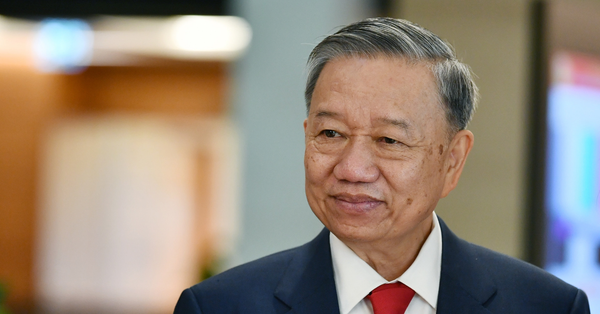
COLOMBO — Vietnam’s President and Communist Party General Secretary Tô Lâm is set to arrive in Sri Lanka today for a two-day state visit that officials in both countries describe as the most consequential diplomatic engagement between Hanoi and Colombo since formal ties were established more than five decades ago — a visit freighted with economic ambition, ideological affinity and the careful optimism of two nations seeking to build something more durable than goodwill.
His motorcade from Bandaranaike International Airport wound through a city under a special traffic plan, roads cleared of heavy vehicles for the convoy. Nearly 200 members are expected to form part of the visiting Vietnamese delegation.
The visit marks the highest-level engagement by a Vietnamese leader with Sri Lanka since the two countries established diplomatic relations in 1970. It follows a stop in New Delhi, where Mr. Tô and Indian Prime Minister Narendra Modi agreed to elevate bilateral ties to an enhanced comprehensive strategic partnership.
Mr. Tô is scheduled to address Sri Lanka's Parliament, an unusual diplomatic gesture extended to few visiting heads of state, and one that underscores the political symbolism both Colombo and Hanoi are investing in the occasion.
A Warm Relationship, Modest Numbers
The foundations of the Vietnam-Sri Lanka relationship are unusually textured for two countries separated by geography and connected by limited trade. Both nations endured colonial rule and prolonged armed conflict. Both draw on Buddhism as a deep cultural anchor. President Ho Chi Minh visited Sri Lanka three times and a monument to him in Colombo remains a recurring point of reference in Vietnamese diplomatic messaging about the relationship.
Annual bilateral trade stood at approximately $200 million for years before climbing to around $260 million in 2025 — a 20 percent increase from the prior year — with trade in the first quarter of 2026 reaching roughly $50 million. Officials in both capitals have set a joint target of $1 billion in annual trade, a figure that would require a near-quadrupling of current volumes. Economists and trade analysts are cautiously optimistic but note that similar targets between smaller Asian economies often founder on logistics, protectionism and implementation inertia.
The economic case rests partly on complementarity: Vietnam exports electronics, garments and industrial materials; Sri Lanka supplies tea, rubber and agricultural products. Sri Lanka currently holds 34 active investment projects in Vietnam across seven sectors, with a total registered capital of $43 million. Direct air connectivity between the two countries, still under negotiation, is widely regarded as a critical missing link that could substantially accelerate both tourism and business travel.
Agreements Across a Broad Agenda
Sri Lanka's Cabinet has granted approval for the signing of several memoranda of understanding during the visit, covering culture, Buddhist religious cooperation, science and technology, police training, and information and communications.
Among the agreements is a religious cooperation pact between Sri Lanka's Ministry of Buddha Sasana, Religious and Cultural Affairs and Vietnam's Ministry of Ethnic and Religious Affairs, covering the welfare of religious students and the protection of religious practices. A separate agreement will establish police training and scientific research cooperation between the Sri Lanka National Police Training Institute and Vietnam's People's Police Training Institute — an area with strategic implications given both countries' concerns about transnational crime and maritime security.
Vietnamese Ambassador to Sri Lanka Trinh Thi Tam said the visit was positioned to deliver breakthroughs in trade, investment and logistics while establishing long-term frameworks for cooperation in innovation, digital economy and energy transition. Broader cooperation in agriculture, high technology, fisheries, education and logistics is also expected to be advanced, she added.
Sri Lanka as Both Partner and Student
The visit carries particular resonance for Sri Lanka, which is still navigating the aftermath of its catastrophic 2022 economic collapse — the worst in its post-independence history — that emptied foreign exchange reserves, triggered acute fuel and medicine shortages, and ultimately forced a humiliating IMF bailout. The country has since stabilised under the IMF programme, but the process of rebuilding investor confidence and diversifying the economy remains far from complete, and President Anura Kumara Dissanayake's government faces intensifying pressure to deliver visible results.
Government sources say Sri Lanka's current leadership increasingly views Vietnam not only as an important diplomatic and economic partner, but as an ideologically familiar model — given the shared Marxist roots between Sri Lanka's ruling Janatha Vimukthi Peramuna-led administration and Vietnam's Communist Party. That alignment gives Mr. Tô's visit added significance beyond traditional diplomacy, offering what officials describe as both a strategic partnership and a form of political learning.
Vietnam's transformation from a war-ravaged, isolated economy into one of Southeast Asia's most dynamic manufacturing and export hubs is widely attributed to a combination of political discipline, long-term planning, sustained investment in infrastructure and education, and a willingness to pragmatically embrace market mechanisms while maintaining single-party political control. For Sri Lanka, where decades of ethnic conflict and political fragmentation repeatedly obstructed economic development, the Vietnamese path represents something specific and instructive: that ideological conviction and pragmatic governance are not necessarily in tension.
Critics, however, are quick to note the limits of the comparison. Vietnam's economic transformation unfolded over four decades under a unified and highly disciplined state apparatus. Sri Lanka is a plural democracy with a volatile electoral cycle, a fractious opposition, and an ethnic minority question — the grievances of Tamil and Muslim communities in the north and east — that remains unresolved and politically combustible. Whether the Dissanayake government has either the political will or the institutional capacity to replicate even the broad contours of the Vietnamese model is, analysts say, very much an open question.
Whether the Momentum Holds
State visits between smaller and mid-sized nations have a well-documented tendency to produce agreements that outpace implementation capacity. Memoranda of understanding are signed; joint committees are established; trade targets are announced. What follows, in many cases, is a period of institutional inertia that allows the goodwill generated by a high-profile visit to quietly dissipate.
Both governments appear aware of this risk. Vietnamese officials have emphasised that Mr. Tô's visit is accompanied not just by diplomats but by a substantial business delegation — a signal, they say, that Hanoi is interested in commercial outcomes, not just political optics. Events such as Sri Lanka Expo 2026 and bilateral business forums are expected to create additional platforms for private-sector engagement, while streamlining trade procedures is identified by both sides as a precondition for hitting the $1 billion target.
The parliamentary address will be watched closely in both capitals. Heads of state who address foreign legislatures tend to make commitments that are harder to quietly shelve than those made in bilateral communiqués. If Mr. Tô uses the occasion to announce concrete deliverables — specific investments, timelines for direct air routes, a framework for the digital economy cooperation both sides have flagged — the visit will carry more weight than the warm bilateral language suggests.
What is already clear is that the visit represents a deliberate repositioning: away from a historically warm but underdeveloped friendship, and toward a partnership with structural ambitions. The question is not whether Sri Lanka and Vietnam want that partnership. Both clearly do. The question is whether the institutions, the logistics and the political will exist to build it — and whether, in the months after the motorcades have gone and the memoranda have been filed, the work actually gets done.