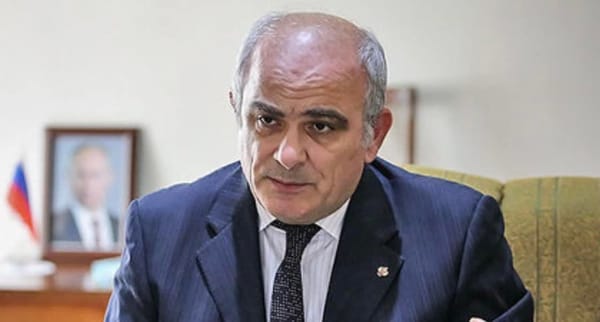
On January 5 and 6, Jaffna received a rare diplomatic visitor. Levan S. Dzhagaryan, Ambassador of the Russian Federation to Sri Lanka and the Maldives, spent two days in the Northern Province at a time when international attention is slowly returning to the region. Against this backdrop, Jaffna Monitor sat down with him for an exclusive conversation, discussing geopolitics, cultural ties, tourism, education, and Russia’s engagement with Sri Lanka’s North and East.
How has your visit to Jaffna been so far? Could you also share your impressions of the meetings you have had during this visit?
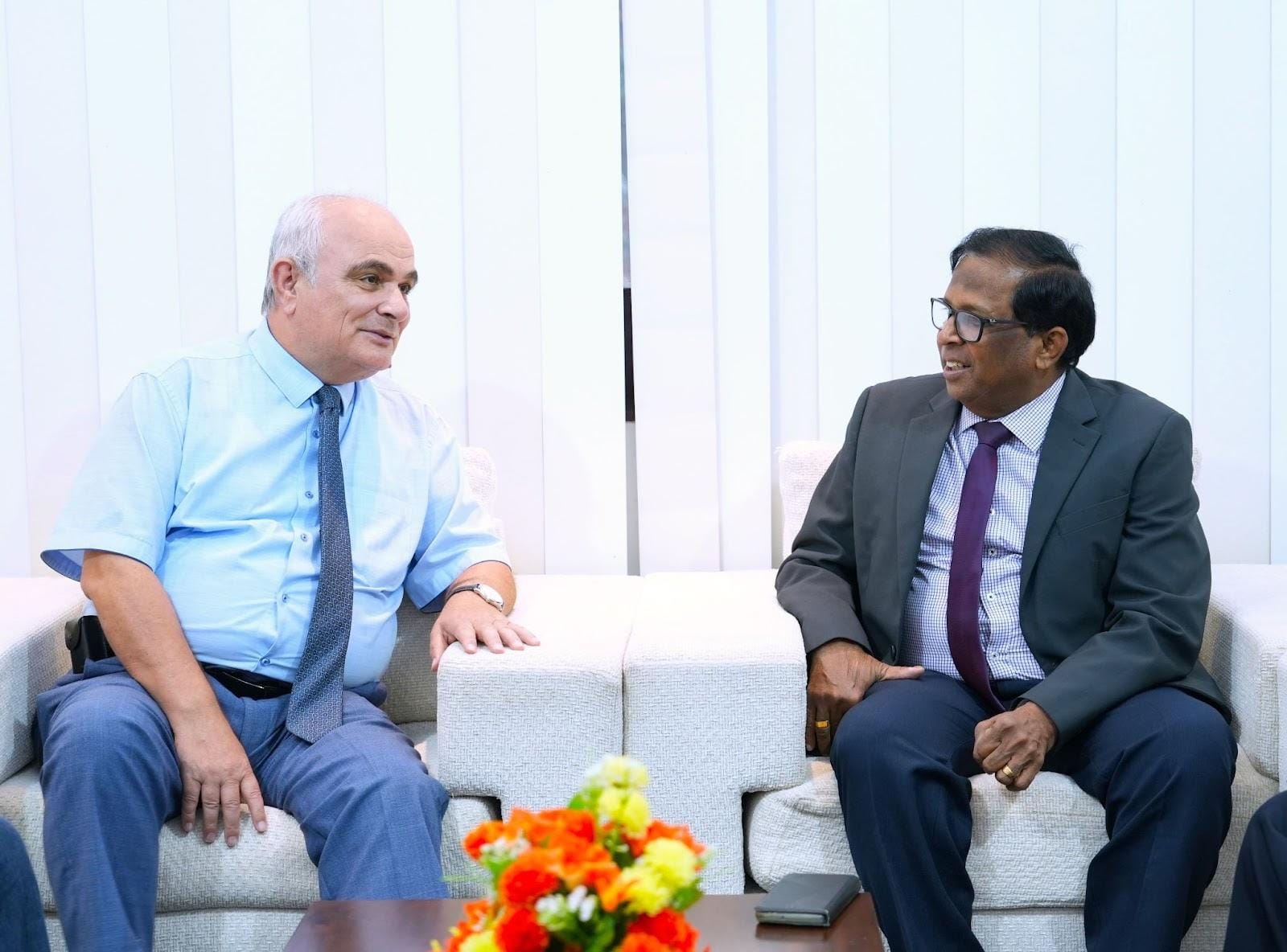
I am thoroughly impressed by my visit to Jaffna. Just before meeting you, I met with the Governor of the Northern Province, Mr. Vethanayagam, and we discussed possibilities for future collaboration, including areas where cooperation with the Russian Federation could be strengthened.
Russian ambassadors have not visited the Northern part of Sri Lanka for quite some time, although we have visited other regions of the country. For me personally, this visit has been a new and valuable experience, offering fresh impressions and deeper insights into Jaffna and the Northern Province.
I believe there is significant potential for joint initiatives involving the Northern Province, with the support of our Sri Lankan friends, particularly in the area of tourism promotion. There are many attractive and culturally rich destinations here, and we see real opportunities to encourage more Russian tourists to visit this part of Sri Lanka.
Russia has historically maintained warm relations with Sri Lanka since 1957. How do you view Russia’s engagement specifically with the Tamil people of the Northern and Eastern Provinces of Sri Lanka?
Russia has indeed enjoyed long-standing and friendly relations with Sri Lanka since 1957. Incidentally, I was also born in 1957, so our diplomatic relations are as old as I am (he laughs).
Over the decades, we have built strong and constructive diplomatic ties with Sri Lanka. In February 2027, we will celebrate the 70th anniversary of the establishment of diplomatic relations between our two countries.
Russia respects all the people of Sri Lanka without distinction. For us, there is no difference between Buddhists, Hindus, Muslims, or Christians. Similarly, we hold equal respect for Sinhalese, Tamils, and Muslims alike. Our approach has always been based on mutual respect, inclusivity, and friendship with all communities of Sri Lanka.
Are there any plans to extend the initiatives of the Russian Cultural Centre in Colombo to the Northern and Eastern Provinces? In an interview with Jaffna Monitor last year, the Head of the Russian Cultural Centre, Ms. Maria Popova, expressed her willingness to open a cultural centre in Jaffna. Could you share your thoughts on this possibility?
Yes, I have already discussed this matter with the Governor of the Northern Province and handed over detailed material outlining the Russian Cultural Centre's activities. This material was prepared by Ms Maria Popova prior to my visit.
We are open and ready to discuss this proposal further. At this stage, the next steps will depend on the interest and initiative of our Sri Lankan partners. As I mentioned, the ball is now in your court.
I believe it is particularly important to begin establishing Russian language courses here. In the southern parts of Sri Lanka, Russian is already being taught in several provinces due to the strong presence of Russian tourists. In fact, even members of the Sri Lankan police have begun learning Russian to better engage with visitors. Introducing similar language programmes in the Northern and Eastern Provinces could create new opportunities, especially in tourism and people-to-people engagement.
Russia is often regarded as synonymous with chess, given its long and distinguished tradition in the sport. Jaffna, too, has a strong chess culture, with many school students showing keen interest and talent. Are there any plans to introduce chess classes or even establish a chess academy for students in Jaffna?
At present, the Russian Cultural Centre in Colombo already conducts chess classes. Decisions regarding the expansion of such cultural and educational programmes are taken by the Russian Cultural Centre itself. In this regard, it would be best to discuss the matter directly with the Head of the Centre, Ms. Maria Popova.
From our side, we would certainly extend political and institutional support for such initiatives.
Many Tamil students from the Northern and Eastern Provinces of Sri Lanka have traditionally chosen Russia for higher education, particularly in medicine, and Russian universities have long been popular among Sri Lankan students. However, due to the ongoing conflict in the region, there are understandable concerns among students and parents regarding safety and stability. How would you reassure prospective Sri Lankan students about their security and well-being while studying in Russia today? Additionally, are there any plans to increase the number of opportunities available to Sri Lankan students?
Yes. There was a very brief period of concern in August 2024 following the incursion by Ukrainian forces into the Kursk region. However, the situation was brought under control very quickly, and those forces were pushed back.
At present, there are no security issues affecting international students in Russia. Students from Sri Lanka are safe, and their daily academic life continues without disruption.
We have also increased the number of scholarships offered to Sri Lankan students. Previously, the number was 50, but it has now been increased to 100. We are very happy to see more Sri Lankan students choosing Russia for their higher education.
So, does Russia now offer 100 medical seats for Sri Lankan students?
No, the scholarships are not limited to medical studies alone. The 100 scholarships are offered across various disciplines. Students are selected by the Russian Cultural Centre and must meet the required academic criteria, including entrance examinations and other requirements. If the Russian Cultural Centre wishes to increase the number of scholarships in the future, we will extend our full political support.
Sri Lanka has recently been affected by severe cyclonic weather and widespread flooding. How has Russia responded to this situation, and what forms of assistance—if any—have been extended or are being considered to support Sri Lanka during this crisis?
Yes, we did provide considerable humanitarian assistance to Sri Lanka, although it was not widely reported in the local media. We issued a press release expressing our displeasure.
To be honest, we were a little disappointed, especially because a dedicated cargo aircraft was arranged exclusively for this purpose at my request. On December 10, 2025, following a request from the President of Sri Lanka, the Russian Ministry of Emergency Situations (EMERCOM) delivered approximately 35 tonnes of humanitarian aid to the country.
This assistance included essential equipment and food supplies. In addition, our embassy staff voluntarily collected funds to support relief efforts, and the Russian Cultural Centre also raised contributions from its staff.
The Palaly Airport in Jaffna is currently being upgraded with the possibility of handling international flights in the future. Would Russia be interested in operating direct flights between Russian cities and Jaffna (Palaly)?
At this stage, we have not received any formal proposal from the Sri Lankan side. If an official request is made, we would certainly consider it.
Currently, there are three weekly direct flights to Colombo and three weekly flights to Mattala, mainly carrying Russian tourists. This is because a large number of Russian tourists are visiting the southern parts of Sri Lanka. In addition, many tourists also travel via transit hubs such as Dubai and Sharjah, as direct flights can sometimes be expensive.
If you visit the southern beaches today, you will see that a significant proportion of tourists are Russians. Personally, I would very much like to see Russian tourists visiting the Northern Province as well, and improved air connectivity—such as international flights to Palaly—could play an important role in making that possible.
Russia has consistently supported Sri Lanka’s unitary state structure at the UN Human Rights Council. From the perspective of many in the Tamil community in Jaffna, genuine reconciliation requires meaningful power-sharing. How does Russia view this concern?
You see, Russia is firmly opposed to any external intervention in Sri Lanka's domestic affairs. We do not interfere in internal matters, and I do not comment on Sri Lanka’s domestic political arrangements.
Unlike some Western countries, we respect Sri Lanka’s sovereign right to resolve its own issues. We believe that the people of Sri Lanka are wise enough to address their challenges and find solutions on their own, without outside pressure or interference.
With the growing influence of India and China in the Northern part of Sri Lanka, how does Russia position itself in the region? How does Russia envision its role as a partner to the Tamil people of the North?
Russia is ready to be a partner to all communities and all people living in Sri Lanka, including the Tamil people of the Northern Province. Our approach is not selective—we engage with Sri Lanka as a whole.
However, it must be said that our economic cooperation is currently constrained by anti-Russian sanctions imposed by several countries. These sanctions are a serious obstacle and limit what we can do economically.
Even for Russian tourists, this has created significant difficulties. For example, many Russian visitors are forced to rely entirely on cash because Russian bank cards are blocked by what we call “unfriendly countries.” Despite these challenges, Russian tourists continue to come to Sri Lanka in large numbers, which shows the strength of people-to-people ties.
Are you also waiting for the Sri Lankan government to begin purchasing oil directly from Russia?
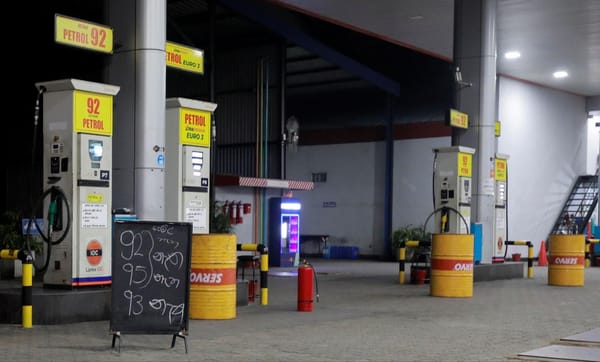
At the moment, no. The Sri Lankan government is not in a position to do so because of the sanctions regime. Direct oil purchases from Russia would be extremely difficult under current international restrictions, particularly regarding payments, insurance, shipping, and financial settlements.
That said, Russia has always been open to pragmatic and mutually beneficial cooperation. If global conditions change and these obstacles are removed in the future, such possibilities could certainly be revisited.
Russian tourists have been among the top arrivals to Sri Lanka since 2022. What, in your view, makes Sri Lanka such an attractive destination for Russians?
First of all, it is the hospitality of the Sri Lankan people. Sri Lankans are genuinely warm, friendly, and welcoming. Their friendly attitude, constant smiles, and openness leave a lasting impression on Russian visitors.
There is also a historical factor. Since Soviet times, Sri Lankans have shown respect and goodwill towards Russians, and this sentiment remains very much alive today.
Of course, Sri Lanka also offers excellent hotels, beautiful beaches, pleasant weather, and very tasty food. All of this matters a great deal to tourists.
Unfortunately, the climate in Russia is not very suitable for seaside holidays. The sea is cold for nearly nine months of the year. That is why many Russians prefer to travel abroad, especially to Asian countries.
Russians generally prefer to visit friendly countries. Travelling to unfriendly countries often involves lengthy procedures, political risks, and visa difficulties. In some cases, visas are simply not issued to Russian citizens.
This is my message to my fellow Russians: do not go to Europe or to unfriendly countries. Visit friendly countries instead. Sri Lanka is certainly one of those friendly countries in Asia. Visit Sri Lanka.
So, can Russians still travel to countries like the United States?
As I said, Russians should avoid unfriendly countries. My fellow Russians are wise enough to understand which countries are friendly and which are not.
What is the Russian Embassy’s position on the alleged abduction of Venezuelan President Nicolás Maduro and his wife, Cilia Flores, by the United States?
This is a blatant violation of international law. It demonstrates a complete lack of respect for the Venezuelan people, as he is the legitimate President of Venezuela.
The actions of the United States constitute a clear violation of the United Nations Charter. Now is the time to ask: what has been the reaction of European countries to this incident?
There should be no double standards. Those who constantly criticise Russia over the invasion of Ukraine should remain silent if they cannot condemn America’s actions in Venezuela.
Finally, what message would you like to share with the people of Jaffna through Jaffna Monitor?
I wish all the very best to the people of Jaffna. I hope they live together as one family, in peace and prosperity.
I also wish for strong cooperation and harmony among all the people of Sri Lanka—Muslims, Buddhists, Hindus, Catholics, and people of all communities, ethnicities, and religions.
May God bless Sri Lanka and all its people.