Part-1
I was only a few years old when the LTTE committed one of its most heinous crimes — the mass expulsion of Jaffna’s Muslims. Three decades later, I found myself sitting in Sonagar Theru (Moor Street), Jaffna, with a group of Muslim women who still carry the scars of that history. Their bodies and souls bear the weight of one of the greatest tragedies and injustices ever committed in the name of the Sri Lankan Tamil struggle.
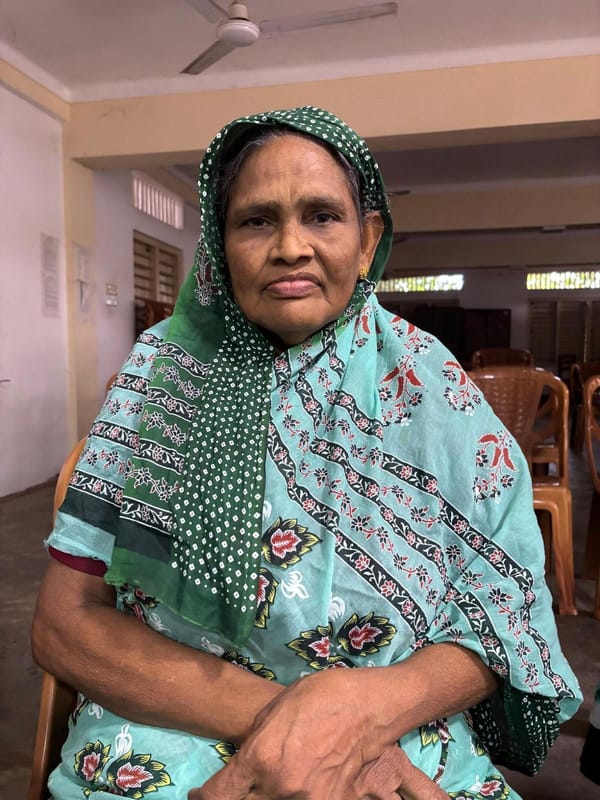
Among them was 68-year-old Mahroopa — fragile, elderly, yet radiant with the strength of a mother who has lived through unimaginable suffering. With a clarity that made the past feel painfully present, she began recounting her ordeal.
“When the expulsion order came, I was 35, a mother of six. My youngest child, Mubeen, was barely a month old, she explained to me.
Twelve days after Mubeen’s birth, tragedy struck. Her 10-year-old daughter, Januria, was killed in an aerial attack, and everyone in the house, including her, was severely wounded.
“We lived in Pommai Veli, Puthiya Sonaha Theru (New Moor’s Road),” Mahroopa told me. “One day, a shell fired from a helicopter hit our home.”
The blast tore the family apart. Everyone — including infant Mubeen — was wounded. Januria, struck in the stomach, fought for an entire day before she died. Her eldest daughter, Jamaliya, then just 12, was so severely injured that part of her brain was exposed.
“Even my own family thought I wouldn’t survive,” Jamaliya, now 47 and a mother of four, told me. “I later heard they had borrowed funeral clothes and made all the arrangements for my burial.”
But through what felt like a universal miracle, she survived.
Almost everyone in the house bore wounds from that attack. Mahroopa was hit in the shoulder. Her husband, H. S. Usman, a pavement vendor, suffered a deep leg injury. One son was wounded in the leg, another in the hands. And Januria was gone.
Mahroopa explains what led to the attack. “The helicopter mistook our area for an LTTE camp,” she says. “Our neighbour made a tragic mistake — she stepped out to use the bathroom at night, carrying a kerosene lamp. The light was spotted from the air and mistaken for an LTTE presence. Shortly after, the bombs fell on our homes.”
Such aerial assaults and shelling on Jaffna Muslims were not uncommon. In the weeks that followed, five members of a single Muslim family were killed, and eight more were seriously wounded in similar attacks in the neighbourhood around Mahroopa’s home alone.
This was the condition of Mahroopa’s household when the LTTE’s order arrived in October 1990: Leave Jaffna immediately. Everyone was wounded. Mahroopa was a new mother, still bleeding and weak from postpartum complications. Her husband could barely walk. Little Jamaliya could not even move. And they had just buried a beloved daughter.
In a trembling voice, Mahroopa told me not only the story of her own family, but, in many ways, the story of nearly 22,000 Muslims expelled from Jaffna and some 65,000 Muslims across the Northern Province who were uprooted from their homeland in 1990. These were people who, like their Tamil neighbours, had endured the same shelling, the same bombings, the same terror. They were communities that had lived in Jaffna not merely for decades, but for more than half a millennium — and, according to some historical records, for nearly a thousand years.
Yes — one thousand years. You read that correctly.
Every Ancestor Was Born Here
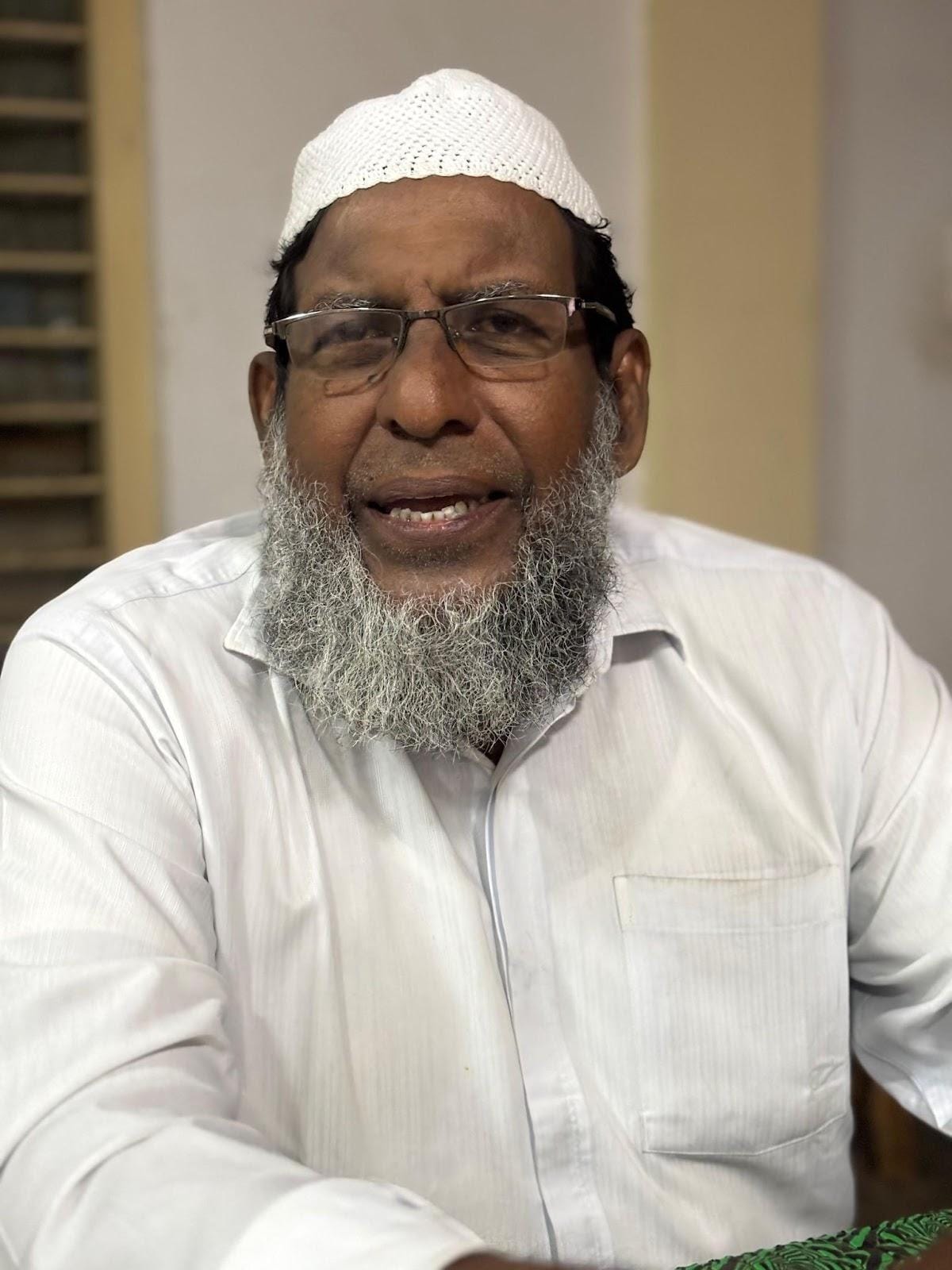
When I asked Moulavi B.A.S. Sufyan, Chairman of the People’s Secretariat — the organisation that works tirelessly for the resettlement and welfare of Jaffna’s displaced Muslims — how many years Muslims had lived in Jaffna, he shifted slightly in his seat.
It was a small movement, almost imperceptible, but I sensed it carried meaning.
I realised the question had touched something within him — not because he lacked an answer, but because the answer itself carried the weight of a truth that we, as a society, have allowed to fade. For a moment, my question may even have sounded naïve to him.
He looked at me with a gentle smile, careful not to embarrass me, and asked softly:
“Tell me… how long have you Jaffna Tamils been living in Jaffna?”
Before I could respond, he continued.
“Many, many generations — perhaps a thousand years, isn’t it?”
I nodded.
He nodded too — slowly, thoughtfully — as though reaching for a memory passed down through centuries.
“It is the same with us,” he said at last. “We, the Jaffna Muslims — when we trace our genealogy, our family trees, our oral histories, even the little written history we possess — every branch leads back to this soil. Every ancestor we know was born here, lived here, and died here.”
He leaned back, his voice taking on a quiet firmness.
“You must understand something. Until 1990, we had no other place we called home. We had almost no relatives outside Jaffna. We had no ‘external identity’. Ninety-nine per cent of us were monolingual — we spoke only Tamil. We were simply people of Jaffna, just like you. This land was our beginning and our end.”
Jaffna’s Muslims: A History Older Than Empire
Jaffna's Muslims trace their origins to early Arab and Indian traders who settled in Sri Lanka's north long before colonial rule reshaped the island. "We are a mixture of Arab merchants and Indian Muslims who came here for business," one elder told me, his voice carrying the certainty of inherited memory. Over centuries, these communities didn't merely settle — they blended and transformed, developing a distinct Muslim identity while remaining deeply rooted in the Tamil language and culture.
Local tradition holds that one of the earliest Islamic places of worship in the island's north stood on Nainativu (Nagadeepa) — an island revered in Buddhist tradition and sacred to Hindus as the home of the ancient Nagapooshani Amman Temple. The structure survives today as the Mohideen Jumma Mosque, believed to mark the site of one of Sri Lanka's earliest mosques. Historians suggest the original building was likely a modest prayer house erected by visiting Muslim traders centuries ago. The mosque was renovated in the 18th century, and its earliest name has been lost to time.
Near the mosque, community elders speak of a small shrine commemorating a Muslim traveller believed to have arrived on the island in the late 16th century. No written records — Tamil or Arabic — preserve his name. Oral tradition remembers him only as a wandering believer who prayed on the island and died there.
By the 14th century, Muslim traders had become integral to the economy and social fabric of the Tamil-ruled Jaffna Kingdom. When the great Moroccan traveller Ibn Battuta visited the island around 1344, the Arya Chakravarti king received him with honour and even sent royal elephants to support his pilgrimage to Adam's Peak. Ibn Battuta's travel accounts, preserved across centuries, describe a cosmopolitan court where Tamil kings and Muslim merchants shared interests, language, and mutual regard.
By the 15th century, Muslims were not merely traders passing through. They were active participants in Jaffna's political, cultural, and commercial life — and in the broader life of the island. Their presence enriched the peninsula for centuries, creating a cosmopolitanism that long predated European contact.
Colonial rule shattered this ancient continuity.
When the Portuguese captured Jaffna in 1619, they treated Muslims as commercial and political rivals to be eliminated. Persecutions followed swiftly: mosques were razed, property confiscated, families scattered. Muslim households fled into the Vanni or went into hiding in peripheral villages, their visibility deliberately erased from Portuguese records.
Under the Dutch (1658–1796), conditions gradually improved. The VOC — the Vereenigde Oostindische Compagnie, or Dutch East India Company — was more interested in profit than religious conformity, and it encouraged trade across the island. Under this more commercial regime, Muslim merchants cautiously returned to the north.
With the arrival of the British in 1796, the small but deeply rooted Muslim community finally stabilised. They prospered modestly as jewellers, textile traders, small-scale merchants, and later as civil servants and teachers. British land records from the 19th century show Muslim households concentrated along Moor Street, as well as scattered across villages such as Kodikamam, Chavakachcheri, and Kayts.
Despite their modest numbers, Jaffna's Muslims built a remarkably rich hybrid culture — Islamic in faith, Tamil in language, and unmistakably "Jaffna" in everyday life.
Their daily lives intertwined closely with their Tamil neighbours — sermons, schooling, business dealings, and even folk songs flowed naturally in Tamil.
Religiously, the majority adhered to Sunni Islam, following the Shāfiʿī school of jurisprudence. For centuries, Sufi traditions — with their emphasis on mysticism, saint veneration, and spiritual devotion — have shaped the inner religious world of northern Muslims. In Mankumban, on Velanai Island (also known as Kayts), a shrine associated with the Bawa Muhaiyaddeen tradition still stands.
The question of identity sometimes sparked a gentle debate. Some Tamil intellectuals argued that Jaffna Muslims were essentially "Tamils who had embraced Islam," while Muslim leaders, proud of their Arab-Indian lineage, emphasised a distinct identity.
By the early 20th century, Sonakar Theru alone housed twelve mosques within a three-kilometre stretch. Alongside them, Muslim schools, charitable trusts (wakfs), women’s welfare groups, and sports associations had flourished across the peninsula. Muslim children were enrolled in nearly all of Jaffna’s leading schools.
And until October 30, 1990 — the day everything changed — Jaffna was the only homeland Jaffna’s Muslims had ever known, across generations.
Not Even a Spare Dress: The Day 22,000 Muslims Were Chased From Jaffna
On the morning of October 30, 1990, LTTE cadres moved systematically through Jaffna’s Muslim neighbourhoods, knocking on doors one by one. Loudspeakers soon crackled to life across Sonakar Theru, Pommai Veli, and other Muslim streets, issuing a stark command: “All Muslim men must report immediately to Osmania College Ground.” Mahroopa recalls the fear spreading almost instantly. “The men went first,” she told me. “But the panic was so intense that we women followed them to Osmania College.” What awaited the gathering was not a discussion, nor an explanation, but a verdict. The order was delivered by C. Ilambarithy, a senior figure in the LTTE’s Jaffna political wing, alongside Karikalan, then head of the organisation’s eastern political wing.
Speaking without preamble or emotion, they announced the decision that would uproot an entire community: Muslims must leave Jaffna immediately. They could take nothing. They had two hours.
When the men protested, the threat became brutally clear: If you don't leave, we will kill you.
Mahroopa remembered Ilamparithi taking his gun and firing several shots into the air as a warning.
When Mahroopa's father and others begged to take at least their belongings, they were told that whatever they had earned, they had earned in Tamil Eelam. And whatever was earned in Tamil Eelam belonged to Tamil Eelam. "We spare your life. Now leave your life behind and go."
Karikalan—though Mahroopa cannot be entirely certain it was him—justified the expulsion by claiming that Muslims in the East had killed Tamils and plundered their property. The LTTE, on orders from its beloved leader Prabhakaran, was choosing not to kill the Jaffna Muslims and was instead "sparing" them. Therefore, they should run.
Then came one of the most heartbreaking moments of the expulsion. Mahroopa looked at me and said, "You must believe me—from Osmania College Ground, they didn't even allow us to return home. We were chased out with only the clothes we wore. Not even a spare dress. Nothing. Not even a final glimpse of our house."
The entire stretch of Sonakar Theru and Pommai Veli—centuries-old Muslim neighbourhoods—had been sealed off by heavily armed LTTE cadres. No one was allowed to step back inside.
Another woman, Fathima, told me she hadn't gone to Osmania College because she had just given birth. "The fighters came into my house, shouted at me to get out, pushed my newborn and me out, locked the door, and took the key," she said quietly.
Everything happened within two hours.
They stripped our clothes — and with it, the soul of Tamil liberation.
Mahroopa and her entire injured family—her husband with a crushed leg, her daughter with an exposed skull wound, her sons carrying various injuries, and her one-month-old infant—were forced to march to Ainthu Santhi Junction, the “Five Junction,” located at the beginning of Moor Street. It was there that LTTE cadres conducted strip searches. Women were stripped and searched by female cadres, and men by male cadres. “They even searched our underwear,” one Muslim man recalled, “to see if we had hidden gold rings or chains.” Another survivor put it more blatantly. "But you must understand," he told me quietly, "when they stripped our bodies bare, the LTTE stripped the Tamil struggle of its soul."
“We were a poor family,” Mahroopa said. “We had nothing except a few tiny gold ornaments worn by me and my daughters. They took all of it.”
For Usman (name changed), the expulsion was no less a tragedy—but it unfolded differently from Mahroopa’s experience.
He told me that there were four or five exit points from the Muslim quarter around Moor Street. Not all were the same, and not all were marked by the same degree of brutality.
Usman said he left through one of the lesser-used routes. LTTE cadres stationed there confiscated his gold and cash, as they did with others, but allowed him to carry a few small household items. One fighter, whom Usman said he had known for several years, apologised repeatedly in a hushed voice.
“He told me, ‘We know this is wrong. But it’s an order from the high command,” Usman recalled.
According to Usman, the difference lay in who manned the exits. His route, he said, was guarded by fighters from Jaffna. Other exits—those controlled by cadres from the Eastern Province—were, in his words, “where the real menace was.”
Usman told me that near the Vannar Pannai Vaitheeswaran Temple, barely a kilometre from Ainthu Santhi, each family was handed just Rs. 500. After that, LTTE cadres loaded the displaced families onto tractors and transported them to Sangupiddy, in the Poonakary area of Kilinochchi District, where they were unceremoniously dumped.
“It took us three days to reach Vavuniya from Poonakary,” Mahroopa recalled. “Three long days. We had no food at all—no proper drinking water, no sanitation facilities. We ate a proper meal only after reaching Vavuniya.”
Her one-month-old son, Mubeen, survived the first day because she could breastfeed him, but soon her milk stopped—because she herself had nothing to eat.
It was her injured 12-year-old daughter, Jamaliya, who saved the baby's life. Since Jamaliya was severely wounded by the helicopter attack, she had remained at home. When all Muslims were called for the meeting, she sensed something amiss and hid a kilogram of sugar in her dress.
"The LTTE didn't take that. Maybe it was not price-worthy," Mahroopa recalled. "That saved Mubeen's life." Whenever Mubeen cried from hunger, Jamaliya put a little sugar in his mouth and gave him water. That sugar kept him alive.
They Ripped the Gold From Our Skin
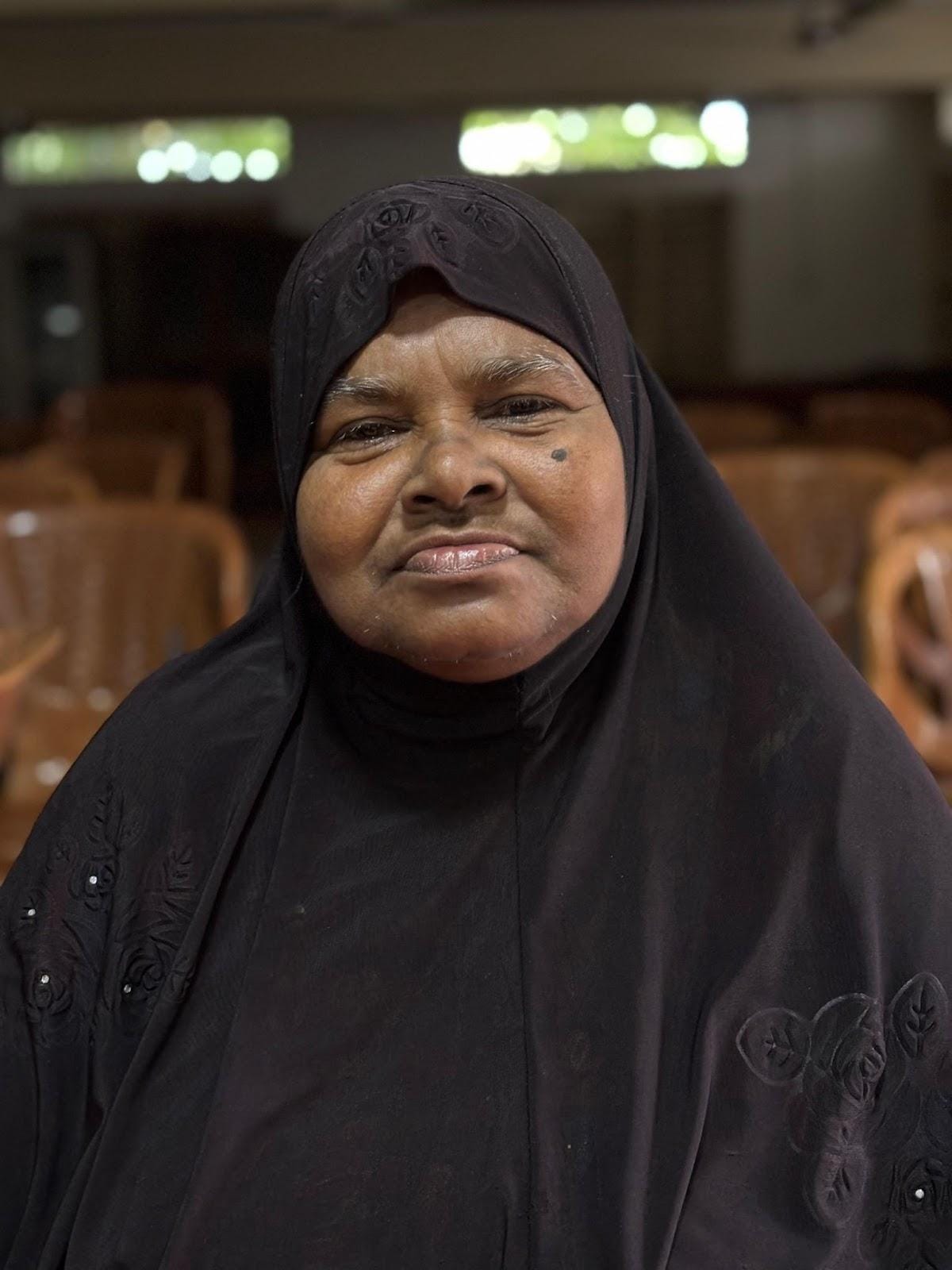
Mumthaj Begum, now 65, was a 30-year-old living in Semmari Lane in the heart of Jaffna at the time of the expulsion. Her area was frequently targeted by Sri Lankan military shelling, so she had temporarily moved to Sonakar Theru seeking safety. “I thought I was escaping the shelling by moving to Sonakar Theru,” she said.
She still remembers the brutality of those final moments before they were pushed out of Jaffna. Her daughter’s ear studs were tightly fixed, and the LTTE’s female cadres—impatient and harsh—yanked them out forcefully. “Blood started dripping down her earlobes,” she said, her voice trembling even after decades.
Mahroopa recalled pleading with the LTTE fighters: “We are poor people… at least spare our little gold.” But the female cadres, though visibly uncomfortable, repeated the same line: “We have strict orders from the high command. We cannot do anything.” Then they removed every last ornament.
Both women described a horrifying scene etched permanently into their memories. After stripping jewellery from hundreds of women and children, the LTTE cadres heaped it all into large piles. “Then they took a shovel,” Mahroopa said softly, “scooped up the gold like sand, and dumped it into gunny sacks.”
Among the most heartrending memories for Mumthaj Begum was that of a newly married Muslim woman. She wore a karugamani—the Tamil-Islamic version of the Hindu mangala sutra, a deeply emotional symbol of marriage and a reminder of how Islam and Tamil traditions blended naturally among Jaffna Muslims before later waves of Arabic cultural influence arrived.
“She cried and begged them not to touch it,” Begum recalled. “But the LTTE fighter tore it from her neck. The poor woman’s skin split and started bleeding.”
Begum also remembered how her sister had desperately tried to save a small piece of jewellery by hiding it inside a flask, then filling it with plain tea to disguise it. “But the LTTE searched everything,” she said. “They found even that.”
Like a Funeral Procession
I met another survivor—Saldin Segu, now 58. At the time of the expulsion, he was just 23, the son of the family that owned the once-celebrated Arabath Hotel in Jaffna. More than three decades later, his memories of that day remain painfully sharp. He chose his words carefully as he spoke; the effort itself revealed how heavy the recollection still was.
He recalled LTTE fighters knocking on every door in the Muslim neighbourhoods, ordering families to gather immediately at the Osmania College grounds. Among them, he clearly recognised Karikalan, the LTTE’s eastern political head—his visible brutality and eagerness seared into Saldin’s memory.
“He was the most energetic,” Saldin said. “He was moving up and down like a spring, full of excitement, shouting instructions.”
“When we Muslims left Osmania College, they were crying—as if an entire community were walking in a funeral procession,” he recalled. “The sobbing grew louder at Ainthu Santhi when the last pieces of gold were torn from the women. It was like watching a whole people cry.”
In a matter of minutes, his family’s entire world vanished: his father’s beloved Somerset car, their Lambretta scooter, his prized Honda CG 125, his mother’s and sisters’ jewellery, their six cows, and every single item inside the Arabath Hotel.
“The saddest part,” he said, “is that we were chased out straight from Osmania College. My father and I couldn’t even look back at our beloved Arabath Hotel, where we had toiled for 18 hours a day, not even once. Later, we heard that the LTTE had locked the hotel and emptied everything inside.”
Scattered Across the Island
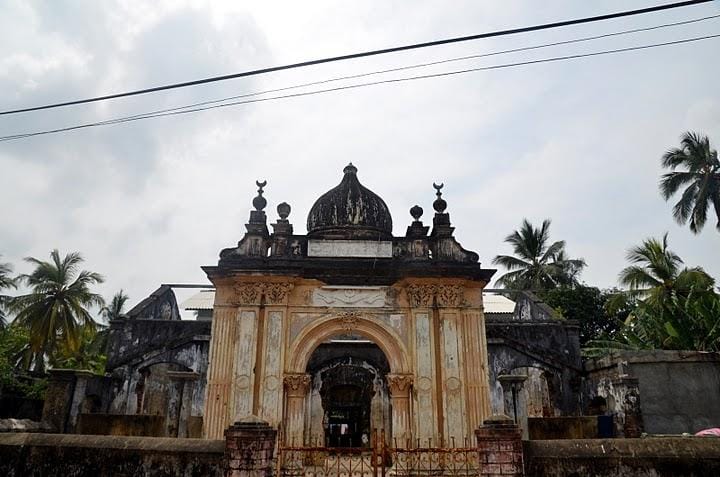
Neither Mahroopa nor Mumthaj Begum had family outside Jaffna. After three days of walking with nothing but the clothes on their backs, they reached Vavuniya exhausted, wounded, and starving—with nowhere to go.
“But in Vavuniya—Tamil, Sinhala, and Muslim families alike—people opened their homes,” they recalled. “They fed us hot rice and curry. They gave us tarpaulin sheets for shelter. They allowed us to use their wells and toilets. They treated us with such humanity.”
From Vavuniya, the expelled Jaffna Muslims scattered across the island.
The largest group moved toward Puttalam, where vast refugee camps would soon rise from the sand. Others were pushed toward Ikirigollewa, while thousands more fled to Wellawatte, Dehiwala, Maligawatta, Panadura, and Matale—wherever they could find space. In each of these places, Muslim organisations and volunteers hastily erected temporary shelters overnight to receive families who had been uprooted without warning.
Like many others, Mahroopa and Mumthaj Begum first tried Anuradhapura, where they lived for several months. But with no steady work and no permanent housing, they eventually joined the growing community of Jaffna Muslims in Wellawatte, where a refugee camp had been established along Peters Lane.
For seven long years, they lived in that camp—surviving on support from the Muslim community, individual philanthropists, and volunteers who stepped in to provide what the state would not.
The Sorrow That Killed Him
Mumthaj Begum's husband, Jabil, was a skilled carpenter. The day the LTTE expelled them, something inside him broke, she said.
"For two months, he was like a man whose spirit had left his body," she recalled. "He kept staring at the walls, silent, shocked… unable to accept what had happened."
The emotional trauma of being uprooted from his birthplace—the humiliation, the loss of dignity, the sudden plunge into homelessness—weighed on him so heavily that his health collapsed. Two months after their expulsion, Jabil suffered a massive stroke. He was paralysed, bedridden for 15 long years, until the day he passed away.
"The sorrow killed him," Mumthaj Begum said quietly.
"He was a big, built man," she said. "I had to lift him, clean him, feed him… and at the same time I had to earn money. I was alone."
To survive, she began making appam and dosa in the refugee camp in Wellawatte, selling them to other displaced families and nearby residents.
"It was a life of tears," she said. "But we somehow survived."
From Owners to Workers
Saldin's story took a cruel turn. From Jaffna, his family walked to Nellikulam in Vavuniya, and later moved to Puttalam, where thousands of expelled Jaffna Muslims lived for decades. In Jaffna, his family had been proud owners of the Arabath hotel. In Puttalam, they were refugees in a cramped camp with basic facilities.
"I went to work in hotels as a parotta and briyani master," Saldin says. "From owners to workers. It wasn't just me—many business owners, quite well-to-do people, plunged to the fate of daily wagers."
He recalled one example that captured the totality of their fall. "The owner of the famous Fancy House—he was very rich in Jaffna. But after the expulsion, he lived in a refugee camp with us. and working as daily wage labour"
They Left Jaffna Alive — but Many Lost Their Minds
But perhaps the saddest part in this entire saga, Saldin said, was what happened to the minds of the people who were expelled.
"Many men and women could not digest what happened to them," he said quietly. "They left Jaffna as ordinary people and reached Puttalam as if their souls had been ripped out."
He remembered how, in the refugee camps, once-dignified fathers, shopkeepers, and mothers wandered like lost shadows.
"In Puttalam," he said, "I saw many of our men roaming like patients from a mental hospital. Their minds simply broke. I personally knew at least twelve people who became mentally unstable."
One memory haunts him still.
"There was a man," Saldin said, "a strong, well-built fellow—the kind everyone respected. But a few months after the expulsion, he was gone, completely insane. He would walk up and down the camp aimlessly, talking to himself, staring into the distance, shouting pointlessly."
He paused before adding, "That's what people don't understand. The expulsion didn't just take our gold, our shops, our houses, or our money. It took the minds of many. It broke people from the inside."
Deaths Along the Road of Exile
A few people also died during the mass exodus, unable to withstand the physical strain and exhaustion. Sufiyan Moulavi recalled that an elderly woman collapsed and died near Sangupiddy, and a young child also lost their life on the way.
Reliable sources further confirmed to Jaffna Monitor that several more people died after crossing Vavuniya. With no proper systems, no support, and no guidance, their bodies were taken and buried wherever a small patch of land was available.
Not Anger, But a Profound Sadness
Even today, Saldin says the feeling that lives within him is not anger—but a deep, bottomless sadness. He repeated this several times, as though the words were emerging from decades of unspoken pain.
“We never expected this,” he said quietly. “Not from our own brethren… not from the people with whom we lived like one family.”
“We could not digest it then… and even now we still cannot,” he continued, his gaze falling to the ground. “How can someone send us away from our birthplace? How can someone chase us from the land where our ancestors lived, after taking everything we owned?”
“I still don’t understand,” he whispered. “Even today… I don’t understand.”
“Before the expulsion, and even after it, we never worked against the LTTE,” he said. “We felt only sorrow… never anger.”
“The Tamils and we were like puttum theṅgāy pūvum,” he added—inseparable, like steamed puttu and coconut flower. “How can I be angry with them?”
He paused, then shared something with disarming honesty: “Sometimes I feel… if we had stayed in Jaffna during the war, perhaps many of us would have died. Maybe this suffering saved our lives. That is the only way I can make sense of what happened—though I know it is just a story I tell myself to find a little peace.”
“But I will never forget Karikalan,” Saldin said. “His face, his voice… they will stay with me until my last breath. Whenever I close my eyes and think of the expulsion, his face appears. His face—and his cruelty—have come to embody the entire trauma of our expulsion.”
Mahroopa and Mumthaj Begum are still saddened that they never had the chance to say a final goodbye to their Tamil friends who had stood by them through every hardship. “We lost touch with so many of them,” they said. When they finally returned to Jaffna in 2010—after twenty long years—most of those friends were either dead, displaced, or had migrated abroad.
As she spoke—Mahroopa and others like her—I felt that even amid the weight of their own tragedy, they were careful, almost instinctively, to ensure that I, a Jaffna Tamil, would not feel blamed, or that the burden of what happened would be placed on Jaffna Tamils.
In that moment, I realised that despite everything that had been done in our name, we Jaffna Tamils were not seen as outsiders by the Jaffna Muslims. That, perhaps, was the most enduring reminder that even after such brutality, kindness had not entirely vanished.
To be continued in the next issue.