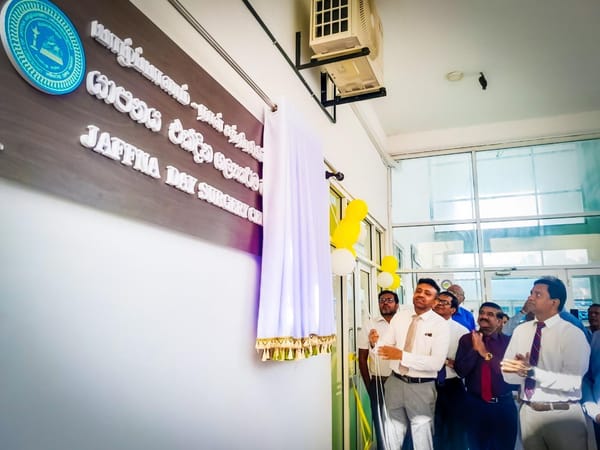
The Jaffna Day Surgery Centre (JDSC) – Pilot Phase was formally inaugurated on Friday at the Clinical Training and Research Block of the Faculty of Medicine, University of Jaffna, marking what clinicians describe as a structural recalibration of surgical care in Northern Sri Lanka.
Developed through collaboration between the University of Jaffna, Teaching Hospital Jaffna (THJ), the Ministry of Health, and international partners, including the International Medical Health Organization (IMHO–USA), the centre introduces a dedicated ambulatory surgery model within Sri Lanka’s government health sector — a first of its kind.
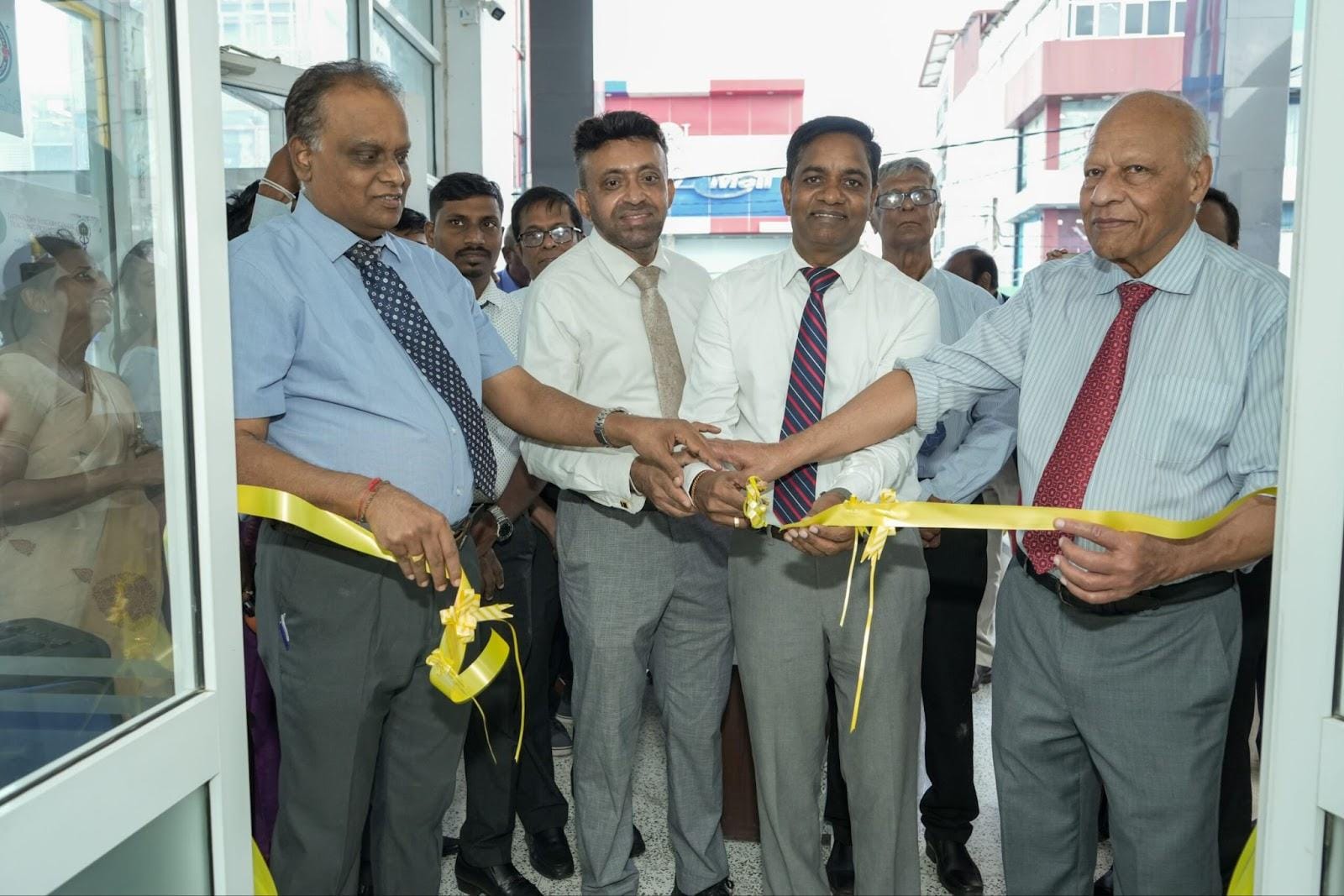
Under the new system, selected patients will undergo surgery and return home the same day within a purpose-designed facility that operates separately from inpatient wards. Health administrators say the initiative aims to reduce surgical waiting lists, ease ward congestion, lower institutional costs, and optimise operating theatre use without expanding physical infrastructure.
Teaching Hospital Jaffna, the region's principal tertiary referral centre, serves a population of approximately 1.15 million people across Sri Lanka's Northern Province. With approximately 1,450 beds, it functions as the apex public hospital for a region that endured decades of civil conflict, during which infrastructure and specialist capacity were severely constrained. Although post-war reconstruction has expanded physical facilities, surgical demand continues to outpace bed availability, making system redesign — rather than new construction alone — increasingly urgent.
A Dedicated System — Not Simply Same-Day Discharge
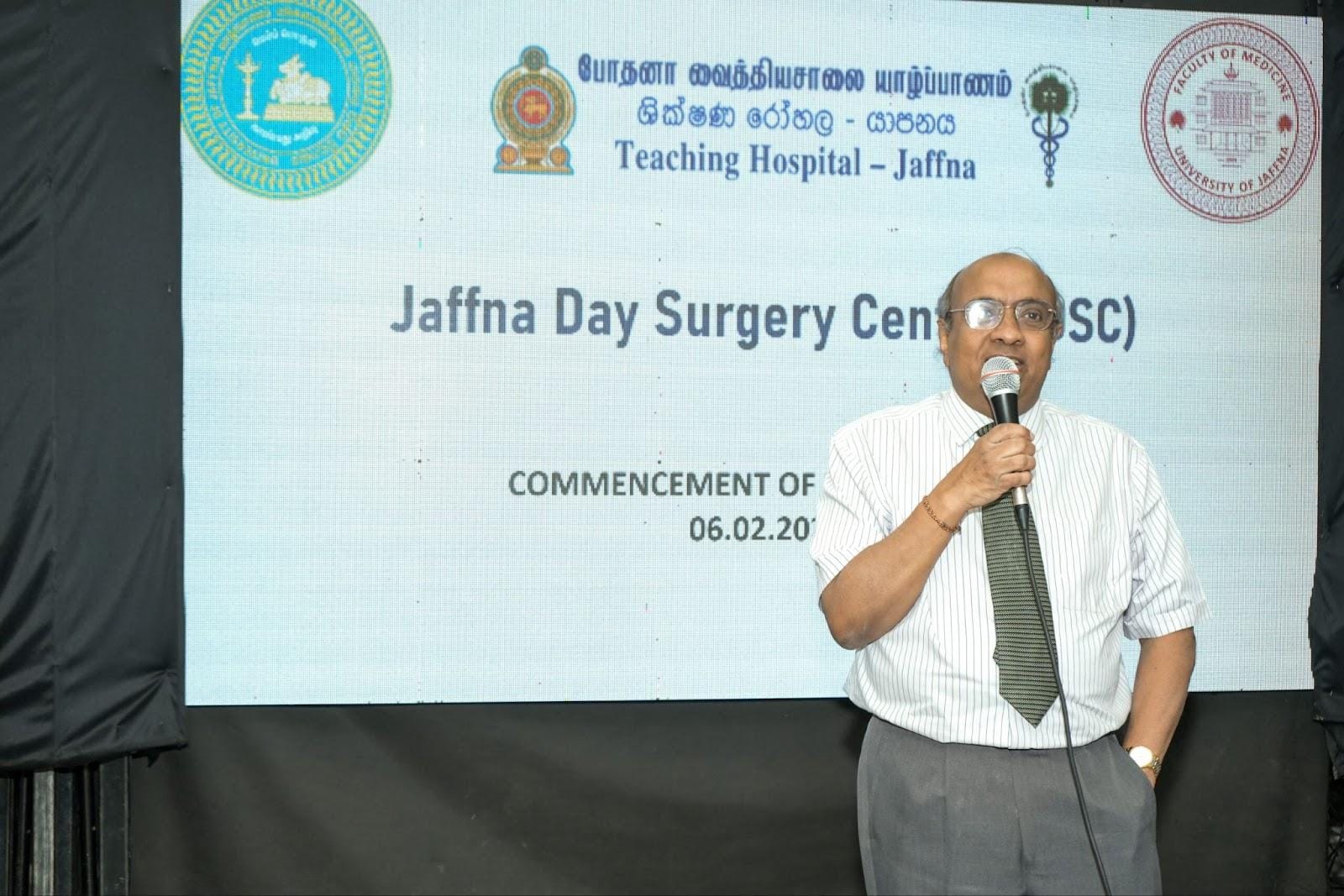
Speaking at the inauguration, Professor B. Balagopi, Head of the Department of Surgery and Professor in Urology at the University of Jaffna, emphasised that the model represents more than discharging patients within hours of surgery.
“This is not merely about sending a patient home early,” he said. “It is a dedicated system — with its own space, team, and booking structure. Patients do not enter the main wards.”
The distinction, he noted, is operational. Teaching Hospital Jaffna’s surgical wards routinely experience bed shortages, with patients at times accommodated on the floor due to congestion.
“Major cases require inpatient beds. Others wait in difficult conditions,” he said. “By shifting appropriate cases here, we decompress the wards, reduce cross-infection risk, and restore dignity.”
The pilot will run for six months before phased expansion.
Dr. Thavam Thambipillai on the Day Surgery Center
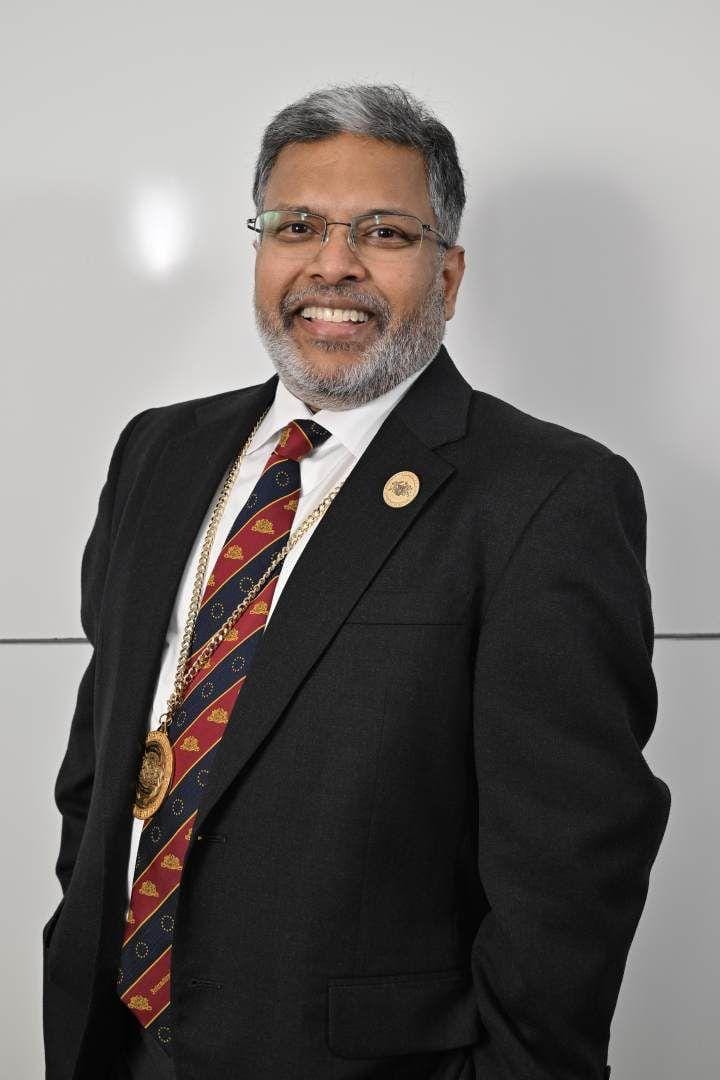
Among those widely credited by local clinicians for the persistence and vision behind Jaffna’s new Day Surgery Center is Dr. Thavam Thambipillai, an internationally renowned transplant surgeon and World President of the International College of Surgeons (ICS).
In an interview with Jaffna Monitor, Dr. Thambipillai described the initiative not merely as an additional facility, but as a structural shift — one that benefits patients, strengthens institutional capacity, and modernizes surgical workflow in the Northern Province.
Faster Recovery, Lower Risk
“From the public standpoint, there are many benefits,” he said. “First and foremost is the benefit to the patient. These procedures are done in an outpatient setting, so patients do not have to stay overnight in the hospital. That is a tremendous convenience. They return home the same day.”
Recovery, he noted, is often smoother in familiar surroundings.
“When patients go home the same day, they tend to recover more quickly and more comfortably than in hospital settings. They are also not exposed to overnight admissions, which reduces the risk of hospital-acquired infections. We know that hospitals — whether in the Western or Eastern world — pose infection risks. So the benefit is substantial: it is convenient, recovery is faster and more pleasant, and infection rates are lower.”
Beyond clinical outcomes, he emphasized the social dimension. Patients who resume daily routines sooner experience less disruption to family life and employment — a meaningful factor in a region where many households rely on daily income.
Relieving System Pressure
But the implications, he said, extend far beyond individual recovery.
“From a system standpoint, because these procedures are performed in an outpatient setting, costs are lower, and care is delivered more efficiently. That means a greater number of patients can be treated, because turnover is faster.”
For Teaching Hospital Jaffna, the shift may be especially consequential.
“Minor, straightforward cases can be moved out of the major operating theatres. That frees those theatres for more complex inpatient surgeries. In practical terms, that reduces waiting times for patients who are currently on surgical lists.”
A Different Rhythm of Practice
The ambulatory model, he added, also reshapes the professional experience of surgeons and physicians.
“From the physician’s standpoint, outpatient surgery is more convenient. Scheduling becomes more efficient. When inpatient waiting lists are reduced, it relieves pressure on physicians.”
Drawing on his experience in Western health systems, Dr. Thambipillai described outpatient surgery days as distinct in tone and tempo.
“In the Western world, outpatient surgery is generally less stressful than some of the complex inpatient procedures. When I perform outpatient operations, those are among my more satisfying days. It is less stressful for both patient and physician. Patients are happy because they are going home. Physicians see the benefit immediately. It is typically done in an elective setting — Monday to Friday, during daytime hours. It is a win-win situation.”
Technology — and the Limits of Investment
Looking ahead, Dr. Thambipillai sees the potential for the center to incorporate advanced minimally invasive technologies.
“There is an opportunity to introduce newer techniques such as laparoscopic and endoscopic procedures. However, these require significant capital investment.”
For now, the unit will begin with carefully selected, lower-risk anesthetic cases, expanding gradually as funding becomes available.
“At the beginning, we will start with straightforward cases. As we secure funding from external sources, we can invest in endoscopic and laparoscopic equipment, which will expand the range of outpatient surgeries.”
Such expansion, he suggested, would not only broaden clinical capability but further refine workflow, reduce costs, and align the region’s surgical services with international ambulatory standards.
Collaboration as Catalyst
What impressed him most, however, was not the equipment or the architecture — but the collaboration.
“This represents a major partnership between the two largest institutions in Jaffna — the Teaching Hospital and the University,” he said. “The participation of surgeons and physicians from both institutions demonstrates what can happen when people work together. When there is collaboration, remarkable things can occur.”
Despite his international stature and the acknowledgment of his role in advancing the project, Dr. Thambipillai was quick to deflect personal credit.
“I always believe in building synergy — one plus one equals three,” he said. “I am delighted to have played even a small part in this journey led by our surgeon and physician leaders in Jaffna. The real achievement belongs to them. My congratulations and best wishes to all who turned this vision into reality.”
The Pressure Inside the Wards
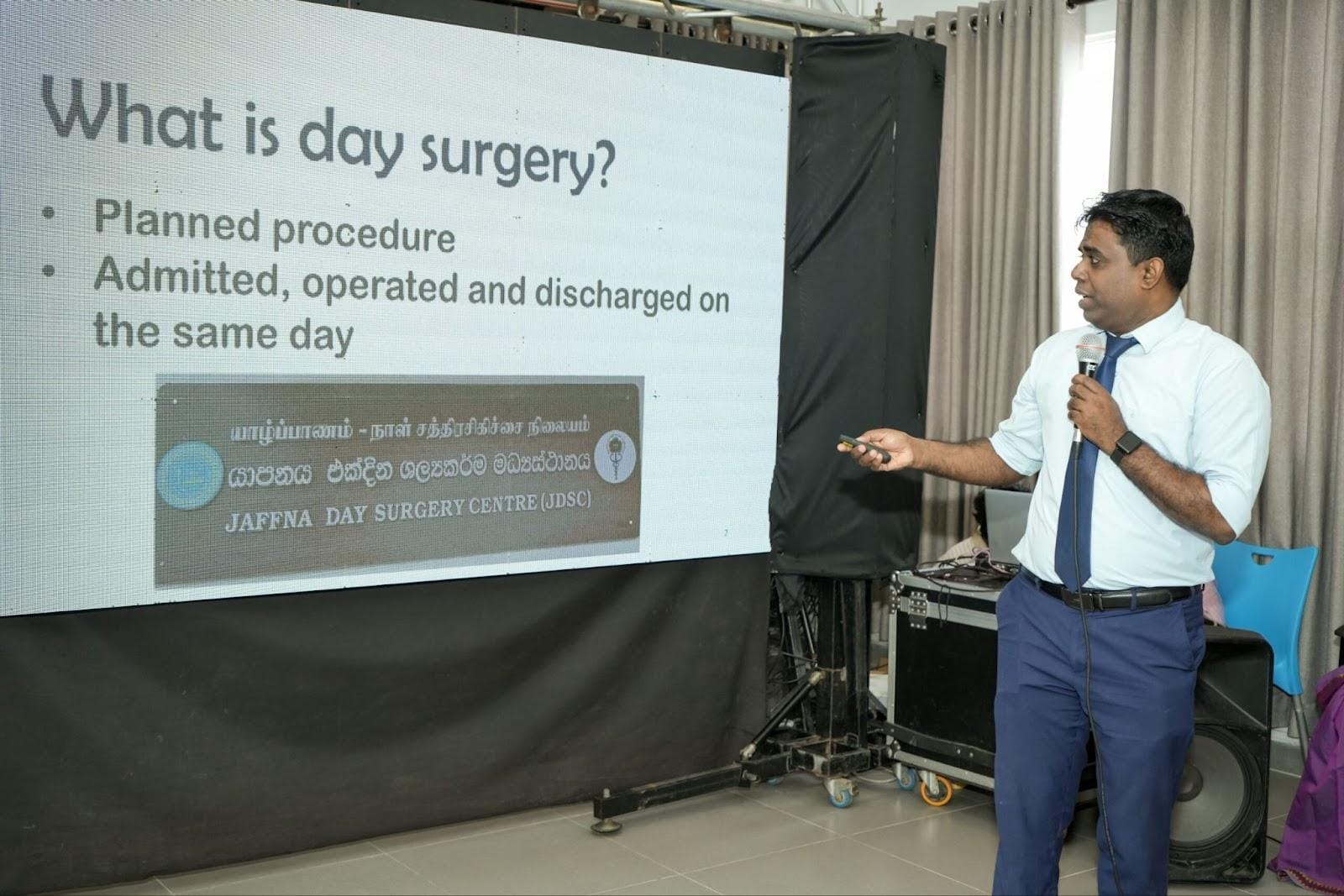
At the inauguration, Professor Balagopi spoke candidly about the realities inside Teaching Hospital Jaffna.
“In our surgical wards, because of bed constraints, we often have 20 to 30 patients on the floor,” he said. “We prioritise beds for major surgical patients who must remain admitted. Others are left without beds. It is tragic.”
The Day Surgery Unit, he argued, directly addresses that strain.
Free for the Public — Sustainability for the Future
For now, the Day Surgery Centre will operate entirely free of charge, in keeping with Sri Lanka’s longstanding commitment to universal public healthcare. “Everything is free, and it will remain free for the public,” Professor Balagopi said.
At the same time, administrators acknowledge that long-term sustainability will require careful financial planning. If the model proves effective and capacity allows, officials are considering the introduction of a parallel fee-based stream for members of the Sri Lankan diaspora seeking elective procedures during visits home.
The proposal, still in its conceptual stage, envisions structured medical travel that would generate revenue without displacing public patients. Income from such services, Professor Balagopi said, could be reinvested in hospital development and equipment upgrades, strengthening public infrastructure while preserving universal access.
Health economists note that many members of the Sri Lankan diaspora living in high-income countries face significant out-of-pocket costs even for routine procedures. Private hernia surgery, for example, can cost several thousand to more than ten thousand dollars or pounds abroad — far exceeding comparable private-sector costs in Sri Lanka. If implemented carefully, specialists say, a diaspora-oriented model could offer an affordable option for patients while creating a supplementary funding stream for the public system.
“It would be good for the country, good for the region, and good for the people,” Professor Balagopi said.
International Partnership and Institutional Design
The center has been developed in collaboration with SingHealth Duke-NUS Global Health Institute. According to Professor Balagopi, the system underwent review by Professor Tan Hiang Khoon, Managing Director of Singapore General Hospital.
“They will share their technology and expertise,” he said. “They will guide us on booking systems and workflow design. Here, the patient is the priority.”
Under the governance structure, the University of Jaffna is responsible for the building and maintenance, while Teaching Hospital Jaffna will manage daily operations and clinical prioritisation.
“This will not be privilege-based,” he said. “It is about order and efficiency.”
Access will be regulated through a booking system intended to ensure fairness.
Building Human Capital
Beyond infrastructure, the project has invested in workforce development. Approximately 30 perioperative staff have already completed a structured 500-hour Certificate in Perioperative Care program through the university.
“We will require additional nurses and staff,” Professor Balagopi said. “The International Medical Health Organization has committed to supporting human resource payments for two years.”
Professor Balagopi emphasized that public participation must move beyond advisory roles.
“I would urge that, in time, at least one member of the public be appointed to the managing committee,” he said. “The patient is the ultimate stakeholder. Those who benefit from the service should be represented in its oversight.”
Speaking to Jaffna Monitor, Professor Balagopi described the centre as the product of sustained collaboration across institutions and communities.
“This project shows what can be achieved when people work together,” he said, noting that contributions ranged from land allocation and construction to administrative and clinical coordination.
He cautioned, however, that the inauguration marked only the beginning. “This is just the starting point,” he said. “The unit must grow in phases, and that will require continued support.”
International Best Practices Come to Jaffna
Globally, ambulatory surgery has become a cornerstone of modern healthcare reform. Evidence shows that carefully selected patients achieve outcomes comparable to — and often better than — traditional inpatient care. In the United Kingdom, day surgery now accounts for roughly three-quarters of elective procedures within the National Health Service, while surgical bodies in the United States actively promote ambulatory models to improve efficiency without compromising safety.
Scope of the Pilot: What Will Be Performed
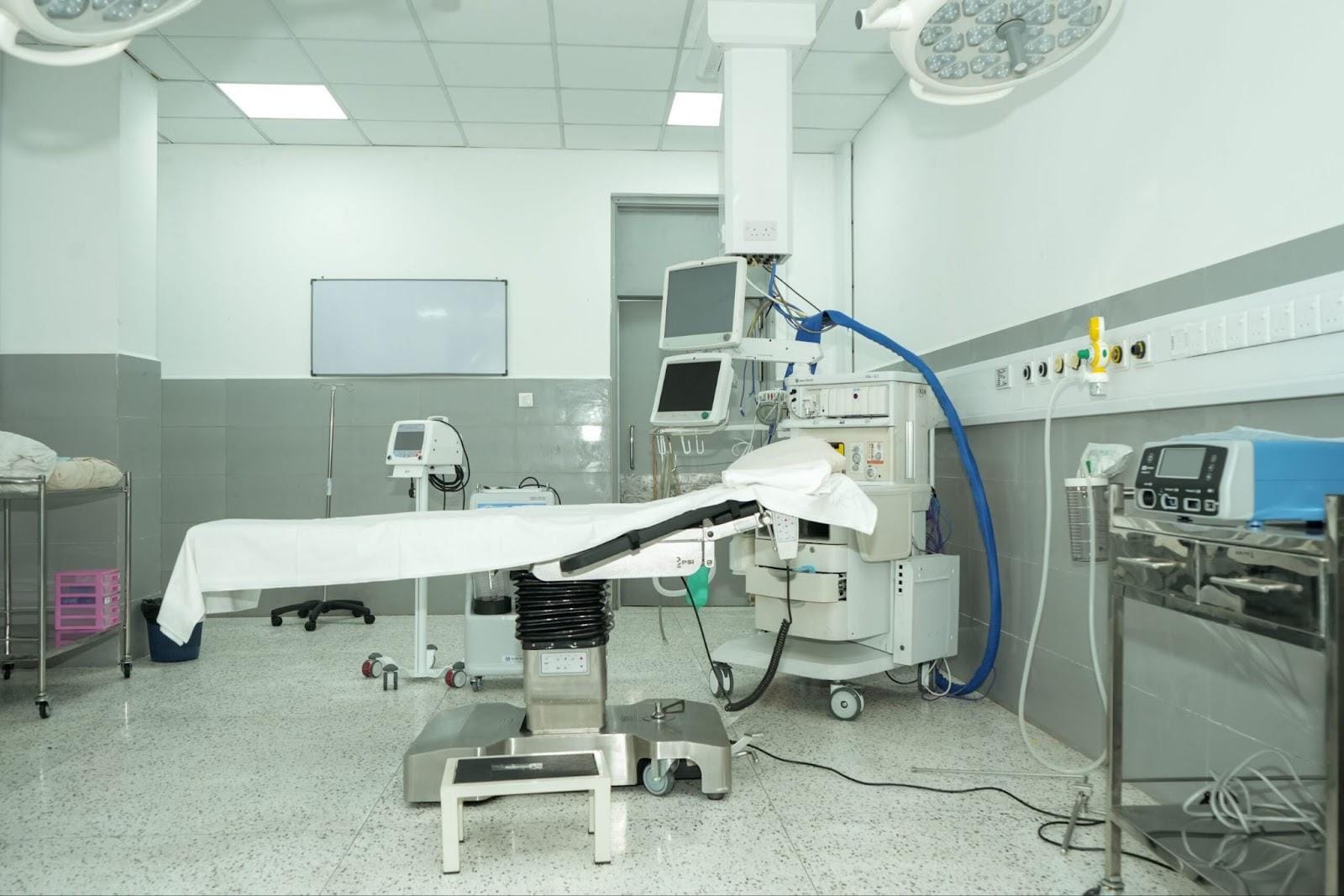
During its pilot phase, the Jaffna Day Surgery Centre will accommodate a broad range of carefully selected procedures across multiple specialties, all deemed suitable for same-day discharge under structured clinical protocols.
The case mix spans general surgery, orthopaedics, urology, vascular and plastic surgery, paediatrics, and gynaecology. These include low-to-moderate complexity operations that traditionally require short inpatient admissions but can now be performed safely in a dedicated ambulatory setting under modern anaesthetic and recovery standards.
Hospital officials stress that patient selection will remain rigorous. Only clinically appropriate cases will be routed through the day-surgery pathway, with safeguards in place to ensure that patients requiring extended observation continue to receive conventional inpatient care.
The Human Impact
For patients on long surgical waiting lists, the shift could mean more than convenience. K. Varathan, a 52-year-old daily wage worker from Kopay awaiting a minor procedure, said even a short hospital admission carries consequences beyond the medical.
“If I stay in hospital for two or three days, I don’t earn,” he said. “My family depends on that income. If I can return home the same day, it makes a difference.”
For households operating on narrow margins, reduced admission time can mean fewer lost wages and less disruption to caregiving responsibilities — a practical change that extends beyond clinical outcomes.
Philanthropic Support Anchors the Pilot
The financial structure of the Day Surgery Centre reflects both ambition and constraint, sustained in part by philanthropic support. The salaries of 30 perioperative personnel for the first two years — estimated at roughly $35,000 — are being covered through a donation from the International Medical Health Organization–USA (IMHO–USA), according to project officials.
In addition, IMHO–USA has donated equipment valued at more than $200,000 and has committed to supporting further recurring human-resource costs during the initial phase of operations.
Officials at IMHO-USA said the expectation is that, after the two-year transitional period, the government health sector will assume responsibility for sustaining the unit’s operations, as it has done with similar externally supported initiatives in the past.
Health administrators involved in the project said that, if successful, the model could serve as a template for future partnerships within Sri Lanka’s public health infrastructure.
Broader Implications for Sri Lanka's Healthcare System
The initiative comes at a pivotal moment for Sri Lanka’s public health system, which is contending with demographic ageing, a growing burden of non-communicable diseases, and sustained fiscal strain after the country’s economic crisis. In that environment, reform increasingly depends less on building new facilities than on rethinking how existing ones function.
Health policy specialists say structured ambulatory surgery offers one pragmatic lever: shifting suitable cases out of inpatient wards to increase throughput, ease congestion, and contain costs without large capital outlays.
If the Jaffna model proves safe and effective, it could offer a template beyond the Northern Province. In a region still rebuilding institutional capacity after decades of conflict, the centre is more than a new unit — it is a test of whether disciplined system redesign can deliver durable gains under constraint.