

Over 50 Students, Teachers Injured in Wasp Attack at Kilinochchi School Despite Prior Warning

Over 50 Students, Teachers Injured in Wasp Attack at Kilinochchi School Despite Prior Warning


Share this post

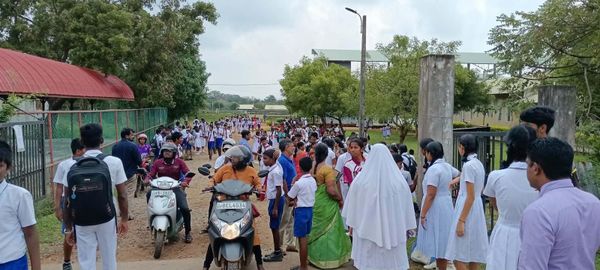
More than 50 students and teachers were injured on Wednesday morning after wasps from a nest on the premises of Kilinochchi Maha Vidyalayam attacked students and staff, triggering panic across the school. At least 39 students were admitted to hospital for treatment, while the deputy principal and two teachers were also hospitalised.

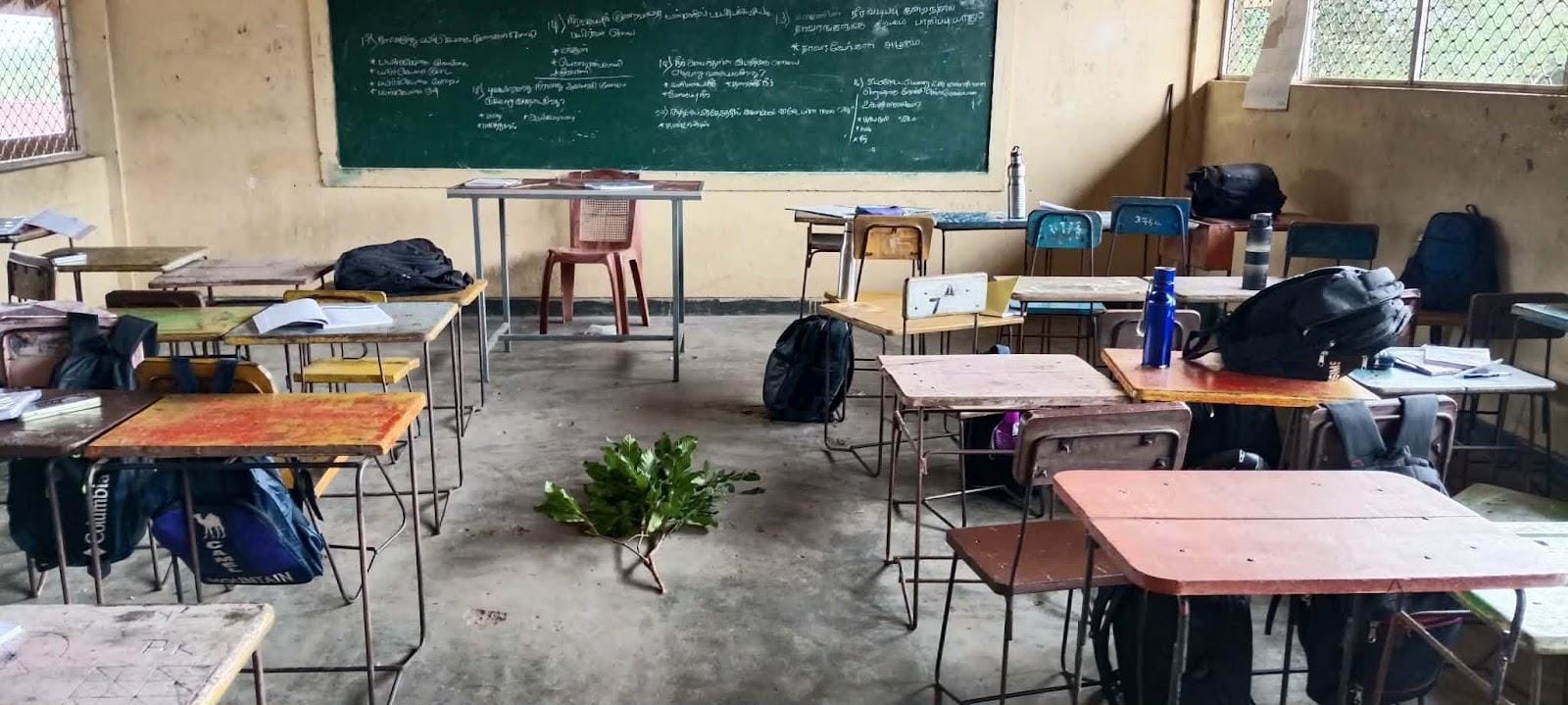
According to eyewitness accounts, students fled classrooms in fear, abandoning their school bags and learning materials as they attempted to shield themselves from the attacking wasps using branches and nearby objects. Several parents and teachers described the scene as chaotic, recalling conditions similar to the panic experienced during air raids in the civil war years.

Public concern intensified amid reports that the danger had been known well in advance. School authorities had formally informed relevant departments in writing nearly two months ago about the presence of a wasp nest within the premises, warning that it posed a serious risk to students and staff. Despite this, no preventive action was taken before Wednesday’s incident.

Only after the attack did officials from multiple agencies — including the Department of Wildlife Conservation, the District Disaster Management Unit, security forces, and education authorities — visit the school to assess the situation.
The Department of Wildlife Conservation later removed the wasp nest, capturing the wasps alive and relocating them to the Kokavil forest area. Officials said chemicals were also applied to the same section of the school building to prevent the wasps from rebuilding a nest at the site.

The department further warned that burning or killing wasp nests is a punishable offence under wildlife protection laws. Anyone found engaging in such acts will be arrested and subjected to legal action.

While no fatalities were reported, parents have raised serious questions about accountability and institutional negligence. “Had a child lost their life today, who would have taken responsibility?” one parent asked, calling for urgent reforms in preventive safety planning at schools.

Educationists and civil society groups argue that the incident highlights a broader governance failure — where action is taken only after a crisis occurs rather than through timely risk assessment and prevention.


Share this post

Be the first to know

Join our community and get notified about upcoming stories

Subscribing...
You've been subscribed!
Something went wrong
Colombo Eyes Control of Jaffna’s Cultural Centre

Colombo Eyes Control of Jaffna’s Cultural Centre

JAFFNA, Sri Lanka — Sri Lanka’s Cabinet is expected to consider a proposal to place the Jaffna Thiruvalluvar Cultural Centre under a new seven-member governing body dominated by central government representatives, according to officials familiar with the plan. If approved, the move would formalize national oversight of a complex built with Indian grant funding on land owned by the Jaffna Municipal Council — and presented, repeatedly, as a gift to the people of the North. The proposal has not b


Our Reporter

Our Reporter

Accountability for Others, Immunity for One’s Own

Accountability for Others, Immunity for One’s Own

On March 27, Kumara Jayakody walked into the Colombo High Court, was formally indicted on corruption charges, posted bail, and had his fingerprints taken. Then he returned to his ministerial office. On April 10, 153 Members of Parliament from the National People's Power voted to keep him there. He remains Sri Lanka's Energy Minister today — attending Cabinet, drawing a public salary, governing a portfolio that just lost seven billion rupees of public money. If this had happened under Mahinda Ra


Kaniyan Pungundran

Kaniyan Pungundran

The Tamil Renaissance

The Tamil Renaissance

By Jeevan Thiyagaraja Generations have scattered across the globe while others remained, tending to the soil of their ancestors through the unimaginable. Though separated by oceans and time, all share the same roots. The time has come for the North to reclaim its narrative—a Tamil Renaissance where a smart, confident, and contented North acts as catalyst for a proud, cultured, and developed community found around the world. I. The Ancient Maritime Spirit: A Legacy of Global Connection Long b


Jeevan Thiyagaraja

Jeevan Thiyagaraja

Iluppai Tree and the Young Generation

Iluppai Tree and the Young Generation

Translated from the original Tamil short story iluppai maramum iḷanñcantatiyum (இலுப்பை மரமும் இளஞ்சந்ததியும்) from the 1976 collection of short stories titled kōṭukaḷum kōlaṅkalum (கோடுகளும் கோலங்களும்) by Kuppilan Ai. Shanmugan. He woke up at around seven in the morning, when it was already rather bright. His little sister shook him awake, calling out, “aṇṇai, aṇṇai.” He stretched lazily, rolled up the reed mat and stood it next to the wall. The house was buzzing with activity. His sibling


Eḻuttukkiṉiyavaṉ

Eḻuttukkiṉiyavaṉ