By M.R. Narayan Swamy
At a workshop for teenage Tamil girls in Jaffna, a teacher wanted to know who Nelson Mandela was.
Several hands went up. Mandela fought for South Africa’s freedom and to end apartheid. The answer was apt.
Okay, who was Mahatma Gandhi?
Again, several hands went up. Gandhi led the Indian independence movement against the British. He was an apostle of non-violence. Correct.
A third question followed: Who was (Appapillai) Amirthalingam?
There was a silence in the classroom. No one seemed to know. After a few moments, two girls hesitantly raised their hands.
One of them was told to speak up.
After a brief pause, the student answered in a low voice: Amirthalingam was a traitor to the Tamil cause.
The lady teacher asked no more questions.
“This is the tragedy with our society,” said a Tamil political activist in Jaffna who related the Q-and-A session. “Thanks to the Tigers, the girls in the class knew nothing about Amirthalingam except that he was a traitor. Isn’t this a shame?”
Indeed, when the school students were being queried, Sri Lanka’s prolonged war against the Liberation Tigers of Tamil Eelam (LTTE) was nearing its gory end. The teacher did not correct the girl’s understanding of the once towering Tamil leader, as the LTTE was still alive, although it would stop kicking soon.
I have often wondered what would have been the direction of the armed struggle waged to carve out a Tamil homeland in Sri Lanka if only the LTTE had desisted from denigrating anyone and everyone who disagreed with it as “traitors” – and doing away with them physically.
Probably, no so-called revolutionary leader or movement killed or ordered the slaying of so many from their own community since Stalin unleashed a murder spree after succeeding Lenin because he didn’t want anyone around who could pose even the remotest threat to his authority.
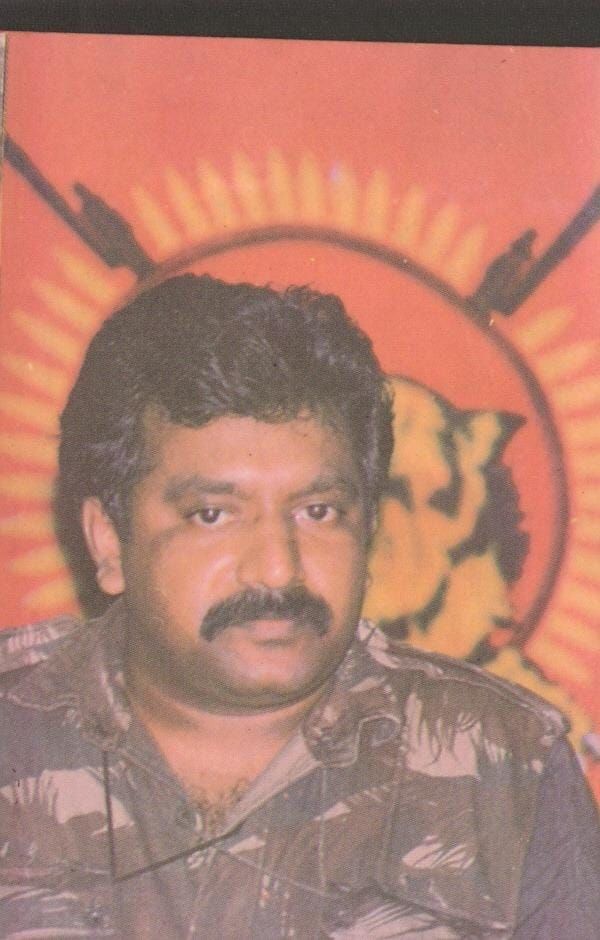
In Prabhakaran’s case, it was not really a case of anyone, barring perhaps a couple, that too if you go by the LTTE’s version – taking on the founder leader of the Tamil Tigers or trying to usurp his place.
This was anarchism at its worst. Fellow Tamils were killed because they broke the LTTE's rules, were considered too independent, or were deemed too dangerous to be left alive.
And who was to decide who could live and who must die? One man: the Tigers' supremo. There was no veto.
What began as stray, stealthy murders gradually developed into a cancer that slowly devoured the once-liberal Tamil society, long before the Sri Lankan state ultimately pulverized the Tigers.
And as everyone knows, the disease claimed hundreds of lives within the LTTE ranks too.
As Prabhakaran’s earliest colleagues recall, there was no rational reason to kill Michael and Patkunan during the LTTE’s formative years. Michael only wanted to quit militancy; Patkunan felt Prabhakaran was not the best leader.
Michael, one of the earliest Tamil militants, was taken to a forested patch and shot dead. His body was torched. Patkunan’s killing was more dramatic. While talking to him, Prabhakaran suddenly whipped out a gun and fired at him from close range.
These were no aberration. Sickeningly, the killings never stopped. From one and two, the numbers began to soar. Over time, the murders were fine-tuned and perfected; assassinations became almost an art. The definition of the drohi too became expansive.
It is sheer luck that friend-turned-foe Uma Maheshwaran did not die at the hands of the Tigers. He was lucky that Prabhakaran and an associate missed their mark when they fired at Uma in Madras in 1982. On another occasion, also in Tamil Nadu, the LTTE wanted to kill Uma, but he didn’t reach the place where he was to be targeted.
TELO leader Sri Sabarattinam had no such luck. Even as he begged for mercy, LTTE Jaffna commander Kittu gunned him down. Hundreds of TELO fighters, too, were slaughtered in Jaffna and elsewhere, decimating one of the biggest Tamil militant groups.
I interviewed a TELO member (from Jaffna) who escaped death at the last moment because a relative begged Kittu to spare his life. But the lucky guy saw another TELO member (from the east) tied to an electricity post and shot in the head – “Sir, the skull splattered to pieces!”
Cho Ramaswamy’s Tughlaq magazine carried a memorable cartoon then. It had National Security Minister Lalith Athulathmudali telling President J.R. Jayewardene the need for weapons to battle Tamil militants. No need, JR retorts, Prabhakaran is doing our job. When he is finished, we will move in!
PLOT Jaffna leader Mendis was caught, tortured, and his bloodied body was handed over to his family, with his gold chain. Acting like a de facto state, the Tigers “banned” TELO and PLOTE, like how Colombo once outlawed the LTTE.
The EPRLF was the next to be targeted. Much later, LTTE gunmen wiped out virtually the entire leadership of the group in a mafia-style attack in Chennai. EPRLF leader K. Pathmanabha’s only defence against an AK-47 was a pillow.
By then, the LTTE had already assassinated Tamil United Liberation Front leader Amirthalingam – once the idol of militants, Prabhakaran included -- and colleague V. Yogeswaran. The LTTE forgot that Amirthalingam, despite his diminished political aura, was held in high esteem by Indian Prime Minister Indira Gandhi until her own very end.
The twin TULF murders were carried out when the Tigers were in so-called peace talks with President Ranasinghe Premadasa.
This was also when the LTTE got the carte blanche to “arrest” scores of Tamils opposed to Prabhakaran from various places in southern Sri Lanka. With Colombo looking the other way, these men were taken to the LTTE lair in buses with tinted glasses, their hands tied and legs chained to seats. Most of them were never seen again.
It was in the late 1980s and early 1990s that the LTTE opened large prisons in the country’s north. At its peak, these jails – torture chambers, in reality – held thousands of Tamils of all age groups, detained on a variety of charges. The treatment meted out to the Tamil prisoners would have put even hardened Sinhalese interrogators to shame. Some went insane due to torture.
Among the prominent Tamils the LTTE assassinated were academic and rights activist Rajani Thiranagama, scholar and lawyer Neelan Thiruchelvan, and Tamil activist and human rights advocate Loganathan Ketheshwaran. Several other lesser mortals, too, were killed in the Tamil areas. Many Tamils fled Sri Lanka to escape the LTTE.
A gunman shot dead an ex-Prabhakaran associate in Paris for daring to write a book on the Tamil Tigers leader. Prominent Tamil journalist D.B.S. Jeyaraj was thrashed by thugs in Toronto. Several other Tamil diaspora members were also victims. The Tigers kept a key Tamil leader from London in an underground prison for 62 days before pressure from the Scotland Yard led to his release.
In actions that only hardened the Sri Lankan state in the long run (despite many military setbacks), Prabhakaran ordered the assassination of several government leaders, including Ranjan Wijeratne, Premadasa, Athulathmudali, Lakshman Kadirgamar, Gamini Dissanayake, and Chandrika Kumaratunga (who, however, survived while losing an eye).
The suicide bombing of former Indian Prime Minister Rajiv Gandhi is well known. This was one assassination the LTTE came to seriously regret. This was not because of any respect for human life but due to a vicious crackdown that India launched till the Tigers were militarily routed.
If one were to list all the “traitors” and “anti-Tamils” the LTTE did away with, one would end up writing thousands of words. Countless Tamils—notables and the not-so-well-known alike—were done to death in Colombo and across the north and east of Sri Lanka.
All these chilling killings created a Stalinist state that the LTTE could control, and where no dissent was allowed. The Tigers’ totalitarian ideology and internal terror stifled free thinking in the once vibrant Tamil society. Ordinary Tamils became extremely cautious while expressing their feelings even outside the LTTE zone – because many felt the Tigers had ears and eyes everywhere, a la North Korea.
The “traitors” were found even within the LTTE. Mahattaya, once the Tigers' designated No. 2, was tortured and executed, along with a few hundred fighters, on charges of being Indian spies. Karuna, one of the LTTE's top leaders, survived a massive manhunt after he revolted—and ultimately outlived Prabhakaran. But hundreds of Tigers seen as loyal to Karuna, including young women, were massacred. Several leaders, including Jim Kelly Thatha, were tortured and burned to death after being promised clemency if they surrendered.
Such extreme cruelty and wanton killings were unheard of in any so-called liberation movement. Palestinian outfits had their woes, but were babies in this matter compared to the LTTE. The once formidable Naxalites in India splintered into dozens of factions; many of these outfits kept trying to unite, not to kill one another.
The number of Tamils the LTTE killed in Sri Lanka could run into thousands. Did these murders serve any purpose – except to instill fear and generate hatred for the Tigers? Did it take Prabhakaran any closer to Tamil Eelam? Did it make Colombo throw up its hands in despair? Yes, it did create some awe about the Tigers' killing machine; Prabhakaran could reach an enemy, real or perceived, anywhere in the world -- just like Stalin got Trotsky in distant Mexico.
We need to examine another largely ignored aspect. Considering the way it hollowed out the Tamil society from within, what would have happened if the LTTE had somehow won an independent Tamil Eelam? Would such a state have been any different from today’s North Korea?
This commentary is no excuse for whatever murderous activities other Tamil militant groups indulged in, either in response to the Tigers or on their own. But no one in Sri Lanka’s Tamil society killed so many fellow Tamils, at times with barbarity, as did the Tamil Tigers.
An armed struggle which began with one enemy – the Sinhalese state – ended up turning almost the entire world against it by the time it was routed: The unending “traitors” among Tamils, Sri Lankan leaders, a senior Indian leader, ordinary Sinhalese and Muslims, the Western world, other countries which armed Colombo et al. Mao believed in isolating the main foe by befriending everyone else; for Prabhakaran, it was “My Way or Highway.”
“The first question we need to ask is who gave the authority to Prabhakaran and the LTTE to decide who was a traitor and who was not,” asks Ratna Rajadurai, a former Tamil militant from Batticaloa who now lives in the West.
Rajadurai recalls with pain the long periods in the mid-1980s when he and his comrades, relatively poorly armed, spent time hiding from the Tigers or occasionally hitting back “when we should have been all fighting the Sri Lankan state”.
According to him, around 600 Tamil militants, mostly from non-LTTE groups, were killed in internecine battles in just around four years in Batticaloa alone until early 1990.
Rajadurai says the Tigers once shot dead an EPRLF activist, stripped his body of its clothes, dragged it to his home in the Mandoor area, and ordered that he should not be clothed even during his last rites.
“This was shocking and absurd,” Rajadurai said. “It was against our religion. Somehow, the villagers found the courage to defy the LTTE's diktat. For once, the Tigers backed off. After all, they were not yet the dominant force in Batticaloa. But I can never forget that naked, bloodied body.”
Without knowing what happened in Batticaloa, the Sri Lankan military similarly treated Prabhakaran after killing him. They took off his battle fatigues, leaving him in soiled undergarments. To those who had suffered at the hands of the Tigers, this was a karmic blowback.