
JAFFNA, Sri Lanka — Leaders of the Ilankai Tamil Arasu Kachchi (ITAK) and the Democratic Tamil National Alliance (DTNA) met in Jaffna on Saturday to discuss a newly formed six-party grouping of Sri Lanka's Tamil-speaking parties — even as the two northern formations remain unable to forge an alliance of their own.
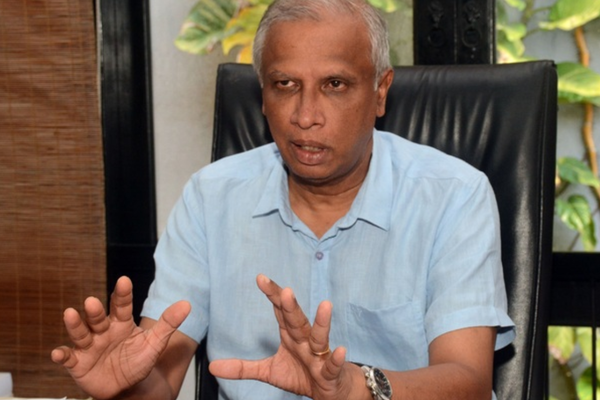
The talks were held at the residence of C.V.K. Sivagnanam, the ITAK leader. He and M.A. Sumanthiran, the party's general secretary, represented ITAK. The DTNA delegation included Dharmalingam Siddharthan, Suresh Premachandran, M. Chandrakumar, C. Venthan and N. Ratnalingam.
Speaking afterward, Mr. Sumanthiran and Mr. Premachandran said the two sides had reviewed the country's political situation and the new six-party initiative, which was announced in Colombo on Monday.
The grouping joins ITAK and the DTNA — the principal Tamil parties of the north and east — with four parties drawn from Muslim and up-country Tamil constituencies: the All Ceylon Makkal Congress, the Sri Lanka Muslim Congress, the Ceylon Workers' Congress and the Tamil Progressive Alliance. Its backers have cast it as a serious effort to align Sri Lanka's Tamil-speaking parties behind shared concerns: constitutional reform, greater devolution, long-delayed provincial council elections and land disputes affecting minority communities.
But the pairing has also raised doubts about how durable the wider project can be. For more than a year, ITAK and the DTNA have held rounds of talks aimed at reviving, in some form, the unity once embodied by the Tamil National Alliance (TNA). They have yet to reach an agreement.
That failure is telling, observers say, because the two formations have far more in common with each other than with their new partners. Both draw their strength from the Tamil population of the north and east; their constituent parties once shared the TNA banner; and they hold broadly common positions on the demands that have defined postwar Tamil politics, from devolution to a political settlement of the ethnic conflict.
Yet a common structure has repeatedly eluded them. The six-party initiative now asks them to coordinate not only with each other but with Muslim and up-country Tamil parties whose priorities are shaped by different constituencies and, on some issues, competing interests.
The six parties unveiled the arrangement at a joint news conference in Colombo on Monday, saying they had agreed on a common platform to exchange views, build consensus and coordinate action while keeping their separate identities and policy positions. They set out three immediate demands: that the government honor its promise of a new Constitution with meaningful devolution, that provincial council elections be held without further delay, and that longstanding land disputes affecting Tamil, Muslim and up-country Tamil communities be resolved.