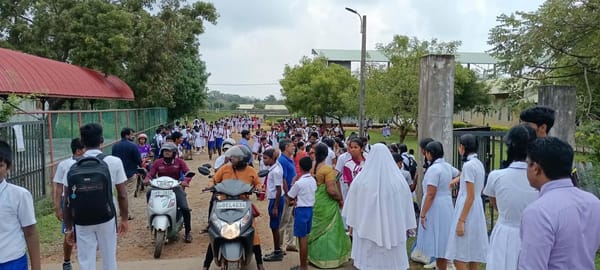
Over 50 Students, Teachers Injured in Wasp Attack at Kilinochchi School Despite Prior Warning

Over 50 Students, Teachers Injured in Wasp Attack at Kilinochchi School Despite Prior Warning


Share this post

More than 50 students and teachers were injured on Wednesday morning after wasps from a nest on the premises of Kilinochchi Maha Vidyalayam attacked students and staff, triggering panic across the school. At least 39 students were admitted to hospital for treatment, while the deputy principal and two teachers were also hospitalised.

According to eyewitness accounts, students fled classrooms in fear, abandoning their school bags and learning materials as they attempted to shield themselves from the attacking wasps using branches and nearby objects. Several parents and teachers described the scene as chaotic, recalling conditions similar to the panic experienced during air raids in the civil war years.

Public concern intensified amid reports that the danger had been known well in advance. School authorities had formally informed relevant departments in writing nearly two months ago about the presence of a wasp nest within the premises, warning that it posed a serious risk to students and staff. Despite this, no preventive action was taken before Wednesday’s incident.

Only after the attack did officials from multiple agencies — including the Department of Wildlife Conservation, the District Disaster Management Unit, security forces, and education authorities — visit the school to assess the situation.
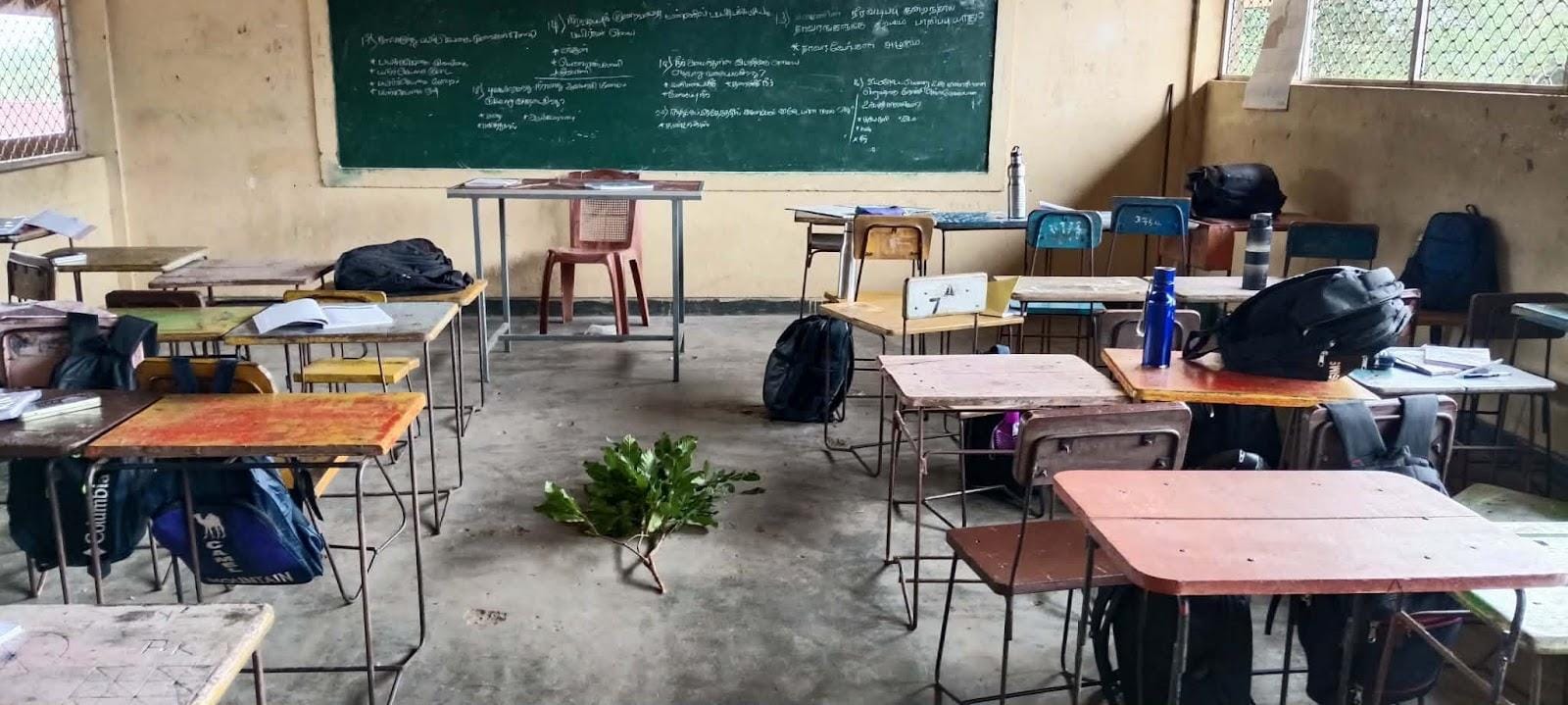
The Department of Wildlife Conservation later removed the wasp nest, capturing the wasps alive and relocating them to the Kokavil forest area. Officials said chemicals were also applied to the same section of the school building to prevent the wasps from rebuilding a nest at the site.

The department further warned that burning or killing wasp nests is a punishable offence under wildlife protection laws. Anyone found engaging in such acts will be arrested and subjected to legal action.

While no fatalities were reported, parents have raised serious questions about accountability and institutional negligence. “Had a child lost their life today, who would have taken responsibility?” one parent asked, calling for urgent reforms in preventive safety planning at schools.

Educationists and civil society groups argue that the incident highlights a broader governance failure — where action is taken only after a crisis occurs rather than through timely risk assessment and prevention.

Share this post

Be the first to know

Join our community and get notified about upcoming stories

Subscribing...
You've been subscribed!
Something went wrong
‘This Is Apartheid’: Mano Ganesan Calls for UN Intervention in Cyclone Relief

‘This Is Apartheid’: Mano Ganesan Calls for UN Intervention in Cyclone Relief

Tamil Progressive Alliance leader Mano Ganesan has appealed to the United Nations to intervene in what he characterised as the systematic exclusion of Hill Country plantation communities from Sri Lanka's post-disaster reconstruction programme following Cyclone Dithwa. In a meeting with UN Resident Coordinator Marc-André Franche at the UN office in Colombo, Mano Ganesan said the government's Rebuilding Sri Lanka housing scheme had failed to include plantation families displaced by the December c


Our Reporter

Our Reporter

Tamil Leaders Accuse Government of Building Parallel Power Structure Through Praja Shakthi

Tamil Leaders Accuse Government of Building Parallel Power Structure Through Praja Shakthi

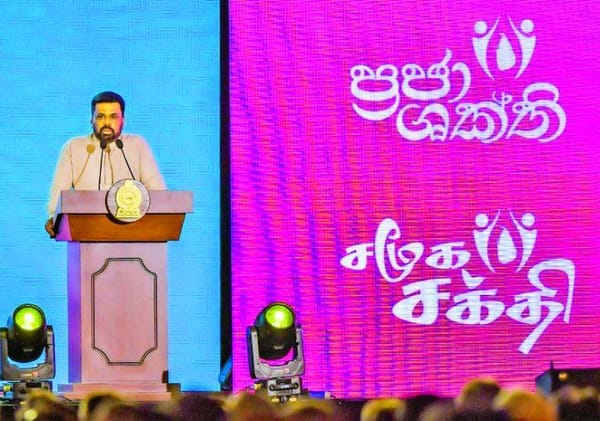
A government-backed community mobilisation programme has emerged as a political flashpoint in Sri Lanka's Northern and Eastern Provinces, with elected officials, political parties, and civil society groups warning that the initiative undermines constitutional governance and threatens to erode Tamil political representation at the grassroots level. The Praja Shakthi (People's Power) programme, launched by the National People's Power (NPP) government and presented as a poverty alleviation initiat


Our Reporter

Our Reporter

“Balasingham Saw the End — Prabhakaran Believed He Was Invincible”: G. L. Peiris on Sri Lanka’s Failed Peace Process

“Balasingham Saw the End — Prabhakaran Believed He Was Invincible”: G. L. Peiris on Sri Lanka’s Failed Peace Process

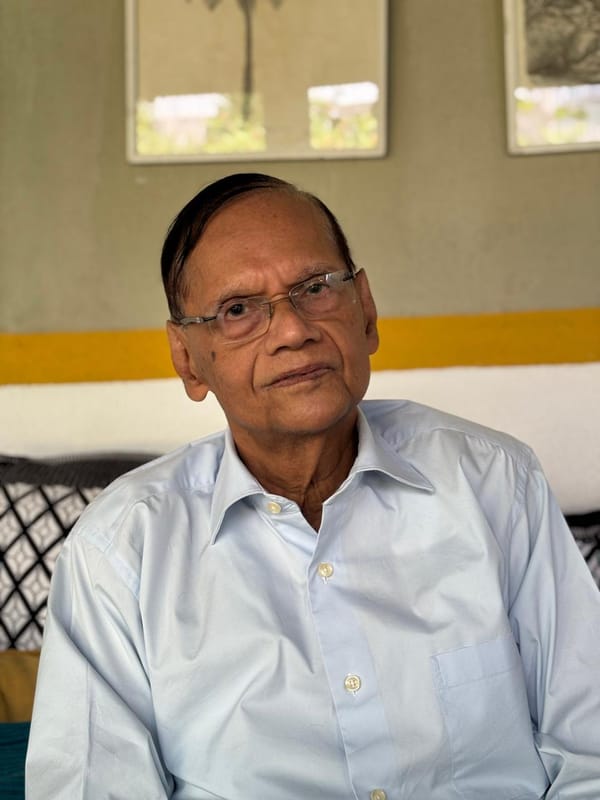
G. L. Peiris was at the epicentre of Sri Lanka’s peace negotiations with the LTTE and occupied senior office under three successive governments during one of the most consequential phases of the conflict. In his new book, The Sri Lanka Peace Process: An Inside View, he revisits that period with the benefit of temporal distance and retrospective clarity. In this interview with Jaffna Monitor, Peiris confronts the charge that his narrative assumes the posture of a detached observer and explains w


Aruliniyan Mahalingam

Aruliniyan Mahalingam

Holy Support for a Controversial Cause: Clergy Back ‘Black Day’ Protest

Holy Support for a Controversial Cause: Clergy Back ‘Black Day’ Protest

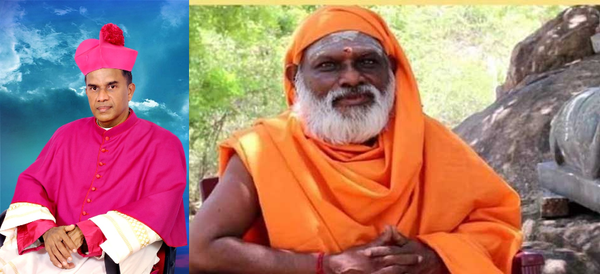
Senior religious figures from the Tamil community have now lent their moral weight to a controversial and arguably ill-judged plan by Jaffna University students to observe Sri Lanka’s Independence Day on February 4 as a “Black Day” in the Northern and Eastern provinces. The Jaffna University Students’ Union has announced that it will stage demonstrations and mark February 4 — Sri Lanka’s Independence Day — as a Black Day and a day of protest. In preparation, student representatives recently pai


Our Reporter

Our Reporter