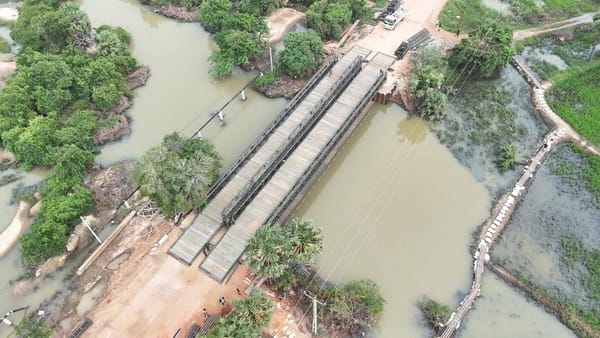
MULLAITIVU, Sri Lanka —Residents of Mullaitivu District are appealing to the Government of India to replace the temporary bridge on the Paranthan–Karaichchi–Mullaitivu (A035) road with a permanent structure, arguing that while the emergency installation restored vital connectivity after a devastating cyclone, it is no longer sufficient to meet the region’s daily transportation demands.
The bridge was installed by India following Cyclone Ditwa, which caused extensive damage to infrastructure across parts of northern Sri Lanka. Constructed as a Bailey bridge by Indian Army engineers, the structure reconnected communities that had been cut off by flooding and storm damage. At the time, local officials and residents described it as a swift humanitarian intervention that restored a critical transport corridor.
The A035 road links villages, markets, schools, and medical facilities across Mullaitivu and neighboring districts, serving as one of the area’s primary road networks.
In recent weeks, Sri Lanka’s Road Development Authority (RDA) imposed new restrictions on the bridge after what officials described as recurring structural strain. Heavy vehicles have been barred from crossing, and passenger buses are now required to disembark commuters before traversing the span. Other vehicles are permitted to cross under speed limitations.
The measures, intended to preserve the integrity of the temporary structure, have renewed calls for a permanent replacement.
“This bridge helped us at a time of crisis, and we remain grateful,” said Muthu, a Mullaitivu resident, speaking to Jaffna Monitor. “India was among the first to respond after the cyclone. But this road is central to our everyday lives. The current restrictions are creating real difficulties.”
Residents say the requirement for bus passengers — including elderly commuters, schoolchildren, and workers — to disembark and walk across before reboarding has added practical burdens, particularly during periods of heavy rain or heat.
Community members recall that the bridge’s construction carried significance beyond its functional purpose. Indian Army engineers, they said, worked extended hours under challenging conditions to restore access.
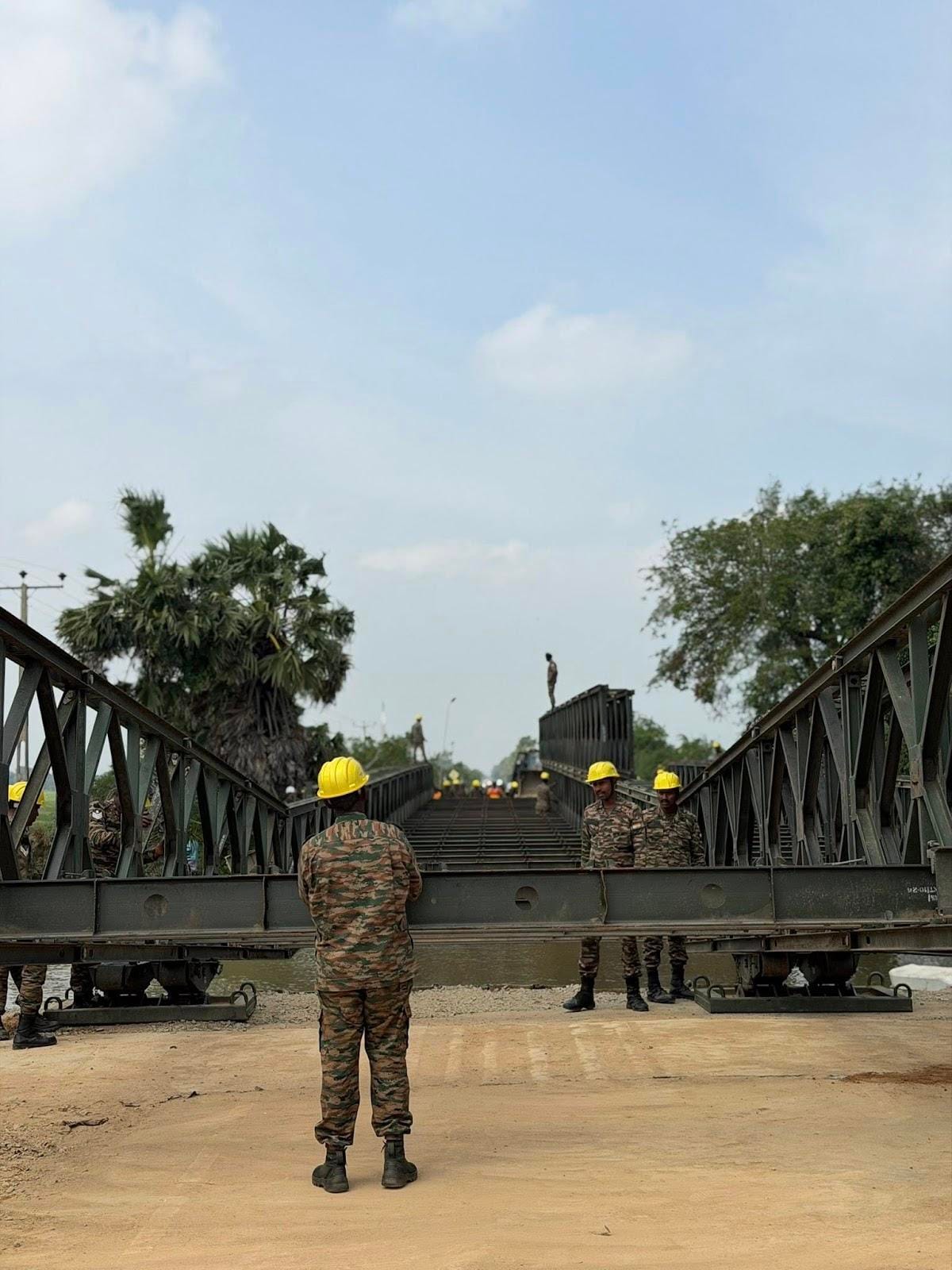
Community leaders emphasize that their appeal for a permanent structure is not a criticism of India’s intervention, but an effort to build upon it. A reinforced bridge, they argue, would ease logistical constraints and provide long-term stability to a region that remains vulnerable to extreme weather.
Neither the Indian High Commission in Colombo nor the Sri Lankan authorities have publicly indicated whether discussions on constructing a permanent replacement are underway.
For residents who depend on the A035 each day, the request is pragmatic rather than political: emergency relief restored connection, but only a permanent bridge, they say, can secure it.