COLOMBO, Sri Lanka — March 10, 2026
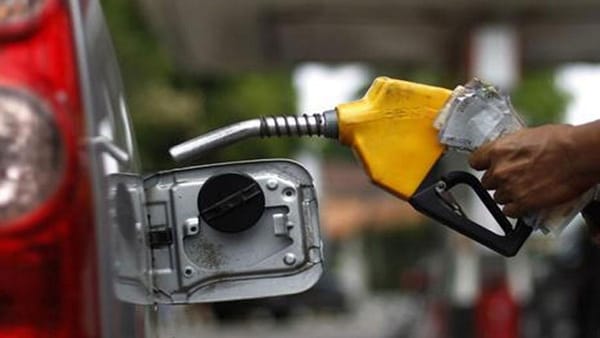
Sri Lanka’s decision to raise fuel prices this week, despite government assurances that the country holds more than a month’s supply of petroleum products, has sparked renewed debate about how domestic fuel prices are determined and how transparent the system is.
The state-run Ceylon Petroleum Corporation (CPC) announced the increase effective from midnight on March 9.
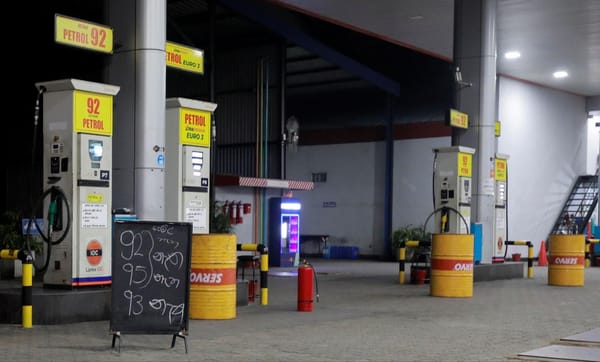
Under the revised rates, Petrol 92 Octane rose by 24 rupees to 317 rupees per litre, while Petrol 95 Octane increased by 25 rupees to 365 rupees per litre. Auto Diesel climbed by 22 rupees to 303 rupees, Super Diesel by 24 rupees to 353 rupees, and kerosene, widely used by low-income households and fishing communities, rose by 13 rupees to 195 rupees per litre.
The adjustments came only days after officials said Sri Lanka had about 27 days of petrol stocks and roughly 33 days of diesel stocks, with additional shipments expected in the coming weeks.
For many ordinary Sri Lankans, a basic question remains unanswered: if the country still holds several weeks’ worth of fuel bought at earlier prices, why should retail prices increase immediately?
The Replacement-Cost Principle
Government officials and energy economists say Sri Lanka follows a replacement-cost pricing system, introduced in 2018 to reduce political interference in fuel pricing.
Under this approach, retail prices are determined not by the historical cost of fuel already stored in depots but by the projected cost of importing the next shipment.
The formula incorporates a range of factors, including international petroleum benchmarks, shipping and insurance costs, exchange-rate fluctuations between the Sri Lankan rupee and the U.S. dollar, taxes, and operational expenses.
Economists say the system was designed to prevent the financial problems that historically plagued Sri Lanka’s petroleum sector when governments kept fuel prices artificially low despite rising global costs.
If domestic prices do not reflect the cost of future imports, economists say, the state petroleum corporation can end up selling fuel at a loss, deficits that can ultimately accumulate as public debt.
Sri Lanka imports nearly all of its petroleum products, making the country particularly vulnerable to global oil price volatility and currency movements.
Questions Over Consistency
Still, some analysts say that while the replacement-cost principle may be economically sound, its application has not always appeared consistent.
Global oil prices declined significantly during parts of 2025, yet domestic fuel prices were adjusted downward only modestly during that period. The limited reductions led some observers to question whether the pricing formula operates symmetrically when international prices fall.
“The issue is not the principle itself,” said a Colombo-based energy analyst. “It is whether the system responds to falling prices with the same speed that it responds to rising prices.”
Timing and Market Volatility
The presence of several weeks of fuel stocks has also raised questions about the timing of the latest increase.
With imports already secured for the coming weeks, some analysts say authorities may have had room to delay the adjustment while monitoring global oil market movements.
Others argue that such delays can create financial risks for the state-owned petroleum sector if future imports must be purchased at significantly higher prices.
Sri Lanka’s fuel reserves typically cover about one month of national consumption, reflecting the country’s limited storage capacity and its reliance on continuous imports.
Transparency Concerns
A broader debate has also emerged over the transparency of the pricing formula itself.
Although the government periodically announces price adjustments, the full set of calculations used to determine those prices is not always publicly disclosed.
Researchers at Verité Research, an independent policy think tank in Colombo, have tracked differences between their formula-based estimates of fuel prices and the government’s final retail prices. Their Fuel Price Tracker frequently shows gaps between the calculated “cost-reflective” price and the price announced by authorities, reflecting variations in assumptions, taxes, and other cost components embedded in the pricing framework.
The Public Utilities Commission of Sri Lanka has also called for greater transparency in the pricing mechanism, arguing that clearer disclosure of cost components could help strengthen public confidence in the system.
Who Benefits From Opacity
Global oil prices moved in the opposite direction during much of 2025. Brent crude, the international benchmark used to estimate Sri Lanka’s import costs, fell by nearly 20 percent over the course of the year, ending December at around $61 per barrel. Yet domestic fuel prices were adjusted only modestly during that period. The Ceylon Petroleum Corporation made its last revision on November 1, reducing Petrol 92 Octane by just five rupees per litre, before leaving prices unchanged through both November and December — even as global oil markets continued to soften.
Against that backdrop, policy analysts have increasingly asked a broader question: who benefits from a fuel pricing system whose full calculations are not publicly disclosed?
Some researchers say the opacity may serve several institutional interests, even if that was not the intention when the pricing formula was first introduced.
One potential beneficiary is the Ceylon Petroleum Corporation (CPC) itself. The original fuel pricing formula was introduced in 2018, with support from the International Monetary Fund under the Ministry of Finance, as part of efforts to depoliticize fuel pricing and prevent chronic losses in the state-owned petroleum sector.
Over time, however, analysts say the formula appears to have evolved in practice. Researchers note that the Ministry of Energy, which oversees the CPC, now applies a version of the pricing framework that incorporates cost components not fully disclosed to the public. These include internal operational elements known only to the CPC, making it difficult for outside observers to independently verify the final retail price.
Such differences can create a gap between the “cost-reflective price” calculated using the original methodology and the price ultimately charged at filling stations.
In November 2024, for example, the Ministry of Energy listed the formula price of petrol at 310.2 rupees per litre, while the independent tracker PublicFinance.lk, which estimates prices based on the original methodology, calculated a cost-reflective price of 298.5 rupees per litre — a difference of 11.7 rupees.
When multiplied across the millions of litres of fuel sold each month, analysts say even relatively small deviations in the formula can translate into substantial revenue flows whose final allocation is not always clearly explained in public disclosures.
Researchers have also pointed to other areas where transparency appears limited. Profit margins attributed to the CPC are not always directly linked to verifiable cost structures, making them difficult to independently assess. Similarly, potential refinery cost savings that could lower prices are not consistently disclosed in the pricing calculations.
A second beneficiary may be the state itself, which collects a range of fuel-related taxes. These include levies such as the Social Security Contribution Levy and other duties whose precise application within the pricing structure is not always publicly detailed.
Because the full calculations behind each price revision are not routinely published, analysts say it can be difficult for outside observers to determine whether the final retail price aligns precisely with the stated formula.
According to PublicFinance.lk’s fuel price tracker, February 2025 was the first month since 2022 in which retail prices came within two percent of the estimated formula price, suggesting that for extended periods consumers may have paid prices somewhat above the calculated cost-reflective level.
Some observers say the lack of transparency also creates political incentives. When the pricing mechanism cannot be independently audited, it becomes harder for analysts, journalists and opposition parties to scrutinize how prices are adjusted over time.
In a country where fuel shortages helped trigger a political crisis in 2022, the politics of fuel pricing remain highly sensitive. Without full disclosure of the calculations behind each adjustment, analysts say it becomes difficult to determine whether price changes reflect market dynamics alone or broader political considerations.
A Politically Sensitive Issue
Fuel prices remain one of the most politically sensitive economic issues in Sri Lanka.
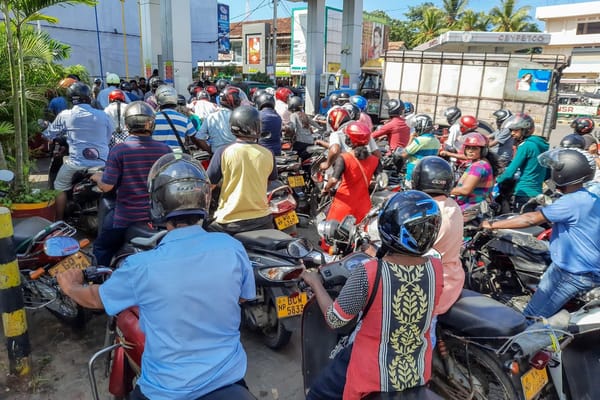
Severe shortages of petrol and diesel in 2022 triggered long queues across the country and helped fuel the protests that forced then-President Gotabaya Rajapaksa from office during the nation’s worst economic crisis in decades.
Although fuel supplies have since stabilized and inflation has fallen sharply from crisis-era peaks, price increases still ripple through the broader economy — raising transportation costs, affecting food prices, and influencing electricity generation costs.
For many households still recovering from the economic crisis, even relatively small fuel price adjustments can have wide-ranging consequences for daily living costs.