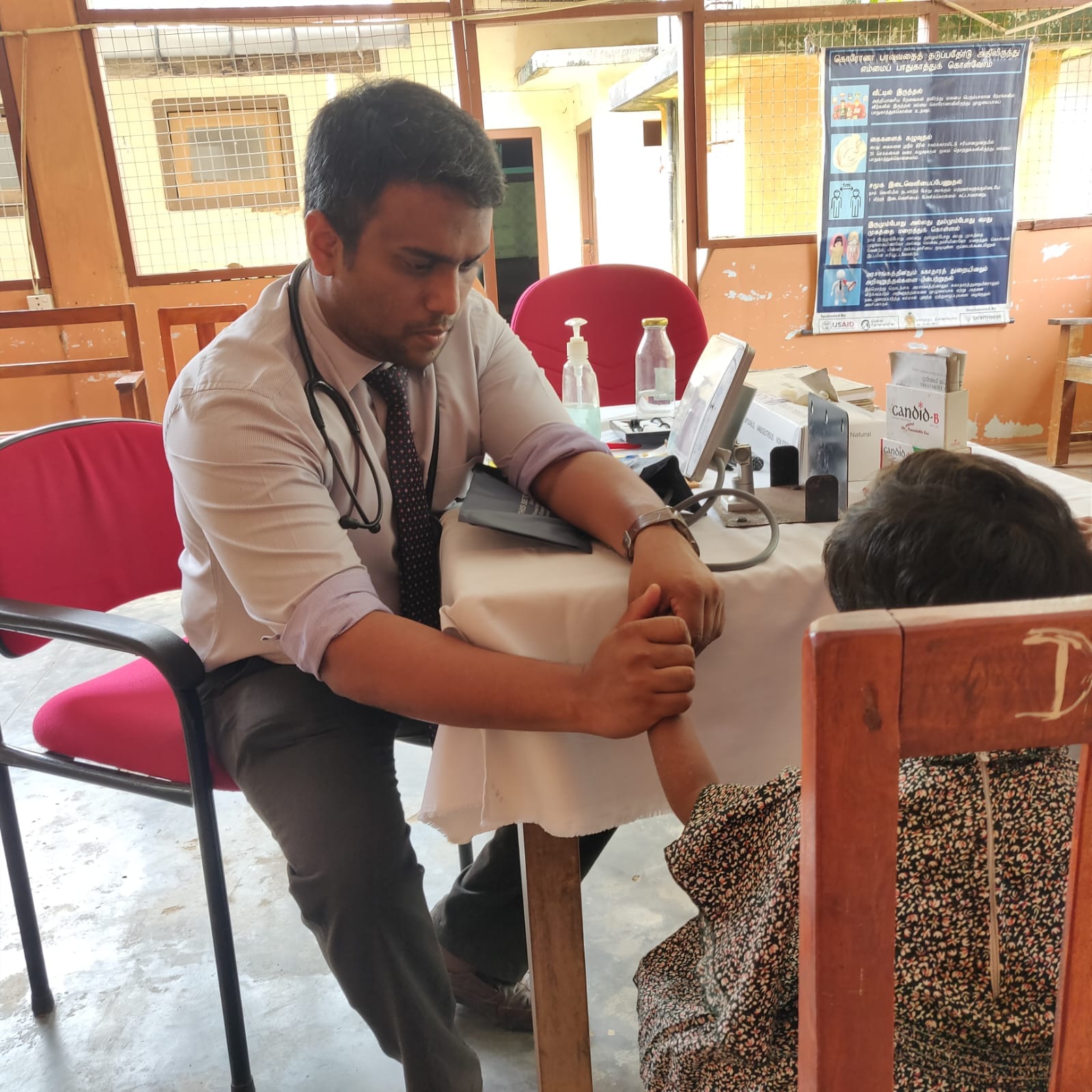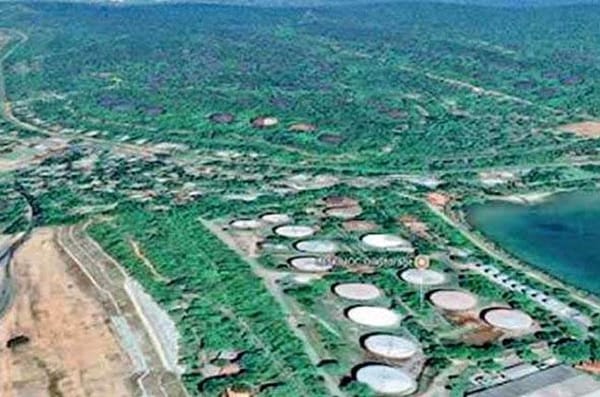
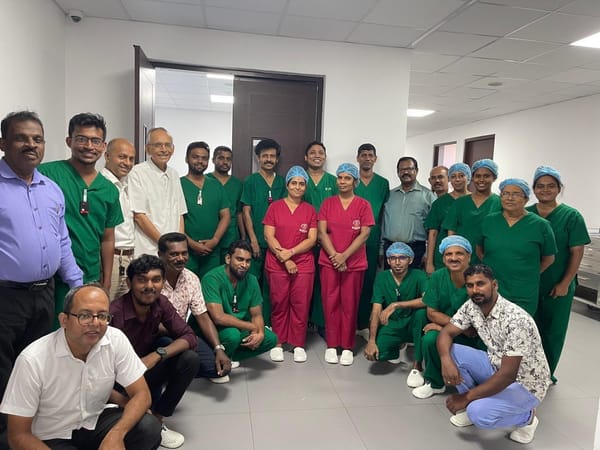
In the gently sunlit plains south of Batticaloa, where plantations and paddy fields meet the sea breeze, we found ourselves on the dusty road toward Kirankulam. It was a drive of about thirty minutes — through the bustling lanes of Kattankudy, past roadside stalls and temple bells — before the noise faded into rural serenity. And there, seemingly out of nowhere, rose the Sanjeevani Hospital.
As we pulled up to the entrance, one sign caught our eye: “All patients are seen free of charge.” Opposite it stood a statue of Swami Vivekananda, calm and radiant in the morning light — and that, we soon learned, was only the beginning of the story.
The Barefoot Sanctuary
The rows of footwear outside told their own story. Slippers, sandals, worn shoes — all neatly arranged like a silent congregation. Inside the entrance, no one wore shoes. Not the doctors. Not the nurses. Not the general manager who would soon tell us how this impossible place came to exist.
Past the threshold, we found ourselves facing a wall that stopped us in our tracks. Images of Swami Madhusudan Sai and Sai Baba. Statues of Buddha and Jesus Christ standing side by side. The crescent of Islam. The symbols of Hinduism. Not competing. Not merely coexisting. Belonging together.
Across the statues, Swami Vivekananda gazed out with that look of quiet majesty he carries in every photograph — a reminder that service to humanity is worship of the divine.
In that moment, standing in our bare feet before that wall, something shifted. This wasn't just a hospital. This was a declaration.
"What Do You Need From Us?"
The story begins with a question.
In 2017, Swami Madhusudan Sai sat across from Prof. Kandasamy Arulanantham and a group of healthcare officials in Batticaloa. The Professor taught family medicine at Eastern University. The others represented various corners of the healthcare system in the Eastern Province. They knew the gaps. They lived with them daily.
Swami's question was deceptively simple: "What do you need from us?"
The answer came back unified, immediate: "We don't have a cath lab."
For anyone in the entire Eastern Province suffering a heart attack, the absence of a cardiac catheterization laboratory meant one thing: time. Time to arrange transport. Time to find money. Time to reach Colombo — if you could afford it. Time that people dying of heart attacks simply don't have.
Batticaloa had skilled cardiologists. It had a teaching hospital. What it didn't have was the equipment to perform emergency angiograms or place stents — the procedures that turn a death sentence into a second chance.
Into that gap stepped the Sri Sathya Sai Karuna Nilayam Foundation.
Seven Months to Build Hope
On 56 acres of donated land in Kirankulam, In just seven months, the Foundation built the Sri Sathya Sai Karunalayam Medical Centre. Soon after, they opened the doors of the Sanjeevani Super Specialty Hospital, the Eastern Province's first facility capable of advanced cardiac interventions.
Mr. David, the hospital's General Manager, shared the numbers with quiet pride:
"In the last 27 months, we've performed 3,334 cardiac procedures. Over 1,000 stent placements. Not one rupee charged."
He paused, then added something that explained everything: "In the government sector, patients face 2–3 year waiting lists for these same procedures. Here, there is no waiting list. We operate three times a week."
Two to three years. Versus three times a week.
That's not a healthcare gap. That's a chasm. And this hospital built a bridge across it.
What "Free" Really Means
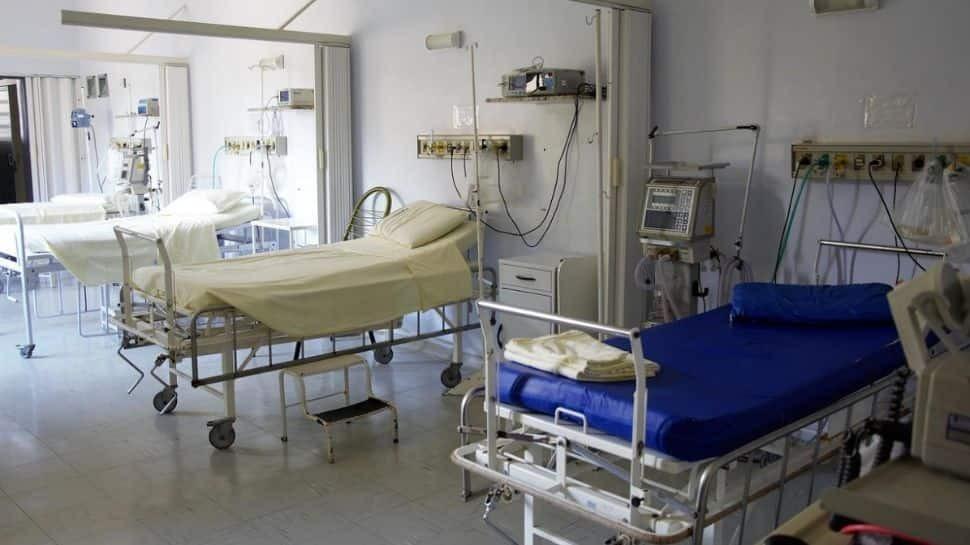
Let's be clear about what happens here:
Every single admitted patient is treated as family. Not customers. Not cases. Not statistics. Family.
Every cardiology intervention — cath lab procedures, angiograms, stents — costs nothing. Zero. Not subsidized. Not reduced. Free.
No waiting lists. If you need a life-saving procedure, you get it.
Free outpatient consultations are available daily from 9 am to 1 pm.
Free meals — lunch, tea, vegetarian food for all staff and visitors.
Free accommodation for families who travel from afar.
A multi-faith worship space where every belief is honored.
But perhaps the most extraordinary thing the hospital does is this: they find children on national waiting lists for cardiac surgeries — children whose families have no means, no hope — and the Foundation covers everything. Air tickets to India. Hospital costs at affiliated facilities. Accommodation. Follow-up care.
Every child. Every expense. No questions asked.
The funding flows from a global network of donors in America, Europe, and India, all animated by the principle that guided Sai Baba's life: "Help ever — hurt never."
Walking Through Worlds
We moved through the wards, the operating theatres, the ICU, and the cath lab. What struck us wasn't the equipment, though it was impressive. It wasn't the cleanliness, though it was immaculate.
It was the atmosphere.
There was no tension. No hurried chaos. No shouting. No hierarchies being performed. Just people — patients, young and old, rich and poor, staff in scrubs and visitors in concern — all moving in a soft rhythm of care.
We asked Mr. David the question that had been building in our minds: Why do you come here every day?
His answer was immediate: "I can take 14 days of leave every month. But I prefer to come to work every day."
And then, the secret:
"Because here, we treat one family. We treat one world."
The Legacy Lives On
This mission began in 2016 on land that knew too much suffering. The Eastern Province had been scarred by civil war and shattered by the tsunami. Recovery had been slow. Trust had been fractured along lines of faith, language, ethnicity.
The Foundation — led by Sadguru Sri Madhusudan Sai, alongside Sri Ravi Jayewardene, Penny Jayewardene, and General Rohan Daluwatte. They would build something that belonged to everyone. Healthcare, education, and social care. All free. All inclusive. All based on one radical idea:
Every human being deserves care, dignity, and love.
They were carrying forward the work of Sri Sathya Sai Baba, who, at fourteen years old, declared that his life's purpose was service to humanity. Over the course of seven decades, he established free hospitals, universities, and drinking water projects across India. His message was simple: love expressed through service can heal individuals and transform societies.
Today, in Batticaloa, that message beats in every heart that beats stronger after surgery. It lives in every mother who receives care without fear. It pulses in every child whose life was deemed unsaveable — until it was saved.
What This Changes
Before this hospital, cardiac emergencies in the Eastern Province meant a desperate race against time and money. Patients were victims of geography, of waiting lists, and of systems that couldn't keep pace with their needs.
Now, that's changed.
Mr. David told us expansion is coming — a larger surgical theatre complex, more ICU beds, more wards. The possibilities are widening.
For the Northern Province — for Jaffna, where geography and economics create similar barriers to care — the lessons are vivid:
Equity isn't optional. Universal access changes lives.
Location matters less than commitment. State-of-the-art care can exist in rural areas.
Faith can unite, not divide. Inclusive spaces build trust.
Global networks can serve local needs. Sustainable funding is possible.
Healthcare is a right, not a privilege. Free doesn't mean inferior.
What We Carried Away
As we drove back toward Batticaloa, the sun beginning its descent, we found ourselves changed. Not by statistics — though they were staggering. Not by infrastructure — though it was impressive.
By something simpler and more profound.
We had walked through a place where the gap between how the world is and how it should be had been closed. Where suffering met compassion and loss. Where economic barriers dissolved before human dignity. Where people removed their shoes not out of obligation but out of recognition that they stood on sacred ground.
Sacred not because of religion — though faith animated it.
Sacred because of what happened there.
Hearts that had stopped beating were given rhythm again.
Children who should have died were given futures.
Families who had lost hope were given it back.
All for free. All with love. All for one reason:
Because we are one family. Because we are one world.
That sign at the entrance wasn't making a promise. It was stating a fact. A fact that exists because people decided it should.
In Kirankulam, south of Batticaloa, where plantation meets paddy meets sea breeze, a hospital stands that belongs not to one group, one faith, or one creed.
It belongs to every life.
And every life that enters leaves changed — sometimes with a beating heart, always with restored faith that humanity, at its best, is still capable of miracles.