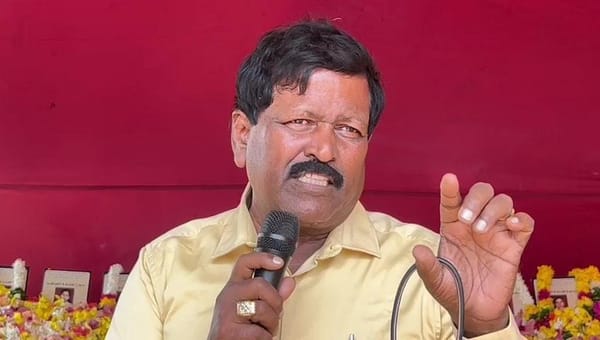
Twenty-three schools in Vavuniya North have been shut down due to lack of Tamil students, a phenomenon that Member of Parliament Ravikaran attributes to what he calls the systematic displacement of Tamil residents through expanding Sinhalese settlements and land acquisitions in the area.
Ravikaran raised the issue during the Vavuniya District Development Coordinating Committee recently, urging Deputy Minister Upali Samarasinghe and Northern Province Governor Nagalingam Vethanayagan to take immediate action to halt planned settlements and protect Tamil residents' rights to their ancestral lands.
Schools are emptying across Vavuniya North
“Vavuniya North Education Zone has become the education zone with the highest number of school closures in the Northern Province,” Ravikaran told the committee. “Twenty-three schools have been shut down. What is the reason for this large number of closures? Only if you officials identify the cause can we take the necessary steps to address it.”
The MP identified two primary factors: the influx of Sinhalese settlements driving Tamil residents out of the area, and severe resource shortages affecting the schools that remain open.
“A major factor is the arrival of Sinhalese settlements in Vavuniya North, which is forcing Tamil families to leave,” he said. “On top of that, schools are suffering from serious shortages of resources. These are the key reasons why so many schools in Vavuniya North have been closed.”
He added that several other schools in the zone are now approaching closure because of sharply declining student enrollment.
Education officials: Population decline, not resource shortage
Responding on behalf of the Northern Provincial Department of Education, Secretary M. Patrick Diranjan disputed the resource-shortage explanation but confirmed the population decline.
"No school has been closed due to a lack of resources," Diranjan said. "All closures have happened due to the absence of students. We, along with the Governor, inspected most of the 23 schools that were shut down. It is clear that the closures were due solely to the lack of population in those areas."
Allegations of systematic displacement
Ravikaran characterised Vavuniya North as "an extremely underdeveloped region" where "the pressures caused by Sinhalese settlements and land grabs are driving our people out of their own land."
"This is a serious and alarming situation," he said, calling on both the Governor and Deputy Minister Samarasinghe to intervene immediately.
The MP noted that Deputy Minister Samarasinghe had previously promised to investigate land-grab allegations in Vavuniya North within one month, and urged expedited action.
"The government must stop the Sinhalese settlements and land acquisitions taking place in Vavuniya North and ensure that Tamil people are able to continue living in their ancestral homes," Ravikaran said.
He also reiterated concerns about resource shortages in remaining schools, stating, "The Education Secretary cannot deny this," and urged the Northern Provincial Ministry of Education to address infrastructure and facility gaps in Vavuniya North schools.
Post-war demographic concerns
Vavuniya North has been at the centre of longstanding disputes over land ownership and demographic changes following the end of Sri Lanka's civil war in 2009.
Tamil political parties and civil society organisations have repeatedly raised concerns about government-sponsored settlement schemes, military land acquisitions, and archaeological projects they say are altering the ethnic composition of historically Tamil-majority areas in the Northern and Eastern provinces.
Sinhalese nationalist groups and government officials have defended such initiatives as legitimate development projects and archaeological preservation efforts, rejecting claims of deliberate demographic engineering.