By: Jeevan Thiagarajah
The High Price of Neglect
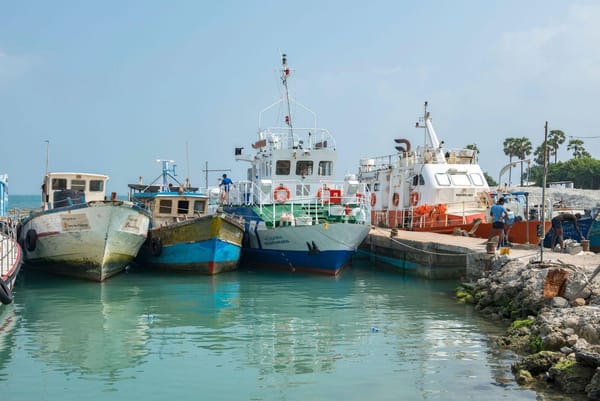
For the residents of Sri Lanka’s Northern Province, the Palk Strait and the Jaffna Lagoon are not merely bodies of water; they are lifelines. The islands of Delft, Kayts, Karainagar, Pungudutivu, and Nainathivu are tethered to the Jaffna mainland by a fragile network of ferries. Every day, students, patients, and traders entrust their lives to these vessels. Yet, despite the existence of comprehensive maritime laws, the reality of compliance in the region is alarming. The gap between regulation and enforcement is not just a bureaucratic failure; it is a gamble with human life.
To secure the safety and prosperity of the Northern Province, we must urgently establish an integrated sea transport service. However, government oversight alone is insufficient. We must introduce a Public-Private Partnership (PPP) Enterprise to bring in operational efficiency, investment capacity, and commercial discipline, ensuring that safety does not come at the expense of economic viability.
Governance and the Regulatory Landscape
Governance of maritime transport is a complex tapestry woven from multiple authorities. The Merchant Shipping Secretariat (MSS) stands as the technical guardian. Operating under the Ministry of Ports, Shipping and Aviation, the MSS enforces the Merchant Shipping Act, certifying that vessels are seaworthy and that crews possess the requisite licenses.
On the ground, the District Secretariat (headed by the District Secretary) plays a pivotal administrative role. They are responsible for the licensing of boats carrying passengers for hire, often in consultation with local councils. They are the bridge between central government regulations and the daily realities of the local harbor.
The Road Development Authority (RDA) acts as a key agency in this ecosystem, managing the national highways and causeways—such as the A32—that feed into the ferry terminals. For sea transport to be efficient, the RDA’s road infrastructure must seamlessly integrate with maritime operations, ensuring safe "last-mile" access to the jetties.
The Proposed PPP Enterprise: "Northern Sea Link Ltd." (NSL)
To unify these fragmented stakeholders, we propose the incorporation of a Special Purpose Vehicle (SPV): Northern Sea Link Ltd.
Shareholding Structure: A joint venture between the Government (via RDA/Ministry of Ports) and a private sector operators with expertise in maritime logistics and tourism.
Mandate: NSL will hold the monopoly on "safety-critical" routes (e.g., Delft) while managing the entire fleet. The Navy retains the role of strategic oversight and emergency backup, while NSL handles daily operations, ticketing, and maintenance.
Governance Role: NSL acts as the unified compliance officer, ensuring that all vessels—whether owned by the company or subcontracted—adhere to MSS standards, removing the burden of daily monitoring from the District Secretariat.
Current Operational Services
To fully understand the scope of integration required, we must recognize the existing services currently keeping the islands connected. Under the new PPP model, these assets will be transferred to or managed by Northern Sea Link Ltd.
Services Conducted by the RDA (to be transferred to NSL):
Boat service between Kurikadduwan and Delft Island (operated by Kumuthini boat).
Boat service between Kurikadduwan and Delft Island (operated by Vadatharakai II).
Ferry service between Kurikadduwan and Nagadeepa.
Cable-supported ferry service between Karainagar and Kayts.
Services Conducted by Local Authorities (to be consolidated under NSL):
Boat service between Kurikadduwan and Delft Island (operated by Neduntharakai).
Boat service between Kayts and the Islands of Analaitivu and Eluvaitivu (operated by Elutharakai).
Infrastructure and Rehabilitation Needs
A major hurdle to an integrated service is the fragmented ownership of the jetties. Under the PPP framework, the Government (RDA) will retain ownership of the "hard assets" (jetties and causeways) but lease them to Northern Sea Link Ltd. for operations and maintenance.
Asset Handover: The Kannakai Amman Jetty (Kayts DS) must be transferred to RDA and subsequently leased to NSL to create a unified terminal management system.
Rehabilitation Targets: NSL will prioritize the commercial viability of these assets:
Expansion of Kurikadduwan Jetty (to handle tourist influx).
Rehabilitation of Kayts, Karainagar, and Kannakai Amman Jetties with retail and passenger amenities.
Critical Interventions and Resource Requirements
To operationalize the integrated service, the following requirements must be addressed through a mix of government capital expenditure (CAPEX) and private operational expenditure (OPEX).
A. Infrastructure and Road Connectivity
Public Funding: Rehabilitation of the Valukkairaru – Pungudutivu - Kurikadduwan Road [AB039] (25.54 km) remains a government responsibility to ensure land-sea connectivity.
B. Fleet Acquisition and Replacement (PPP Investment)
Instead of government budgeting for boats, NSL will procure the fleet through private financing or leasing arrangements, ensuring accountability.
Replacement Vessels: Procurement of a timber boat (Kumuthini replacement), a new ferry (Nagadeepa route), and a new cable ferry (Kayts-Karainagar).
New Capability Vessels:
LCM Ferry: To be leased by NSL for commercial cargo transport (construction materials) to Delft, creating a revenue stream.
Emergency Ambulance Boat: Funded through a CSR (Corporate Social Responsibility) arm of NSL or a government subsidy specifically tied to healthcare outcomes.
C. Workshop and Human Resources
NSL Management: NSL will cover the wages of the 49 newly recruited employees and workshop staff.
Maintenance Contract: The construction of the workshop and purchase of vehicles/fuel logistics will be managed by NSL to ensure cost-efficiency.
The Revenue Dimension: A Sustainable Business Model
The transition to a PPP Enterprise requires a robust financial model. The "Northern Sea Link" must generate revenue to cover OPEX, vessel leasing, and infrastructure maintenance, while the government provides subsidies only for essential social connectivity.
A. Diversified Revenue Streams
Tiered Passenger Pricing:
Resident Fare: A subsidized, fixed rate (e.g., Rs. 80–100) for island residents with valid ID, funded by a government pay-per-use subsidy to NSL.
Tourist/Standard Fare: A market-driven fare for non-residents and tourists, reflecting the full cost of operation plus a profit margin.
Freight and Logistics:
Cargo Transport: Revenue from transporting construction materials, consumer goods, and agricultural produce via the LCM ferry and cargo decks of passenger ferries.
Vehicle Transport: Tolls for cars/vans transported on the Delft route.
Tourism and Leisure:
Island Hopping Packages: All-day passes for tourists visiting Nagadeepa, Delft, and Kayts.
Charter Services: Private hire of NSL vessels for luxury groups or events.
Concessionary Revenue:
Terminal Retail: Leasing space at jetties for cafes, souvenir shops, and ticketing kiosks.
Advertising: Branding rights on vessel hulls and interior digital screens.
B. Financial Projections & Cost Recovery
Cross-Subsidization: Profits from the high-volume Delft tourist route and the lucrative cargo trade will offset the operational losses on less profitable social routes (e.g., small islands).
Anchor Revenue: The LCM ferry cargo operations are projected to be the anchor revenue, ensuring the service remains solvent even during tourism low seasons.
Prospects for Development: Offshore and Aquatic Tourism
The PPP Enterprise is uniquely positioned to unlock the high-value tourism potential, transforming sea transport from a utility into an experience.
Marina and Yachting: NSL will develop the Delft Harbour as a multi-purpose facility, berthing yachts and charging berthing fees. The regulatory framework for this will be fast-tracked by the MSS.
Jaffna Lagoon & Water Sports: NSL will operate recreational boating and water sports at the Karainagar Channel and Pannai, utilizing dedicated high-speed craft separate from commuter ferries.
Resort Connectivity: Future development of Pallaithivu and Iranathivu as high-end resorts will be serviced by premium NSL ferries, operated under specific "luxury service" contracts with resort developers.
Conclusion: From Subsidy to Sustainability
The current fragmented approach is incapable of bearing the weight of safety and economic growth. Relying solely on the Navy for civilian transport is not a sustainable long-term strategy, nor is relying on inconsistent government funding for boat repairs.
By establishing Northern Sea Link Ltd. as a PPP Enterprise, we introduce a commercial imperative that demands efficiency, safety compliance, and customer service. The Revenue Dimension ensures that the service pays for itself, while the PPP structure leverages private sector capital for fleet renewal.
The people of the Northern Province deserve a modern standard of safety. By leveraging the regulatory strength of the MSS, the infrastructure of the RDA, the security of the Navy, and the commercial efficiency of a PPP Enterprise, we can ensure that the journey between the mainland and the islands is safe, legal, and prosperous for all.