VAVUNIYA, Sri Lanka — A Sri Lankan court has temporarily blocked the Northern Province governor from enforcing his decision to remove the elected mayor of Vavuniya, setting off a broader constitutional dispute over the powers of unelected governors in the absence of provincial councils.
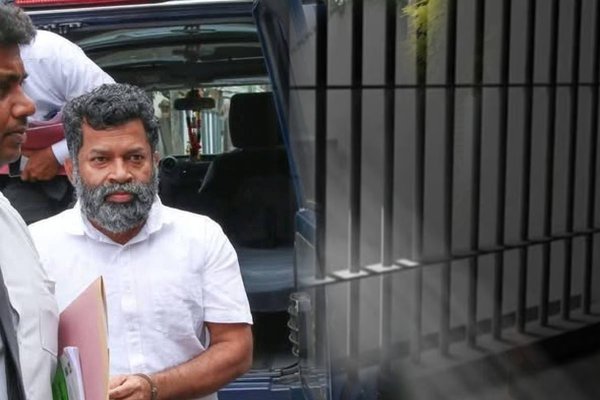
The Vavuniya High Court on Friday granted interim relief suspending a Gazette notification issued by Northern Province Governor Nagalingam Vethanayahan, removing Vavuniya Municipal Council Mayor Sundaralingam Kandeepan from office and stripping him of his seat as a councillor. The court also barred authorities from acting on the notification or taking steps to appoint a replacement mayor until further orders.
The respondents have been directed to appear before the court on July 15, when they are expected to present their case. Until then, the interim orders will remain in force.
The ruling came after Kandeepan filed a writ petition challenging the governor's decision. The respondents, although served with notice, did not appear when the case was called.
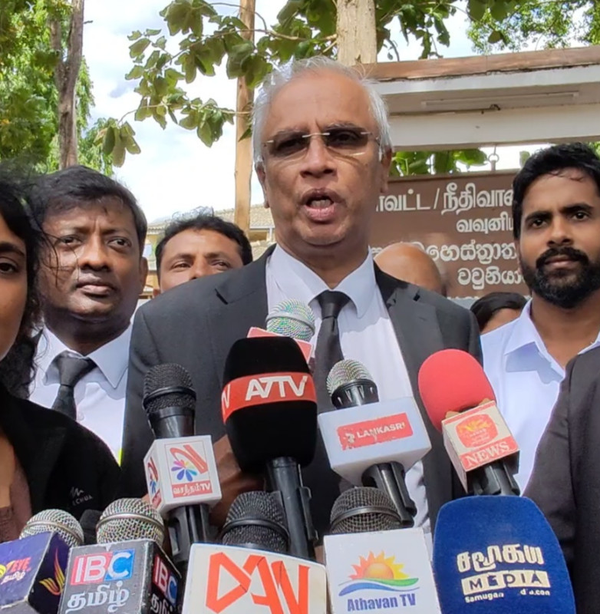
Appearing for the mayor, President's Counsel and acting General Secretary of the Ilankai Tamil Arasu Kachchi (ITAK), M.A. Sumanthiran, argued that the governor's action raised fundamental constitutional questions extending far beyond the removal of a single elected official.
He contended that the case required the court to determine whether, in the prolonged absence of elected provincial councils, a governor could lawfully exercise all powers ordinarily vested in the provincial minister of local government.
Sumanthiran relied on the Supreme Court's determination on the Divineguma Bill, in which the court held that the views of the then Northern Province governor, G.A. Chandrasiri, could not substitute for those of an elected provincial council during the years the north had none. That reasoning, he argued, pointed to a broader principle: that the powers of an elected provincial administration do not automatically pass to an appointed governor merely because no council has been elected.
He further argued that the governor had failed to observe the principles of natural justice by removing the mayor without disclosing the reasons for doing so. According to Sumanthiran, the governor neither informed Kandeeban of the grounds for his removal nor provided reasons even after they were requested, and the two allegations against the mayor were unsupported by any evidence.
The judge initially indicated that the court might first hear the respondents before deciding whether interim relief was warranted. But after nearly two hours of submissions supported by constitutional arguments and judicial precedents, the court concluded that immediate intervention was justified and granted the interim orders sought by the petitioner — suspending the Gazette notification, barring officials from acting on it, and restraining authorities from electing or appointing anyone in Kandeepan's place, as mayor or councillor, pending further proceedings.
The order is the first time a court has suspended one of Governor Vethanayahan's gazetted removals of an elected local government official. The dismissals have drawn criticism from opposition politicians and constitutional lawyers, who say they test the limits of executive authority under Sri Lanka's devolved system of government.
Kandeepan had been removed under Section 277 of the Municipal Councils Ordinance after an inquiry commissioned by the governor. The Gazette stated that the governor was satisfied that the mayor was unfit to continue in office, but did not publicly set out the factual basis for that conclusion. The governor's office has maintained that the removals followed independent inquiries and fell within the powers the law confers on him.
The case is expected to become an important test of the constitutional relationship between provincial governors and elected local authorities, at a time when Sri Lanka's provincial councils have remained dissolved for years, leaving governors to exercise powers that would ordinarily be subject to political oversight by elected provincial administrations.