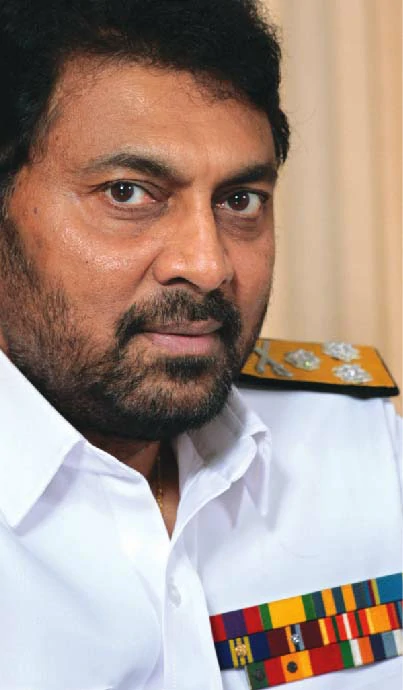
COLOMBO, Sri Lanka — Sri Lanka’s anti-corruption commission arrested a former navy commander, Admiral of the Fleet Wasantha Karannagoda, on Friday over the 2006 recruitment of a son of former President Mahinda Rajapaksa into the navy and his subsequent officer training in Britain at state expense, deepening an inquiry into how the country’s most powerful political family bent state institutions to its purposes.
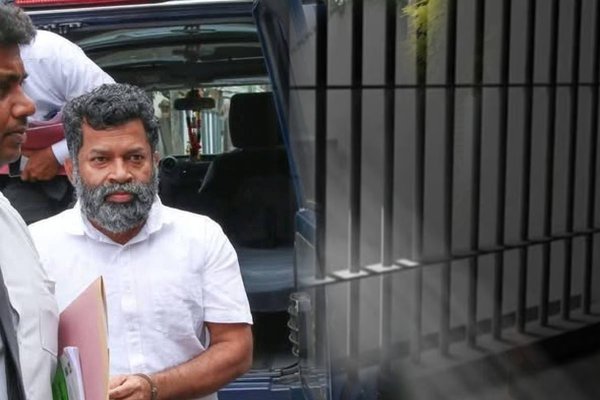
The Commission to Investigate Allegations of Bribery or Corruption, known as CIABOC, said Admiral Karannagoda was taken into custody at about 10:05 a.m. at its premises in Colombo and was to be produced before the Colombo Chief Magistrate’s Court. Investigators contend that the way the recruitment and the overseas placement were arranged amounts to an offense of corruption.
The arrest had been coming for weeks. The commission said it had summoned Admiral Karannagoda twice, on June 16 and again on June 22, to record a statement on the matter, and that he had not appeared on either date. He was detained after finally presenting himself.
The case centers on Yoshitha Rajapaksa, the second son of Mr. Rajapaksa, who was president from 2005 to 2015 and remains one of the island’s most influential figures. Yoshitha Rajapaksa, 38, a former naval officer, was himself arrested by the commission on June 17 in connection with the same recruitment and later released on bail on three personal bonds, ordered to surrender his passport and barred from leaving the country while the investigation proceeds.
What investigators allege
According to the commission’s findings, the standard requirement for a cadet officer entering the Navy’s executive branch was a pass in the sciences or mathematics at the Advanced Level examination. Mr. Rajapaksa had sat his Advanced Levels in the arts stream and, investigators say, did not meet that bar. The commission alleges that the recruitment criteria were then revised and fresh advertisements issued in a manner that matched his academic record; concerns raised over his Ordinary Level qualifications were said to have been resolved in the same way. He enlisted in December 2006.
Investigators say that in September 2006, Admiral Karannagoda, then the commander of the Sri Lankan Navy, wrote directly to the Royal Naval College in Britain seeking a place for Mr. Rajapaksa, bypassing normal channels. The college replied in November that a place could be arranged, but would not be offered on a full scholarship and would have to be paid for. Mr. Rajapaksa traveled to Britain in January 2007 and trained there for more than 18 months, the commission says, with the cost borne by the Sri Lankan treasury. Prosecutors have argued that he was sent before completing the basic training required of every cadet at the Naval and Maritime Academy in Trincomalee. The commission has framed the alleged offence as aiding and abetting corruption.
This is not the Navy 11 case
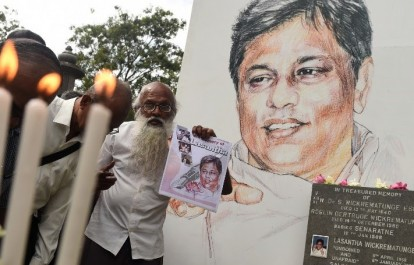
Friday’s detention has nothing to do with the enforced disappearance of the “Navy 11” — eleven youths, most of them Tamil, abducted for ransom between 2008 and 2009 and held at naval facilities in Colombo and at the underground “Gun Site” detention cells inside the Trincomalee base before they vanished. None have been found; all are presumed murdered. Admiral Karannagoda was named in 2019 as the 14th suspect in that case, on the basis of command responsibility, before the Attorney General dropped the charges against him in 2021 — a decision condemned by the United Nations High Commissioner for Human Rights and by Amnesty International. He was afterward appointed governor of the North Western Province by then-President Gotabaya Rajapaksa. Petitions by the victims’ families to reinstate the charges remain before the Supreme Court.
A wider reckoning
Admiral Karannagoda holds the honorary five-star rank of Admiral of the Fleet, the highest in the Sri Lanka Navy. In March 2025, Britain sanctioned him for gross human rights violations; the United States had earlier imposed a visa ban after the State Department described the allegations against him as serious and credible.
The recruitment inquiry is one strand of a broadening effort by CIABOC under President Anura Kumara Dissanayake, whose government took office pledging to dismantle networks of political patronage. Yoshitha Rajapaksa is already out on bail in separate money-laundering proceedings; on the day of his father’s associate’s arrest, the Court of Appeal dismissed a revision application he had filed in one such case.